
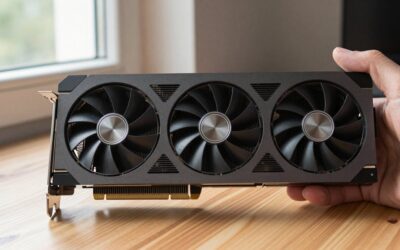
- Top Pick: GIGABYTE GeForce RTX 5060 Ti WINDFORCE OC 8G Graphics Card, 8GB 128-bit GDDR7, PCIe 5.0, WINDFORCE Cooling System, GV-N506TWF2OC-8GD Video Card
- Best Value: ASUS Prime GeForce RTX 5060 Ti 16GB GDDR7 Gaming Graphics Card
- Premium Choice: ASUS Dual GeForce RTX 5060 Ti 16GB GDDR7 OC Edition Gaming Graphics Card


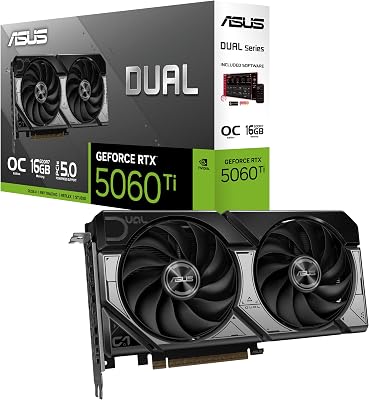
4060 Ti vs 5060 is the exact matchup thousands of budget builders are wrestling with right now, and the answer is far less obvious than the newer model number suggests. On paper the RTX 5060 is Nvidia’s fresher Blackwell card, while the RTX 4060 Ti brings more shader cores and an optional 16GB frame buffer. This comparison breaks down real benchmark trends, memory, ray tracing, power, and today’s shaky pricing so you can decide which card actually deserves your money.
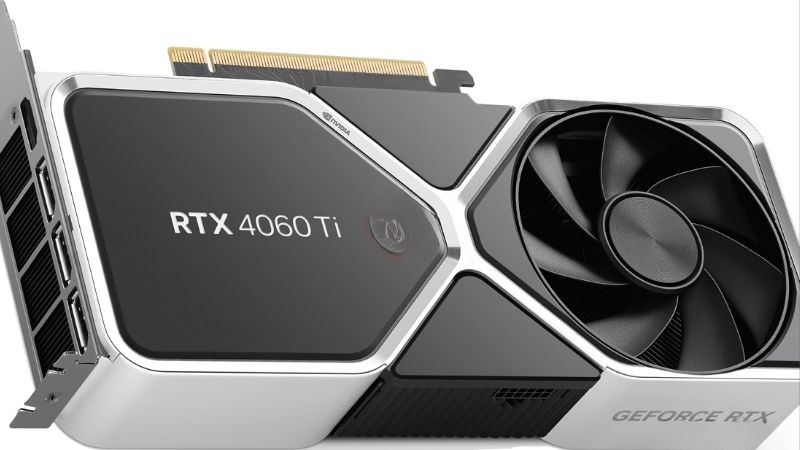
The Quick Verdict for the 4060 Ti vs 5060 Matchup
If you only have thirty seconds, here is the compressed answer before we get into the numbers. Neither card is a blowout winner; the right pick depends on your monitor, your games, and how long you plan to keep the GPU.
As an Amazon Associate we earn from qualifying purchases at no extra cost to you.




Best Overall Pick for Most 1080p Gamers
For a straight 1080p build, the RTX 5060 is the card most players should buy. It uses newer Blackwell architecture, ships with much faster GDDR7 memory, and unlocks DLSS 4 Multi Frame Generation, which the 4060 Ti cannot run.
In practice that means smoother frame pacing in modern titles and a lower typical price. Unless you specifically need a large frame buffer, the 5060 delivers more of what a mainstream gamer notices day to day.
The catch is the shared 8GB memory pool, which we return to below. For most 1080p libraries it is still enough today, and the 5060’s speed advantage is the more immediate, visible win.
Best Value When Every Dollar Counts
The 8GB RTX 4060 Ti often shows up discounted now that a newer generation exists, and at the right price it is a legitimate value play. It has more CUDA cores than the 5060 and still handles esports and older AAA titles comfortably.
There is also the 16GB 4060 Ti, which sits in a different bracket. If you edit video, run local AI models, or play texture-heavy games at 1440p, that extra memory is the single strongest reason to consider the older card over the 5060.
When It Makes Sense to Wait
Waiting only pays off if you are chasing higher tiers. Both of these cards are entry-to-mid parts, so a 5070-class GPU is the logical “wait for it” upgrade, not a future 5060 refresh.
That said, current pricing pressure (covered later) means the deal you see today may not get cheaper soon. If a build is needed now, buying now is defensible.
The resale market complicates the wait-it-out plan too. Prices on current cards have stayed firm rather than sliding, so delaying rarely rewards you the way it did in calmer years, and you lose gaming time in the meantime.
RTX 4060 Ti vs 5060 Specs and Benchmark Comparison
Numbers cut through the noise, so start with the raw hardware. The table below lines up the core specifications side by side, then we translate them into real gaming behavior.
Core Specs and Architecture Side by Side
The headline differences are architecture, memory type, and price. The 4060 Ti leans on more shaders; the 5060 leans on newer tech and faster memory bandwidth.
| Spec | RTX 4060 Ti (8GB) | RTX 5060 |
|---|---|---|
| Architecture | Ada Lovelace | Blackwell |
| CUDA cores | 4,352 | 3,840 |
| Memory | 8GB GDDR6 | 8GB GDDR7 |
| Memory bandwidth | ~288 GB/s | ~448 GB/s |
| Typical board power | ~160W | ~145W |
| Upscaling / FG | DLSS 3 | DLSS 4 (Multi FG) |
| Launch price | $399 | $299 |
Notice the 5060 launches lower and draws less power while adding DLSS 4. That combination is why the newer card wins on paper for most buyers, even with fewer cores.
Real-World Gaming Benchmarks at 1080p and 1440p
Across aggregated reviews, the two cards trade blows in raw rasterization at 1080p, usually landing within roughly ten percent of each other depending on the title. The 4060 Ti’s extra cores help in a few older engines; the 5060’s memory bandwidth helps in newer ones.
At 1440p the gap tilts toward the 5060 once DLSS 4 frame generation is enabled, because that feature can multiply perceived frame rate in supported games. Turn it off, and both cards start feeling stretched at max settings.
The practical takeaway: if you play at 1080p, either card clears 60fps in most titles. If you want a comfortable 1440p experience, the 5060’s software stack does more heavy lifting. Results also swing with the game engine and driver version, so treat any single chart as a snapshot. Look at averages across several titles before you decide the 4060 Ti vs 5060 gap truly matters for your library.
VRAM, Memory Bandwidth and Future-Proofing
Both 8GB cards share the same long-term worry: modern games increasingly ask for more than 8GB at high textures. When a game exceeds the frame buffer, you get stutter and texture pop-in that no amount of raw speed fixes.
This is where the 16GB 4060 Ti becomes interesting. It is slower per core than a hypothetical high-end card, but it simply will not run out of memory in the same scenarios, which matters for creators and 1440p players.
For pure 1080p gaming today, 8GB is still workable. For a build you want to keep for four or five years, the memory conversation should weigh heavily on your decision. Frame generation complicates this further, since generated frames also consume memory. On an 8GB card, enabling every feature at 1440p can quietly push you against the buffer limit, another point in favor of the 16GB option for longevity.
Deep Dive Face-Off: Features, Power and Everyday Use
Specs set the stage, but features and real-world fit decide satisfaction. Here we compare the two cards on the things you actually live with after the box is open.
Ray Tracing, DLSS 4 and AI Upscaling
Both cards support hardware ray tracing, and honestly both are entry-level at it; heavy path-traced titles will need upscaling to stay smooth on either GPU. That makes Nvidia’s software the real differentiator.
DLSS 4 Multi Frame Generation is exclusive to the 5060 here, and it is Nvidia’s strongest experimental lever. In supported games it can insert additional generated frames, which raises the on-screen frame rate well beyond what the raw silicon produces.
If you value future driver optimizations and AI-based features, the 5060 is the card built to receive them. The 4060 Ti still gets DLSS 3, which remains excellent, just a generation behind. This is where Nvidia’s roadmap matters: AI-driven features tend to improve through driver updates, so the 5060 is positioned to gain performance over its lifetime in a way the 4060 Ti largely will not.
Power Draw, Thermals and Case Compatibility
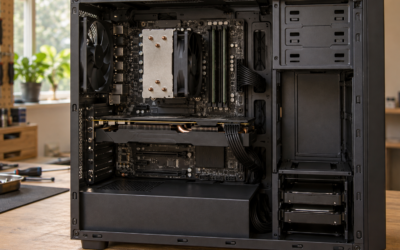
The 5060’s roughly 145W draw makes it friendly to smaller builds and modest power supplies, and a quality 550W unit comfortably covers a full system. The 4060 Ti’s ~160W is only slightly higher but worth noting for tight builds.
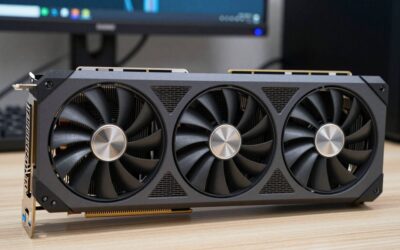
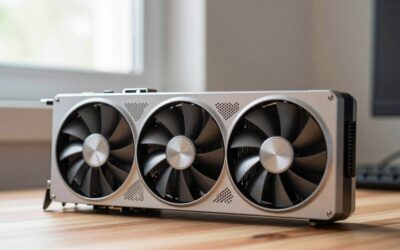
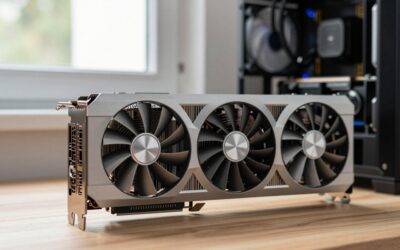
Physically, both cards come in compact two-slot and even smaller variants from partners, so mini-ITX cases are on the table. Check the exact model’s length before buying, since cooler designs vary widely.
Neither card runs hot under normal loads, and both stay quiet with basic case airflow. This is a low-stress category for both, which is good news for first-time builders. In practice you can drop either card into a modest mid-tower without upgrading your cooling. Just confirm the exact model length against your case, since partner designs range from tiny dual-fan cards to longer triple-fan units.
Pros and Cons of the 4060 Ti and the 5060
Here is the honest ledger for the 4060 Ti vs 5060 decision, pulled from the strengths and complaints that show up most in owner feedback.
RTX 5060 — Pros: lower launch price, faster GDDR7 memory, DLSS 4 Multi Frame Generation, lower power draw, newer architecture with a longer support runway. Cons: only 8GB VRAM, fewer CUDA cores, frame-generation gains depend on game support.
RTX 4060 Ti — Pros: more CUDA cores, an available 16GB version for memory-hungry work, frequent post-launch discounts, mature drivers. Cons: older DLSS 3 only, slower GDDR6 bandwidth, the base 8GB model can feel dated for the price.
What Rising Prices and the Supply Outlook Mean for Buyers
You are not just choosing between two cards; you are buying into a strange market. Component prices have been climbing, and that reality should shape your timing more than any single benchmark.
Why GPU and Laptop Prices Keep Climbing
Across GPUs, prebuilt PCs, and gaming laptops, prices have trended upward rather than settling into the usual post-launch decline. Memory is a major driver, because graphics cards and systems compete for the same tight supply of modern DRAM.
For the 4060 Ti vs 5060 shopper this has a concrete effect: the older card is not automatically the “cheap” option anymore, and street prices can drift above launch figures. Always compare the live price of both before assuming one is the budget pick.
The practical move is to treat any good price as potentially temporary. If a card lands near its launch price, that is currently a solid deal by 2026 standards. This also reshapes the old advice to always buy last generation for value. When memory costs inflate the whole stack, the newer card’s lower launch price can leave it cheaper than the older one at retail, so verify with live pricing rather than assumptions.
The “Relief Is Coming” Story and Why It’s Still Far Off
There is genuine good news, but it is weak and it lives in the future. Prices have at least stopped climbing as steeply as they did in late 2025, and some hardware makers have reported a stretch of relative stability, while still warning that volatility is not over.
New supply is being built. Manufacturers are expanding DDR5 sourcing and new memory fabs are under construction, which should eventually loosen the market. The catch is timing: those facilities largely come online around 2027 to 2028.
So the honest summary is that prices have flattened, not fallen, and real relief is still years out. That argues for buying the card you need when the price is fair rather than holding out for a crash that is not scheduled to arrive soon.
The Alternative: A Third GPU Worth a Look
If both of these cards feel overpriced on the day you shop, do not force the purchase. A used previous-generation card, or a step down to a cheaper current model, can deliver most of the 1080p experience for less.
On the AMD side, competing Radeon cards in this bracket sometimes undercut both Nvidia options while offering generous VRAM, which is worth checking if raw value matters more than DLSS 4 to you.
The goal is simple: match the card to your monitor and budget, and refuse to overpay in a market that is temporarily inflated. There is almost always a sensible third option. Whatever you pick, set a firm ceiling price before you shop. In an inflated market, price discipline protects you more than chasing the last few percent of performance between these two cards.
See more:
- Nvidia gear store
- Nvidia number of employees
- Nvidia Jetson Xavier Developer Kit
- GeForce graphics driver
Final Verdict and Recommendation
When it comes to the 4060 Ti vs 5060 decision, buy the RTX 5060 if you want the newer architecture, DLSS 4, lower power, and the best all-round 1080p experience at a typically lower price. Choose the RTX 4060 Ti, especially the 16GB version, if you need more memory for 1440p, creation, or local AI work, or if it is heavily discounted on the day you shop. Both are capable entry-to-mid cards, and in this market the fairest price often matters as much as the spec sheet. Check the current live price on both cards through the link below before you buy, so you lock in the better deal today.
Frequently Asked Questions
Which is faster overall, the RTX 4060 Ti or RTX 5060?
They trade blows. The RTX 5060 benefits from GDDR7 memory and higher effective bandwidth on the same 128-bit bus, while the 4060 Ti has more shader cores. In rasterized 1080p the two land close together, with the newer card pulling ahead where bandwidth and DLSS 4 features matter.
Does the RTX 5060 support features the 4060 Ti does not?
Yes. Blackwell adds DLSS 4 multi-frame generation, which can insert multiple generated frames rather than one, plus updated NVENC and NVDEC engines with improved AV1 support. Ada cards still receive the transformer upscaling model, so the practical gap is largest in titles that implement multi-frame generation.
How does VRAM affect the comparison?
The RTX 5060 ships with 8GB only, while the 4060 Ti exists in both 8GB and 16GB versions. If you find the 16GB 4060 Ti near the same price, it is the better long-term buy for texture-heavy games, local AI experimentation and video editing despite the older architecture.
What are the power and connector requirements?
The RTX 5060 draws roughly 145W and the 4060 Ti around 160W, both fed by a single 8-pin PCIe connector on most partner boards. A quality 500W to 550W supply is sufficient for either in a mainstream build, and both fit comfortably in compact two-slot cases.
Which delivers better value at 1080p today?
Pick whichever is cheaper when capacity is equal, since performance is close. The RTX 5060 wins on efficiency, media engine and frame generation. The 16GB 4060 Ti wins on memory headroom. Both use a PCIe x8 interface, so older PCIe 3.0 systems lose a little performance with either card.

Write Your Review
No reviews yet. Be the first to share your experience!