
- Top Pick: GIGABYTE GeForce RTX 4070 Ti Super Eagle OC 16G Graphics Card, 3X WINDFORCE Fans, 16GB 256-bit GDDR6X, GV-N407TSEAGLE OC-16GD Video Card
- Best Value: ZOTAC Gaming GeForce RTX 4070 Ti Super Solid OC DLSS 3 16GB GDDR6X 256-bit 21 Gbps PCIE 4.0 Gaming Graphics Card, IceStorm 2.0 Advanced Cooling, ZT-D40730RC-10P
- Premium Choice: GIGABYTE GeForce RTX 4070 Ti Super Gaming OC 16G Graphics Card, 3X WINDFORCE Fans, 16GB 256-bit GDDR6X, GV-N407TSGAMING OC-16GD Video Card
Top Rtx 5070 Rtx 4070 Super Picks for 2026
Here are our current top rtx 5070 rtx 4070 super picks, compared on real Amazon owner reviews, price, and features. Live prices update below.
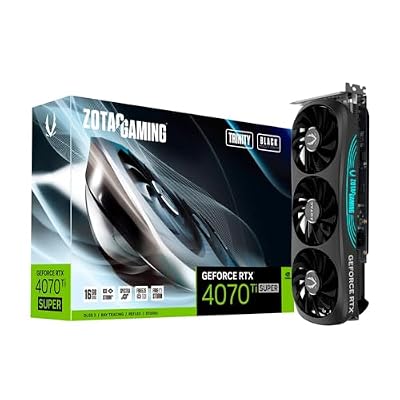


RTX 5070 vs RTX 4070 Ti Super is a cross-generation matchup that pits a newer Blackwell card against a proven Ada Lovelace performer with more memory. The RTX 5070 brings DLSS 4 and modern efficiency, while the RTX 4070 Ti Super counters with a larger 16GB buffer and stronger raw performance. If you only have thirty seconds, the 4070 Ti Super wins on raw rasterization and VRAM, while the 5070 counters with DLSS 4 Multi Frame Generation, better efficiency and a lower price. The right pick depends on whether you value raw speed and memory or modern features and value. The rest of this comparison breaks down specs, real frame rates, power, VRAM and the volatile 2026 market so you can decide which GPU is the smarter buy for your build.
As an Amazon Associate we earn from qualifying purchases at no extra cost to you. Product prices and availability are accurate as of the date shown and are subject to change.


Quick Verdict and the Spec Showdown
These two cards target overlapping buyers from different generations, and each brings a clear strength. The 4070 Ti Super leans on raw power and memory, while the 5070 leans on modern features and efficiency. Before the benchmarks, here is the fast summary of how the RTX 5070 vs RTX 4070 Ti Super decision usually breaks down.
The 30-Second Verdict
Choose the RTX 4070 Ti Super if you want stronger raw performance, more VRAM for demanding titles, and find it at a competitive price. Choose the RTX 5070 if you want the newest DLSS 4 features, better efficiency, lower power draw and a lower price. For native-focused gamers who want the most raw frames and memory, the 4070 Ti Super is the stronger card, but for those who lean on upscaling or want modern features at a lower cost, the 5070 makes a compelling case.
Side-by-Side Spec Sheet
The spec sheet shows two cards with opposite priorities. The 4070 Ti Super emphasizes raw power and memory; the 5070 emphasizes features and efficiency.
| Spec | RTX 5070 | RTX 4070 Ti Super |
|---|---|---|
| Architecture | Blackwell | Ada Lovelace |
| VRAM | 12GB GDDR7 | 16GB GDDR6X |
| Memory Bus | 192-bit | 256-bit |
| TDP | around 250W | around 285W |
| DLSS | DLSS 4 (MFG) | DLSS 3 |
| Launch Price | $549 | $799 |
The 4070 Ti Super offers 16GB on a wider 256-bit bus and stronger raw shading, while the 5070 counters with DLSS 4 support, better efficiency and a lower price. The RTX 5070 vs RTX 4070 Ti Super gap is therefore a trade between raw power and memory versus modern features and value, and which side wins depends on your resolution and how you play.
Architecture and Feature Gaps
The 5070 runs on Blackwell with full DLSS 4 Multi Frame Generation, while the 4070 Ti Super uses Ada Lovelace with the earlier DLSS 3 Frame Generation. This means the 5070 can generate more frames in supported titles, while the 4070 Ti Super delivers more raw rasterization performance and carries more memory. For buyers planning to keep a card for several years, the 5070’s newer feature set is better positioned for the games ahead, whereas the 4070 Ti Super rewards those who prioritize native speed and a larger buffer today.
It helps to think of this as a choice between raw power and memory on one side and modern features and value on the other. The 4070 Ti Super delivers more native performance and a larger buffer you can use right now, while the 5070 bets on DLSS 4 and efficiency at a lower price. Neither approach is wrong; they simply suit different buyers. If you want the most raw frames and VRAM for demanding titles, the 4070 Ti Super makes a strong case, whereas if you lean on upscaling, value efficiency or want to spend less, the 5070’s modern strengths are compelling.
Gaming Performance and Real Frame Rates
Specs set expectations, but frame rates settle the argument. These two cards trade blows depending on resolution and whether DLSS 4 is in play. Here is how the RTX 5070 vs RTX 4070 Ti Super race actually unfolds on screen.
1440p Performance
At native 1440p the 4070 Ti Super’s stronger raw performance gives it an edge in many titles, typically pushing higher frame rates than the 5070 when upscaling is off. Both cards comfortably handle modern games at high settings, but the 4070 Ti Super is the faster option in pure rasterization. This is where its raw power and larger buffer shine, and for native-focused 1440p gamers who do not lean heavily on DLSS, it remains the stronger performer of the two by a noticeable margin in demanding scenes.
4K and VRAM
The practical lesson from native testing is that resolution and your reliance on upscaling should drive the decision. If you play mostly at 1440p with DLSS off, the 4070 Ti Super’s raw speed and larger buffer make it the stronger performer, but the moment you enable DLSS 4 in supported titles, the 5070’s features close or reverse the gap. Knowing how you actually play, and how heavily your favorite games lean on upscaling, tells you immediately which card’s strengths matter more for your situation and points you toward the right pick.
Push to 4K and the memory difference matters. The 4070 Ti Super’s 16GB buffer gives it more breathing room with ultra textures than the 5070’s 12GB, helping it avoid stutter in the most demanding titles. Neither card is a native-4K powerhouse, but with upscaling both remain playable. The 5070’s DLSS 4 helps it here, lifting frame rates more effectively than the 4070 Ti Super’s DLSS 3 in supported games, so the two cards trade advantages depending on whether memory or upscaling matters more in a given title.
DLSS 4 and Frame Generation
This is the decisive separator. The 5070 supports DLSS 4 with Multi Frame Generation, while the 4070 Ti Super is limited to DLSS 3 Frame Generation. In a DLSS 4 title, the 5070 can post substantially higher frame rates, sometimes overturning the 4070 Ti Super’s native advantage. For gamers who play recent releases that adopt DLSS 4, this feature gap is a strong argument for the newer card, since it can counter the older card’s raw-speed and memory lead in supported games.
Frame generation also changes how you should read benchmark charts. A native comparison that shows the 4070 Ti Super ahead can be misleading, because in a DLSS 4 title the 5070 can close or overturn that result once Multi Frame Generation is active. If the games you care about support the latest upscaling stack, the real-world picture favors the newer card more than any native chart suggests, which is worth keeping in mind when you weigh these two against your actual library rather than a generic benchmark suite that may not reflect how you really play.
Power, Price and the 2026 Market
Performance is only part of the purchase. What you pay up front, what you spend on electricity, and what the wider market is doing all shape whether the RTX 5070 vs RTX 4070 Ti Super choice is wise. In 2026 those market forces are unusually significant.
Power Draw and Efficiency
Efficiency matters more than buyers often assume, since it touches your electricity bill, your case temperatures and how quiet your system runs during long sessions. A card that draws fewer watts is easier to cool quietly and runs comfortably on a more modest power supply, which can simplify a build and trim the overall cost of the rest of the components.
The 5070 is the more efficient card at roughly 250W, while the 4070 Ti Super draws around 285W. Both are easy to cool with a quality 650W to 700W power supply, and neither runs hot in a well-ventilated case. The 5070’s lower draw gives it a modest edge in heat and noise, making it the friendlier choice for compact or quiet builds, and it can run comfortably on a more modest power supply, which can simplify a build and keep overall system costs down.
Pricing, Value and Where to Buy
Value is where 2026’s market noise gets loud. Laptop and component prices have been climbing as supply tightens and demand for AI-capable silicon soaks up manufacturing capacity. The recent United States decision to allow Nvidia to resume selling its H200 data-center accelerators to China has pulled even more capacity toward enterprise GPUs, and when fabs prioritize lucrative data-center chips, consumer cards can face thinner stock and firmer prices. For shoppers the message is blunt: waiting for a steep price drop is risky, because the macro pressure points upward, not downward.
That backdrop sharpens the value question. The 5070 at $549 delivers modern features and efficiency at a lower price, while a discounted 4070 Ti Super offers more raw power and memory for those who prioritize it. If you have settled on the RTX 5070, compare current listings and today’s deals across a couple of trusted retailers before stock tightens further, and avoid overpaying during a volatile pricing stretch.
Pros and Cons at a Glance
The summary below distills the comparison into the points buyers actually weigh at checkout. Because one card leads on raw power and memory while the other leads on features and value, the decision usually comes down to your priorities and budget rather than a single benchmark. Scan the lists with your own resolution and wallet in mind, and the smarter buy for your build should become clear quickly, even though both cards will keep high-refresh gamers happy for years to come.
To crystallize the RTX 5070 vs RTX 4070 Ti Super trade-offs, here is a focused rundown of where each card wins and where it stumbles. Read it with your resolution and budget in mind, because the right answer depends on whether you prioritize raw power and memory or modern features and value.
RTX 5070 Pros
- Full DLSS 4 with Multi Frame Generation
- Better efficiency at roughly 250W
- Newer architecture and lower price
RTX 5070 Cons
- Only 12GB VRAM versus the 4070 Ti Super’s 16GB
- Slower than the 4070 Ti Super in native rasterization
RTX 4070 Ti Super Pros
- Stronger raw 1440p and 4K performance
- 16GB VRAM on a wider 256-bit bus
- Excellent for demanding titles
RTX 4070 Ti Super Cons
- No full DLSS 4 Multi Frame Generation
- Higher power draw and usually higher price
One more angle worth weighing is your upgrade horizon. If you keep a graphics card for several years, the 5070’s DLSS 4 support makes it better armed for the rendering techniques future games will demand, even though it carries less memory today. If you spot a sharp discount on the 4070 Ti Super and want the most raw power and VRAM you can get now, the older card is a fine pick. Matching the card to your own upgrade rhythm and the way you play is often more useful than chasing the last few percent of native benchmark performance in either direction.
See More:
Conclusion
The RTX 5070 vs RTX 4070 Ti Super decision rewards different buyers. For gamers who want the most raw performance and memory, the RTX 4070 Ti Super is the stronger card and the choice for native-focused play at a competitive price. The RTX 5070, however, pairs DLSS 4 Multi Frame Generation with better efficiency and a lower price, making it both cheaper and better equipped for the games ahead, especially in titles that embrace the latest upscaling. With component and laptop prices firming and fabs leaning toward data-center demand, the smart play is to choose the card that matches your resolution and feature priorities and buy it while stock is healthy, rather than waiting for a price drop the market may never hand you.
Frequently Asked Questions
What is the best rtx 5070 rtx 4070 ti super in 2026?
The best rtx 5070 rtx 4070 ti super depends on your budget and how you plan to use it. The options compared above are our top-rated picks based on real customer ratings, build quality, and overall value — start with the highest-rated model that fits your budget.
How much should I expect to spend on a rtx 5070 rtx 4070 ti super?
Prices vary by brand and features. Budget options cover the essentials, while mid-range and premium models add durability, performance, and extra features. Compare the prices in the list above to find the best value for your needs.
What should I look for when buying a rtx 5070 rtx 4070 ti super?
Focus on what matters most for your use case — build quality, compatibility, performance, warranty, and verified customer reviews. Every pick above is selected to balance these factors.
Are budget rtx 5070 rtx 4070 ti super options worth it?
Yes. For most people a well-reviewed budget or mid-range rtx 5070 rtx 4070 ti super delivers excellent value. You only need to spend more if you specifically require premium materials or top-tier performance.
How did we choose these rtx 5070 rtx 4070 ti super picks?
We compare current Amazon ratings, review counts, key features, and price to surface the options with the best real-world value. The list is refreshed as ratings and availability change.










Write Your Review
No reviews yet. Be the first to share your experience!