
Top Rtx 3080 5080 Two Generations Picks for 2026
Here are our current top rtx 3080 5080 two generations picks, compared on real Amazon owner reviews, price, and features. Live prices update below.
- Top Rtx 3080 5080 Two Generations Picks for 2026
- RTX 3080 vs 5080: Quick Verdict and the Generational Gap
- Deep Dive: Performance, Features, and the Upgrade Ledger
- Market Timing, News, and the Middle Path
- Recommended Products
- Final Verdict: RTX 3080 vs 5080, Both Questions Answered
- Related Guides
- Frequently Asked Questions
- Related Articles


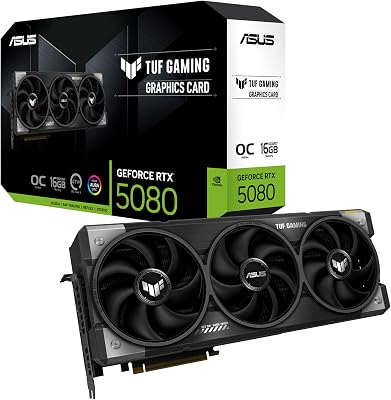


RTX 3080 vs 5080 is the namesake question: two cards sharing a number, separated by two architectures, five years, and roughly $650 of price gap. The Ampere original trades used at $280-380; its Blackwell heir lists at $999 new. That spread makes this less a head-to-head than two decisions wearing one search term — the upgrade question for the millions still gaming on 3080s, and the budget-versus-flagship question for new buyers tempted by the old name’s discount. This comparison answers both with numbers: benchmarks, the feature canyon, upgrade math, and the market forces moving both prices in the same direction.
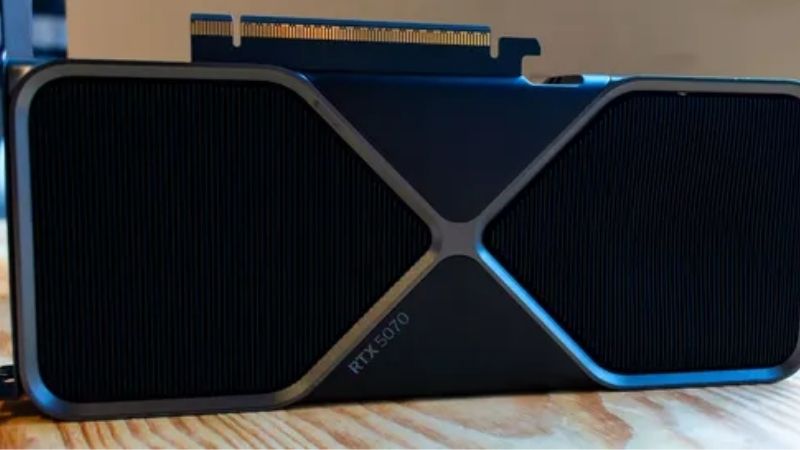
RTX 3080 vs 5080: Quick Verdict and the Generational Gap
Conclusions first, evidence after: the two-paragraph verdict for each buyer type, the specification table that quantifies five years of progress, and the cost arithmetic both decisions hang on.
The Quick Verdict for Both Buyers
For new buyers, the split is budget-shaped: the RTX 5080 is comprehensively better — roughly 70-90% faster in modern titles, 16GB of GDDR7 against 10GB, DLSS 4 Multi Frame Generation, and a warranty — but at nearly triple the street price, the used 3080 remains 2026’s strongest sub-$400 rasterizer. Neither verdict embarrasses the other; they serve different wallets honestly.
For current 3080 owners, the answer is cleaner: the 5080 is the first upgrade since your purchase that clears the classic doubling threshold in real experience — near-2x native gains plus a frame-generation multiplier on top — which is precisely the jump that owner satisfaction data says feels worth four figures. Smaller steps (5070, used 40-series) trade sideways; this one trades up. Know your camp? Check current Amazon pricing on your side — both bands move weekly.
The Specification Table: Five Years, Quantified
Every row below moves in the same direction, which is itself the story — this is what a two-generation gap looks like when the tier stays constant.
| Specification | RTX 3080 | RTX 5080 |
|---|---|---|
| Architecture | Ampere (2020) | Blackwell (2025) |
| CUDA Cores | 8,704 | 10,752 |
| VRAM | 10GB GDDR6X | 16GB GDDR7 |
| Memory Bus / Bandwidth | 320-bit / 760 GB/s | 256-bit / 960 GB/s |
| Boost Clock | 1,710 MHz | 2,617 MHz |
| Total Graphics Power | 320W | 360W |
| Frame Generation | None (DLSS 2 only) | DLSS 4 (multi, up to 4x) |
| Price 2026 | $280-380 used | $999+ new |
| Recommended PSU | 750W | 850W |
The Cost Arithmetic Behind Both Decisions
For new buyers, frames per dollar still crowns the elder: at $330 against $999, the 3080 delivers roughly 55-60% of the 5080’s native performance for a third of the money — unbeatable raw value, taxed by the used market’s standard 5-10% risk premium, a possible PSU line item, and a permanent feature ceiling. The 5080’s premium buys the other 40-45%, the multiplier, the buffer, and the warranty; whether that bundle is worth $650 is a budget statement, not a benchmark one.
For upgraders, the math runs through resale: a clean 3080 recovers $280-350 in today’s firming used market, cutting the 5080’s effective cost to $650-720 — the framing that converts a daunting sticker into a defensible per-year figure across a four-year hold. Sell first, buy second; the sequencing section below explains why the order matters this quarter.
One calibration note keeps the upgrade math honest: the doubling threshold is an experience rule, not a spreadsheet one. Owners on 1080p or 60Hz panels will not perceive most of what the 5080 delivers, and should upgrade the monitor first or hold entirely — the satisfying jump requires a display that can show it, and a surprising share of upgrade regret traces to skipping that check.
Deep Dive: Performance, Features, and the Upgrade Ledger
The generational gap lives in three places: the benchmarks where silicon progress compounds, the feature canyon software opened, and the ownership ledger that decides whether either buyer’s math closes.
Benchmarks: What 70-90% Actually Looks Like
At 1440p, the RTX 5080 posts 150-190 FPS in demanding AAA titles where the 3080 holds 90-125 — a gap a high-refresh monitor renders visible every session. At 4K the spread widens decisively: 80-110 FPS native against 50-70, with the elder leaning on DLSS Quality to stay comfortable while the heir runs native. Esports titles see both far beyond most panels, the one arena where five years buys nothing perceptible.
Frame-time data sharpens the picture beyond averages: the 5080’s 1% lows at 4K hold above 60 FPS in scenes that drag the 3080’s into the 30s — the difference between consistent smoothness and visible hitching during heavy asset streaming. Aggregated across engines, the heir’s lows track 5-10% tighter relative to its own averages too, a VRR-monitor smoothness dividend the bar charts undersell.
Ray tracing turns the gap into a canyon: two generations of RT-core progress deliver 2-2.5x in heavy RT titles, and path-traced showcases that reduce the 3080 to slideshow-with-upscaling run playably on the 5080 before frame generation even engages. Engage it and supported titles display 200+ FPS at 4K — output the DLSS 2-only Ampere card cannot conceptually approach. The 10GB buffer adds the final asymmetry: 2025-2026 releases at 4K Ultra now brush past it, forcing texture management exactly where the 16GB card never thinks about it.
The Feature Canyon: What Five Years of Software Built
The 3080’s software story is mature and closed: superb DLSS 2 upscaling, the Nvidia App’s overlay and tools, and drivers in maintenance mode — everything it will ever do, it does today. That stability is genuinely worth something at $330; nothing about the card will surprise its buyer.
The 5080’s story is the opposite shape: DLSS 4’s transformer upscaler and Multi Frame Generation, Smooth Motion’s driver-level frame doubling for the back catalog the 3080 generation never got, 5th-gen Tensor throughput that runs local AI workloads 2-3x faster, and first-in-line driver optimization for years ahead. Buyers planning a long hold should weight the runway as heavily as the day-one benchmarks — Nvidia’s pattern of reserving headline features for current silicon has held through four consecutive generations, and there is no signal it breaks for the fifth.
Creators inherit the same canyon with different labels: 5th-generation Tensor cores and 16GB run Stable Diffusion, video upscaling, and mid-size local language models 2-3x faster than Ampere manages — and several model classes simply fit on the new card that the 10GB elder must offload or refuse. Owners whose GPU moonlights as a work tool should read this paragraph as the comparison’s real verdict.
The Ownership Ledger: PSUs, Heat, and Risk
The practical rows run closer than the price gap suggests. Both cards demand serious power — 320W against 360W, quality 750W against 850W supplies — so neither escapes the big-card ecosystem conversation; 3080 buyers inherit Ampere’s documented transient spikes and dual-cable diligence, while 5080 buyers inherit the 12V-2×6 connector and an ATX 3.1 recommendation. Case clearance is near-identical at 285-330mm across partner models.
The ledger diverges on risk and trust: the used 3080 carries mining-era histories, worn thermal pads, and warranty silence — manageable with the standard photo-and-history diligence, never free — while the 5080 ships tested, covered, and returnable. Heat output into the room is comparable and real on both; acoustics favor whichever card wears the better partner cooler, an archaeology question on the used side and a catalog question on the new one.
Electricity rounds the ledger: the 40W gaming-load gap runs in the elder’s favor on paper, but Blackwell’s superior idle and video-playback draw claws most of it back across a mixed desktop week — the rare ownership row this matchup genuinely ties. What does not tie is time: the used card’s vetting hours and any PSU shopping are real costs the new card’s checkout simply skips, and honest ledgers price hours.
Market Timing, News, and the Middle Path
Two current developments are lifting both ends of this comparison simultaneously, and one card between them serves the buyer for whom $999 overshoots and $330 undershoots.
The H200 Approval Squeezes Both Ends
The United States has cleared Nvidia to sell the H200 — one of its most powerful AI accelerators — to China, reopening a multi-billion-dollar quarterly market. Nvidia’s wafer, packaging, and premium memory allocation follows margin toward data-center silicon, and the documented consumer sequence lands within a quarter or two: new supply tightens, GDDR7 flagships like the 5080 firm first, and street prices drift above MSRP.
The elder feels the same news through demand: every new-card increase cascades priced-out buyers into the used bands, and the $280-380 range holding every 3080 in existence absorbed clean listings within days during prior surges. For upgraders the sequencing consequence is concrete: a firming used market means your resale recovers more if you sell into it now — the rare news that pays the seller and warns the buyer in the same sentence.
The export decision carries a broader signal worth one paragraph: it confirms the AI investment cycle is accelerating rather than cooling, keeping data-center products first in line for every constrained input — wafers, packaging, premium memory — across the planning horizon. Consumer GPUs are not the priority customer in 2026, and both this comparison’s prices reflect exactly that hierarchy.
Component Inflation Closes the Spread From Below
In parallel, laptop and component prices are trending upward industry-wide, led by memory: DRAM and graphics memory contract prices have climbed as AI build-outs consume fab output, and the 5080’s 16GB of GDDR7 sits precisely on the most pressured line of any bill of materials. Board partners have already nudged flagship SKU pricing this cycle.
The used card trades under the umbrella every such increase lifts: 10GB of premium GDDR6X soldered at 2020 prices reprices upward as its new alternatives get costlier. The conclusion is symmetrical and unforgiving — both ends of this comparison are likelier floors than ceilings through the next two quarters, and the $650 spread that defines the decision is more stable than either number inside it. Whichever camp you occupy, the arithmetic is cheapest today.
The Middle Path: RTX 5070 Ti
Buyers caught between the bands have an engineered exit: the RTX 5070 Ti delivers roughly 85% of the 5080’s performance with the identical 16GB-GDDR7-DLSS-4 feature column for $250 less — and beats the used 3080 by 50-65% while erasing every used-market caveat this article catalogued.
For upgrading 3080 owners specifically, it clears the satisfying-jump threshold at a friendlier net cost after resale; for new buyers, it is the strongest price-performance point in the current flagship-adjacent stack. Its Amazon listing is the five-minute check that resolves a surprising share of this comparison’s traffic one tier down from the headline.
Recommended Products

msi
MSI GeForce RTX 4060 Ventus 2X Black 8G OC Gaming Graphics Card – 8GB GDDR6X, PCI Express Gen 4, 128-bit, 3X DP v 1.4a, HDMI 2.1a (Supports 4K & 8K HDR)

ASUS
ASUS Dual GeForce RTX 4060 Ti OC Edition 8GB GDDR6 (PCIe 4.0, 8GB GDDR6, DLSS 3, HDMI 2.1, DisplayPort 1.4a, Axial-tech Fan Design, 0dB Technology), 3 Year Warranty
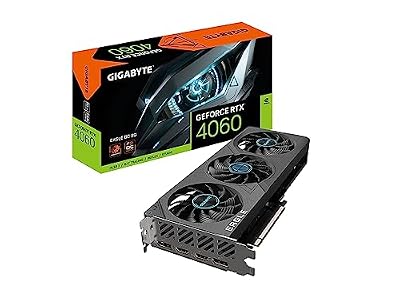
GIGABYTE
GIGABYTE GeForce RTX 4060 Eagle OC 8G Graphics Card, 3X WINDFORCE Fans, 8GB 128-bit GDDR6, GV-N4060EAGLE OC-8GD Video Card (Renewed)
As an Amazon Associate we earn from qualifying purchases. Product prices and availability are accurate as of the date/time indicated.
Final Verdict: RTX 3080 vs 5080, Both Questions Answered
The RTX 3080 vs 5080 namesake question resolves into two honest answers. New buyers split by budget: under $400, the used 3080 remains the strongest rasterizer money buys and a fine card for raster-first 1440p libraries; at $999, the 5080 justifies its tier with near-double performance, 16GB of headroom, DLSS 4’s multiplier, and a warranty. Current 3080 owners get the cleaner verdict: this is the first successor that clears the doubling bar, and selling into today’s firming used market cuts its effective cost to the most favorable figure it will likely see. The 5070 Ti at $749 serves everyone the bands miss. With the H200 approval tightening supply at the top and component inflation lifting the floor beneath the used market, both numbers in this comparison point the same direction — check today’s Amazon listings on your side of the spread, and settle the famous name’s question while the window holds.
Frequently Asked Questions
What is the best rtx 3080 5080 in 2026?
The best rtx 3080 5080 depends on your budget and how you plan to use it. The options compared above are our top-rated picks based on real customer ratings, build quality, and overall value — start with the highest-rated model that fits your budget.
How much should I expect to spend on a rtx 3080 5080?
Prices vary by brand and features. Budget options cover the essentials, while mid-range and premium models add durability, performance, and extra features. Compare the prices in the list above to find the best value for your needs.
What should I look for when buying a rtx 3080 5080?
Focus on what matters most for your use case — build quality, compatibility, performance, warranty, and verified customer reviews. Every pick above is selected to balance these factors.
Are budget rtx 3080 5080 options worth it?
Yes. For most people a well-reviewed budget or mid-range rtx 3080 5080 delivers excellent value. You only need to spend more if you specifically require premium materials or top-tier performance.
How did we choose these rtx 3080 5080 picks?
We compare current Amazon ratings, review counts, key features, and price to surface the options with the best real-world value. The list is refreshed as ratings and availability change.

Write Your Review
No reviews yet. Be the first to share your experience!