
- Top Pick: Skytech Gaming Rampage Gaming PC, Intel i5 14400F 2.5GHz, NVIDIA RTX 5070 12GB VRAM, 1TB Gen4 NVMe SSD, 24GB DDR5 RAM 6000, 850W Gold ATX 3 PSU, Wi-Fi 5, Windows 11, Desktop
- Best Value: ZOTAC MEK Gaming PC Desktop, Ryzen 7 9700X, NVIDIA GeForce RTX 5070 Ti 16GB
- Premium Choice: ASUS Prime GeForce RTX 5070 12GB GDDR7 OC Edition Gaming Graphics Card
- The Quick Verdict for the RTX 5060 vs RTX 5070 Matchup
- RTX 5060 vs RTX 5070 Specs and Benchmark Comparison
- Deep Dive Face-Off: Features, Power and Everyday Use
- Timing Your Purchase: Prices, Supply and Whether to Wait
- Final Verdict and Recommendation
- Related Guides
- Frequently Asked Questions
- Related Articles

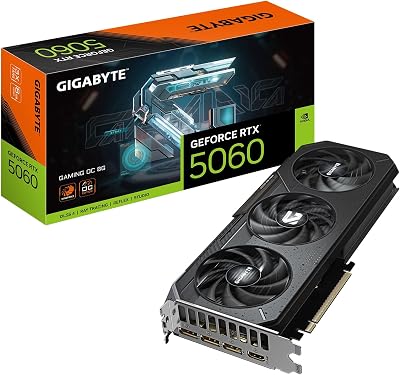

RTX 5060 vs RTX 5070 is the decision that splits Nvidia’s mainstream Blackwell lineup right down the middle, and the roughly $250 gap between them is not as simple as bigger-is-better. The 5060 targets smooth 1080p on a tight budget, while the 5070 steps up to comfortable 1440p with more cores and a larger 12GB frame buffer. This comparison digs into real benchmarks, VRAM, power, features and today’s volatile pricing so you can match the right card to your monitor and your wallet.
The Quick Verdict for the RTX 5060 vs RTX 5070 Matchup
If you want the short answer before the deep dive, it comes down to resolution and budget. One card is a value 1080p machine; the other is a proper 1440p performer that costs meaningfully more.
As an Amazon Associate we earn from qualifying purchases at no extra cost to you.


Best Pick for Budget 1080p Builds
The RTX 5060 is the smarter buy if your monitor is 1080p and your budget is tight. It delivers strong frame rates in most modern titles at that resolution and keeps total system cost low.
Its lower power draw also means you can pair it with a modest power supply and a smaller case. For an esports-focused or first PC build, the 5060 covers the bases without overspending.
There is also a resale angle. Because the 5060 sits at the affordable end of the stack, it is easier to sell on later if you decide to upgrade, which lowers the real long-term cost of starting here.
Best Pick for 1440p and Longevity
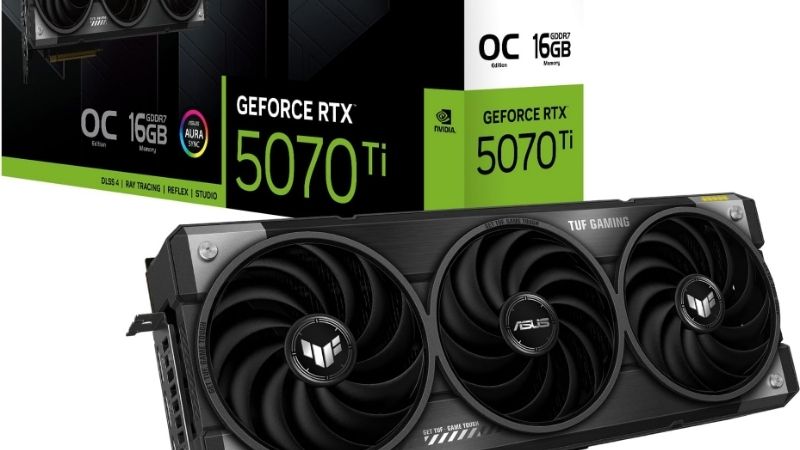
The RTX 5070 is the card to choose if you game at 1440p or want a build that stays capable for longer. Its extra CUDA cores and 12GB of memory handle higher resolutions and demanding textures far more comfortably.
That larger frame buffer is the quiet hero here, since it keeps modern games from running out of VRAM. If you plan to keep the GPU for four or five years, the 5070 is the safer long-term bet.
The 5070 also holds its performance better as games get heavier. A card with more cores and memory degrades more gracefully over several years, so you are less likely to feel forced into an early upgrade.
When Neither Is the Obvious Answer
There is a middle ground where the choice blurs. If you own a 1440p monitor but mostly play older or lighter games, the 5060 can still hold up, saving you real money.
Monitor plans matter too. If a 1440p or high-refresh upgrade is on your horizon, buying the 5070 now can save you from replacing a 5060 sooner than expected, turning the higher price into a longer-term saving.
Conversely, if pricing pushes the two cards closer together than their launch figures suggest, the 5070’s headroom starts to look like the better value. Always weigh the live price gap, not just the sticker difference. Your CPU matters here too. Pairing a 5070 with an older or weaker processor at 1080p wastes much of its power, so the balance of your whole system should inform which card actually makes sense.
RTX 5060 vs RTX 5070 Specs and Benchmark Comparison
The hardware gap between these two cards is genuinely large, unlike some same-tier fights. The table lays out the core numbers, then we translate them into gaming reality.
Core Specs and Architecture Side by Side
Both cards share Blackwell architecture and DLSS 4, so the differences are about scale: cores, memory, bandwidth and power. The 5070 is roughly a class above, not a small step up.
| Spec | RTX 5060 | RTX 5070 |
|---|---|---|
| Architecture | Blackwell | Blackwell |
| CUDA cores | 3,840 | 6,144 |
| Memory | 8GB GDDR7 | 12GB GDDR7 |
| Memory bandwidth | ~448 GB/s | ~672 GB/s |
| Typical board power | ~145W | ~250W |
| Upscaling / FG | DLSS 4 (Multi FG) | DLSS 4 (Multi FG) |
| Launch price | $299 | $549 |
The 5070 has roughly 60 percent more cores and 50 percent more memory, but nearly doubles the power draw and price. That scaling is the whole story of this matchup.
Real-World Gaming Benchmarks at 1080p and 1440p
At 1080p, the 5060 already clears comfortable frame rates in most games, and the 5070’s advantage often gets masked by CPU limits at that resolution. Paying up for the 5070 to game only at 1080p is usually wasted headroom.
Push to 1440p and the picture flips. The 5070 pulls clearly ahead, holding high frame rates where the 5060 starts leaning hard on upscaling to stay smooth at maxed settings.
The practical rule: buy the 5060 for 1080p, the 5070 for 1440p. The resolution you actually play at should drive this decision more than any single benchmark chart. It is also worth watching one-percent lows, not just average frame rates. The 5070’s extra resources tend to produce steadier frame pacing at 1440p, which feels smoother in practice even when the average numbers look close.
VRAM, Memory Bandwidth and Future-Proofing
The 8GB versus 12GB gap matters more every year. Modern games increasingly request more than 8GB at high textures, and when a card runs short you get stutter and pop-in rather than a clean drop in frame rate.
The 5070’s 12GB and higher bandwidth give it real breathing room at 1440p and with ray tracing enabled. The 5060’s 8GB is fine at 1080p today but is the first thing likely to feel dated over time.
If future-proofing is a priority, the memory difference alone is a strong argument for the 5070. It is the spec most likely to decide how long each card stays comfortable. Texture quality is the easiest setting to protect with more memory. On the 5070 you can keep textures high without fear, while the 5060 may force you to dial them back in the most demanding recent titles.
Deep Dive Face-Off: Features, Power and Everyday Use
Raw specs aside, the two cards differ in how they fit into a real build. Here is how they compare on features, power and daily ownership.
Ray Tracing, DLSS 4 and AI Features
Both cards run DLSS 4 Multi Frame Generation, so the upscaling toolkit is identical. The difference is the raw base performance that feeds it: the 5070 starts higher, so its final frame rates after DLSS are proportionally better.
For ray tracing, the 5070’s extra cores and memory make heavy effects far more usable, especially at 1440p. The 5060 can enable ray tracing but leans heavily on upscaling to keep it playable.
For a buyer who wants ray tracing as a genuine feature rather than a checkbox, that gap is decisive. The 5070 lets you actually keep effects on at 1440p, while on the 5060 ray tracing is more of an occasional treat than a default. If you care about future AI-driven features and driver optimizations, both cards are on the same modern platform and will receive them equally. In testing, frame generation shines brightest when the base frame rate is already reasonable. That favors the 5070 slightly, since its higher starting point gives the AI features cleaner input to work with at 1440p.
Power Draw, PSU and Case Fit
Power is a real dividing line. The 5060’s ~145W sips power and runs happily on a quality 550W supply, making it ideal for compact or budget builds.
The 5070’s ~250W needs a stronger power supply, typically 650W or higher for a full system, plus better case airflow to stay cool and quiet. Factor that added cost into your comparison.
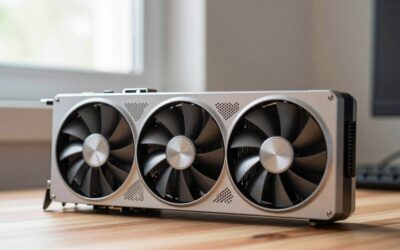
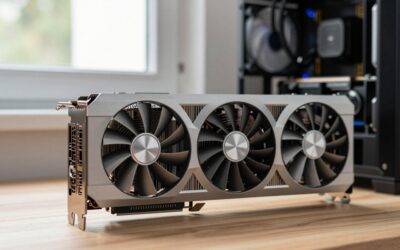
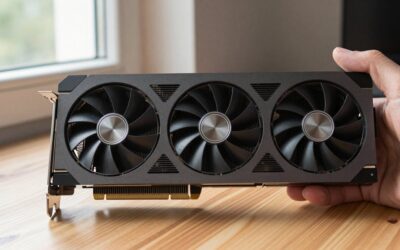
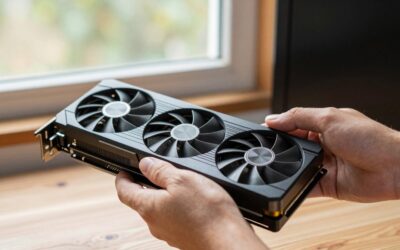
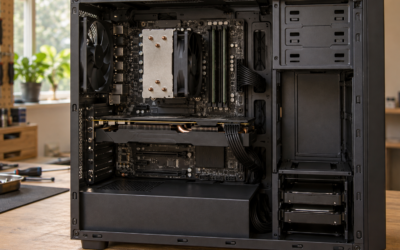
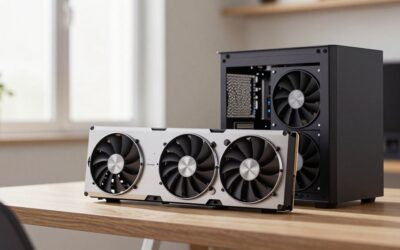
Physically both come in reasonably sized partner cards, but the 5070’s beefier coolers tend to run longer. Check clearance before committing to a small case. Noise is the everyday consequence of that power gap. The cooler 5060 stays quiet with basic airflow, whereas the 5070 works its fans harder under load, so a well-ventilated case pays off more with the bigger card.
Pros and Cons of the RTX 5060 and RTX 5070
Here is the honest ledger for the RTX 5060 vs RTX 5070 decision, drawn from the strengths and trade-offs each card brings.
RTX 5060 — Pros: low price, very low power draw, great for 1080p and small builds, full DLSS 4 support. Cons: only 8GB VRAM, limited 1440p headroom, less future-proof.
RTX 5070 — Pros: strong 1440p performance, 12GB VRAM, higher bandwidth, better ray tracing, longer useful life. Cons: significantly higher price, nearly double the power draw, overkill for pure 1080p play.
Timing Your Purchase: Prices, Supply and Whether to Wait
Choosing a card is only half the battle in 2026; the market itself is working against buyers. Component prices have been climbing, and that should shape your timing as much as the spec sheet.
Why GPU Prices Have Stayed High
Across GPUs and full systems, prices have trended upward rather than falling into the usual post-launch decline. Memory is a big reason, since graphics cards compete with the wider industry for tight supplies of modern DRAM.
For the 5060 versus 5070 shopper, this can compress or stretch the price gap unpredictably. If the 5070 is only modestly more than the 5060 on the day you shop, its extra performance becomes far easier to justify.
The practical move is to treat a fair price as a good price. If either card sits near its launch figure, that counts as a solid deal by current standards. Bundles can tip the math as well. Retailers sometimes pair a card with a game or a small discount on the rest of the build, and in a tight market those extras are worth factoring into the true price you pay.
The Weak Case for Waiting
There is some good news, but it is faint and far off. Prices have at least stopped climbing as steeply as they did in late 2025, and parts of the hardware market have seen a stretch of relative stability, even as makers warn volatility is not finished.
New memory supply is being built, with expanded DDR5 sourcing and new fabs under construction. The catch is that these facilities largely come online around 2027 to 2028, so meaningful relief is years away.
That means waiting rarely rewards you right now. Prices have flattened, not fallen, so buying the card you need at a fair price beats holding out for a drop that is not scheduled to arrive.
The Alternative: A Third Option to Consider
If the 5070 stretches your budget but the 5060 feels limiting, look at the middle. A 5060 Ti, or a well-priced previous-generation card, can bridge the gap between them.
On the AMD side, competing Radeon cards in this price range sometimes offer more VRAM for the money, which is worth a look if raw value outweighs Nvidia’s DLSS 4 edge for you.
The goal is to match the card to your monitor and budget without overpaying in an inflated market. There is usually a sensible third path between these two. Whatever you land on, set a firm budget ceiling before you shop and stick to it. In an inflated market, that discipline protects you far more than chasing the last few frames per second between two capable cards.
See more:
- Nvidia gear store
- Nvidia number of employees
- Nvidia Jetson Xavier Developer Kit
- GeForce graphics driver
Final Verdict and Recommendation
In the RTX 5060 vs RTX 5070 decision, buy the RTX 5060 if you game at 1080p, want the lowest cost and power draw, and value a compact, efficient build. Step up to the RTX 5070 if you play at 1440p, want 12GB of VRAM and stronger ray tracing, and intend to keep the card for years. Both share the same modern Blackwell platform and DLSS 4, so this really is a resolution-and-budget choice. Check the current live price gap between the two cards through the link below before you decide, since today’s market can make the smarter buy obvious.
Frequently Asked Questions
How much faster is the RTX 5070 than the RTX 5060?
The RTX 5070 uses the larger GB205 die with roughly double the CUDA cores and a 192-bit memory bus versus 128-bit. In practice it delivers a substantial lead at 1440p, often on the order of fifty to seventy percent, and the gap widens further with ray tracing enabled.
Is 12GB on the RTX 5070 enough for 1440p and 4K?
Twelve gigabytes is comfortable for 1440p including ray tracing in nearly every current title. At 4K with ultra textures and frame generation it can become the limiting factor in a handful of demanding games, where dropping texture quality one notch usually restores smooth frame pacing without a visible downgrade.
What power supply and case clearance does each need?
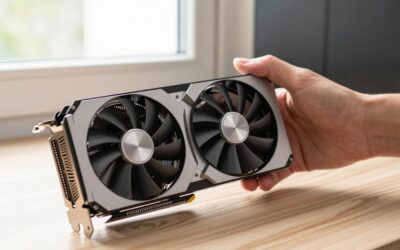
The RTX 5060 sits near 145W and works with a 450W to 550W unit and short two-slot coolers that fit small form factor cases. The RTX 5070 pulls about 250W, wants a 650W supply, and partner models are frequently triple-fan designs over 300mm long, so verify GPU clearance first.
Which one should I buy for 1080p high refresh gaming?
If your monitor is 1080p at 144Hz or above and you play competitive titles, the RTX 5060 is the better value and rarely bottlenecks those games. Choose the RTX 5070 only if you plan to upgrade to a 1440p panel, run ray tracing heavily, or keep the card five years.
Do both support DLSS 4 and multi-frame generation?
Yes. Every Blackwell GeForce card includes the fifth-generation Tensor cores required for DLSS 4 multi-frame generation and the transformer-based upscaling model. Frame generation costs VRAM and adds latency, so pair it with Reflex, and expect the 8GB RTX 5060 to hit memory limits sooner than the 5070.

Write Your Review
No reviews yet. Be the first to share your experience!