
- Top Pick: GIGABYTE GeForce RTX 4070 WINDFORCE OC 12G Graphics Card, 3X WINDFORCE Fans, 12GB 192-bit GDDR6X, GV-N4070WF3OC-12GD Video Card
- Best Value: MXZ Intel Core i7 12700F 5.2GHz,GeForce RTX 4070, Gaming PC,16G DDR4, M.2 SSD 1T, B760, 6RGB Fans,Windows 11 Pro, Gamer Desktop Computer(I7 12700F| RTX 4070)
- Premium Choice: MSI Gaming GeForce RTX 4070 Ventus 3X E1 12G OC Graphics Card (Ada Lovelace Architecture, Extreme Clock: 2520 MHz, Memory Speed: 20 Gbps, 12GB GDDR6, 192-bit, DP/HDMI)
Top Rtx 5060 Rtx 4070 Budget Picks for 2026
Here are our current top rtx 5060 rtx 4070 budget picks, compared on real Amazon owner reviews, price, and features. Live prices update below.
- Top Rtx 5060 Rtx 4070 Budget Picks for 2026
- RTX 5060 vs RTX 4070: Quick Verdict and Key Specifications
- Deep Dive Face-Off: Performance, Power, and Features
- Budget GPU Buying in 2026: The Market Is Working Against Waiting
- Final Verdict: Who Should Buy Which Card?
- Conclusion
- Related Guides
- Frequently Asked Questions
- Related Articles
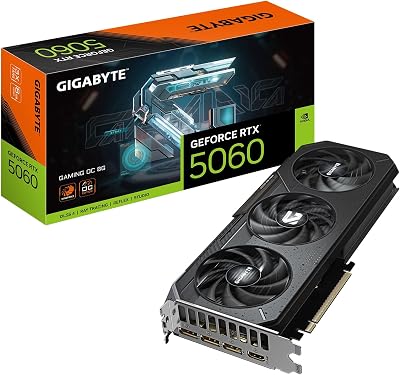


Save $18.00
Dropped $18.00


RTX 5060 vs RTX 4070 is the cross-generation matchup that confuses more budget builders than any other, because the naming suggests an unfair fight while the prices suggest a fair one. The RTX 5060 launched at $299 with DLSS 4 and remarkable efficiency; the RTX 4070 debuted in 2023 at $599 and now sells used for not much more than the 5060 costs new. One card is a tier higher in raw power, the other a generation newer in features. Which actually serves you better depends on your resolution, your power supply, and how long you plan to keep the card. This comparison settles it with numbers.
As an Amazon Associate we earn from qualifying purchases at no extra cost to you. Product prices and availability are accurate as of the date shown and are subject to change.





RTX 5060 vs RTX 4070: Quick Verdict and Key Specifications
Tier beats generation in raw performance, but generation beats tier in features and efficiency — that tension defines this entire comparison. Start with the direct answer, then the spec sheet that explains it.
The Quick Verdict for Busy Buyers
The RTX 4070 is the faster card, leading the RTX 5060 by roughly 20 to 30 percent in raster performance at 1440p, with 12GB of VRAM against 8GB. If you can find a used 4070 around $360 to $400, it delivers more performance per dollar and more memory headroom.
The RTX 5060 wins a different contest: at $299 new it brings DLSS 4 Multi Frame Generation, a warranty, and a 145W power draw that slots into virtually any PC ever built. For 1080p gamers and prebuilt upgraders, it is the lower-risk buy. Check current prices for both on Amazon — the used 4070 market moves weekly and the right answer moves with it.
Specification Comparison Table
The spec sheet shows two very different design briefs: a lean efficiency card against a former $599 performer.
| Specification | RTX 5060 | RTX 4070 |
|---|---|---|
| Architecture | Blackwell (2025) | Ada Lovelace (2023) |
| CUDA Cores | 3,840 | 5,888 |
| VRAM | 8GB GDDR7 | 12GB GDDR6X |
| Memory Bandwidth | 448 GB/s | 504 GB/s |
| Board Power | 145W | 200W |
| DLSS Support | DLSS 4 (Multi Frame Generation) | DLSS 3 (Frame Generation) |
| Launch Price | $299 | $599 |
The 4070 holds a 53 percent core-count advantage; the 5060 counters with GDDR7, a newer feature set, and 55W lower power. Neither line on this table is decorative — each one decides a buyer profile below.
Pros and Cons of Each Card
A straight RTX 5060 vs RTX 4070 assessment needs both columns filled honestly, because each card has one weakness serious enough to disqualify it for certain buyers.
RTX 5060 pros: $299 entry price with warranty; DLSS 4 Multi Frame Generation; 145W draw needs only a single 8-pin and a modest 550W PSU; compact models fit any case. Cons: 8GB of VRAM is already tight in new releases at high settings; 20 to 30 percent slower in raw raster; bandwidth limits show at 1440p in heavy scenes.
RTX 4070 pros: a full performance tier faster; 12GB buffer handles 1440p comfortably for years; excellent 200W efficiency for its class; huge used supply. Cons: no Multi Frame Generation, ever; used units carry no warranty and unknown histories; prices vary wildly between listings, and overpaying erases its advantage.
Deep Dive Face-Off: Performance, Power, and Features
The 20-to-30-percent headline gap is real, but it is not evenly distributed across resolutions and workloads. These four sections show where the 4070 earns its lead, where the 5060 claws it back, and what each costs to run.
1080p and 1440p Gaming Performance
At 1080p, both cards are excellent: the RTX 5060 averages 90 to 120 fps in demanding AAA titles at high settings, the RTX 4070 pushes 115 to 150 fps. For esports, both exceed 240 fps in popular competitive titles, making the difference academic on most monitors. Frame-time consistency at 1080p is equally clean on both, so competitive players choosing purely for that resolution can safely let price decide.
At 1440p the separation matters. The 4070 holds 80 to 105 fps at high settings; the 5060 lands at 60 to 85 fps and, more importantly, begins to brush its 8GB ceiling in texture-heavy games — exactly the scenario where averages stay fine but one-percent lows deteriorate into visible stutter. Reviewers measuring frame-time variance rather than averages consistently flag this as the 5060’s defining weakness above 1080p, and it is the main reason the two cards belong to different resolution classes despite the per-frame cost tie.
Enable frame generation and the picture muddies in the 5060’s favor: DLSS 4 Multi Frame Generation can triple or quadruple presented frames against the 4070’s doubling, letting the cheaper card post higher on-screen frame rates in supported titles. Base render rate still governs latency, so the 4070 retains the better feel in fast competitive play. A useful rule: treat generated frames as smoothness, not speed — they raise what you see, while the underlying render rate still sets how the game responds, and on that metric the 4070’s 25 percent advantage is untouched.
Power, PSU Requirements, and Upgrade Practicality
This is the 5060’s strongest practical argument. At 145W with a single 8-pin connector, it runs on the 450W to 550W power supplies found in mainstream prebuilts from the last eight years — no PSU swap, no adapters, no clearance drama from its compact two-slot coolers.
The 4070 is hardly demanding at 200W, but most models use the 16-pin connector with an included adapter, and a quality 650W unit is the sensible floor. For a fresh build that difference is trivial; for upgrading an office-tower prebuilt, it can add $70 to $90 in PSU costs that quietly erase the used 4070’s price advantage.
Thermals favor the newer card too: 145W is easy to cool quietly, and even budget 5060 models stay unobtrusive under load. Idle and video-playback power is lower on Blackwell as well, a small but permanent saving for PCs that double as media machines or stay on all day.
DLSS 4, VRAM, and the Future-Proofing Question
Feature-wise, Blackwell brings the 5060 DLSS 4’s transformer upscaler, Multi Frame Generation, improved Reflex, and a newer media engine with better AV1 encoding — a software stack Nvidia will keep optimizing for years. The 4070 receives the upscaler improvements via driver but is permanently capped at single Frame Generation.
VRAM cuts the other way, and it cuts deep. Game memory budgets keep rising, and 8GB already forces texture compromises in several 2025-2026 releases at 1440p. The 4070’s 12GB is the difference between a card that ages gracefully and one that ages on a schedule. For buyers keeping a GPU four or more years, this single line outweighs the feature gap. There is a middle path worth knowing: the 5060’s GDDR7 compresses and streams assets efficiently enough that dropping textures one notch usually restores smooth frame times — a workable compromise, but a compromise the 4070 simply never asks you to make.
Value per Frame: The Cost Math
Put numbers on it with 2026 pricing. The RTX 5060 at $299 averaging 75 fps in a 1440p suite costs about $3.99 per frame. A used RTX 4070 at $380 averaging 95 fps costs exactly $4.00 per frame. On raw frames per dollar, the matchup is a dead heat — which surprises almost everyone.
Risk and lifespan break the tie differently for different buyers. The 5060 carries a warranty but an 8GB expiration date; the 4070 carries memory headroom but secondhand risk. Amortized over expected comfortable service, the 4070 edges ahead for 1440p gamers, while the 5060 wins for 1080p players who will never stress the buffer.
The decisive variable is the used price you actually find: a 4070 at $350 is a clear win, at $430 it is a clear loss. Anchor on that number before anything else.
Budget GPU Buying in 2026: The Market Is Working Against Waiting
Entry and mid-range cards feel macro pressure first, because their margins are thinnest and their buyers most price-sensitive. Two current developments are squeezing exactly this segment.
The H200 China Approval Reaches the Budget Tier
Nvidia has received US approval to sell its H200 accelerator — one of the most powerful AI chips in its lineup — to China, and the resulting data-center order surge competes for the same memory supply and fab capacity as every GeForce card. When allocation tightens, volume parts like the 5060 are historically the first to drift above MSRP, because demand at $299 is nearly bottomless.
The knock-on effect hits used cards within a quarter: buyers priced out of new stock bid up secondhand 4070s instead. Both sides of this comparison get more expensive together.
Component and Laptop Prices Keep Rising
Meanwhile, laptop and PC component prices continue their upward trend, driven chiefly by memory costs — and memory is a larger share of a budget card’s bill of materials than a flagship’s. GDDR7 competes with server DRAM for fab output, which keeps the 5060’s costs firm and its discounts rare.
For budget builders the conclusion is uncomfortable but clear: the entry tier is not getting cheaper this cycle, and waiting for a sale risks paying more, not less.
Buy Now or Wait?
If your current GPU limits you today, buy now. A 5060 at $299 to $319 or a clean used 4070 under $390 with returns are both fair 2026 prices that may not survive the next supply squeeze.
Set alerts on Amazon for both cards and act on whichever hits its target first — in this segment, timing beats brand loyalty.
Final Verdict: Who Should Buy Which Card?
This comparison genuinely splits by buyer profile rather than crowning one winner. Here is the recommendation for each, plus the in-between option many readers should actually choose.
Who Should Buy the RTX 5060
Buy the RTX 5060 if you game at 1080p, are upgrading a prebuilt with a modest power supply, or simply want a new card with a warranty at the lowest sensible price. Its 145W draw and DLSS 4 support make it the easiest GPU purchase of 2026.
Accept the trade openly: you are choosing convenience and features over memory headroom, and high-texture 1440p gaming is not this card’s job.
Who Should Buy the RTX 4070
Buy a used RTX 4070 if you game at 1440p, keep hardware for years, and can verify your listing — return window, stress test, memory temperatures. Its 12GB buffer and tier-higher performance make it the stronger long-term card at any price under $400.
Browse Amazon’s used and renewed listings rather than private sales; the modest premium buys recourse that secondhand GPUs genuinely need.
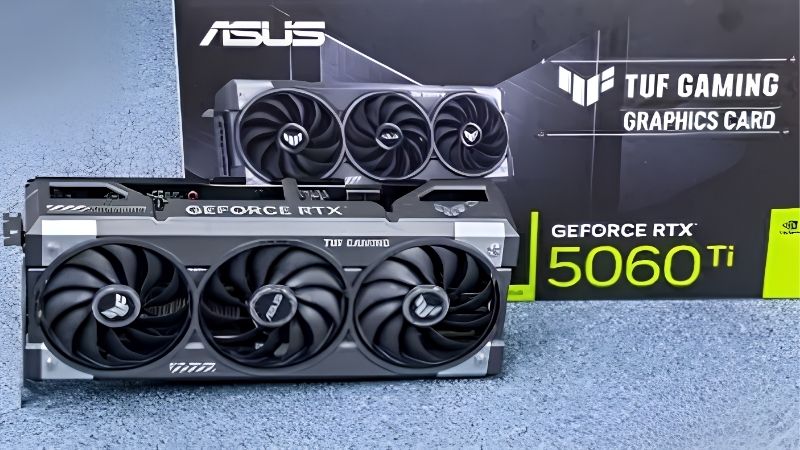
The Alternative: RTX 5060 Ti 16GB
The card that resolves this dilemma for many readers is the RTX 5060 Ti 16GB at $429: 4070-class performance, double the 5060’s VRAM, DLSS 4, a warranty, and a 180W draw.
It costs more than either option here, but it deletes both of their weaknesses at once — check its current Amazon price before settling this comparison.
See More:
- Nvidia Reflex low latency
- RTX 4070 vs 5060 Ti
- Zephyr RTX 4070
- RTX 3080 Ti price
- Nvidia RTX 2060 Super
Conclusion
The RTX 5060 vs RTX 4070 matchup ends in a split decision with clear lines: the 4070’s 20 to 30 percent raster lead and 12GB buffer make it the better 1440p card, while the 5060’s $299 price, 145W draw, warranty, and DLSS 4 make it the smarter 1080p and prebuilt upgrade. Frames per dollar, they are virtually tied — so buy for your resolution and your timeline. With the H200 export approval tightening supply and component prices climbing, this segment rewards decisiveness. Settle your side of the RTX 5060 vs RTX 4070 question, then check today’s Amazon listings and lock in your card at a fair price.
Frequently Asked Questions
What is the best rtx 5060 rtx 4070 in 2026?
The best rtx 5060 rtx 4070 depends on your budget and how you plan to use it. The options compared above are our top-rated picks based on real customer ratings, build quality, and overall value — start with the highest-rated model that fits your budget.
How much should I expect to spend on a rtx 5060 rtx 4070?
Prices vary by brand and features. Budget options cover the essentials, while mid-range and premium models add durability, performance, and extra features. Compare the prices in the list above to find the best value for your needs.
What should I look for when buying a rtx 5060 rtx 4070?
Focus on what matters most for your use case — build quality, compatibility, performance, warranty, and verified customer reviews. Every pick above is selected to balance these factors.
Are budget rtx 5060 rtx 4070 options worth it?
Yes. For most people a well-reviewed budget or mid-range rtx 5060 rtx 4070 delivers excellent value. You only need to spend more if you specifically require premium materials or top-tier performance.
How did we choose these rtx 5060 rtx 4070 picks?
We compare current Amazon ratings, review counts, key features, and price to surface the options with the best real-world value. The list is refreshed as ratings and availability change.










Write Your Review
No reviews yet. Be the first to share your experience!