
- Top Pick: ASUS Prime GeForce RTX 5060 Ti 16GB GDDR7 Gaming Graphics Card
- Best Value: ASUS Dual GeForce RTX 5060 Ti 16GB GDDR7 OC Edition Gaming Graphics Card
- Premium Choice: GIGABYTE GeForce RTX 5060 Ti WINDFORCE OC 8G Graphics Card, 8GB 128-bit GDDR7, PCIe 5.0, WINDFORCE Cooling System, GV-N506TWF2OC-8GD Video Card


Prime
Editor's Pick
NVIDIA GeForce RTX 3060 Ti Founders Edition 8GB GDDR6 PCI Express 4.0 Graphics Card (Renewed)
3060 Ti vs 5060 is a matchup that pits a beloved older workhorse against Nvidia’s newest budget card, and the result is more interesting than the two-generation gap suggests. The 3060 Ti still holds respectable raw power, while the 5060 answers with modern efficiency and DLSS 4. This comparison digs into rasterization, features, power and pricing so you can decide whether the newer card is a genuine upgrade or just a sidegrade in a shinier box.
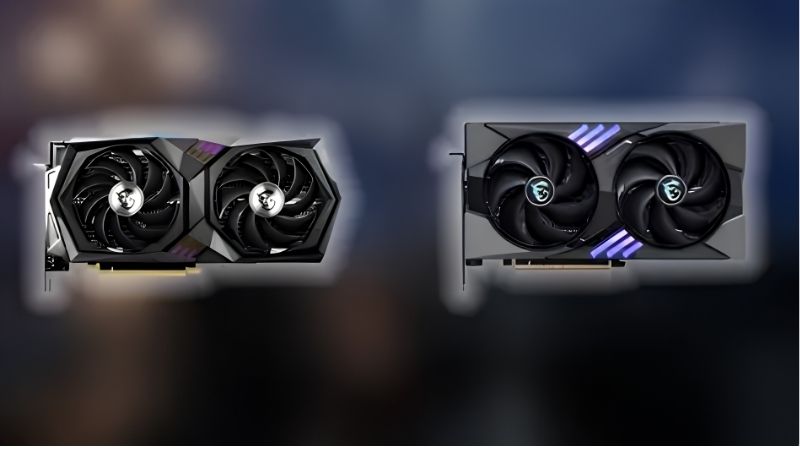
The Quick Verdict for the 3060 Ti vs 5060 Matchup
The short answer splits along two lines: whether you already own a 3060 Ti, or whether you are buying fresh. Those are very different questions with different best answers.
As an Amazon Associate we earn from qualifying purchases at no extra cost to you.




Best Pick for a Brand-New Build
If you are buying new today, the RTX 5060 is the clear choice. It is a current card with modern architecture, better efficiency and full DLSS 4 support, and it is sold new with warranty at a competitive price.
The 3060 Ti is no longer produced, so buying one now means the used market, with all the uncertainty that brings. For a fresh build, the newer card is simply the more sensible, lower-risk purchase.
Unless you find a used 3060 Ti at a genuinely unbeatable price, the 5060 is the default recommendation for anyone starting from scratch. Warranty is a bigger deal than many first-time builders assume. A new card comes with coverage if something fails, while a used 3060 Ti offers none, and replacing a dead GPU in a tight market can cost far more than the savings you made buying used.
Best Answer for Current 3060 Ti Owners
If you already own a 3060 Ti, the upgrade case is weaker than the model numbers imply. In pure rasterization the two cards are closer than a two-generation jump would suggest, so the raw frame-rate gain alone may not justify the spend.
The real reasons to upgrade are DLSS 4 frame generation and far better efficiency, not a huge leap in native performance. If those features matter to you, the move makes sense; if not, your 3060 Ti still has life left.
For many owners, the smarter play is to hold the 3060 Ti and save toward a bigger jump later. This is a lateral-plus upgrade, not a transformation. A useful rule of thumb is to skip upgrades smaller than a clear generational leap. Moving from a 3060 Ti to a 5060 rarely clears that bar on native performance alone, which is why patient owners often wait for a 70-class card instead.
When Either Card Makes Sense
There is a scenario where both are valid. A 1080p gamer who wants the lowest possible cost might grab a cheap used 3060 Ti, while one who values features and warranty picks the new 5060.
Both cards comfortably handle 1080p gaming today, so neither is a bad performer. The decision is really about risk, features and how much you are willing to spend.
Set your priorities first, then let the live prices of a new 5060 and a used 3060 Ti settle the tie. Both can be right for the right buyer. Keep your monitor in mind as well. If a 1440p or high-refresh upgrade is coming, that shifts the calculation toward a newer, more capable card rather than squeezing more life out of an aging 3060 Ti.
3060 Ti vs 5060 Specs and Benchmark Comparison
The spec sheets reveal an unusual dynamic: the older card actually has more shader cores and a wider memory bus, while the newer one wins on efficiency and features. The table shows why this fight is closer than expected.
Core Specs and Architecture Side by Side
Notice that the 3060 Ti leads on raw core count and bus width, a reminder that newer does not automatically mean more powerful in every metric. The 5060 counters with a new architecture and much lower power draw.
| Spec | RTX 3060 Ti | RTX 5060 |
|---|---|---|
| Architecture | Ampere | Blackwell |
| CUDA cores | 4,864 | 3,840 |
| Memory | 8GB GDDR6 | 8GB GDDR7 |
| Memory bus | 256-bit | 128-bit |
| Typical board power | ~200W | ~145W |
| Upscaling / FG | DLSS 2 (no frame gen) | DLSS 4 (Multi FG) |
| Launch price | $399 (2020) | $299 (2025) |
The story here is efficiency and features versus raw legacy horsepower. The 5060 does more with less power and far newer software, while the 3060 Ti leans on the brute-force resources of its era.
Rasterization Performance at 1080p
In native 1080p rasterization, the two cards are remarkably close, often trading places depending on the title. The 3060 Ti’s extra cores and wider bus keep it competitive despite its age, which is a testament to how strong it was at launch.
That closeness is the crux of the upgrade debate. A current 3060 Ti owner expecting a dramatic native speed boost from the 5060 will likely be underwhelmed by the raw numbers alone.
For a new buyer, though, the practical point is different: the 5060 matches that proven performance while adding modern features, which makes it the better forward-looking choice. It is also worth watching one-percent lows rather than just averages. The 5060’s newer architecture can deliver slightly steadier frame pacing in some modern titles, which feels smoother in motion even when the average frame rate looks nearly identical.
DLSS 4 vs DLSS 2 and the Feature Gap
This is where the generation gap actually shows. The 5060 supports DLSS 4 Multi Frame Generation, which can dramatically raise on-screen frame rates in supported games, while the 3060 Ti is limited to the older DLSS 2 with no frame generation.
In games that support it, that difference can make the 5060 feel far faster than the raw benchmarks suggest, even where native performance is similar. It is the single biggest reason to favor the newer card.
If you play modern titles that lean on frame generation, the feature gap alone can justify the 5060. If your library is older or competitive titles that do not use it, the advantage shrinks considerably. Image quality is part of this too. DLSS 4 has advanced well beyond the older DLSS 2 the 3060 Ti runs, so even standard upscaling tends to look cleaner on the 5060, which is an easy quality win in supported games.
Deep Dive Face-Off: Efficiency, Longevity and Everyday Use
Beyond frame rates, these cards differ sharply in power use and long-term outlook. Here is how they compare on the practical realities of ownership.
Power Draw and Running Costs
The efficiency gap is large. The 3060 Ti draws around 200W, while the 5060 does similar work at roughly 145W, a meaningful reduction that translates into less heat and a quieter system.
Lower power also means the 5060 fits comfortably on a modest supply and in a small case, whereas the older card asks a bit more of both. Over years of heavy use, that efficiency shaves a little off your electricity bill too.
For anyone building a compact, quiet or power-conscious system, the 5060’s efficiency is a genuine, everyday advantage that the raw benchmarks do not capture. Thermals follow from that efficiency. A cooler-running card puts less strain on your case airflow and tends to keep fan noise down, which makes the 5060 the more pleasant card to live with during long sessions.
Longevity, Drivers and Support
As a current-generation card, the 5060 sits at the start of its support life and will receive the newest driver optimizations and features going forward. The 3060 Ti, while still supported, is nearer the tail of its curve.
That matters for future games, which increasingly assume modern features. A newer card is more likely to stay comfortable as software demands rise over the next few years.
Buying used also carries the usual risks: no warranty, unknown history and potential wear. A new 5060 avoids all of that, which is worth factoring into the value comparison.
Pros and Cons of the 3060 Ti and the 5060
Here is the honest ledger for the 3060 Ti vs 5060 decision, based on how each card performs and what it costs to own.
RTX 3060 Ti — Pros: strong raw raster for its class, more CUDA cores, wider memory bus, often cheap on the used market. Cons: higher power draw, no frame generation, older DLSS 2, no warranty when bought used, nearer end of its support life.
RTX 5060 — Pros: DLSS 4 Multi Frame Generation, much better efficiency, current drivers and long support runway, sold new with warranty. Cons: fewer cores and a narrower bus than the 3060 Ti, only 8GB VRAM, modest native gain over the older card.
Should You Upgrade Now or Hold Your 3060 Ti?
Timing is central to this particular decision, because the market is pushing prices up and that changes the math on both a new 5060 and a used 3060 Ti.
Why Prices Are Working Against Upgraders
Across GPUs and full systems, prices have trended upward rather than falling, and memory is a big reason as cards compete for tight DRAM supply. That keeps new card prices firm and even props up used prices for older models like the 3060 Ti.
For an existing owner, that has an upside: your current card holds its resale value better in a tight market. It also means a new 5060 is unlikely to get dramatically cheaper in the near term.
The practical move is to treat a fair price as a good price. If a new 5060 sits near its launch figure, that is a solid deal by current standards, and waiting may not improve it.
Why Meaningful Relief Is Still Far Off
There is faint good news. Prices have at least stopped climbing as steeply as they did in late 2025, and parts of the hardware market have seen a stretch of relative stability, even as makers warn volatility is not finished.
New supply is being built, with expanded DDR5 sourcing and new memory fabs under construction. The catch is timing, since those facilities largely come online around 2027 to 2028, so real relief is years away.
That means holding out for a price crash is not a reliable plan. If the feature and efficiency gains of the 5060 appeal to you and the price is fair, buying now is a defensible choice.
The Alternative: A Third Option to Consider
If the 5060 feels like too small a jump from a 3060 Ti, look one tier up. A 5060 Ti, especially the 16GB version, offers a more convincing upgrade with extra memory and performance for a bit more money.
Alternatively, if budget is tight, simply keeping the 3060 Ti and saving toward a larger future leap is a perfectly rational choice in a pricey market.
The aim is to make sure any upgrade delivers a gain you will actually feel. There is usually a smarter path than a lateral move if the numbers are close.
See more:
- Nvidia gear store
- Nvidia number of employees
- Nvidia Jetson Xavier Developer Kit
- GeForce graphics driver
Final Verdict and Recommendation
In the 3060 Ti vs 5060 decision, buy the RTX 5060 if you are building new, since it matches the older card in raster while adding DLSS 4, better efficiency, current drivers and a warranty. If you already own a 3060 Ti, the upgrade is only worthwhile for the frame-generation and efficiency gains, not for a big native speed boost, so hold the card if those features do not move you. Both handle 1080p gaming well, which makes this a question of features, efficiency and risk rather than raw power. Check the current price of a new 5060 against used 3060 Ti listings through the link below before you decide.
Frequently Asked Questions
Is the RTX 5060 actually faster than the RTX 3060 Ti?
Yes, but not dramatically in raw rasterised terms. The 5060 leads in most titles thanks to faster GDDR7 memory and architectural improvements, though the 3060 Ti’s wider 256-bit bus keeps it competitive in some memory heavy scenarios. The real gap opens up once DLSS 4 features are used.
Do they have the same amount of VRAM?
Both ship with 8GB, which is the disappointing part of this comparison. Upgrading from a 3060 Ti to a 5060 does nothing for memory capacity, so any stuttering you already experience from a full frame buffer will persist. Only a 16GB class card resolves that limitation.
What does the 5060 offer that the 3060 Ti cannot?
DLSS 4 multi frame generation, NVIDIA Smooth Motion, improved ray tracing hardware, the ninth generation NVENC encoder with AV1 support, and much lower power draw at 145 watts against 200 watts. Ampere cards get the DLSS 4 upscaler but no frame generation of any kind.
Is the upgrade worth the money?
For most 3060 Ti owners, no. The rasterised gain is modest and the memory capacity is unchanged, so you are largely buying feature access and efficiency. If your 3060 Ti is healthy, hold it and save toward a 16GB card, which represents a genuine generational step rather than a lateral move.
Would the 5060 lower my power bill and case temperatures?
Somewhat. Dropping from a 200 watt card to a 145 watt card reduces heat output noticeably, which helps in small cases and quiet builds and lets a marginal power supply breathe. It is a nice secondary benefit but rarely enough to justify the purchase on its own.

Write Your Review
No reviews yet. Be the first to share your experience!