
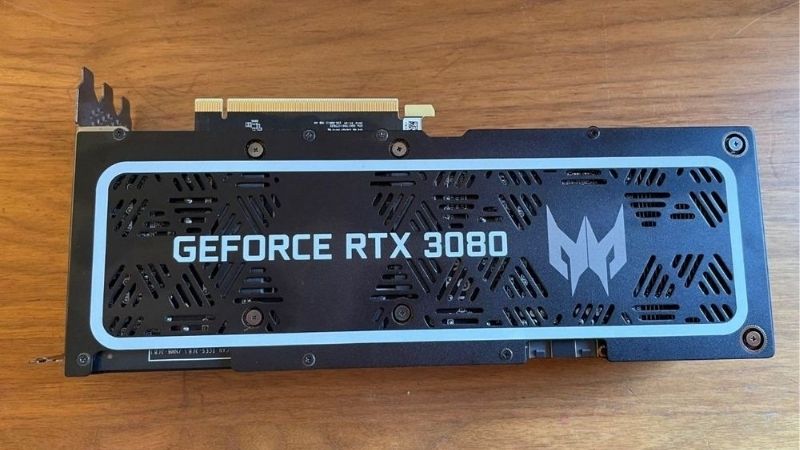
- Top Pick: Dell Gaming OEM Nvidia GeForce RTX 3080 10GB GDDR6X 320-bit 19Gbps PCIe 4.0 x16 Graphics Video Card 0Y5K9F (Renewed)
- Best Value: ASUS TUF Gaming NVIDIA GeForce RTX 3080 V2 OC Edition Graphics Card (PCIe 4.0, 10GB GDDR6X, LHR, HDMI 2.1, DisplayPort 1.4a, Dual Ball Fan Bearings, Military-Grade Certification, GPU Tweak II)
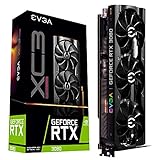
- Premium Choice: EVGA GeForce RTX 3080 FTW3 Ultra Gaming, 10G-P5-3897-KL, 10GB GDDR6X, iCX3 Technology, ARGB LED, Metal Backplate, LHR (Renewed)
Top 3080 Rtx Legend Reviewed Five Picks for 2026
Here are our current top 3080 rtx legend reviewed five picks, compared on real Amazon owner reviews, price, and features. Live prices update below.

Dropped $218.01

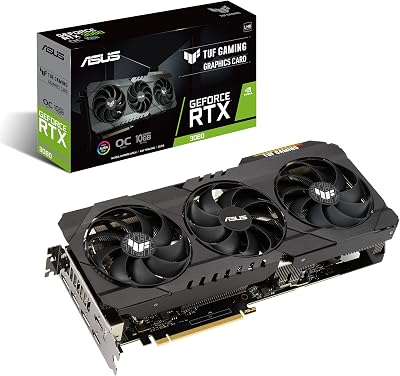


The 3080 rtx occupies a place few graphics cards ever earn: five years after its September 2020 launch at $699, it remains one of the most searched, most traded, and most fondly reviewed GPUs on the internet. It headlined the greatest generational leap in modern Nvidia history, survived the crypto shortage that made it mythical, and powered millions of gaming PCs through an entire console generation. This retrospective review evaluates the card as a 2026 purchase and a 2026 keeper: what its Ampere silicon still delivers in current titles, what five years of owner reports reveal about living with it, what fair pricing looks like today, and exactly which buyers it still serves versus which it quietly fails.
As an Amazon Associate we earn from qualifying purchases at no extra cost to you. Product prices and availability are accurate as of the date shown and are subject to change.




The RTX 3080 in 2026: What the Silicon Still Delivers
Strip away the nostalgia and the hardware remains formidable on paper: the GA102 die with 8,704 CUDA cores, a wide 320-bit bus pushing 760GB/s from 10GB of GDDR6X, and second-generation RT cores — specifications that outmuscle several newer mid-range cards in raw terms. The 2026 question is how that 2020 muscle maps onto 2026 games, and the answer splits cleanly by resolution and by one number: ten.
Performance Today: 1080p Champion, 1440p Veteran
At 1080p, the 3080 remains comfortably overqualified: 100–140 fps on high settings in current AAA releases and well past 200 fps in esports staples, with DLSS upscaling support continuing across new titles. Nothing about full-HD gaming stresses this card, and it will stay that way for years.
At 1440p, it has aged from ruler to capable veteran: 75–100 fps on high settings in modern AAA aggregates, with DLSS Quality adding 20–30% headroom where supported. The compromises arrive at the margins — maxed texture packs, heavy ray tracing, the densest open worlds — where settings management becomes a habit rather than an exception.
At 4K, honesty rules: the 2020 “4K flagship” is a 2026 4K/45–55 card that depends on upscaling for smooth play. Owners with UHD ambitions have outgrown it; the card has not failed, the target moved.
The 10GB Question That Defines Its Aging
The 3080’s compute aged gracefully; its memory buffer set the clock. Modern releases allocating 9–11GB at 1440p high textures push the 10GB card into texture streaming compromises — the stutter and pop-in that owner threads describe is memory pressure, not silicon weakness, and dropping textures one notch resolves it almost universally.
The rarer 12GB variant deserves its asterisk: the wider buffer meaningfully extends settings lifespan in current titles and commands a justified $30–$60 premium on the used market. Among 3080s, it is the one to hunt.
System pairing notes complete the performance picture: at the frame rates the card still produces, a 2020-era CPU becomes the bottleneck before the GPU does in many modern titles, and owners report meaningful 1% low improvements from platform refreshes alone. Likewise, 32GB of system RAM has become the sensible companion as titles offload what the 10GB buffer cannot hold — the card rewards a balanced machine more visibly with each passing year.
What It Never Got: The Feature Gap, Itemized
Ampere predates the frame-generation era entirely: the 3080 upscales via DLSS but cannot generate frames — no DLSS 3, no Multi Frame Generation, ever. It also lacks AV1 encoding (decode only), carries first-generation upscaler hardware that runs newer models slower, and its second-generation RT cores deliver roughly half the per-tier throughput of current silicon.
None of this is a flaw; it is a timestamp. The gap matters most to streamers (AV1) and high-refresh single-player gamers (frame generation), and barely at all to raster-focused and esports players — the cohorts for whom the card remains genuinely complete.
Five Years of Owners: The Verdict from the Field
Few GPUs have a review dataset this deep: launch buyers updating their reviews years later, shortage-era buyers who paid double, and a continuous stream of used-market adopters writing fresh impressions in 2025–2026. Synthesizing the 4–5 star themes against the 2–3 star complaints produces one of the clearest ownership pictures in PC hardware — and a pros-and-cons ledger with half a decade of evidence behind it.
The Five-Star Record: Reliability as Identity
The dominant long-term theme is endurance: reviews updated in 2025–2026 overwhelmingly confirm units still running daily after five years, and Ampere’s field reliability record ranks among the strongest of any GPU generation. “Still going strong” is practically the card’s unofficial slogan across thousands of reports.
Recent used-market buyers add the value chorus: flagship-class build quality, premium coolers from the ASUS TUF/Strix, MSI Trio, and EVGA FTW3 lines, and raw 1440p performance at $280–$320 that no new card matches per dollar. First-time builders specifically praise inheriting 2020’s best engineering at 2026’s budget prices.
The Two-Star Record: Heat, Hunger, and the Ceiling
The critical themes are equally consistent. First: power and heat — 320W demands a quality 750W PSU, warms small rooms in summer, and early transient spikes tripped marginal supplies, a complaint that followed the card its whole life. Second: the VRAM ceiling, reported with increasing frequency since 2024 as titles crossed the 10GB line at QHD.
Third, used-market specific: tired thermal paste and pads on five-year-old units, restoring launch thermals only after a $15 repaste — fixable, but a recurring arrival surprise. Notably absent at scale: outright failure complaints. The card’s problems are the problems of age and appetite, not defect.
Pros and Cons of the 3080 RTX in 2026
Pros: unmatched raw frames per dollar at $280–$320 used; wide-bus performance that still beats newer budget cards in rasterization; five-year reliability record few products of any kind can match; flagship-class coolers throughout the used supply; DLSS upscaling support continuing; perfect 1080p and strong 1440p service.
Cons: the 10GB ceiling tightens with every release cycle; no frame generation or AV1, permanently; 320W of heat and PSU demand in an era of 200W rivals; virtually all units sold without warranty; thermal refresh effectively mandatory on arrival; resale value faces only one long-term direction.
Buying or Holding in 2026: Prices, Forces, and the Fit
Whether arriving as a buyer or deciding as an owner, two market stories frame the 3080’s 2026 economics: the United States approving Nvidia’s H200 AI chip exports to China, and the sustained rise in laptop and component prices. Both explain the card’s strangest current property — a five-year-old GPU whose price refuses to fall.
Fair Pricing and the Firm Floor
The fair-value map: $250–$290 for clean mainstream-cooler 10GB units, $290–$330 for premium coolers, $30–$60 more for the 12GB variant — and skepticism below $200, where mining history, repairs, and the scam taxonomy concentrate. Above $350, the money approaches a used RTX 4070 with 12GB, frame generation, and possible warranty remainder, and the 3080’s case collapses.
That floor is firmer than history suggests: H200-driven AI demand tightens new-GPU supply and drifts street prices above MSRP, squeezing budget buyers backward into used listings, while component inflation — memory costs rising for consecutive quarters, laptop prices already following — anchors used values to expensive new alternatives. The fire-sale era keeps not arriving.
Undervolting deserves a mention as the community’s favorite longevity trick: a thirty-minute tuning session typically trims 40–60W from the card’s appetite at a 2–4% performance cost, easing the PSU demand and summer heat that dominate the complaint record. For 2026 adopters, it is the closest thing to a free generational efficiency update the hardware allows.
Who It Still Serves — and Who It Fails
The card’s 2026 constituency is specific and real: 1080p players wanting maximum frames for minimum outlay, 1440p gamers comfortable with occasional settings management, raster-focused and esports libraries indifferent to RT and frame generation, and budget builders who enjoy vetting used hardware.
It fails, equally specifically: 4K aspirants, streamers needing AV1, high-refresh single-player gamers whose panels reward frame multiplication, and anyone whose peace of mind prices a warranty above $50. Those buyers should put $549 toward a new RTX 5070 and close the tab without regret.
The variant market adds one more lever: premium-cooler units hold value best and sell fastest, mainstream duals trade at the band’s middle, and blower designs anchor the bottom for thermal reasons buyers should respect. Sellers listing premium models with original boxes and receipts consistently close at the band’s top — provenance is worth real dollars in both directions of this trade.
The Timing Read for Both Sides
Buyers: fair listings clear in days in this climate, so set the target — $280 for a premium 10GB unit — and execute on contact rather than waiting for a discount era the supply chain has postponed indefinitely. Owners: the firm floor is a gift with an expiration; each VRAM-hungry release cycle erodes the resale value that funds an upgrade, and selling into strength beats drifting past it.
Either way, anchor to live numbers: check current RTX 3080 listings on Amazon — including Renewed units with their 90-day guarantee — and let today’s real prices cast the vote.
See More:
Conclusion
The 3080 rtx earns its retrospective verdict: five years on, it remains a genuinely great graphics card inside a clearly drawn boundary — unbeatable raw value at $280–$320 for 1080p and capable 1440p gaming, carried by a reliability record few products ever compile, and limited by the 10GB ceiling, the missing frame-generation era, and 320W of vintage appetite. It is the right purchase for the value hunter who knows the boundary and the wrong one for everyone outside it, and 2026’s H200-firmed pricing rewards decisiveness on both sides of the trade. Tap through to check today’s RTX 3080 prices on Amazon, weigh them against the fair-value map above, and let the legend serve one more build — or fund your next one — while the market still pays it respect.
Frequently Asked Questions
What is the best 3080 rtx in 2026?
The best 3080 rtx depends on your budget and how you plan to use it. The options compared above are our top-rated picks based on real customer ratings, build quality, and overall value — start with the highest-rated model that fits your budget.
How much should I expect to spend on a 3080 rtx?
Prices vary by brand and features. Budget options cover the essentials, while mid-range and premium models add durability, performance, and extra features. Compare the prices in the list above to find the best value for your needs.
What should I look for when buying a 3080 rtx?
Focus on what matters most for your use case — build quality, compatibility, performance, warranty, and verified customer reviews. Every pick above is selected to balance these factors.
Are budget 3080 rtx options worth it?
Yes. For most people a well-reviewed budget or mid-range 3080 rtx delivers excellent value. You only need to spend more if you specifically require premium materials or top-tier performance.
How did we choose these 3080 rtx picks?
We compare current Amazon ratings, review counts, key features, and price to surface the options with the best real-world value. The list is refreshed as ratings and availability change.


Write Your Review
No reviews yet. Be the first to share your experience!