
- Top Pick: GIGABYTE GeForce RTX 5070 Ti Gaming OC 16G Graphics Card, 16GB 256-bit GDDR7, PCIe 5.0, WINDFORCE Cooling System, GV-N507TGAMING OC-16GD Video Card
- Best Value: GIGABYTE GeForce RTX 5080 Gaming OC 16G Graphics Card, WINDFORCE Cooling System, 16GB 256-bit GDDR7, GV-N5080GAMING OC-16GD Video Card
- Premium Choice: ASUS TUF Gaming NVIDIA GeForce RTX 4070 Ti OC Edition Gaming Graphics Card (PCIe 4.0, 12GB GDDR6X, HDMI 2.1a, DisplayPort 1.4a), 3 Year Warranty
Top Rtx 5080 4070 One Tier Picks for 2026
Here are our current top rtx 5080 4070 one tier picks, compared on real Amazon owner reviews, price, and features. Live prices update below.


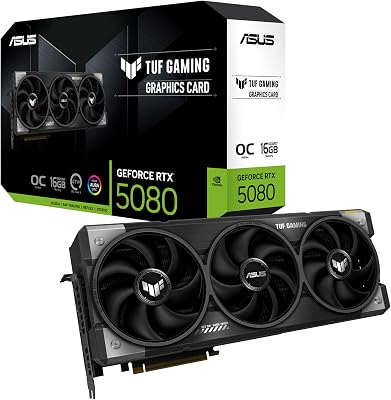


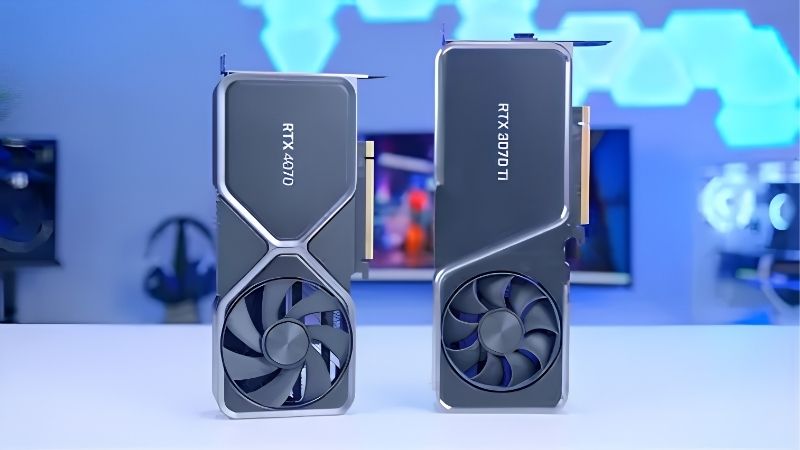
5080 vs 4070 ti is the one-generation, one-tier jump question — and it lands on two distinct desks. The first belongs to the large base of RTX 4070 Ti owners who bought Ada’s $799 upper-midrange card in 2023 and now watch the $999 Blackwell 5080 post numbers 40–50% higher with features their card will never run. The second belongs to buyers weighing a discounted used 4070 Ti against the new 5080 right now. Both desks need the same data set: the measured gap, the 12GB-versus-16GB divide that has aged the older card faster than its compute, the resale math that prices the jump, and the 2026 market forces compressing every window involved. This comparison serves both desks — and renders a different verdict at each.
As an Amazon Associate we earn from qualifying purchases at no extra cost to you.




The Quick Verdict: Two Desks, Two Answers
The condensed answers: for owners, the upgrade is worth it if you game at 4K or high-refresh 1440p and felt the 12GB squeeze this year — selling the 4070 Ti into its firm $520–$600 used band compresses the net jump to roughly $420–$480 for 40–50% more performance, 16GB of GDDR7, and DLSS 4 Multi Frame Generation; 1440p/144Hz players comfortable at high settings can hold one more cycle. For buyers choosing today, the answer is shorter: at the live spread — used 4070 Ti at $520–$600 against the new 5080 at $999 — the smarter purchase is usually neither extreme but the $749 RTX 5070 Ti, unless 4K ambitions justify the full card or a deep sub-$500 listing revives the old one. Check all three live Amazon prices before deciding; the spreads run this verdict.
The Measured Gap: What One Tier and One Generation Bought
The hardware delta is substantial in every column: 10,752 Blackwell CUDA cores against 7,680 Ada cores, 16GB of GDDR7 at 960GB/s against 12GB of GDDR6X at 504GB/s — capacity up a third, bandwidth nearly doubled — and fourth-generation RT cores against third. Aggregate benchmarks convert it into a 40–50% lead at 1440p that stretches toward 60% at 4K and beyond it in path-traced workloads.
The feature column compounds: DLSS 4 Multi Frame Generation presenting up to four frames per render against a permanent 2x ceiling, newer dual AV1 encoders, FP4 throughput for local AI tools, and the front-of-queue driver trajectory that keeps widening the measured gap quarter by quarter.
The 12GB Clock: Why the 4070 Ti Aged Ahead of Schedule
The older card’s compute remains genuinely strong — 130–155 fps at 1440p ultra is no one’s bottleneck — but its 12GB buffer set a faster clock than its silicon deserved: 2025–2026 releases allocating 9–11GB at QHD high textures already press it, frame-time spikes appear exactly where averages stay flat, and 4K with maxed textures has moved from stretch to supervision. Owner threads describe the symptom set in identical language across titles.
The 5080’s 16GB at 960GB/s resets that clock entirely: every current allocation clears with margin, overflow scenarios drain gracefully, and the buffer outlasts the realistic ownership window. For owners, escaping the clock — not the average-fps gain — is frequently the upgrade’s honest motive.
Specs Comparison Table
The jump, quantified line by line.
| Specification | RTX 4070 Ti | RTX 5080 |
|---|---|---|
| Architecture | Ada Lovelace (AD104, 2023) | Blackwell (GB203, 2025) |
| CUDA Cores | 7,680 | 10,752 |
| VRAM | 12GB GDDR6X | 16GB GDDR7 |
| Memory Bandwidth | 504 GB/s | 960 GB/s |
| TGP / PSU | 285W / 650–750W | 360W / 850W |
| Frame Generation | DLSS 3 (2x) | DLSS 4 MFG (up to 4x) |
| Performance | ~100% (baseline) | ~140–160% |
| Launch MSRP | $799 (2023) | $999 |
| 2026 Status | Used market, $520–$600 | New, in retail |
Deep Dive: The Jump as Both Desks Experience It
The same 40–50% gap reads differently from each desk, so this section runs it three ways: the resolution map that decides where the jump displays, the feature divide that widens across the ownership window, and the platform-and-resale arithmetic that converts sticker prices into each desk’s real numbers.
The Resolution Map: Where 40–50% Becomes Visible
At 4K, the jump is categorical: 70–100 fps native ultra against 45–60 with upscaling dependence — the 5080 is a residence at the resolution the 4070 Ti can only visit, and the bandwidth doubling is most of the reason. Path tracing stretches the gap past 60% as the RT-core generations compound.
At 1440p, the jump is real but conditional: 150–190 fps against 130–155 at ultra matters on 240Hz glass and disappears on 144Hz panels the older card already saturates. MFG complicates the reading in the new card’s favor — presented rates past 200 fps in supported titles versus the 2x ceiling — but the native floor decides competitive play, where both cards already exceed most panels.
The map’s verdict: 4K and 240Hz QHD owners see the entire jump; 144Hz QHD owners see the VRAM relief and the feature set, not the frames. Both desks should locate their panel before their wallet.
The Widening Divide: Features Across the Window
Snapshot comparisons undersell generational jumps, and this one widens on schedule: Blackwell sits first in Nvidia’s optimization queue and has gained measurable performance through 2025–2026 driver branches while Ada settles into maintenance; MFG’s supported library grows monthly against a hardware-permanent 2x ceiling; and the transformer upscaler runs fastest on the newer Tensor generation. The 40–50% measured today is the jump’s minimum, not its average across an ownership window.
For the owner’s desk, that trajectory argues for jumping once and early rather than late; for the buyer’s desk, it prices the used card’s discount honestly — a gap that widens is worth less savings than a gap that holds.
Platform and Resale: Each Desk’s Real Arithmetic
The owner’s math: sell the 4070 Ti into its firm $520–$600 band — premium coolers and warranty remainder close at the top — buy at $999–$1,050, and the net jump lands at $420–$480; amortized over a four-year hold, roughly $110–$120 per year for a performance class, the VRAM reset, and the feature stack. The platform audit adds its line: 360W wants an 850W PSU, a $100–$130 contingency for builds running 650–750W units.
The buyer’s math runs the spread cold: $520–$600 used buys yesterday’s tier with the 12GB clock already running; $999 buys the new tier outright; and the $749 5070 Ti between them buys 16GB, MFG, and performance within 15% of the big card — the spread’s quiet winner whenever neither extreme’s specific case applies.
2026 Market Forces: The Spreads Behind Both Verdicts
Two stories set every number above: the United States approving Nvidia’s H200 AI chip exports to China, and the sustained rise in laptop and component prices. One drifts the new card upward; the other firms the used band — and both compress the windows each desk is working with.
H200 Demand and the New Card’s Drift
The H200 approval channels enormous demand into Nvidia’s leading-edge wafer and GDDR7 supply — the 5080’s exact pipeline. The recurring post-surge pattern drifts street prices 5–15% above MSRP within a quarter or two; on a $999 card that is $50–$150, and 2026’s MSRP listings already behave like events. For the owner’s desk, drift directly inflates the net-jump math; for the buyer’s desk, it widens the spread the 5070 Ti quietly wins.
The instruction both desks share: a $999–$1,050 contact is the action zone, not the opening of negotiations with the market.
Component Inflation and the Used Band’s Firmness
Memory costs rising for consecutive quarters — laptop prices already following — anchor the 4070 Ti’s used band to expensive new alternatives, which is the owner’s quiet gift: resale value that history says should be eroding is instead holding at $520–$600, funding the jump at today’s favorable spread. The gift expires on schedule — each VRAM-hungry release cycle and each Blackwell price drift presses the band’s ceiling down.
Tracking shows the direction: the band’s top has softened two quarters running as the new 5070 Ti’s gravity pulls buyers upward. Selling into firmness beats drifting past it.
The Windows, Stated Plainly
The owner’s window: sell while the band holds and buy on MSRP contact — the spread that makes the jump cost $420–$480 is a market condition, not a constant. The buyer’s window: a sub-$500 verified 4070 Ti revives the used case for 1440p builds; everything between $500 and the 5070 Ti’s live price belongs to the new middle card; and 4K ambitions alone justify the full $999.
Anchor both windows to today: check the RTX 5080’s current Amazon price, the 5070 Ti’s beside it, and the used band’s live sold listings — the three numbers that finish this comparison.
Final Verdict: Pros, Cons, and the Card Between
Two desks, two verdicts, one honest ledger — and the middle card both desks keep meeting on the way to their answer.
Pros and Cons of Each Card
RTX 5080 — Pros: 40–50% faster with true 4K residence; 16GB GDDR7 at 960GB/s resets the VRAM clock entirely; DLSS 4 MFG and the widening Blackwell trajectory; one purchase covers a full ownership window; warranty replaces a three-year-old card’s bare ledger. Cons: $999 with structural drift above it; 360W wants an 850W platform; the full jump displays only on 4K and 240Hz panels.
RTX 4070 Ti — Pros: still a 130–155 fps QHD performer; firm resale band funds the owner’s jump; sub-$500 listings remain genuine 1440p value; 285W runs on platforms the big card outgrows. Cons: the 12GB clock is already audible in current releases; 2x frame-generation ceiling is permanent; maintenance-mode trajectory widens the gap each quarter; used-market ledger applies to every 2026 purchase.
The Card Between: RTX 5070 Ti
Both desks keep arriving here, so name it plainly: $749 buys 16GB of GDDR7, the complete DLSS 4 stack, performance within 15% of the 5080, and a 300W platform demand ordinary builds absorb — the VRAM reset and the feature stack at three-quarters of the big card’s money. For owners whose panels stop at 165Hz QHD, it is the efficient landing; for buyers staring at the spread, it is usually the answer.
Its presence disciplines the whole comparison: the 5080 must earn its last $250 with 4K or 240Hz glass, and the used 4070 Ti must price below $500 to stay in the room at all.
Who Should Jump, Buy, or Hold
Owners: jump to the 5080 if 4K or 240Hz QHD is your reality and the 12GB squeeze found you this year — the resale-funded spread makes 2026 the favorable window; hold at 144Hz QHD high settings, where the old card still clears the bar. Buyers: take the 5070 Ti as the spread’s standing answer, the 5080 for genuine 4K plans, and the used 4070 Ti only below $500, verified clean.
All three answers share one clock: the spreads that make them true are market conditions, and the market is moving.
See More:
Conclusion
The 5080 vs 4070 ti decision resolves desk by desk: owners with 4K or high-refresh ambitions should take the jump while the firm $520–$600 resale band compresses its net cost to $420–$480 — buying 40–50% more performance, a 16GB VRAM reset, and the DLSS 4 stack in one move — while 144Hz QHD players hold honestly, and buyers facing the raw spread usually find the $749 RTX 5070 Ti was the question’s real answer. The H200-driven drift above and the inflation-firmed band below define windows that reward decisiveness on every desk. Tap through to check the latest RTX 5080, RTX 5070 Ti, and used RTX 4070 Ti prices on Amazon, run your panel and your numbers against the map above, and make the jump — or the hold — the live spread actually endorses.
Frequently Asked Questions
What is the best 5080 4070 ti in 2026?
The best 5080 4070 ti depends on your budget and how you plan to use it. The options compared above are our top-rated picks based on real customer ratings, build quality, and overall value — start with the highest-rated model that fits your budget.
How much should I expect to spend on a 5080 4070 ti?
Prices vary by brand and features. Budget options cover the essentials, while mid-range and premium models add durability, performance, and extra features. Compare the prices in the list above to find the best value for your needs.
What should I look for when buying a 5080 4070 ti?
Focus on what matters most for your use case — build quality, compatibility, performance, warranty, and verified customer reviews. Every pick above is selected to balance these factors.
Are budget 5080 4070 ti options worth it?
Yes. For most people a well-reviewed budget or mid-range 5080 4070 ti delivers excellent value. You only need to spend more if you specifically require premium materials or top-tier performance.
How did we choose these 5080 4070 ti picks?
We compare current Amazon ratings, review counts, key features, and price to surface the options with the best real-world value. The list is refreshed as ratings and availability change.

Write Your Review
No reviews yet. Be the first to share your experience!