
- Top Pick: Lenovo Legion Tower 7i Gen 10 Gaming Desktop PC (2026 Model) – Intel Ultra 9 285K 24-Core, NVIDIA RTX 5090 32GB, 64GB RAM, 2TB NVMe SSD, 1200W PSU, Liquid Cooling, Windows 11 Pro
- Best Value: ASUS ROG Astral LC GeForce RTX 5090 32GB GDDR7 OC Edition Gaming Graphics Card
- Premium Choice: ASUS ROG Astral GeForce RTX 5090 32GB GDDR7 OC Edition Gaming Graphics Card
What PSU for RTX 5090 to choose is the first serious decision in any flagship build, because Nvidia’s top card pushes power demands higher than anything before it. With a 575-watt board power and sharp transient spikes, the 5090 punishes weak or undersized power supplies with crashes and shutdowns. Get the wattage and connector right, though, and you have a stable platform for years. This step-by-step guide cuts through the confusion with the exact numbers, the standard you need, and a clear shortlist of power supplies worth your money.
How Many Watts Your RTX 5090 Power Supply Needs
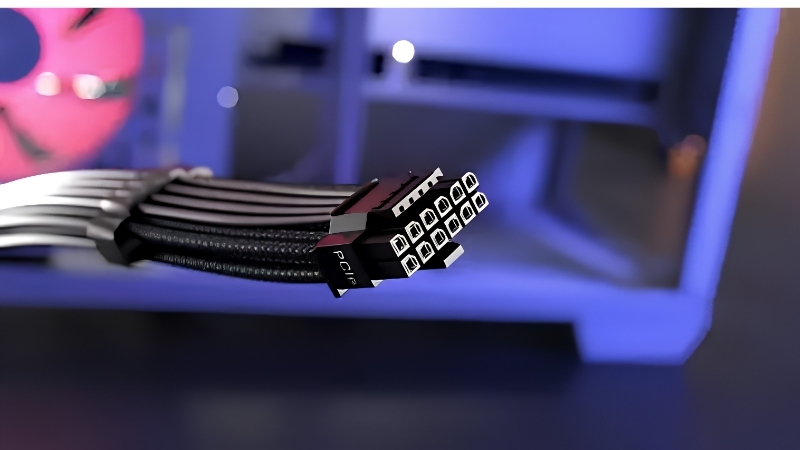
The short answer: plan for a 1000-watt power supply as the minimum, move up to 1200 watts with a top-tier CPU, and choose a modern ATX 3.1 unit with a native 16-pin (12V-2×6) cable. The RTX 5090 carries a 575-watt rated board power, noticeably higher than the previous generation, and that single number reshapes your whole PSU budget. The right wattage is about giving the card room to spike without tripping a safety shutdown, and it is the foundation everything else builds on.
As an Amazon Associate we earn from qualifying purchases at no extra cost to you.


The Recommended Wattage and Why
Nvidia recommends a 1000-watt power supply for the RTX 5090, and that is the figure most builders should treat as the minimum. The extra headroom over the card’s 575 watts absorbs transient spikes and powers the rest of your system without strain.
Pair the 5090 with a top-tier CPU and you should consider 1200 watts for comfortable margin. The well-reviewed 1000W and 1200W units linked in this guide are sized exactly for this card, so you are not left guessing.
Think about efficiency headroom as well as raw capacity. A power supply is happiest running around 50 to 70 percent of its rating, where it is quietest and coolest, so a 1000W to 1200W unit feeding a 5090 system sits comfortably in that band. Sizing too tightly forces the unit to run hot under sustained load, shortening its life and raising fan noise for no good reason.
Remember that the rest of your system has grown too. Faster DDR5 memory, multiple NVMe drives, and high-speed fans all add up, and a generous unit absorbs that without complaint, whereas a bare-minimum unit leaves no room for the extras that make a flagship build worthwhile.
Handling the 5090’s Transient Spikes
Like its predecessor, the 5090 produces brief, sharp power spikes that can momentarily exceed its rated draw. A PSU that handles steady loads can still fail these microsecond surges if it is not built for them, and early buyers who skimped here are the ones reporting shutdowns.
This is precisely why a modern unit matters. Current power supplies are engineered to ride out spikes well beyond their rated output, eliminating the random crashes that plagued undersized setups.
Look for an explicit ATX 3.1 or PCIe 5.1 ready label when you shop. That badge is the manufacturer’s shorthand for the exact spike behaviour the 5090 produces, so it is the quickest way to confirm a unit is built for this card rather than merely large enough on paper.
Step-by-Step: Sizing Your Unit
- Begin with the GPU: 575 watts for the 5090.
- Add your CPU’s peak draw: typically 150 to 280 watts.
- Add about 100 watts for the rest of the system.
- Add a 30% buffer for spikes and efficiency, then round up to 1000W or 1200W.
This simple math keeps you from both underbuying and wildly overbuying, landing you on a unit that fits the card perfectly.
As a rule, round up when you are between two sizes. The price gap between a 1000W and a 1200W unit of the same quality is small next to the cost of the card itself, and the extra margin pays you back in quieter running and room for your next upgrade.
The Connector and Standard an RTX 5090 Requires
Wattage gets you halfway; the connector gets you the rest. The 5090 uses a single high-power 16-pin input, and the standard your PSU follows determines how cleanly and safely that power is delivered. This is the detail that separates a tidy, trouble-free build from a cluttered, adapter-heavy one.
Why ATX 3.1 Is the Ideal Match
The RTX 5090 is best paired with an ATX 3.1 power supply, the latest standard, which refines the 16-pin connector design for better reliability under high load. These units ship with a native cable that plugs directly into the card.
An ATX 3.1 unit removes the bulky multi-cable adapters older PSUs require, giving you a cleaner install and a more dependable connection. The recommended power supplies in this guide are ATX 3.1 models chosen for exactly this card.
Cable routing matters more than people expect on a card this powerful. Feed the 16-pin cable into the card in a straight line and avoid a sharp bend right at the plug, which can stop the connector seating fully. A native ATX 3.1 cable gives you the slack to do this neatly, removing the most common cause of connection worries.
If your existing unit is older or relies on adapters, the upgrade is usually worth it on this card alone. The 5090 draws enough power that a marginal connection is not something to risk, and a native, securely seated cable simply removes that worry from the equation.
The 12V-2×6 Connector Advantage
Newer standards use the refined 12V-2×6 connector, designed to seat more securely and reduce the connection issues that worried early adopters of high-power cards. For a 575-watt card, a secure, properly seated connector is not a luxury.
Choosing a unit with this updated connector gives you peace of mind on an expensive build. It is one more reason a current ATX 3.1 unit is the smart pairing for a 5090.
A secure connection also gives peace of mind during transport. If you ever move the PC, a properly latched 12V-2×6 connector is far less likely to work loose than an adapter stack, which is one less thing to re-check after the system has been jostled.
Pros and Cons of Your PSU Options for the 5090
Here is the straightforward trade-off:
- New ATX 3.1 unit (recommended) – Pros: native secure connector, full spike tolerance, cleanest cabling, ready for future cards. Cons: higher initial price.
- Older high-wattage PSU with adapter – Pros: reuses a unit you may own. Cons: bulky adapters, no guaranteed spike handling, more clutter, and a less secure connection.
- Undersized unit (avoid) – Pros: none. Cons: shutdowns and instability on a card that demands headroom.
For a 5090, the verdict is clear: a quality 1000W to 1200W ATX 3.1 unit is the right call and a purchase you will not regret.
For most builders the decision is therefore simple. Unless you already own a recent, high-wattage ATX 3.1 unit, a new 1000W to 1200W power supply is the cleanest path to a stable 5090 system, and it is a part you will not have to think about again for many years.
Buying Your RTX 5090 Power Supply at the Right Time
Specs aside, timing your purchase matters in today’s market, where hardware pricing has been unusually volatile. The encouraging news is that the steep climb of late 2025 has eased, but the picture is still mixed, and knowing where things stand helps you decide whether to buy now or hold out.
Where Component Prices Stand in 2026
There is real but modest good news on pricing. The sharp increases seen at the end of 2025 have slowed, and some hardware makers, including Framework, have noted a period of relative stability, even while warning that further fluctuation is still possible.
What this means in practice is that prices have stopped spiking, not that they are falling. The market has reached a tentative plateau rather than offering real relief, so the bargain many buyers are waiting for has not arrived and may not for some time.
For a buyer, the practical takeaway is that waiting is unlikely to be rewarded soon. A plateau means today’s price is roughly what you will see for a while, not a peak about to collapse. Building now with a quality unit gets you a working, stable system instead of an empty bench while you wait for a discount the market is not ready to give.
What This Means for Your Decision
Because prices have leveled off at a high point rather than dropping, there is little advantage to delaying a PSU you already need. A power supply is the most reusable part in your build, carried across multiple GPU upgrades, which makes buying a strong unit now a sound long-term move.
With the market stable for the moment but still capable of moving, locking in a well-reviewed ATX 3.1 unit at today’s prices protects you from any renewed climb. The recommended power supplies in this guide are chosen for lasting value, so your investment holds up across future builds.
In short, the smart play in 2026 is to treat your power supply as the stable anchor of the build. While GPUs change generation to generation, a strong ATX 3.1 unit bought today will likely outlast several cards, spreading its cost and sidestepping a volatile market entirely.
How to Choose a Reliable 5090 Power Supply
Beyond wattage and connector, a handful of quality markers tell you whether a unit deserves a place in a flagship build. Target an 80 Plus Gold rating or higher for efficient, cool operation, and favour units with a long warranty, frequently ten years on premium models, which reflects the maker’s own confidence.
Fully modular cabling keeps your build tidy and your airflow unobstructed, an underrated benefit when you are already managing the heat of a 575-watt card. Choose established, well-reviewed brands over unknown bargains, because the power supply protects every other component in the system.
Each unit recommended in this guide already meets these standards, so you are choosing from a shortlist that has cleared the bar rather than guessing from a spec sheet.
The right power supply is what turns a 5090 into a stable powerhouse instead of a crash-prone headache. If you are ready to give your flagship the foundation it needs, browse the recommended 1000W and 1200W ATX 3.1 units linked throughout this guide and choose the model that fits your CPU and case.
See More:
- How to clean a GPU heatsink
- GPU vertical mount thermals
- GPU thermal throttle temp
- What PSU for RTX 4090
Conclusion
Settling what PSU for RTX 5090 to buy comes down to aiming for 1000 to 1200 watts, choosing a modern ATX 3.1 unit with a native 16-pin or 12V-2×6 connector, and respecting the card’s transient spikes. With prices plateaued at a high level and no real relief in sight, there is little reason to wait on a part you will reuse for years. Follow the wattage steps, favor a current ATX 3.1 unit, and check the recommended power supplies above to power your RTX 5090 the right way.
Top-Rated Picks


| Product | Brand | Rating | Reviews | Price |
|---|---|---|---|---|
| ARCTIC MX-4 (4 g) – Premium Performance Thermal Paste… | ARCTIC | ★ 4.8 | 104k | $4.99 |
| ARCTIC MX-4 (incl. Spatula, 4 g) – Premium Performanc… | ARCTIC | ★ 4.8 | 71.9k | $5.49 |
| Crucial 8GB DDR4 RAM 3200MHz (PC4-25600), Downclockab… | Crucial | ★ 4.8 | 62.8k | $74.99 |
| AMD Ryzen 5 5600X 6-core, 12-thread unlocked desktop … | — | ★ 4.8 | 30.2k | $177.60 |
| NVIDIA Shield Remote; Voice Search, Motion-Activated,… | — | ★ 4.7 | 10.6k | $25.99 |
Frequently Asked Questions
What is the minimum power supply for an RTX 5090?
NVIDIA recommends 1000W for this 575W card, and that should be treated as a genuine floor rather than a conservative estimate. Pair it with a 250W class processor and a 1000W unit spends much of its time above sixty percent load. For that combination, 1200W is the more comfortable choice.
Should I insist on ATX 3.1?
At this power level, yes. A native 12V-2×6 cable removes the four-headed adapter entirely, which reduces cable bulk behind the card and eliminates one connection junction. The specification also guarantees the unit tolerates the large transient excursions this card produces without tripping its own over-current protection during demanding scenes.
How should I route and seat the 16-pin cable?
Insert straight until it clicks, check that no gap remains at the housing, and give the cable at least 35mm of straight run before any bend. Route it so the side panel does not press against the plug. At 600W the connector runs near its design limit, so installation quality genuinely matters.
Do I need multiple 12V-2×6 cables?
No, the card uses one. What matters is that the single cable and its supply-side port are rated for the full 600W, which is standard on any 1000W or larger ATX 3.1 unit. Do not attempt to combine two partial cables or use a splitter to reach the required capacity.
What else in the build should I upgrade alongside the supply?
Case airflow. A 575W card releases nearly all of that energy as heat inside the chassis, so a mesh front, multiple intake fans and clear exhaust paths are essential. Also budget for a card support bracket, since flagship coolers are heavy enough to stress the PCIe slot over time.



Write Your Review
No reviews yet. Be the first to share your experience!