
- Top Pick: ASRock Radeon RX 7700 XT Challenger 12GB OC Graphics Card, AMD RDNA 3 Architecture, 12GB GDDR6, 2584 MHz Boost Clock, 3X DisplayPort 2.1, 1x HDMI 2.1, Dual Fan Cooling
- Best Value: ASRock Radeon RX 7600 Challenger Pro 8GB OC, AMD RDNA 3, 8GB GDDR6, PCIe 4.0, Triple Fans, 0dB Silent, 2695MHz Boost, Triple Fan Graphics Card
- Premium Choice: XFX Speedster QICK319 AMD Radeon RX 6700 XT Black Gaming Graphics Card with 12GB GDDR6 HDMI 3xDP, AMD RDNA 2 RX-67XTYPBDP (Renewed)
RX 6700 XT has quietly become one of the best value 1440p cards you can buy, and that is exactly why it keeps appearing on budget shortlists years after launch. With 12GB of VRAM and capable 1440p performance, it offers a level of longevity that cheaper 8GB cards cannot match, and at the low prices it now commands, new or used, it punches well above its cost. If you want affordable 1440p gaming and are weighing this older card against newer options, this review covers the performance, the practical build details, and the value math that decides whether the RX 6700 XT is still worth buying.
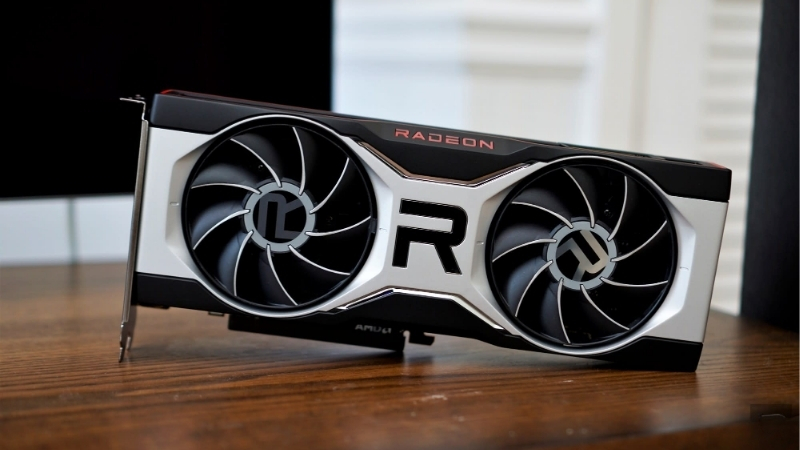
RX 6700 XT Performance: A Lasting 1440p Value Card
The RX 6700 XT is built on RDNA 2 Navi 22 with 12GB of GDDR6 on a 192-bit bus and a 230W board power. It was designed as a 1440p card, and that 12GB buffer, generous for its class, is the reason it has aged better than many of its contemporaries. Below, the performance is broken down the way a value-focused 1440p buyer evaluates an older but capable card.
As an Amazon Associate we earn from qualifying purchases at no extra cost to you.





1440p Gaming Performance
At 1440p the RX 6700 XT remains a solid performer, clearing 60 FPS in most modern titles at high settings and pushing higher in lighter and competitive games. It is comfortably a 1440p card rather than just a 1080p one, which is what separates it from cheaper budget options and makes it such a popular value pick.
The 12GB frame buffer is a real strength at this tier. While 8GB cards increasingly struggle with texture-heavy modern titles, the 6700 XT has the memory headroom to keep running smoothly, which is a meaningful longevity advantage as games grow more demanding. At 1080p it is effectively overkill, delivering very high frame rates with ease.
The practical takeaway is that the RX 6700 XT offers genuine 1440p capability and 12GB of VRAM at a budget price, which is an unusually good combination for the money. For a value buyer who games at 1440p, that headroom is exactly what makes it worth considering over cheaper cards.
Ray Tracing, FSR and Feature Limitations
Ray tracing is the familiar weakness of this RDNA 2 card. It can run ray tracing, but the performance cost is steep, so most owners leave it off at 1440p and rely on the card’s solid rasterized performance instead. If ray tracing is a priority, this is not the card to chase it on.
On upscaling it supports FSR, including the software-based FSR 3 Frame Generation that works on RDNA 2, which is a genuinely useful way to lift frame rates in heavier 1440p titles and extend the card’s usable life. It does not support the newer FSR 4, which is exclusive to RDNA 4 hardware, so it misses that specific upscaling leap.
As an older card it also lacks AV1 encoding, found on newer RDNA 3 cards. For pure 1440p gaming that is irrelevant, but a budget streamer or creator may weigh it when deciding between the 6700 XT and a newer model. For most value-focused gamers, the 12GB of VRAM matters far more than these feature gaps.
What Owners Praise and Criticize
Owner sentiment is strongly positive, centered on value and longevity. The most common praise is the combination of real 1440p performance and 12GB of VRAM at a low price, with many owners noting how well the card has aged compared with 8GB rivals and how confidently it still handles modern games at 1440p.
The criticisms are the expected ones for an older card: weak ray tracing, the lack of newer features like AV1 encoding and FSR 4, and a power draw that is higher than the smaller budget cards. None of these undermine its core value proposition, which is affordable, longevity-friendly 1440p gaming, but they are worth knowing before you buy.
The overall impression is of a card that has aged unusually well, with the 12GB buffer doing much of the heavy lifting to keep it relevant at 1440p long after launch.
| Strengths | Trade-offs |
|---|---|
| Genuine 1440p performance at a budget price | Weak ray-tracing performance |
| 12GB VRAM for strong longevity | No AV1 encoding for streamers |
| Ages better than 8GB rivals | No FSR 4; older RDNA 2 feature set |
| Excellent value new or used | Higher power draw than smaller budget cards |
RX 6700 XT Build Fit: Power, Size and Cooling
The RX 6700 XT is straightforward to build around, but a clean install still depends on three practical things: the power draw and supply it needs, whether it fits your case, and how it handles heat and noise. Each is covered below so your 1440p value build comes together without surprises.
Power Draw and PSU Requirements
With a 230W board power, the RX 6700 XT draws a bit more than the smaller budget cards but is still moderate, and a quality 600W to 650W power supply is plenty for most builds. It uses standard 8-pin connectors, keeping the install simple.
That sensible draw makes it an easy upgrade for many existing systems, since a typical mid-range build already has the headroom. It is not as ultra-efficient as the smaller 1080p cards, but it remains undemanding for a 1440p-capable card and rarely forces a PSU upgrade.
Card Size and Case Compatibility
Most RX 6700 XT models are moderate in size, with plenty of dual and triple-fan designs that fit standard mid-towers comfortably. Dimensions vary by brand, so check the exact length against your case, but the card is rarely a tight fit in a typical build.
For smaller cases, compact models are available, and the card’s reasonable power draw means a modest cooler keeps temperatures in check. You are not forced into a large design to manage heat at this performance level.
That balance of moderate size and sensible cooling needs makes the 6700 XT an easy fit for the kind of standard mid-tower most value builders already own, so an upgrade rarely means changing anything beyond the card itself.
Cooling, Noise and Temperatures
The RX 6700 XT runs cool and quiet on most partner coolers, with fan-stop keeping it silent at idle and during light use. Under sustained 1440p gaming it stays comfortably within thermal limits without ramping fans aggressively on a decent cooler.
For the noise-sensitive, a mild undervolt lowers temperatures and noise further with negligible performance loss. Out of the box, most owners find a well-cooled model quiet enough to leave alone, which suits a no-fuss value build.
RX 6700 XT Pricing, Value and When to Buy
The RX 6700 XT’s appeal is value and longevity, so price is central to the verdict, and the current component market is part of the picture. This section covers where prices sit, how the card compares to newer options, and which buyer it suits.
Where Prices Stand Right Now
For a value buyer, the market backdrop matters. PC component prices have broadly trended upward, driven mainly by memory costs, and that pressure reaches graphics cards and the rest of a build. The encouraging side is real but limited: the steep climb seen at the end of 2025 has cooled, and some makers, Framework among them, have reported a relatively stable recent stretch while still warning of further movement.
New memory supply is on the way but not soon. OEMs can now source DDR5 from suppliers like CXMT, and Micron is building two fabs in Idaho, yet those plants are not expected to come online until 2027–2028. In short, prices have stopped spiking rather than started falling, so genuine relief is still some distance out, which is worth remembering when budgeting a whole system.
The practical implication for an RX 6700 XT buyer is that its value depends on how low its price sits relative to newer 1440p-capable cards. As an older model it should be clearly cheaper than current-generation options to be the smart pick, so compare it directly against newer cards and used listings on the day you buy.
RX 6700 XT vs the Competition
Against newer mid-range cards, the 6700 XT gives up modern features and ray-tracing performance but can still win on raw 1440p value when it is significantly cheaper, helped by its 12GB of VRAM. The decision usually comes down to whether the price gap to a newer card is large enough to outweigh the features you would be giving up.
In the used market in particular, the 6700 XT is often a standout value, offering real 1440p performance and a generous frame buffer for very little money. If you are comfortable buying second-hand, it is one of the better ways to reach 1440p gaming on a tight budget, provided you compare it carefully against newer cards first.
When shopping used, a few sensible checks go a long way: ask about the card’s history, confirm it has not been heavily overclocked or run hot for long periods, and factor in the lack of any remaining warranty. Done carefully, a used 6700 XT is one of the strongest ways to reach 1440p gaming on a tight budget.
Who Should Buy the RX 6700 XT
Buy it if you want affordable 1440p gaming, value the 12GB of VRAM for longevity, prioritize raw rasterized performance over newer features, and can find it at a clear discount to current-generation cards, new or used. For a value-focused 1440p builder, it remains one of the smarter budget choices.
Look at a newer card instead if ray tracing, AV1 encoding, or the latest upscaling matter to you and the price difference is small. If the RX 6700 XT is genuinely cheap relative to newer options, check the current price and availability through the link here, and compare it directly against the current generation before you decide.
See More:
- Colorful iGame RTX 4090
- Founders Edition vs AIB
- Best RTX 4080 Super card
- Best RTX 5080 AIB
- Best RTX 5070 Ti card
Conclusion: Is the RX 6700 XT Worth It?
The RX 6700 XT remains one of the best value 1440p cards available, pairing genuine 1440p performance with 12GB of VRAM that gives it real longevity, all at the low prices it now commands new or used. Its limitations, weak ray tracing and the lack of newer features like AV1 encoding and FSR 4, are the expected trade-offs of an older RDNA 2 card, and they matter only if those features top your list. With component prices stabilizing rather than falling, the move is simple: if the RX 6700 XT is clearly cheaper than newer 1440p cards, it is still a smart, longevity-friendly buy, so compare it against the current generation before you commit, and you may well find it is the most performance and VRAM your money can buy at this price.
Top-Rated Picks


Save $365.01

| Product | Brand | Rating | Reviews | Price |
|---|---|---|---|---|
| ARCTIC MX-4 (4 g) – Premium Performance Thermal Paste… | ARCTIC | ★ 4.8 | 104k | $4.99 |
| ARCTIC MX-4 (incl. Spatula, 4 g) – Premium Performanc… | ARCTIC | ★ 4.8 | 71.9k | $5.49 |
| Crucial 8GB DDR4 RAM 3200MHz (PC4-25600), Downclockab… | Crucial | ★ 4.8 | 62.8k | $74.99 |
| AMD Ryzen 5 5600X 6-core, 12-thread unlocked desktop … | — | ★ 4.8 | 30.2k | $177.60 |
| NVIDIA Shield Remote; Voice Search, Motion-Activated,… | — | ★ 4.7 | 10.6k | $25.99 |
Frequently Asked Questions
Is the RX 6700 XT still good value in 2026?
On the used and clearance market, yes. It delivers solid 1440p high settings performance in raster titles and its 12GB buffer avoids the memory ceiling that limits 8GB cards from the same era. Ray tracing is its weak point, as is the lack of FSR 4 support.
What power supply does it need?
Total board power is 230W, usually through one 8-pin and one 6-pin or dual 8-pin connectors depending on the model, with AMD recommending 650W. A good quality 600W unit will handle it in a typical six core build, though partner cards with factory overclocks appreciate the extra headroom.
Does 12GB really make a difference over 8GB?
It does at 1440p in current releases. When a game exceeds the frame buffer the symptom is stutter and texture pop-in rather than a lower average frame rate, which is far more noticeable in play. The 6700 XT can run ultra textures where 8GB cards of the same performance class cannot.
What upscaling and frame generation can it use?
It supports FSR 1 through 3.1 including in-game frame generation, plus driver-level Fluid Motion Frames, Radeon Super Resolution and HYPR-RX in Adrenalin. FSR 4 requires RDNA 4 hardware and is therefore unavailable, which is the main image quality gap against a modern RX 9060 XT or 9070.
How does it compare with an Arc B580?
Raster performance is broadly similar, with the B580 ahead in ray tracing and offering the newer XeSS 2 stack. The 6700 XT counters with mature drivers and much lower CPU overhead, which matters on older processors. If your platform is modern, the Intel card is the more future-focused option.



Write Your Review
No reviews yet. Be the first to share your experience!