
- Top Pick: CORSAIR RM1000e (2025) ATX 3.1 PCIe 5.1 Ready 1000W Power Supply – Black | Native 12V-2×6 Cable Included, Low-Noise, Fully Modular, Cybenetics Gold, Modern Standby Mode, NA
- Best Value: Seasonic FOCUS GX-1000 1000W Power Supply ATX 3.1 & PCIe 5.1 Ready | 80 Plus & Cybenetics Gold Fully Modular 12V-2×6 RTX 5090 AMD RX 9000 Ready Premium Japanese Capacitors 10 Years Warranty
- Premium Choice: CORSAIR HX1200i (2025) ATX 3.1 PCIe 5.1 Ready 1200W Power Supply – Black | Native 12V-2×6 Cable Included, Ultra Low-Noise, Fully Modular, Cybenetics Platinum, Fluid Dynamic Bearing Fan, NA
Updated October 2026 – Philippine price ranges rechecked against launch announcements and retailer listings.
- RTX 5090 Price Philippines: Quick Answer
- Current RTX 5090 Prices in the Philippines
- RTX 5090 Price Philippines by Tier
- RTX 5090 Price Tiers in the Philippines by Model Type
- What You Need Besides the Card
- Pre-Purchase Checklist for Philippine Buyers
- Where and How to Buy in the Philippines
- What Else to Budget For: Power Supply, Case and Cooling
- Warranty and Authorized Retailers in the Philippines
- Is It the Right Time to Buy?
- Related Hardware for an RTX 5090 Build
- Conclusion
- Related Guides
- More Questions About the RTX 5090 in the Philippines
- RTX 5090 vs RTX 5080 in the Philippines: Is the Premium Worth It?
- Frequently Asked Questions
- Who Should Skip the RTX 5090
- Related Articles
| Model or edition | Reported price in pesos | Note |
|---|---|---|
| ASUS TUF Gaming RTX 5090 | about 155,690 (launch) | Non-OC launch price |
| ASUS TUF Gaming RTX 5090 OC | about 206,750 (launch) | Factory overclock |
| ASUS ROG Astral RTX 5090 | about 222,320 (launch) | Premium quad-fan cooler |
| ASUS ROG Astral LC RTX 5090 | about 230,100 (launch) | Liquid cooled |
| MSI RTX 5090 Lightning Z | 359,000 | Limited run |
| ROG Astral RTX 5090 Edition 20 | 430,590 | Anniversary edition |
These are reference points from launch announcements and retailer news, not live quotes; always confirm the price and stock with the store.
Updated October 2026 — The RTX 5090 price in the Philippines depends mostly on the model tier and on stock, not on one official peso figure.
Quick answer: RTX 5090 price in the Philippines runs from roughly ₱155,000 for entry partner cards to ₱230,000 for premium air-cooled models, with liquid-cooled and limited editions often above ₱300,000. These bands come from ASUS Philippines launch pricing and later retailer listings; always confirm the live price and stock with an authorized retailer before paying. A dealer advisory in August 2026 projected typical street prices nearer 260,000 to 400,000 pesos, so treat the lower bands as launch-era figures.
Quick specs for context: the GeForce RTX 5090 uses 32GB of GDDR7 on a 512-bit bus, draws up to 575W, and NVIDIA recommends a 1000W system power supply. Popular partner cards include the ASUS TUF Gaming RTX 5090, MSI GeForce RTX 5090 Vanguard SOC and Gigabyte RTX 5090 Gaming OC.
RTX 5090 Price Philippines: Quick Answer
Quick answer: in 2026 the RTX 5090 costs roughly 140,000 to 450,000 pesos in the Philippines, depending on the model. Standard air-cooled cards sit at the low end, while flagship and limited editions cost far more. Prices move with stock, so check the retailer before you buy.
Rtx 5090 price philippines is one of the most searched questions among local enthusiasts, because this Blackwell flagship commands a steep premium in the country and stock is hard to find. This guide breaks down realistic peso prices, explains why the card costs what it does here, and shows where and how to buy safely. The aim is to help Filipino buyers spend wisely on the most powerful consumer GPU available in 2026 rather than overpaying a scalper.
As an Amazon Associate we earn from qualifying purchases at no extra cost to you.

Current RTX 5090 Prices in the Philippines
Before choosing a model, it helps to know what the card realistically costs in the local market and why those figures sit so far above the US price. This section sets clear expectations on pricing, which is essential before you start comparing listings or considering an import, so you can recognise a fair deal when one finally appears in front of you.
It helps to approach this with realistic expectations, because the 5090 is both the most powerful consumer GPU and one of the hardest to find at a sensible price locally. Understanding the figures and the forces behind them is what separates a confident buyer from one who overpays out of urgency.
What You Will Actually Pay
Published local prices vary widely by model. ASUS announced launch prices of about 155,690 pesos for the TUF Gaming RTX 5090, 206,750 pesos for the TUF OC edition, and roughly 222,000 to 230,000 pesos for the ROG Astral cards. Current retailer listings run from about 140,000 pesos for entry partner cards to well above 300,000 pesos for premium coolers, and limited editions such as the MSI RTX 5090 Lightning Z (359,000 pesos) and the ROG Astral Edition 20 (430,590 pesos) cost more. Genuine bargains are rare given the demand.
These figures sit well above the card’s US launch price, and the gap reflects local market realities rather than a temporary spike. Buyers should treat any listing far below this range with caution, since it is more likely to signal a scam or a non-genuine unit than a real discount.
It is also worth tracking a specific model’s price over a few weeks before buying, since flagship pricing here moves with stock rather than following a steady official figure. A short watch period quickly reveals whether a listing is genuinely competitive or simply riding the scarcity premium.
Why the 5090 Costs So Much Here
Several factors stack on top of the base price. Import duties and VAT, shipping, and a local distributor premium all push the final figure up considerably before a retailer adds any margin.
On top of that, demand from both gamers and a fast-growing local AI and machine-learning community keeps stock levels in Metro Manila and Cebu close to zero. When supply is that tight, retailers can apply significant markups, and scarcity rather than list price ends up setting the real cost of the card.
This is why two buyers can pay very different amounts for the same model within the same month, depending purely on timing and stock. Recognising that the local price is driven by availability rather than a fixed number is the key to not overpaying in a thin market.
How Global Supply and Export Rules Affect Local Prices
Local pricing is shaped heavily by global conditions. Laptop and PC component prices have been trending upward worldwide on tight memory supply and intense AI demand, and a flagship like the 5090 that uses cutting-edge GDDR7 is among the most exposed to that pressure.
Strong AI and data-center demand for the same memory and fabrication capacity adds another layer. Both factors keep global stock tight and Philippine prices firm.
The practical takeaway is that local 5090 prices are unlikely to fall sharply in the near term, so Filipino buyers waiting for a steep drop may be disappointed. If you need the card, planning around current pricing is more realistic than betting on relief from a supply situation that policy and demand are keeping tight.
For the Philippines specifically, this means the usual advice to wait for prices to settle carries less weight than normal, since the pressures keeping the 5090 expensive are global and structural rather than a passing local quirk that will resolve on its own.
RTX 5090 Price Philippines by Tier
Prices below are rounded peso bands built from ASUS Philippines launch pricing (January 2025) and retailer listings seen since. They are guides, not live quotes, and cards that are out of stock may show old numbers.
| Tier | Example models | Rough band (PHP) | Typical cooler | What to expect |
|---|---|---|---|---|
| Entry partner | ASUS TUF Gaming RTX 5090 32G, INNO3D RTX 5090 X3 | About 155,000 to 185,000 | Air, triple fan | Lowest tier, but often out of stock |
| Mainstream OC | ASUS TUF RTX 5090 O32G, MSI Vanguard SOC, Gigabyte Gaming OC | About 185,000 to 230,000 | Air, large triple fan | Slightly higher clocks and better coolers |
| Premium | ASUS ROG Astral RTX 5090, MSI Suprim | About 220,000 to 280,000 | Air or hybrid | Best acoustics and build quality |
| Halo and limited | ROG Astral LC, Gigabyte Aorus Master ICE, MSI Lightning Z | About 280,000 and up | Liquid or special designs | Collector pricing and low supply |
Entry Tier: Roughly 155,000 to 185,000 Pesos
Spec line: 32GB GDDR7 · 512-bit · 575W class · three-fan air cooler · standard clocks
What to expect at this tier:
- The lowest sticker price but the hardest stock to find.
- Reference-class clocks with the same core performance as pricier cards.
- Large coolers that need a roomy case and at least a 1000W power supply.
Premium Tier: Roughly 220,000 to 280,000 Pesos
Spec line: 32GB GDDR7 · factory overclock · reinforced shroud · quieter cooler · often 3.5-slot or larger
What to expect at this tier:
- Marginally higher clocks and quieter fans, not a big jump in frame rates.
- Extra build quality and brand software for RGB and fan control.
- Higher resale value for buyers who plan to upgrade again.
Halo Tier: Above 280,000 Pesos
Spec line: 32GB GDDR7 · liquid or special cooling · limited run · collector-style design
What to expect at this tier:
- Prices that depend on the retailer and on how scarce stock is that week.
- Some listings far above these bands, which usually reflect reseller markups, not extra performance.
- The same core GPU as cheaper cards, so only buy for cooling, looks or a specific form factor.
RTX 5090 Price Tiers in the Philippines by Model Type
The same GPU sells for very different amounts depending on the cooler, factory overclock and finish. Local retailer catalogs in 2026 show listings spread across a wide band, from roughly the low 140 thousand peso mark for the plainest triple-fan models to well over 400 thousand pesos for top-tier limited designs. A dealer advisory published in August 2026 projected typical street prices of about 260 thousand to 400 thousand pesos and warned that figures were rising, so older price lists are unreliable.
| Model Type | Typical Examples | Price Tier | Who It Suits |
|---|---|---|---|
| Standard triple-fan | Entry partner cards such as Ventus or Windforce lines | Lowest tier for this GPU | Buyers who want the chip, not the extras |
| Mid-tier overclocked | TUF, Vanguard, Gaming OC | Mid-range for this GPU | Most gamers and creators |
| Premium air-cooled | ROG Astral, Suprim, Aorus Master | High tier | Quiet, cool, large-case builds |
| Liquid-cooled | ROG Astral LC, Suprim Liquid | High to premium tier | Compact cases with radiator space |
| Limited editions | Lightning Z, Edition 20, white or ice finishes | Top tier | Collectors |
Launch price versus street price
At launch in early 2025, manufacturers published suggested local prices, with some air-cooled models sitting in the 155 thousand peso range and the most premium ROG models above 220 thousand pesos. Street prices in 2026 have drifted higher for most models because of memory and foundry cost pressure. Use launch figures only as a reference point for comparison, not as a target you will find on shelves.
What You Need Besides the Card
- Power supply: NVIDIA recommends about a 1000W unit for this card. A modern ATX 3.1 supply with a native 12V-2×6 connector avoids adapters and bending the cable sharply near the plug.
- Case clearance: many models are 3.5 to 4 slots thick and long, so measure the case before ordering.
- Motherboard slot and CPU: a PCIe 5.0 x16 slot is ideal, and a mid-range CPU can bottleneck the card in many games.
- Cooling and airflow: a card that can draw several hundred watts needs a case with strong intake and exhaust.
- Surge and power protection: unstable local grids make a quality surge protector or UPS a sensible addition.
Pre-Purchase Checklist for Philippine Buyers
- Compare at least three local retailers and note whether the price includes VAT.
- Confirm the exact model name, not just RTX 5090, since cooler and clock differ across listings.
- Ask about stock at the branch, because online pages often show out of stock for a specific location.
- Ask for a local warranty document and the serial number before paying.
- Prefer payment methods with buyer protection, and avoid sellers who insist on bank transfer only for a flagship card.
- Inspect the box seal and the card for signs of previous use on pickup.
- Keep the receipt and warranty card for any future service claim.
Where and How to Buy in the Philippines
Once you understand the pricing, the next step is choosing a safe place to buy, since the flagship’s scarcity attracts both legitimate sellers and opportunists. This section covers trusted local options, the import route, and how to avoid the inflated or fraudulent listings that inevitably follow any high-demand product.
Getting this step right protects both your money and your warranty, which matters more for an expensive flagship than for a budget card, since a bad purchase here is a costly mistake rather than a minor one.
Trusted Local Retailers
Established Philippine computer retailers and their official online stores are the safest starting point, since they offer genuine units, local warranty support, and clear return policies. Buying from a reputable physical or verified online store protects you in a way that informal sellers simply cannot.
Because stock moves quickly, it pays to set price and availability alerts and to inquire directly before visiting a store, as inventory often sits in a warehouse rather than on display. Patience and a verified seller are the two best tools for landing a fair-priced unit.
Importing From Abroad: Pros and Cons
Some buyers source the 5090 from the United States through a freight forwarder to avoid the local distributor premium, which can save money on the card itself.
Pros: potentially lower base price, access to models that are out of stock locally, and the ability to choose a specific edition. Cons: import duties and VAT on arrival, shipping cost and risk, a more complex warranty situation, and no local after-sales support.
For confident buyers comfortable handling customs and accepting a harder warranty path, importing can work out cheaper, but for most people the simplicity and local support of a trusted retailer outweigh the potential savings.
As a rule of thumb, importing suits experienced buyers chasing a specific model or a clear price advantage, while first-time or warranty-conscious buyers are better served locally. Being honest about which group you fall into prevents an import from turning into a frustrating ordeal.
Spotting Scams and Inflated Listings
Any high-demand flagship attracts scams, so treat prices far below the normal local range as a warning sign rather than a lucky find. Genuine 5090 cards simply do not sell well under market value in a supply-constrained environment.
Stick to sellers with verifiable reputations, insist on proper receipts and warranty documentation, and avoid deals that pressure you to pay quickly or off-platform. A little verification up front prevents the costly mistakes that catch buyers chasing an unrealistic price.
Marketplace listings in particular deserve extra scrutiny, since the flagship’s scarcity makes it a frequent target for fake stock and bait pricing. When a deal feels urgent or too generous, slowing down and verifying the seller is almost always the right move.
What Else to Budget For: Power Supply, Case and Cooling
The card itself is only part of the bill. The RTX 5090 draws up to 575W and uses the 16-pin 12V-2×6 connector, so your power supply, cable and case all need to be ready.
- Power supply: NVIDIA recommends a 1000W system power supply. A 1200W unit leaves more headroom for a high-end CPU and for transient spikes.
- Cable: use the 12V-2×6 cable that comes with an ATX 3.1 supply, or the adapter from the card box, and seat it fully with a gentle bend.
- Case: many partner cards are around 3.5 slots thick and very long, so check clearance before you buy.
- Airflow: add front intake fans and keep the rear exhaust free, since a 575W card heats the case.
Three ATX 3.1 power supplies that include a native 12V-2×6 cable are worth shortlisting for an RTX 5090 build.
Corsair RM1000e (2025) — Best Value 1000W Option

Specs: 1000W · ATX 3.1 and PCIe 5.1 ready · native 12V-2×6 cable · fully modular · low-noise design. Best for builders who want to meet NVIDIA’s 1000W guideline at the lowest tier. Trade-off: little headroom if you also run a power-hungry CPU.
Seasonic Focus GX-1000 — Best for Gold-Efficiency Builds

Specs: 1000W · 80 Plus Gold · ATX 3.1 and PCIe 5.1 ready · fully modular · 12V-2×6 connector. Best for builders who value Seasonic’s reputation and a compact unit. Trade-off: sits at a mid price tier for 1000W.
Corsair HX1200i (2025) — Best 1200W Headroom

Specs: 1200W · ATX 3.1 and PCIe 5.1 ready · native 12V-2×6 cable included · ultra low-noise. Best for RTX 5090 systems with a flagship CPU, multiple drives or overclocking. Trade-off: the highest price tier of the three.
Warranty and Authorized Retailers in the Philippines
For a card at this price tier, warranty and seller reputation matter as much as the sticker price.
- Launch retailers: when ASUS announced RTX 5090 pricing in January 2025, the official retailers named included DataBlitz, PC Express, Dynaquest, EasyPC, PC QuickBuys, PC Hub and Villman in Metro Manila, plus several provincial dealers.
- Brand warranty: Gigabyte Philippines lists a standard 3-year warranty on graphics cards, extended to 4 years when you register within 30 days of purchase. Terms differ by brand, so read the card’s warranty page.
- Mining and misuse: Gigabyte states that crypto-mining use voids its warranty, so keep your use case in mind if you plan 24/7 compute.
- DOA policy: some retailers, such as Netcodex, advertise a 1-to-1 replacement for dead-on-arrival units within 7 days; ask about it before ordering.
- Invoices: keep your official receipt and box, since local service centers ask for both.
When you compare offers, check that the listing names the exact model number, that the card is sold new and sealed, and that the warranty is honored by a local service center.
Is It the Right Time to Buy?
With pricing and sourcing understood, the final question is timing – whether to buy now or wait. This section weighs who should act now against who can hold, covers the models worth seeking out, and closes with practical advice for getting the most for your money in the current market.
The overarching theme is that patience and verification beat speed and luck when buying a 5090 in the Philippines, where the biggest risk is not paying a fair premium but overpaying a scalper or losing money to a scam.
Who Should Buy Now vs Wait
If you need the 5090 for high-end gaming, content creation, or AI work and can find one at a fair local price, buying now makes sense, since the supply and pricing picture does not favour waiting. The card’s capability is available today, and prices are not in a reliable downward trend.
If your current GPU still meets your needs, there is little harm in waiting for stock to stabilise, but you should not expect a dramatic price drop. Holding is reasonable only if you genuinely do not need the performance yet, not as a strategy to wait out a fall that may not come.
For AI and content-creation users whose work depends on the card’s capability, the calculus tilts further toward buying now, since the productivity gains can justify the premium in a way they may not for a purely recreational gaming purchase.
Models and What to Look For
Popular options in the Philippines include cards from major brands such as ASUS, MSI, Gigabyte, and others, ranging from compact designs to large triple-fan coolers. Prioritise a model with strong cooling and a reputable warranty over chasing the absolute lowest sticker price.
Because the 5090 draws a demanding amount of power, also confirm your power supply and case can handle it before buying, as a flagship paired with inadequate support will not perform reliably. Matching the card to a capable build is as important as the purchase itself.
RTX 5090 Specs That Affect What You Should Pay
Every RTX 5090 uses the same GB202 Blackwell chip with 32GB of GDDR7 on a 512-bit bus and a 575W board power rating. What changes between models is the cooler, factory clock, and warranty terms, which explains most of the price spread in the local market.
- Power supply: NVIDIA recommends a 1000W power supply for the reference card, and the card uses a 12V-2×6 power connector. Budget for a quality ATX 3.x unit if your current supply is older.
- Case size: premium coolers such as the ROG Astral occupy nearly four slots, so check clearance and GPU support before ordering.
- Cooling style: air-cooled cards are simpler and cheaper; liquid-cooled editions run cooler but need radiator space.
- Warranty: a local warranty with a service center in Metro Manila or Cebu is worth paying for on a card this expensive.
Example RTX 5090 Models Sold by Brand
The two cards below show typical flagship designs. They are described from their listing details, and availability in the Philippines depends on the local distributor.
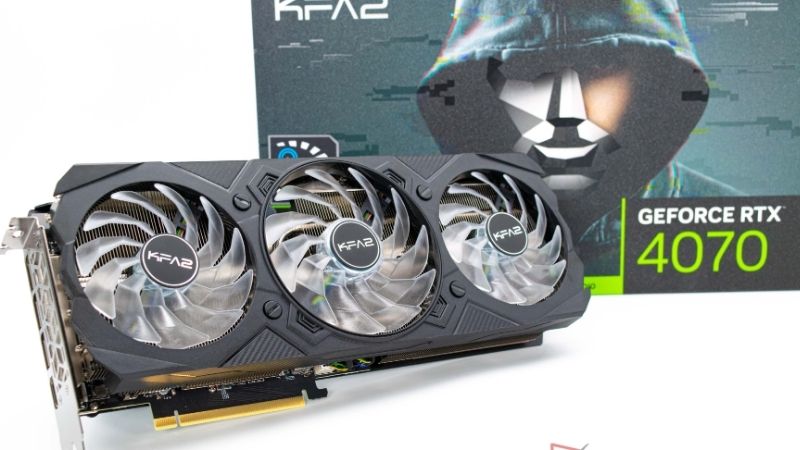
ASUS ROG Astral GeForce RTX 5090 32GB OC Edition

- 32GB GDDR7, PCIe 5.0, HDMI and DisplayPort 2.1
- 3.8-slot design with a four-fan Axial-tech cooler
- Vapor chamber and phase-change thermal pad
Pros: premium cooling, strong build, a favorite of overclockers. Cons: very large and priced at the top of the market. Skip it if your case is compact or you want the lowest price.
MSI GeForce RTX 5090 32G Vanguard SOC Launch Edition

- 32GB GDDR7 Blackwell flagship
- Vanguard SOC launch edition design
- Factory-tuned clocks
Pros: sensible mid-range pick among premium partner cards, backed by a major brand. Cons: still a large three-slot class card with a very high power draw. Skip it if your power supply is under 1000W.
How to Check a Philippine Listing Before You Pay
- Match the exact model name and part number against the brand’s product page.
- Ask whether the card is brand new, sealed, and covered by a local warranty.
- Get an official receipt that names the model.
- Prefer payment methods that offer buyer protection for marketplace purchases.
- Compare at least three retailers, because the same model can differ by tens of thousands of pesos.
Warranty, Receipts, and After-Sales Support
On a card that costs well into six figures, warranty terms matter as much as the price. Ask the retailer who handles the warranty (the local distributor or the brand), how long it lasts, and whether a replacement card or a repair is offered. Keep the official receipt, box, and serial number, since claims usually require all three. Imported cards may only carry an international warranty that needs shipping abroad, which is slow and costly.
Power and Running Cost
The RTX 5090 is rated at 575W board power, so it adds to your electricity bill during long gaming or rendering sessions. It also demands a strong power supply and good case airflow. Budget for a 1000W-class supply with a native 12V-2×6 cable if you do not already own one.
Why Used and Open-Box Cards Need Extra Care
Used RTX 5090 cards may carry a lower price tag, but the risk is higher: mining wear is unlikely on a recent card, yet water damage, missing warranty, and altered boards are possible. Inspect the card in person, run a stress test before paying, and avoid sellers who refuse to meet in a public place or provide a receipt.
Final Advice and Recommendation
The sensible approach is to set a realistic budget based on current local ranges, buy from a trusted retailer with warranty support, and act when you find a fair price rather than waiting for a drop that the supply picture does not support. Verify every listing and avoid prices that look too good to be true.
If you are ready to build around the flagship, make sure the rest of your system – power, cooling, and case – is prepared to match it, and secure a fairly priced unit from a reputable seller while stock is available.
See More:
- Rtx 4070 ti super vs rtx 4070 super
- 5080 vs 4080 super benchmark
- 4070 ti super vs 4080 super benchmark
- Rtx 4070 ti super vs rtx 4090
- Rtx 4070 ti vs rtx 4070 ti super
Related Hardware for an RTX 5090 Build
ASUS ROG Astral GeForce RTX 5090 OC Edition
The ROG Astral is the model Philippine news and retailer pages mention most often at the premium end. The listing describes a 32GB GDDR7 card, PCIe 5.0, HDMI and DisplayPort 2.1, a 3.8-slot design and four fans. At launch, ASUS Philippines listed air-cooled and liquid-cooled Astral versions at the top of its local price list, and retailer listings today vary widely.
It suits builders with a roomy case who care about cooling headroom and quiet operation under load, and who accept a high price tier. The thick cooler also means it will not fit smaller cases, so check the clearance first.
Strengths are the cooling design, the factory overclock and the build quality. Drawbacks are the very high price tier, the size and the weight, which can call for a support bracket. Compared with the cheaper triple-fan cards, you pay for acoustics and finish rather than a different chip.
MSI GeForce RTX 5090 32G Vanguard SOC Launch Edition
MSI’s Vanguard SOC appears in Philippine retailer catalogs and in price comparisons as a more moderate way to buy this GPU. The listing describes a launch edition RTX 5090 with 32GB of memory and MSI’s factory overclocked SOC clocks.
It suits buyers who want a mainstream premium model without the very top tier cooler or lighting. If your priority is performance per peso rather than looks, cards in this class are often the practical middle ground.
The advantages are the more moderate price tier compared with limited editions, solid cooling and widespread availability from local dealers. The disadvantages are less distinctive styling and fewer extras. Dimensions and exact clock speeds are not listed in the summary data, so verify them on the product page and against your case.
Thermaltake Toughpower GF A3 1200W

The card is only half of the power equation. This Thermaltake unit is described as a 1200W, 80 PLUS Gold, ATX 3.1 supply with a true 600W 12V-2×6 connector, which is the connector the card uses. Having the right cable on the supply removes the need for adapter dongles.
It suits anyone buying an RTX 5090 who needs a new supply and wants headroom beyond the recommended 1000W minimum for a high-end CPU and several drives. Headroom also helps with brief power spikes.
The strengths are the connector, the capacity and a mid-range price tier for its class. The weaknesses are its size and the fact that a 1000W unit is enough for many builds, so 1200W is optional. Check your case supports a full-size ATX supply and local warranty terms before ordering.
Conclusion
Rtx 5090 price philippines comes down to a clear reality: expect to pay a steep local premium driven by import costs, distributor markups, and tight global supply, with most models landing in the six-figure peso range, roughly 140,000 to 450,000 pesos depending on the edition. With component prices and export-driven demand keeping supply tight, the smart move is to buy from a trusted retailer at a fair price rather than wait. Review current local listings, verify the seller, and choose the model that best fits your build and budget in 2026.
More Questions About the RTX 5090 in the Philippines
Is the RTX 5090 cheaper in the US than in the Philippines?
The US launch price was far lower than local street prices, and US street prices have varied widely, while import duties, VAT, shipping, and distributor margins raise the final price in the Philippines. Compare the landed cost, not only the sticker price.
Which RTX 5090 is the best value in the Philippines?
A mainstream air-cooled partner card from a brand with local support usually gives the best value. Limited editions mainly add cost.
What power supply do I need for an RTX 5090?
NVIDIA recommends 1000W for the reference card. Choose a quality unit with a native 12V-2×6 cable, and add headroom if your CPU is also power hungry.
RTX 5090 vs RTX 5080 in the Philippines: Is the Premium Worth It?
The biggest question for most Filipino buyers is whether to pay roughly double for the RTX 5090. A short comparison helps.
| Trait | GeForce RTX 5090 | GeForce RTX 5080 |
|---|---|---|
| Memory | 32GB GDDR7, 512-bit | 16GB GDDR7, 256-bit |
| Board power | Up to 575W | Up to 360W |
| Power supply guidance | 1000W system supply | 850W system supply |
| Starting ASUS PH launch price | About 155,000 pesos | Roughly half the 5090 tier |
| Best for | 4K at maximum settings, AI and 3D work, large VRAM | High-refresh 1440p and 4K with upscaling |
- Buy the RTX 5090 if you work with large AI models, 3D scenes or video that need 32GB of VRAM, or you want maximum 4K settings with ray tracing.
- Buy the RTX 5080 if you mainly game at 1440p or 4K with upscaling and want to keep the budget near half.
- Wait if your current card still handles your games, since local stock and pricing are unlikely to fall quickly.
Frequently Asked Questions
What is the RTX 5090 price in the Philippines in 2026?
Most RTX 5090 cards in the Philippines cost roughly 140,000 to 450,000 pesos, depending on the brand and cooler. Standard air-cooled models sit at the low end and halo editions at the high end.
How much should I budget for an RTX 5090 in the Philippines?
Plan for at least 150,000 to 210,000 pesos for a mainstream partner card, then add money for a power supply and case that can handle a flagship GPU. Premium coolers and limited editions cost considerably more.
What should I check before buying an RTX 5090 in the Philippines?
Confirm that the seller is a verified retailer, that the card carries a local warranty, that the receipt lists the exact model, and that your power supply and case support a 575W-class flagship GPU.
Are cheap RTX 5090 listings in the Philippines safe?
Treat prices far below the normal range as a warning sign. Genuine RTX 5090 cards rarely sell well under market value, so very low listings often signal scams, fake stock, or grey-market units.
How did we research these RTX 5090 price figures?
We compared published launch prices and retailer listings from Philippine stores and tech news sites, and we do not sell or test the cards. Prices change quickly, so confirm them before you buy.
How much is the RTX 5090 in the Philippines?
The RTX 5090 in the Philippines cost roughly 155,000 to 230,000 pesos for most air-cooled partner cards at launch, while an August 2026 dealer advisory projected 260,000 to 400,000 pesos on the street, with premium and liquid-cooled models above 280,000 pesos. Prices move with stock, so confirm the live price with the retailer.
Why is the RTX 5090 so expensive in the Philippines?
The RTX 5090 is expensive in the Philippines because of import duties, VAT, shipping, a local distributor premium and very limited stock. Demand from gamers and AI users keeps supply tight and lets retailers hold higher prices.
What power supply do I need for an RTX 5090?
You need at least a 1000W power supply for an RTX 5090, according to NVIDIA’s recommendation. Choose an ATX 3.1 unit with a native 12V-2×6 cable, and consider 1200W if you pair it with a high-end CPU.
Where can I buy an RTX 5090 in the Philippines?
You can buy an RTX 5090 in the Philippines from authorized retailers such as PC Express, Dynaquest, EasyPC, DataBlitz and Villman. Check stock first, because many listings show out of stock. Avoid marketplace sellers without receipts or warranty.
Does the RTX 5090 come with a warranty in the Philippines?
Yes, RTX 5090 cards sold through authorized retailers carry a manufacturer warranty, but length and terms differ by brand. Gigabyte, for example, lists 3 years, extended to 4 years with online registration, so confirm the exact terms before buying.
Is the RTX 5090 price in the Philippines going up or down?
Dealer notices and news reports in August 2026 pointed to upward pressure from higher memory and manufacturing costs, in line with similar increases reported across Asia. Prices change quickly with stock, so check live listings on the day you buy.
Which Philippine stores sell the RTX 5090?
Common sources include local PC retailers such as PC Worth, Netcodex, DataBlitz, PC Express and Bermor Zone, plus authorised brand dealers for limited editions. Always confirm stock at the branch.
Should I wait for a price drop?
If you can wait, official brand announcements are a better signal than rumors. If you need the card now, prioritise existing stock at current prices, because retailers often struggle to update prices before the next supply batch.
Is a cheaper RTX 5080 enough?
For most gaming and creative work, yes. The 5090 makes sense for 4K at very high settings, heavy AI workloads and professional use. If you only play at 1440p, a lower-tier card saves a large amount.
Who Should Skip the RTX 5090
- Gamers playing at 1080p or 1440p, where a much cheaper card delivers a similar experience.
- Buyers with a case, power supply or CPU that would need replacing, which raises the real total cost significantly.
- Anyone tempted by a listing far below market prices, which is more likely a scam or a non-genuine unit.

Write Your Review
No reviews yet. Be the first to share your experience!