
- Top Pick: ASUS TUF Gaming NVIDIA GeForce RTX 4070 Ti OC Edition Gaming Graphics Card (PCIe 4.0, 12GB GDDR6X, HDMI 2.1a, DisplayPort 1.4a), 3 Year Warranty
- Best Value: ZOTAC Gaming GeForce RTX 4070 Ti Super Solid OC DLSS 3 16GB GDDR6X 256-bit 21 Gbps PCIE 4.0 Gaming Graphics Card, IceStorm 2.0 Advanced Cooling, ZT-D40730RC-10P
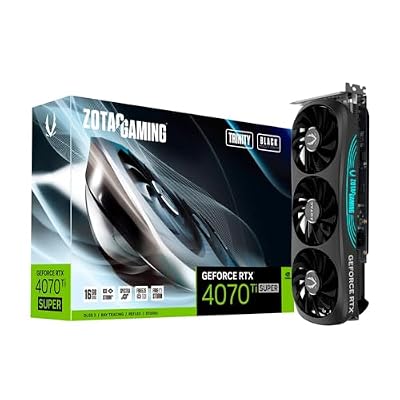
- Premium Choice: ZOTAC GAMING GeForce RTX 4070 Ti SUPER Trinity Black Edition 16GB GDDR6X
Top Rtx 4070 Price Finally Worth Picks for 2026
Here are our current top rtx 4070 price finally worth picks, compared on real Amazon owner reviews, price, and features. Live prices update below.
- Top Rtx 4070 Price Finally Worth Picks for 2026
- RTX 4070 Ti Price History: From $799 Launch to Today
- Performance Review: What That Price Actually Buys
- The Alternatives That Define the 4070 Ti’s Worth
- Why RTX 4070 Ti Prices Stopped Falling: 2026 Market Forces
- Conclusion
- Related Guides
- Frequently Asked Questions
- Related Articles



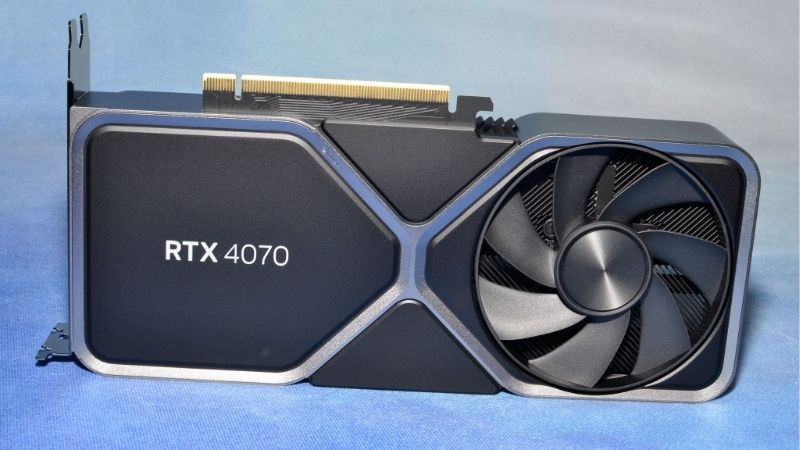
RTX 4070 Ti price questions never really stopped, because this card’s pricing story has been controversial since the day it launched. It debuted in January 2023 at $799 — after famously being unlaunched as the “RTX 4080 12GB” — was discontinued barely a year later in favor of the 4070 Ti Super, and now lives entirely on the used market, where its value depends on numbers that change monthly. This review tracks the card’s full price history, establishes what a fair 2026 price actually is, measures it against the alternatives that define its worth, and gives a clear verdict on who should still buy one and at what number.
As an Amazon Associate we earn from qualifying purchases at no extra cost to you. Product prices and availability are accurate as of the date shown and are subject to change.


RTX 4070 Ti Price History: From $799 Launch to Today
Understanding today’s fair price requires the trajectory that produced it, because the 4070 Ti never followed a normal depreciation curve. Its short retail life, awkward positioning, and the market chaos around it created a price history with more plot than most GPUs get.
Launch Pricing and the MSRP Controversy
The card arrived at $799 in January 2023 carrying baggage: Nvidia had originally announced the identical silicon as the RTX 4080 12GB at $899, withdrew it under community pressure, and relaunched it $100 cheaper with the 4070 Ti name. Reviewers judged the $799 sticker aggressive for a 12GB card even then, and partner models routinely listed at $829 to $899.
The pricing critique aged into consensus quickly. Within a year, Nvidia itself conceded the point by releasing the 4070 Ti Super at the same $799 with 16GB of memory — effectively the card buyers had asked for — and quietly ending production of the original. Total retail lifespan: roughly twelve months, one of the shortest for any modern x70-class card.
The Used Market Trajectory Since Discontinuation
Discontinued cards usually depreciate in a smooth slide; the 4070 Ti instead stepped down in two distinct phases. Through 2024 and early 2025, used prices fell from the $700s into the $500s as the Super variant and then Blackwell’s launch compressed its position. The arrival of the RTX 5070 at $549 — matching its performance new, with a warranty — was the decisive blow, dragging fair used value into the mid-$400s.
Then the slide stopped. Since mid-2025, listings have traded flat in a $430 to $500 band, with clean examples from reputable sellers holding the top of that range. A two-year-old card refusing to depreciate further is unusual, and the market-forces section below explains exactly why it is happening.
What a Fair RTX 4070 Ti Price Looks Like in 2026
Synthesizing current listings produces clean bands. Under $430 from a seller with a return window: a genuinely good deal worth acting on. The $430 to $470 range: fair, defensible market price for a tested card. Above $470: walk away — at that money, the math collapses against new alternatives, as the next section quantifies.
Condition adjusts these bands. Cards with transferable warranty remnants, original packaging, or verifiable light use earn the upper band; anything with mining-adjacent history, missing accessories, or no return option belongs at the bottom or not in your cart at all.
Performance Review: What That Price Actually Buys
Price judgments need a performance denominator, so here is what the 4070 Ti still delivers in 2026 — measured honestly, including the aging lines that affect its worth more each quarter.
Gaming Performance at 1440p and 4K
The card remains a strong 1440p performer: 100 to 130 fps in demanding AAA titles at high settings, with its 7,680 Ada cores and DLSS 3 Frame Generation keeping high-refresh monitors fed in supported games. At this resolution, nothing about it feels old.
4K is more conditional. Raster output of 55 to 70 fps is workable with upscaling, but the 12GB buffer and 504 GB/s of bandwidth — the two specs critics flagged at launch — show their limits in the heaviest 2025-2026 releases, where texture-heavy scenes produce the frame-time spikes that average-fps charts hide. Owners describe it accurately: a superb 1440p card that visits 4K rather than living there.
Owner Sentiment: The Praise and the Complaints
Positive owner reviews are consistent across years: excellent efficiency at 285W, cool and quiet partner coolers, and rock-solid drivers on the mature Ada platform. Buyers who paid mid-$400s used describe the value as exceptional, which is the strongest signal in any price review.
The recurring complaints map perfectly onto the launch critiques: the 12GB ceiling arriving sooner than expected in new titles, no path to DLSS 4 Multi Frame Generation, and — among original $799 buyers — lingering resentment about depreciation. Notably absent are reliability complaints; the silicon itself has proven durable, which supports buying used with reasonable confidence.
Pros and Cons at Today’s Price
Pros: 1440p performance matching a new $549 card for roughly $100 less; efficient 285W draw on a quality 700W power supply; mature, stable platform; proven hardware reliability; abundant listings keep sellers honest.
Cons: permanently excluded from DLSS 4 Multi Frame Generation; 12GB is the spec aging fastest; no warranty and unknowable history; the price band sits close enough to new alternatives that overpaying by $50 flips the verdict entirely.
The balance: a good purchase inside the fair band, a poor one above it — this card’s value is unusually price-elastic.
The Alternatives That Define the 4070 Ti’s Worth
No used price means anything in isolation; it means something against what else the same money buys. Three comparisons frame this card’s 2026 value precisely.
Against the RTX 5070
The new 5070 matches the 4070 Ti’s raster performance within a few percent, adds DLSS 4 Multi Frame Generation, draws 35W less, and carries a full warranty. The used card’s entire case is therefore the gap between its price and $549: at $440, you are saving $110 by giving up the warranty and frame-generation tier — defensible. At $500, you are saving $49 for the same sacrifices — indefensible.
This single comparison is why the fair-price ceiling sits at $470 and why disciplined buyers should check the 5070’s live Amazon price before making any used offer.
Against the RTX 4070 Ti Super and Used Ada Siblings
The card’s own replacement complicates mid-range used shopping: 4070 Ti Supers with 16GB trade around $550 to $620 used, and that extra 4GB of memory is worth a real premium for anyone planning multi-year ownership. Meanwhile the standard 4070 Super at $430 to $480 delivers roughly 90 percent of the 4070 Ti’s performance, frequently at the same listing prices — making careful model verification essential before paying.
The practical takeaway: in the Ada used market, the suffix is the price. Confirm exactly which card a listing contains, because sellers blur these names constantly, sometimes innocently.
Against Stretching to the RTX 5070 Ti
For buyers who can reach $749, the new 5070 Ti ends the conversation: roughly 25 to 30 percent faster, 16GB of GDDR7, DLSS 4, and a warranty. It is the card the 4070 Ti wanted to be, at inflation-adjusted similar money three years later.
The honest framing: a used 4070 Ti is what you buy when $749 is genuinely out of reach — a budget decision, and at the right price a smart one, but never the preference. Compare both on Amazon the day you decide.
Why RTX 4070 Ti Prices Stopped Falling: 2026 Market Forces
The flat $430-500 trading band is not an accident, and it answers the most common question in this card’s threads: should I wait for it to get cheaper? Two current industry developments say the wait will likely cost rather than save.
The H200 China Approval Props Up the Whole Stack
The United States has cleared Nvidia to sell the H200 — one of its most powerful AI accelerators — to China, releasing a surge of data-center demand into supply chains already running tight. Accelerators compete with GeForce production for memory output, packaging, and wafer allocation, and Nvidia allocates toward its highest margins.
The effect cascades downward predictably: new cards hold MSRP or drift above it, buyers priced out of new stock turn to the used market, and used prices — including this card’s — find a floor instead of a slope. The 4070 Ti’s stalled depreciation is this mechanism in miniature.
Rising Component Prices Anchor Used Values
Simultaneously, laptop and PC component prices are trending upward industry-wide, led by memory costs feeding directly into new graphics card bills of materials. Every dollar new cards rise transfers a fraction of itself to used equivalents, because the two markets price against each other continuously.
For this card specifically, the read is concrete: a $450 listing today is more likely to be $470 in six months than $410. Price trackers already show used Ada cards flat to slightly appreciating across consecutive quarters — the patient-buyer discount has left the building. If the fair band fits your budget, act inside it now rather than betting against the trend; check current used and renewed listings on Amazon and set alerts at your target number.
The Timing Verdict
Buy when you find your number, not when the calendar suggests sales. This card’s market rewards prepared buyers with alerts set and recourse demanded, and punishes the ones waiting for a depreciation curve that flattened a year ago.
And if three consecutive weeks pass without a listing inside the fair band, treat that as the market’s answer: redirect the budget to the new 5070 and stop hunting.
See More:
- Nvidia Reflex low latency
- RTX 4070 vs 5060 Ti
- Zephyr RTX 4070
- RTX 3080 Ti price
- Nvidia RTX 2060 Super
Conclusion
The RTX 4070 Ti price story ends in an unexpectedly precise place: a card that launched controversially at $799 is a genuinely good buy at $430 to $470 used — and a clearly bad one above that line, where the new RTX 5070’s warranty and DLSS 4 erase its case. Its 1440p performance remains excellent, its hardware has proven reliable, and its 12GB ceiling is the honest cost of the discount. With the H200 export approval and rising component prices holding used values firm, waiting for further drops is the losing strategy. Decide your number from the RTX 4070 Ti price bands above, compare it against the alternatives on Amazon today, and buy whichever side of the math wins.
Frequently Asked Questions
What is the best rtx 4070 ti price in 2026?
The best rtx 4070 ti price depends on your budget and how you plan to use it. The options compared above are our top-rated picks based on real customer ratings, build quality, and overall value — start with the highest-rated model that fits your budget.
How much should I expect to spend on a rtx 4070 ti price?
Prices vary by brand and features. Budget options cover the essentials, while mid-range and premium models add durability, performance, and extra features. Compare the prices in the list above to find the best value for your needs.
What should I look for when buying a rtx 4070 ti price?
Focus on what matters most for your use case — build quality, compatibility, performance, warranty, and verified customer reviews. Every pick above is selected to balance these factors.
Are budget rtx 4070 ti price options worth it?
Yes. For most people a well-reviewed budget or mid-range rtx 4070 ti price delivers excellent value. You only need to spend more if you specifically require premium materials or top-tier performance.
How did we choose these rtx 4070 ti price picks?
We compare current Amazon ratings, review counts, key features, and price to surface the options with the best real-world value. The list is refreshed as ratings and availability change.



Write Your Review
No reviews yet. Be the first to share your experience!