
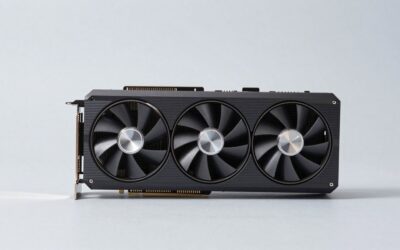
- Top Pick: ASRock Intel Arc B580 Steel Legend 12GB OC Graphics Card, 2800 MHz GPU Clock, 12GB GDDR6, DisplayPort 2.1, HDMI 2.1a, Triple Fan Cooling, Polychrome SYNC
- Best Value: ASRock Intel Arc B580 Challenger 12GB OC Graphics Card, 2740 MHz GPU Clock, 12GB GDDR6, DisplayPort 2.1, HDMI 2.1a, Dual Fan Cooling, 0dB Silent Operation
- Premium Choice: Sparkle Intel Arc B580 Titan OC, 12GB GDDR6, Torn Cooling 2.0, Axial Fan, Breathing Light, Metal Backplate, SB580T-12GOC

Prime
Best Seller
Sparkle Intel Arc B580 Titan OC, 12GB GDDR6, Torn Cooling 2.0, Axial Fan, Breathing Light, Metal Backplate, SB580T-12GOC

Prime
Editor's Pick
ASRock Intel Arc B580 Challenger 12GB OC Graphics Card, Xe2-HPG, 2740MHz GPU, 12GB GDDR6 192 Bits, PCIe 4.0, Dual Fans, 0dB Silent, DP 2.1, HDMI 2.1a

Prime
Limited Time
ASRock Intel Arc B580 Challenger 12GB OC & PRO-650G 650W 80+ Gold PSU | Efficient 1440p Gaming Bundle


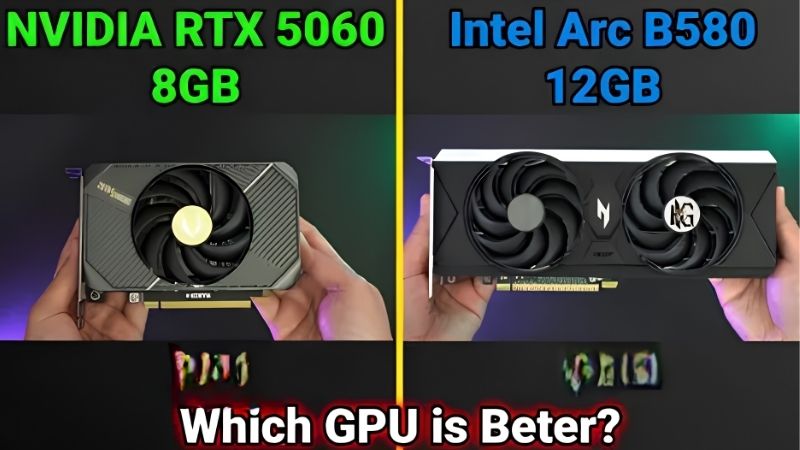
RTX 5060 vs Arc B580 is the comparison where you already know the pitch — Intel gives you 12GB for less money, Nvidia gives you DLSS and drivers that work — and you are here to find out whether the Intel risk is real or whether it is a stale reputation. Fair question. The honest answer involves two specific requirements the B580 has that almost nobody warns you about, and either one can cost you 20-30% of the card’s performance depending on the rest of your machine. Neither appears on the box. Both are below.
The Quick Verdict: RTX 5060 vs Arc B580 in One Minute
It depends on your CPU and your motherboard, which is an unusual answer for a GPU comparison and it is the correct one. The B580’s 12GB against the 5060’s 8GB is a genuine and important advantage in 2026 — 8GB on a new card is the segment’s defining problem. But the B580 requires Resizable BAR to perform as advertised, and it suffers measurable CPU overhead that costs it real frames on older or slower processors. If you have a modern CPU and rBAR enabled, the B580 is excellent value. If you are pairing it with a Ryzen 5 3600 or an older Intel chip, it will underperform its benchmarks and the 5060 becomes the safer buy despite the 8GB. Check your BIOS before you decide anything else.
As an Amazon Associate we earn from qualifying purchases at no extra cost to you.




The Resizable BAR Requirement Nobody Warns You About
This is the single most important paragraph on this page for anyone considering the Intel card.
Arc GPUs depend on Resizable BAR far more than Nvidia or AMD cards do. It is not an optimisation for them — it is load-bearing. With rBAR disabled, a B580 loses a substantial share of its performance, and reports of 20-30% deficits in some titles are consistent rather than isolated.
Two things follow. First, check your BIOS: rBAR needs to be on, along with Above 4G Decoding, and both are frequently disabled by default on older boards. Second, and more seriously — rBAR support is limited on older platforms. Intel 10th gen and earlier, and AMD pre-Ryzen 3000, either lack it or implement it partially. If your motherboard cannot do rBAR, do not buy an Arc card. This is not a preference; the card will not perform.
Go check now, before reading further. It changes the answer.
Who Should Buy the RTX 5060
Buy the 5060 if your CPU or motherboard is older, if rBAR is unavailable, or if you simply want a card that behaves predictably regardless of what it is plugged into. That predictability is worth something real, and it is what the price premium buys.
Buy it also if you use DLSS heavily or play on a high refresh panel — the 5060 is Blackwell, which means it gets DLSS 4.5’s multi-frame generation including the newer 5X and 6X modes and the Dynamic mode that shifts the multiplier to match your display’s refresh rate. That is a capability Intel has no equivalent for.
And buy it if you stream, record or do any CUDA work. NVENC and CUDA remain genuine advantages that no amount of VRAM offsets.
Who Should Buy the Arc B580
Buy the B580 if you have a modern CPU — Ryzen 5000 or newer, Intel 12th gen or newer — with rBAR enabled, and you want the most VRAM available at this price. 12GB against 8GB is not a specification advantage, it is the difference between a card that ages and a card that expires.
Buy it if you play modern single-player titles at 1080p High or want to attempt 1440p. That is exactly where 8GB breaks and 12GB does not.
And buy it if the price gap in your region is meaningful. The B580 typically undercuts the 5060 while offering 50% more memory, which is a proposition nothing else in the segment matches.
Specs and Real Frame Rates
The specification table looks close. The results are not, and the reason is in the third section rather than in the table.
Core Specifications Compared
| Specification | RTX 5060 | Arc B580 |
|---|---|---|
| Architecture | Blackwell (GB206) | Xe2 Battlemage (BMG-G21) |
| Shader units | 3,840 CUDA | 2,560 (20 Xe2 cores) |
| VRAM | 8GB GDDR7 | 12GB GDDR6 |
| Memory bus | 128-bit | 192-bit |
| Bandwidth | ~448 GB/s | ~456 GB/s |
| Upscaler | DLSS 4.5 | XeSS 2 |
| Frame generation | MFG up to 6X | XeSS 2 FG (2X) |
| Board power | 145W | 190W |
| Resizable BAR | Optional | Effectively required |
| Launch price | ~$299 | ~$249 |
Three bolded rows carry the comparison. The B580 wins VRAM and bus width — 12GB on 192-bit against 8GB on 128-bit, which is a genuinely better memory configuration at a lower price. Bandwidth is effectively tied.
The rBAR row is the one that decides whether any of this matters. It is the only row on the table that can invalidate the other nine.
1080p and 1440p Frame Rates
High preset, no upscaling, on a modern CPU with rBAR enabled — the B580’s best case.
| Game | 5060 @1080p | B580 @1080p | 5060 @1440p | B580 @1440p |
|---|---|---|---|---|
| Counter-Strike 2 | ~285 FPS | ~230 FPS | ~200 FPS | ~168 FPS |
| Call of Duty (recent) | ~112 FPS | ~102 FPS | ~76 FPS | ~74 FPS |
| Cyberpunk 2077 | ~72 FPS | ~66 FPS | ~46 FPS | ~47 FPS |
| Hogwarts Legacy | ~68 FPS* | ~64 FPS | ~40 FPS* | ~46 FPS |
| Black Myth: Wukong | ~54 FPS | ~50 FPS | ~32 FPS* | ~38 FPS |
| Ratchet & Clank | ~75 FPS* | ~72 FPS | ~42 FPS* | ~52 FPS |
Read the two 1440p columns against each other. At 1080p the 5060 leads by 5-25%. At 1440p, the asterisks start appearing on the Nvidia side and the ordering flips — the B580 wins Hogwarts, Wukong and Ratchet outright, not because it is faster, but because the 5060 has run out of memory.
That is the whole argument for the Intel card in one table. It is slower and it stays functional where the faster card breaks.
The CPU Overhead Problem
The second Intel-specific issue, and it is real rather than a rumour.
Arc’s driver carries more CPU overhead than Nvidia’s, and the consequence is that the B580 performs worse than its benchmarks suggest when paired with a slower processor. Every number in the table above assumes a modern CPU. Pair the same card with a Ryzen 5 3600 or a 10th-gen Intel chip and it loses ground — sometimes substantially, particularly at 1080p where CPU load is highest.
The unfortunate irony is that budget cards get paired with budget CPUs. The exact buyer the B580’s price targets is the buyer most likely to have the processor that undermines it.
Practically: if your CPU is a Ryzen 5000/Intel 12th gen or newer, ignore this. If it is older, take 10-20% off the B580’s column and the comparison changes.
Deep Dive: 8GB, 12GB and the Upscalers
Two axes decide this beyond the rBAR question, and they point in opposite directions.
8GB vs 12GB: The Segment’s Defining Problem
Shipping a $299 card with 8GB in 2026 is the criticism the 5060 cannot escape, and it is fair.
At 1080p Medium-High, 8GB is adequate. At 1080p Ultra with texture packs, or at 1440p, several current titles exceed it. And when they do, performance does not decline gently — the driver spills assets across PCIe into system RAM, producing stutter and late-loading textures that no average frame rate reveals. The 128-bit bus makes it worse, because spilling across a narrow bus is more painful.
The B580’s 12GB on a 192-bit bus simply does not have this problem, and that is why it wins the 1440p rows despite being the slower card. If you keep GPUs for four years, that difference is the whole comparison.
DLSS 4.5 vs XeSS 2
Where Nvidia pulls decisively ahead, and it deserves an honest accounting rather than dismissal.
XeSS 2 is genuinely good now — real image quality, real frame generation, and it runs on the B580’s dedicated XMX units rather than a compatibility fallback. The gap to DLSS is much narrower than it was two generations ago.
But the gap is real in three ways. Title support: DLSS is in over 400 games and apps and XeSS is in far fewer. Delivery: Nvidia ships new DLSS models through the Nvidia app as an override, so games that stopped being updated years ago still receive improvements — Intel has no equivalent mechanism. And multi-frame generation: the 5060 is Blackwell, so it gets DLSS 4.5’s 5X and 6X modes plus Dynamic mode, which targets your display’s refresh rate automatically. XeSS 2 frame generation is 2X.
One caveat on the Nvidia side: Dynamic mode is not compatible with frame rate limiters or V-Sync, which catches people who cap frames by habit.
Pros and Cons of Each Card
| RTX 5060 | Arc B580 | |
|---|---|---|
| Pros | 5-25% faster at 1080p; DLSS 4.5 with 5X/6X MFG in 400+ titles; 145W; no rBAR dependency; predictable on any CPU; NVENC and CUDA; new models arrive via the Nvidia app | 12GB on a 192-bit bus for less money; wins 1440p outright where the 5060 runs out of memory; XeSS 2 is genuinely competitive now; better value per gigabyte than anything in the segment |
| Cons | 8GB on a $299 card in 2026 is the segment’s worst spec; 128-bit bus compounds it; loses 1440p rows to a slower card; costs ~$50 more | Effectively requires rBAR — will not perform without it; CPU overhead penalises older processors; XeSS has far fewer titles; 190W; driver maturity still behind |
Both cons columns lead with a structural flaw rather than a nitpick. The 5060’s is fixed in silicon. The B580’s is fixed by your motherboard, which means you can check it right now.
Market Context Before You Choose
The $50 gap between these two is the whole argument, and it exists inside a market that has behaved abnormally for two years.
Why an 8GB Card Costs $299 in 2026
The obvious question, and the answer is not greed alone. Component and laptop prices have kept trending upward rather than settling back, and memory has been among the sharpest movers. On a $299 card, memory is a far larger fraction of the bill of materials than on a $2,000 flagship.
That is the mechanism behind the 5060’s 8GB. GDDR7 is new and supplied by very few manufacturers; adding four more gigabytes to a card at this price point costs more than the segment’s margins absorb. It does not excuse the specification, but it explains why the entire budget tier has stalled at 8GB while the tier above moved on.
It also explains why the B580 is the value story it is. Intel chose GDDR6 on a wider bus — older, cheaper memory in greater quantity — and bought themselves 12GB at a lower price. That is a deliberate engineering trade and in 2026 it looks like the right one.
Prices Flattened, But Relief Is Distant
The good news is real and deserves precision rather than optimism. The steep climb of late 2025 has eased. Framework, which publishes unusually candid component pricing updates, has described a stretch of relative stability while continuing to warn that volatility persists. Prices stopped accelerating; they did not reverse.
New capacity is coming. OEMs can now source DDR5 from Chinese manufacturers such as CXMT, and Micron is building two fabs in Idaho. Both are genuine additions to a constrained market. Neither begins production before 2027-2028, which is well past the useful life of a decision you are making this month.
So the 8GB problem is not going to be solved by a price correction that lets you buy up a tier. Flat, not falling. Choose between what is in front of you.
The Alternative If Neither Fits
If your platform cannot do rBAR but 8GB worries you — a genuinely awkward position — two options exist. The RTX 5060 Ti 16GB costs more but solves the memory problem outright with no platform requirements. A used RX 6700 XT offers 12GB with strong raster and no rBAR dependency, at the cost of DLSS and a warranty.
And if you are on a modern platform, the B580 is the value pick in this segment and it is not especially close. Compare current pricing across the RTX 5060, Arc B580 and RTX 5060 Ti 16GB before deciding — and check your BIOS for Resizable BAR and Above 4G Decoding first, because that single setting determines whether the Intel card is a bargain or a mistake.
See More:
- GTX 1650 vs RTX 3050
- Nvidia DIGITS
- Nvidia cuDNN
- Radeon RX 9070 XT vs RTX 5090
- PNY GeForce RTX 5080 review
Final Verdict: RTX 5060 vs Arc B580
The rtx 5060 vs arc b580 decision is settled by your motherboard rather than by the cards. Check Resizable BAR before anything else: if your platform cannot enable it, the B580 loses a large share of its performance and the comparison is over — buy the 5060. If your CPU is older than Ryzen 5000 or Intel 12th gen, take 10-20% off the B580’s numbers for driver overhead and the 5060 likely wins on that too.
But if you have a modern CPU with rBAR on, buy the Arc B580. Its 12GB on a 192-bit bus is the right specification for 2026, and the 1440p table shows exactly why — it beats the faster card in three titles simply by not running out of memory. The 5060 is 5-25% quicker at 1080p and has the better upscaler in far more games, and those are real advantages. They do not outweigh shipping 8GB on a $299 card in 2026. With prices flat and no relief before 2027, buy the memory.
Frequently Asked Questions
Is the Arc B580 12GB worth the driver risk over an 8GB RTX 5060?
It depends on your library. The B580 has 12GB on a 192-bit bus, which keeps textures intact at 1440p where the 5060 8GB card starts swapping. But Intel drivers still show weaker results in older DirectX 11 and some Unreal Engine titles, so if you play a lot of pre-2020 games the Nvidia card is the safer pick.
Does the B580 really need Resizable BAR?
Yes, and this is the single biggest gotcha. Intel Arc leans heavily on ReBAR, and without it you can lose 20 percent or more in many titles. That means a motherboard with UEFI boot, ReBAR or Smart Access Memory enabled in the BIOS, and generally a 10th generation Intel or Ryzen 3000 platform or newer.
How do the power requirements compare?
The RTX 5060 draws around 145W and is comfortable on a good 500W to 550W supply with a single 8-pin. The B580 sits near 190W with a single 8-pin and Intel suggests a 600W unit. Neither needs the 12V-2×6 connector, so both are straightforward upgrades in a prebuilt with a modest PSU.
What about DLSS 4 and multi frame generation?
DLSS 4 with the transformer model and multi frame generation is exclusive to the RTX 50 series and is the 5060 strongest argument, since it can multiply frame rates in supported titles. Intel counters with XeSS 2 and frame generation, which is good but supported in far fewer games and slightly softer in motion.
Which is the better 1080p and 1440p card in 2026?
At 1080p the two trade blows and the 5060 usually leads in modern titles thanks to upscaling quality. At 1440p with high textures the B580 12GB frame buffer keeps it more consistent in memory heavy games. Buy the B580 for value and VRAM, the 5060 for driver maturity, efficiency and NVENC.
Ready to decide? Our #1 pick for 2026 is the Architecture.
Live price & availability on Amazon.




Write Your Review
No reviews yet. Be the first to share your experience!