
- Top Pick: GIGABYTE Radeon RX 9070 XT Gaming OC 16G Graphics Card, PCIe 5.0, 16GB GDDR6, GV-R9070XTGAMING OC-16GD Video Card
- Best Value: GIGABYTE Radeon™ RX 9070 XT Gaming OC ICE 16G Graphics Card (16GB GDDR6, 256-bit, PCIe 5.0, HDMI/DP 2.1, 2.7 Slot, Hawk Fan, Server-Grade Thermal Gel, Reinforced Structure)
- Premium Choice: ASUS Prime Radeon RX 9070 XT 16GB GDDR6 OC Edition Gaming Graphics Card


Editor's Pick
Sapphire 11323-02-20G Pulse AMD Radeon RX 7900 XT Gaming Graphics Card with 20GB GDDR6, AMD RDNA 3


Best Seller
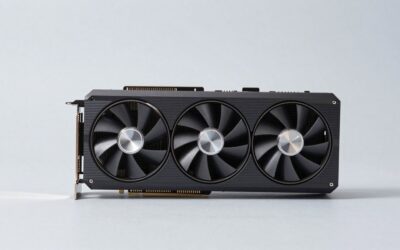
XFX Swift AMD Radeon RX 9070XT Triple Fan Gaming Edition with 16GB GDDR6 HDMI 3xDP, AMD RDNA 4 RX-97TSWF3BA
radeon rx 7900 xt vs 9070 xt is the most genuinely difficult decision in AMD’s lineup, and it is difficult for a reason worth stating plainly: the older card has more memory and more bandwidth, while the newer card has a feature the older one can never receive. FSR 4 runs on RDNA 4’s AI accelerators. The 7900 XT is RDNA 3 and does not have them, so it stays on FSR 3.1 permanently — no driver update changes that. Against this sits 20 GB of VRAM on a 320-bit bus delivering 800 GB/s, against the 9070 XT’s 16 GB and 645 GB/s. This is a real trade-off with no obviously correct answer, so here is the data to make it with.
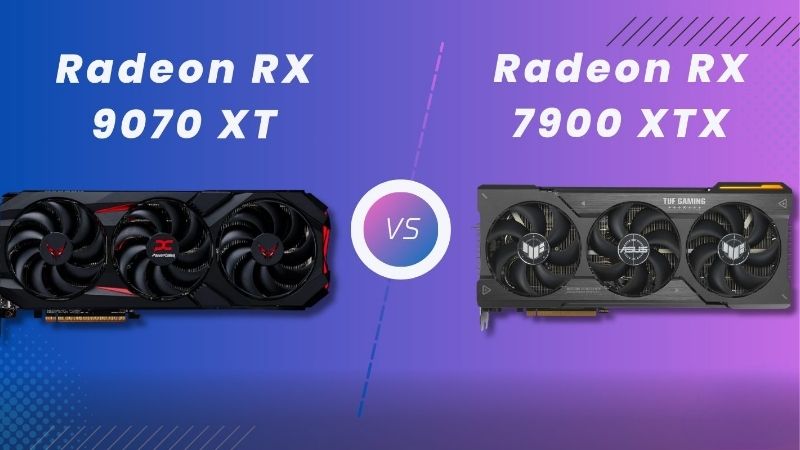
The Quick Verdict on Radeon RX 7900 XT vs 9070 XT
The 9070 XT is the better card for most people, and the reason is ray tracing plus FSR 4 rather than raw speed — in raster the two are close enough that price decides. The 7900 XT wins if you need the 20 GB frame buffer for creative work or very high-resolution texture mods, or if it is discounted heavily enough to make the feature gap irrelevant.
As an Amazon Associate we earn from qualifying purchases at no extra cost to you.


When the RX 9070 XT Is the Right Call
Choose the 9070 XT if you play anything with ray tracing enabled. RDNA 4 roughly doubled ray tracing throughput per compute unit versus RDNA 3, and the 9070 XT beats the 7900 XT in RT titles despite having 20 fewer compute units. That is a generational improvement, not a clock speed difference.
Choose it also if image quality at upscaled resolutions matters to you. FSR 4 moved to a machine-learning model and closed most of the gap to DLSS. FSR 3.1 is a good spatial-temporal upscaler, but it is a different class of technology and the difference is visible in motion at Performance and Balanced presets.
And choose it if you want a card that will receive AMD’s optimisation priority for the next several years. RDNA 4 is current; RDNA 3 is one generation back and heading further back.
When the RX 7900 XT Still Makes Sense
Choose the 7900 XT if 16 GB is a real constraint for you rather than a theoretical one. Blender scenes, high-resolution texture mod packs, 4K with everything maxed, or local AI work — in these, 20 GB is 20 GB and no feature substitutes for it.
Choose it also for pure raster at 4K. The 800 GB/s of bandwidth on a 320-bit bus is a 24% advantage that asserts itself precisely where frame buffers are under pressure, and it lets the 7900 XT hold its own or edge ahead in bandwidth-bound titles at high resolution.
And choose it on price. If clearance stock puts a 7900 XT meaningfully below a 9070 XT, the value case reopens — you are buying more memory and more bandwidth for less money, and giving up features you may not use.
Radeon RX 7900 XT vs 9070 XT Spec Comparison Table
The compute unit count is misleading across architectures. Read the bandwidth, VRAM, and upscaling rows instead — those three define the entire decision.
| Specification | RX 7900 XT | RX 9070 XT |
|---|---|---|
| Architecture | RDNA 3 (2022) | RDNA 4 (current) |
| Compute Units | 84 CUs (5,376 SPs) | 64 CUs (4,096 SPs) |
| Ray Accelerators | 84 (1st gen RDNA 3) | 64 (2nd gen, ~2x per CU) |
| AI Accelerators | 168 (RDNA 3) | 128 (RDNA 4) |
| VRAM | 20 GB GDDR6 | 16 GB GDDR6 |
| Memory Bus | 320-bit | 256-bit |
| Bandwidth | ~800 GB/s | ~645 GB/s |
| Infinity Cache | 80 MB | 64 MB |
| Board Power | 315W | 304W |
| Power Connector | 2x 8-pin | 2-3x 8-pin |
| Recommended PSU | 750W | 750W |
| Upscaling | FSR 3.1 — no FSR 4 | FSR 4 (ML-based) |
| Launch MSRP | $899 (2022) | $599 |
The 9070 XT achieves comparable raster performance with 20 fewer compute units, 4 GB less memory, and 24% less bandwidth. That is what a genuine architectural generation looks like — and it is also why the compute unit row tells you nothing useful on its own.
Deep Dive Face-Off: Where Each Card Wins
Aggregated across published benchmark suites, these two trade positions depending entirely on what you switch on. The pattern is clean and it maps directly onto the spec table above.
Raster Performance at 1440p and 4K
At 1440p with ray tracing off, the two land within roughly 5% of each other, with the 9070 XT typically nosing ahead. Both comfortably feed a 144 Hz panel in most modern titles at high settings. On this metric alone, the newer card is a lateral move.
At 4K raster the 7900 XT closes and sometimes wins, by roughly 3% to 8% in bandwidth-sensitive titles. Its 320-bit bus and 800 GB/s are doing exactly what wide memory buses do — holding performance where the frame buffer is stressed. This is the one scenario where RDNA 3’s brute force beats RDNA 4’s efficiency.
Read that honestly: if you game at 4K without ray tracing and never touch upscaling, the older card is the marginally better performer. That is a narrow scenario, but it is a real one and nobody should pretend otherwise.
Ray Tracing and the FSR 4 Exclusivity
Switch ray tracing on and the comparison inverts hard. In RT titles the 9070 XT leads by roughly 25% to 45% depending on how heavy the RT load is. RDNA 4’s second-generation ray accelerators roughly doubled throughput per compute unit, which is why 64 CUs beat 84.
FSR 4 is the larger issue. It is hardware-accelerated on RDNA 4’s AI accelerators and does not run on RDNA 3 — this is a silicon boundary, not a software gate. The 7900 XT is on FSR 3.1 for the rest of its life. If you use upscaling routinely, which at 4K almost everyone does, you are choosing between a machine-learning reconstruction and a previous-generation one every time you launch a game.
The counter-argument deserves airing: FSR 3.1 at Quality preset on a 4K panel is perfectly good, and the 7900 XT’s extra bandwidth means it needs upscaling slightly less often. That is fair. But the direction of travel is one-way — FSR 4 will keep improving and the 7900 XT will keep not receiving it.
Practical Fit: Power, Size and What Fits Your Build
These two are unusually similar physically, which removes a variable that complicates most comparisons on this site. Both want 750W, both use standard 8-pin connectors, and both land in comparable case-clearance territory.
The 7900 XT draws 315W and takes two 8-pin connectors. The 9070 XT draws 304W and takes two or three depending on the partner design. Check the card’s spec before ordering — a three-connector model on a PSU with two discrete PCIe cables is a problem, and daisy-chaining a second connector off one cable is a known source of instability at this power level.
Length is the only meaningful difference. Reference-class 7900 XT cards run roughly 276 to 320 mm and 2.5 slots; 9070 XT partner designs run 280 to 330 mm and two to three slots. Both are large. If your PSU is currently 650W or 700W, that is your first purchase either way — a quality 750W or 850W 80+ Gold unit with two separate PCIe cables is the foundation both of these cards need, and it is worth pricing alongside whichever you choose.
Pros, Cons and the Third Option
Here is the plain ledger for both cards, and the alternative if this trade-off is not one you want to make.
RX 9070 XT: Pros and Cons
Pros: FSR 4 with hardware ML upscaling — exclusive to RDNA 4 and a genuine quality step. Roughly 25% to 45% faster in ray tracing despite 20 fewer compute units. Current architecture with years of driver priority ahead. Lower board power at 304W. Better efficiency per compute unit. Available new with full warranty. Typically cheaper than the 7900 XT’s original MSRP by a wide margin.
Cons: 16 GB against 20 GB — a real limit for Blender, heavy texture mods, and local AI work. 24% less bandwidth, which costs it at 4K raster. 64 MB of Infinity Cache against 80 MB. Some partner designs need three 8-pin connectors. Still loses heavily to Nvidia in path tracing.
RX 7900 XT: Pros and Cons
Pros: 20 GB of VRAM — more than any card near this price. 320-bit bus with 800 GB/s, a 24% bandwidth advantage. 80 MB of Infinity Cache. Wins or ties at 4K raster. Two standard 8-pin connectors on nearly every design. Mature drivers with years of refinement. Clearance pricing can make it excellent value.
Cons: No FSR 4 — permanently, at the silicon level. First-generation RDNA 3 ray accelerators are roughly half as capable per CU. 315W for comparable raster performance means worse efficiency. Out of production, so stock only shrinks and used units carry unknown history. Driver priority declines from here.
The Alternative: RTX 5070 Ti
If this trade-off feels like choosing which compromise to accept, that is because it is. The RTX 5070 Ti sidesteps it: 16 GB of GDDR7 with roughly 896 GB/s of bandwidth — more than either AMD card — plus DLSS 4 with Multi Frame Generation, full NVENC, and CUDA.
It costs more than either, and if you are committed to AMD for driver, Linux, or ecosystem reasons that is a legitimate position and this section does not apply. But if the reason you are cross-shopping two AMD cards is that neither quite fits, the answer may be that the card you want is on the other side of the aisle.
Worth checking current pricing across all three before committing — at these levels a single discount reorders the whole ranking.
Why AMD Went From 20GB to 16GB
An analytical reader deserves the mechanism rather than the observation. A newer flagship-adjacent card shipping with less memory than its predecessor is not an oversight, and three market forces explain it.
The H200 Decision and Who Is Buying the Memory
The United States has cleared Nvidia to sell the H200 — among its most capable AI accelerators — into China. That reaches this comparison indirectly but genuinely: memory is a shared, contested resource, and the entire industry procures GDDR and DRAM from the same small set of suppliers.
When AI infrastructure demand rises, every board partner across both vendors competes for the same supply against buyers with vastly better margins. A large market reopening reinforces that pressure rather than relieving it, and AMD is not exempt simply because the H200 is an Nvidia product.
Read the 20 GB against 16 GB in that light and it stops looking like a step backwards in ambition. The 7900 XT’s 320-bit bus and 20 GB were specified in 2022, under different memory economics. The 9070 XT was specified under current ones, and a 256-bit bus with 16 GB is what those economics produce at $599.
The Good News Is Real, But Weak and Distant
Prices have at least stopped climbing at the pace they set through late 2025. Framework, which publishes unusually candid supply commentary, has reported a stretch of relative stability while still warning that volatility has not ended. The steep climb flattened. Nothing reversed.
For this decision specifically, that means the 7900 XT’s clearance pricing is unlikely to improve further. It is out of production, remaining stock is finite, and a flat market gives sellers no reason to discount harder. If a 7900 XT at a good price is what tips your decision, that price is not waiting for you.
New Memory Supply Arrives in 2027 at the Earliest
Fresh capacity is genuinely opening up. OEMs can increasingly source DDR5 from Chinese suppliers such as CXMT, and Micron is building two fabs in Idaho. Both are real and substantial. Neither runs before 2027 or 2028.
So relief exists, but it is weak and years away. Waiting for 20 GB to become normal again at this tier means waiting through two more product generations — by which point FSR 4 will be two versions old and the 7900 XT will still not run it.
Which clarifies the trade-off. You are not choosing between memory now and memory later. You are choosing between memory that exists today and features that will keep improving for years.
See More:
Final Verdict and Recommendation
The radeon rx 7900 xt vs 9070 xt decision comes down to one question: do you need 20 GB, or do you need FSR 4? Everything else is close. In raster they are within roughly 5% at 1440p, with the 7900 XT edging ahead at 4K on the strength of its 800 GB/s. Power draw, PSU requirements, and physical size are near-identical. The two things that genuinely separate them are the 4 GB of memory and the upscaler — and neither can be added later.
For most people, buy the 9070 XT. Ray tracing performance is 25% to 45% better, FSR 4’s machine-learning model is a visible quality step over FSR 3.1, and RDNA 4 has years of driver priority ahead while RDNA 3 has years of decline. Buy the 7900 XT only if 20 GB solves a problem you actually have — Blender scenes, heavy texture mods, local AI — or if clearance pricing makes the feature gap worth accepting. With memory supply contested and no new capacity before 2027, that 20 GB is not something the market will offer you again cheaply, and remaining 7900 XT stock only shrinks. Check today’s price on both, confirm your PSU has two discrete PCIe cables, and buy the one that matches the problem you are actually solving.
Frequently Asked Questions
Is 20GB on the 7900 XT better than 16GB on the 9070 XT?
Only for niche workloads. Twenty gigabytes helps with large local language models, heavy 4K texture mods and professional scenes, but no current game needs it at the resolutions these cards target. For gaming, the 9070 XT 16GB with faster effective throughput and better compression is the more balanced configuration.
How much does FSR 4 matter?
Quite a lot. FSR 4 is an RDNA 4 exclusive machine-learning upscaler that closes most of the historic image-quality gap with DLSS, and it can be forced into many FSR 3.1 titles through AMD Software. The RX 7900 XT is permanently limited to FSR 3.1, which shows more shimmer and ghosting in motion.
Which is faster in ray-traced games?
The RX 9070 XT is clearly ahead, often by 30 to 50 percent in heavy ray-traced titles, because RDNA 4 substantially reworked the ray accelerators. In pure rasterisation the two trade blows, with the 7900 XT sometimes leading at 4K thanks to its wider 320-bit memory bus and higher raw bandwidth.
What power supply and cabling do they need?
The RX 7900 XT is rated around 315W and the RX 9070 XT around 304W, and both typically use two or three 8-pin PCIe connectors rather than 12V-2×6. A quality 750W unit is the sensible baseline, and 850W is safer if you pair either card with a high core count CPU.
Should I upgrade from a 7900 XT to a 9070 XT?
Only if you play ray-traced games or want FSR 4. Rasterised performance is close enough that the swap is hard to justify at full price, and you lose 4GB of VRAM. If you can sell the 7900 XT for a strong price and mostly play modern titles, the upgrade makes sense.
Ready to decide? Our #1 pick for 2026 is the Architecture.
Live price & availability on Amazon.




Write Your Review
No reviews yet. Be the first to share your experience!