
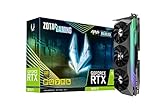
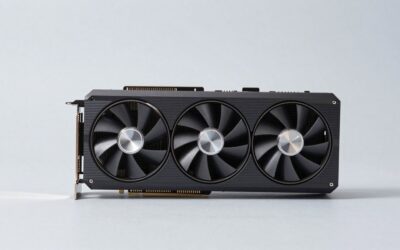
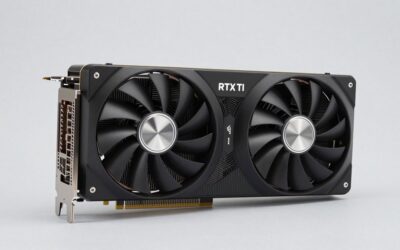
- Top Pick: EVGA GeForce RTX 3070 Ti FTW3 Ultra Gaming, 8GB GDDR6X, 19000MHz Memory, 1860MHz GPU, 3 Fans, ARGB LED, Metal Backplate, PCIe 4.0, DisplayPort, Desktop Compatible
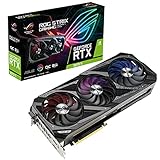
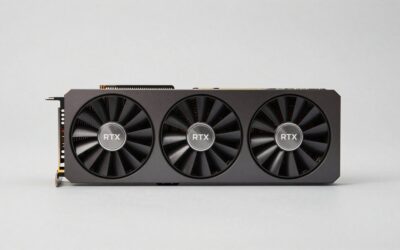
- Best Value: MSI Gaming GeForce RTX 3070 Ti 8GB GDRR6X Ventus 3X – Computer Graphics Card 256-Bit HDMI/DP Nvlink, Tri-Frozr 2 Ampere Architecture OC, NVIDIA GPU Video Card (Renewed)
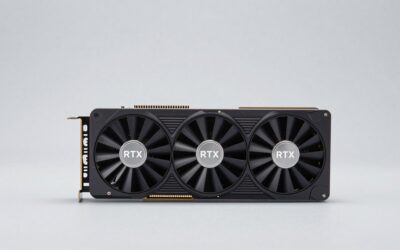
- Premium Choice: ASUS TUF Gaming NVIDIA GeForce RTX 3070 Ti OC Edition Graphics Card (PCIe 4.0, 8GB GDDR6X, HDMI 2.1, DisplayPort 1.4a, Dual Ball Fan Bearings, Military-Grade Certification, GPU Tweak II) (Renewed)
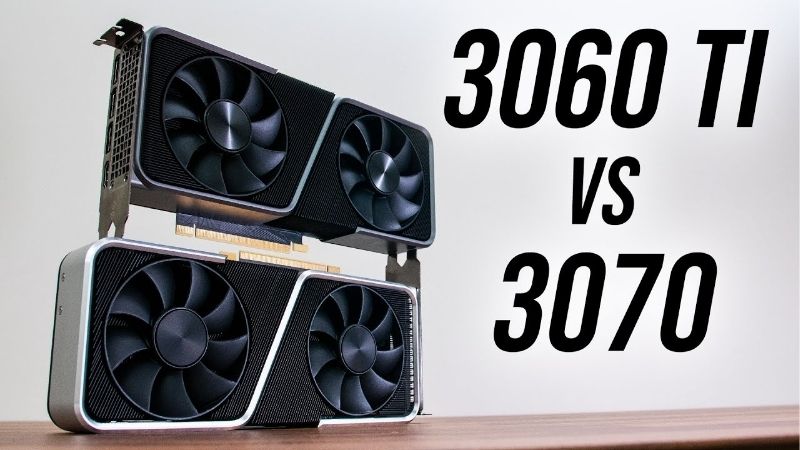
3060 Ti vs 3070 is one of the cleanest comparisons in the used market, because these two cards are almost the same product. Same die. Same memory. Same bus. Same bandwidth. The 3070 has 21% more CUDA cores enabled and draws 20W more, and that is the entire list of differences. Which means the question is not really about performance — it is about whether 21% more shader hardware is worth what sellers are asking, and the answer turns on a detail that catches people out repeatedly.
The Quick Verdict
The RTX 3070 wins by roughly 10–15% in real games — less than its 21% core advantage, because both cards share an identical memory subsystem that constrains them equally. If the used price gap is under $40, take the 3070. If it is $80 or more, take the 3060 Ti and keep the money.
As an Amazon Associate we earn from qualifying purchases at no extra cost to you.



Where They Are Genuinely Identical
Both are GA104. Both carry 8GB of GDDR6 on a 256-bit bus at 448 GB/s. Both run DLSS 4.5, neither runs Frame Generation, and both sit on Nvidia’s supported driver branch. There is no feature you get on one and not the other.
The Variant That Changes the Answer
There is an RTX 3060 Ti GDDR6X. It runs 19 Gbps memory for 608 GB/s against the standard version’s 448 GB/s — 36% more bandwidth on the same silicon. On a card where memory is the shared constraint, that variant closes most of the gap to a 3070. If a 3060 Ti listing carries a premium, this is frequently why, and it is one of the rare premiums worth paying.
Comparison Table
Read the rows that say “identical”, because there are more of them than in almost any other GPU comparison.
| Spec | RTX 3060 Ti | RTX 3070 | Difference |
|---|---|---|---|
| Die | GA104 | GA104 | Identical |
| CUDA cores | 4,864 | 5,888 | 3070, +21% |
| VRAM | 8GB GDDR6 | 8GB GDDR6 | Identical |
| Bus width | 256-bit | 256-bit | Identical |
| Bandwidth | 448 GB/s | 448 GB/s | Identical |
| TDP | 200W | 220W | 3060 Ti, −20W |
| PSU recommended | 600W | 650W | 3060 Ti |
| Upscaling | DLSS 4.5 | DLSS 4.5 | Identical |
| Frame generation | No | No | Identical |
| Driver status 2026 | Full support | Full support | Identical |
| Launch MSRP | $399 | $499 | 3060 Ti, −$100 |
Why 21% More Cores Delivers 10–15%
This pattern should look familiar if you have read anything about the current generation. The RTX 5070 Ti and RTX 5080 share the GB203 die: 20% more cores on the 5080, 7% more bandwidth, and a 10–14% real gap. Nvidia has been doing this for years.
Here it is starker, because the bandwidth difference is not 7% — it is zero. Both cards move data at exactly 448 GB/s. The 3070’s extra 1,024 cores have precisely the same memory subsystem feeding them.
So at resolutions where bandwidth binds — 1440p with heavy textures, 4K with anything — the 3070’s advantage shrinks toward nothing. At 1080p, where the shaders have room to work, it opens toward the full 21%. Your resolution decides how much of that 21% you actually receive.
Deep Dive Face-Off
Three criteria, since two of the four you would normally compare are literally identical here.
Gaming: The Gap Depends on Your Monitor
At 1080p the 3070 leads by roughly 13–15%. The shaders are the constraint, the extra cores have work to do, and the gap approaches what the spec sheet suggests.
At 1440p it narrows to around 10–12%. Both cards start bumping into 448 GB/s, and the 3070’s cores wait more often.
At 4K, or in texture-heavy titles at 1440p Ultra, the gap can compress into single digits — and both cards run into the same 8GB wall at the same moment, because the VRAM is identical. Neither card rescues you from a texture pack the other one chokes on.
The 8GB Question Applies Equally
Worth stating clearly because people assume the more expensive card must have more headroom. It does not. Both are 8GB, and in 2026 that is the shared limitation.
Modern titles at 1440p Ultra with ray tracing routinely approach or exceed 8GB. The symptom is not a lower average frame rate — it is stutter in 1% lows as assets swap over PCIe. When that happens, the 3070’s extra cores buy you nothing, because the card is waiting on memory rather than computing.
If VRAM capacity is your concern, neither of these is the answer. The RTX 3060 12GB is slower than both and has more memory, which is its entire argument.
Power and the Used-Card Reality
200W against 220W, and 600W against 650W recommended. On paper marginal. On the used market, where these cards go into machines that are themselves five years old, a 50W PSU difference occasionally decides a build.
More important on any card of this vintage: thermal paste has had five or six years to dry out, and fan bearings wear. A card throttling at 83°C because its paste is spent will underperform every benchmark you have read, and no amount of comparing spec sheets tells you which listing that describes.
Budget a repaste on either. Undervolting one of these afterwards typically drops 10–20°C and recovers sustained clocks you have quietly been losing.
The Nvidia Pattern Worth Recognising
This comparison is a template rather than a one-off, and spotting it saves money across every generation.
Nvidia repeatedly ships two cards from one die where the cheaper one keeps the full memory subsystem and gives up shader units. The 3060 Ti and 3070 are GA104 with identical 448 GB/s. The 5070 Ti and 5080 are GB203 with 896 against 960 GB/s — a 7% gap against 20% more cores, producing 10–14% in practice.
The lesson is consistent: when two cards share a die and a bus, the cheaper one captures most of the performance. The premium buys shader units that the shared memory subsystem cannot fully feed.
The inverse pattern is where the trap lives. When the cheaper card has a narrower bus — the RTX 5060 Ti 16GB at 128-bit against the 5070 Ti’s 256-bit, both carrying 16GB — the VRAM number looks identical and the cards are not remotely comparable. Same die, cheaper card, good buy. Same VRAM, narrower bus, different product entirely.
The Alternative
Both are used cards with no warranty. Two other options deserve weighing.
The RTX 3060 Ti GDDR6X
Mentioned above and worth repeating because it genuinely reshapes this comparison. Same GA104 at 4,864 cores, but 19 Gbps memory delivering 608 GB/s rather than 448.
On a pair of cards whose shared constraint is bandwidth, adding 36% more of it to the cheaper one is a bigger change than adding 21% more cores to the dearer one. In bandwidth-bound scenarios the GDDR6X 3060 Ti can match or beat a standard 3070.
Check GPU-Z on arrival — the memory type field tells you which one you received. Sellers frequently do not know, and the model name on the box is identical either way.
The RTX 5060: New, and Nearer Than You Think
At $299 MSRP with 3,840 Blackwell CUDA cores, 8GB of GDDR7 at 448 GB/s and 145W, the RTX 5060 has traded near $339 as of July 2026 — the tightest MSRP-to-street gap in the current lineup.
Against a used 3070 at $250–$300, that is a small step for a warranty, a longer driver runway, and Multi Frame Generation — which neither Ampere card can ever have, and which on cards this size is what makes recent titles playable.
Note it shares the same 8GB limitation. It solves the feature problem, not the capacity one.
Keeping What You Have
If you own either card, the other one is not an upgrade. A 10–15% gain is not worth a transaction, and both run DLSS 4.5 on a supported branch. Spend the afternoon on a repaste and an undervolt instead.
The runway is longer than the age suggests. Ampere was excluded from the October 2025 deprecation that moved Maxwell, Pascal, and Volta to security-only updates through 2028. Nvidia has given no signal about when Ampere follows, and historically that has arrived around a decade after launch — which puts these cards comfortably past 2030.
The honest limit is features rather than support. Neither card will ever run Frame Generation, which needs RTX 40, or Multi Frame Generation, which is RTX 50 only. DLSS 5 arrives this autumn and is expected to require RTX 50 silicon. You keep the driver updates and you stay outside the feature roadmap.
What the 2026 Market Does to This Decision
Used prices are anchored to new ones, and the new market has been unusual enough to hold these cards up well past where they should be.
Why Five-Year-Old Cards Still Cost Money
Component pricing has continued trending upward, memory foremost. The positive news is real but weak: the steep late-2025 climb has flattened, and Framework has reported a stretch of relative stability while still warning that volatility remains. New supply is opening — OEMs can source DDR5 from Chinese suppliers such as CXMT, and Micron is building two Idaho fabs — but neither produces until 2027–2028.
It got tighter at the top. At CES 2026 board partners reported the RTX 5070 Ti and RTX 5060 Ti 16GB as end of life while Nvidia disputed the claim, and Nvidia’s allocation has visibly shifted toward 8GB parts. When new mid-range supply thins, used mid-range prices rise. That is why a 2020 card still commands what it does.
The Practical Read
Waiting for used prices to fall is not a plan. They track a new market where relief is three years out and where the 16GB tiers are getting scarcer rather than cheaper.
Both of these cards remain genuinely serviceable at 1080p and workable at 1440p with DLSS. Ampere was excluded from the October 2025 deprecation that ended Game Ready support for Maxwell, Pascal, and Volta, so the driver runway is long — historically that has come around a decade after launch.
If you are buying, the honest advice is to shop the price rather than the model. These cards are close enough that a $60 gap matters more than 21% of core count.
One thing worth doing before any used purchase: ask the seller for a GPU-Z screenshot. It shows the memory type, the bus width, and the ROP count in one image, and it distinguishes a GDDR6X 3060 Ti from a standard one instantly. A seller who will not provide it is telling you something.
It is worth checking what the RTX 5060 actually costs today before committing to either — the gap between a used 3070 and a new card with a warranty is smaller than most people assume, and the new card brings Multi Frame Generation that no Ampere card will ever have.
See More:
- Nvidia beta
- Nvidia CUDA 11.8
- Check CUDA version
- Nvidia GPU for gaming
- PNY GeForce RTX 5080 16GB OC review
Final Verdict and Recommendation
The 3060 Ti vs 3070 verdict is unusually simple because the cards are unusually similar. Same GA104 die, same 8GB, same 256-bit bus, same 448 GB/s, same DLSS 4.5, same driver support. The 3070 has 21% more cores, delivers 10–15% more frames, and draws 20W more. That is the whole comparison.
Buy the 3070 if the price gap is under $40 — you are getting the gain for close to nothing. Buy the 3060 Ti if the gap is $80 or more, because 10–15% is not worth that on cards this age. Hunt for the 3060 Ti GDDR6X if you can find one: 608 GB/s against 448 on a pair of cards limited by memory is a larger change than 21% more cores, and it is the smartest buy in this comparison.
And check GPU-Z on arrival for the memory type. On the used market, listings are written by sellers who often do not know which variant they have, and the difference between 448 and 608 GB/s is worth considerably more than the difference between these two model names.
Frequently Asked Questions
If they share a die and a bus, where does the difference come from?
Both use GA104 with 8GB of GDDR6 on a 256-bit bus. The 3070 simply has more of the die enabled, 5888 CUDA cores against 4864 on the 3060 Ti, plus slightly higher clocks and a higher power limit. The gap in games is typically ten to fifteen percent, which is smaller than the model numbers imply.
Is 8GB of VRAM a limitation on both?
Yes, and it affects them equally since the buffer is identical. At 1440p with ultra textures and ray tracing enabled, both can run out of memory and produce frame time spikes. Dropping textures one notch or using DLSS quality mode resolves it in most titles, but neither card is a good 4K choice today.
Which one is better value on the used market?
The 3060 Ti almost always wins on performance per pound, because the 3070 commands a premium disproportionate to a ten to fifteen percent gain. Buy the 3070 only if the price difference is small, or if you specifically want the extra headroom for 1440p high refresh play in older, less memory hungry titles.
What power supply do they need?
The 3060 Ti is rated around 200W and the 3070 around 220W, both usually on a single 8-pin or dual 8-pin depending on the partner design. Ampere is known for sharp transient power spikes, so a quality 650W unit is the sensible minimum even though the average draw suggests you could get away with less.
Do they still get driver support and DLSS updates?
Yes. Ampere is fully supported by current drivers and both cards run DLSS super resolution and ray reconstruction. They cannot run frame generation, which is limited to Ada and newer, so the displayed frame rate gap against a modern midrange card is much wider than the raw rendering gap.
Ready to decide? Our #1 pick for 2026 is the Die.
Live price & availability on Amazon.

Write Your Review
No reviews yet. Be the first to share your experience!