
- Top Pick: ASRock Radeon RX 7600 Challenger Pro 8GB OC, AMD RDNA 3, 8GB GDDR6, PCIe 4.0, Triple Fans, 0dB Silent, 2695MHz Boost, Triple Fan Graphics Card
- Best Value: XFX Speedster SWFT210 Radeon RX 7600 Graphics Card with 8GB GDDR6 HDMI 3xDP, AMD RDNA 3 RX-76PSWFTFY
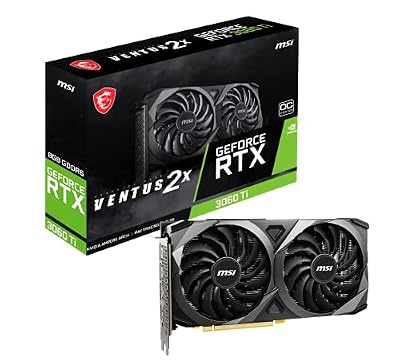
- Premium Choice: msi Gaming GeForce RTX 3060 Ventus 2X 12G OC V1 Graphics Card – 15 Gbps GDRR6 Boost Clock: 1807 MHz 192-Bit HDMI/DP PCIe 4 Torx Twin Fan Ampere


rx 7600 vs rtx 3060 is a price question wearing a performance question’s clothes. In raw frames at 1080p these two are close enough to be a coin flip — within roughly 5% of each other across a mixed suite, trading wins depending on the title. So the benchmark charts do not settle it, and a twenty-minute video filmed at last quarter’s prices settles it even less. What actually settles it is two spec-sheet facts pointing in opposite directions: the RTX 3060 has 12 GB of VRAM, and the RX 7600 has an AV1 encoder. Here is the table, the frame rates, and the exact price gap where each one becomes the right buy.
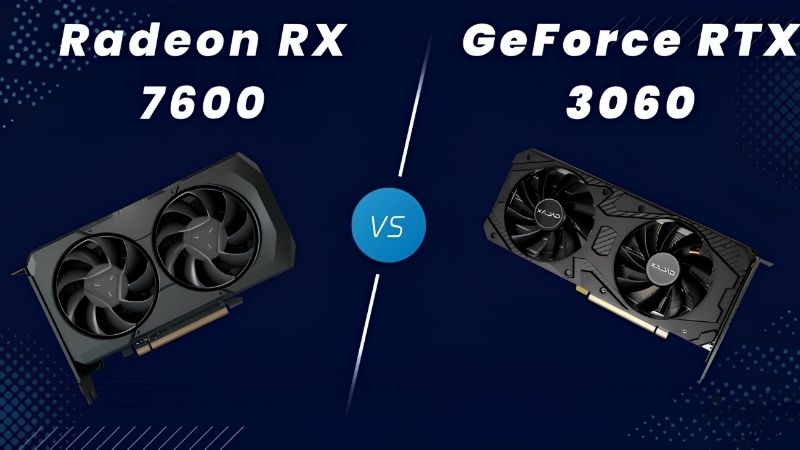
The Quick Verdict on RX 7600 vs RTX 3060
Buy the RTX 3060 12GB unless it costs more than roughly $50 over the RX 7600. The 12 GB frame buffer and the 192-bit bus are worth that premium and nothing about the 7600 offsets them — with one exception. If you stream or record, the 7600’s AV1 encoder is a capability the 3060 does not have at all, and that flips the decision outright.
As an Amazon Associate we earn from qualifying purchases at no extra cost to you.



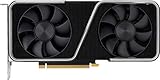
When the RTX 3060 12GB Is the Buy
Choose the 3060 if you play modern single-player titles and intend to keep the card for three years. 12 GB against 8 GB is the difference between adjusting texture settings to avoid stutter and not thinking about it. The 192-bit bus and 360 GB/s also give it more headroom at 1440p than the 7600’s 128-bit path.
Choose it if you want DLSS. FSR 3.1 on the 7600 is good, but DLSS has wider game support and a longer record of per-title model updates, and Nvidia’s driver-level DLSS Override can force newer models into older titles — an ongoing channel with no AMD equivalent at this tier.
When the RX 7600 Is the Buy
Choose the 7600 if you stream to Twitch or YouTube, or if you record and upload gameplay. This is the decisive case. Ampere has AV1 decode but no AV1 encode — that arrived on Ada. RDNA 3 has AV1 encode. If AV1 encoding is part of your workflow, the 3060 simply cannot do it and the comparison ends there.
Choose it also on price. If a deal puts the 7600 $70 or more below the 3060, the value case reopens — you are giving up VRAM you might not stress at 1080p medium, and pocketing real money.
And choose it if your case is small. The 7600 runs 165W with compact partner designs and generally slots into tighter builds than a 3060.
RX 7600 vs RTX 3060 Spec Comparison Table
The bus width and VRAM rows explain the 3060’s longevity. The encoder row explains why the 7600 exists for a specific person.
| Specification | RX 7600 | RTX 3060 12GB |
|---|---|---|
| Architecture | RDNA 3 (2023) | Ampere (2021) |
| Shader Units | 2,048 SPs (32 CUs) | 3,584 CUDA cores |
| RT Hardware | 32 Ray Accelerators | 28 RT Cores (2nd gen) |
| VRAM | 8 GB GDDR6 | 12 GB GDDR6 |
| Memory Bus | 128-bit | 192-bit |
| Bandwidth | ~288 GB/s | ~360 GB/s |
| Board Power | 165W | 170W |
| Power Connector | 1x 8-pin | 1x 8-pin |
| Recommended PSU | 550W | 550W |
| Upscaling | FSR 3.1 | DLSS |
| AV1 Encode | Yes | No |
| AV1 Decode | Yes | Yes |
| Launch MSRP | $269 | $329 |
Note that both draw roughly the same power, use one 8-pin, and want a 550W PSU. Physically these are interchangeable — which is unusual and genuinely useful, because it means your existing build supports either and the decision is purely about the card.
Deep Dive Face-Off: Where the Coin Flip Lands
Aggregated across published 1080p benchmark suites, these two are closer than almost any pair on this site. The interesting question is not which is faster — it is where the near-tie breaks.
Frame Rates at 1080p and 1440p
At 1080p high settings the two land within roughly 5% of each other. The 7600 wins in some newer titles that favour RDNA 3’s architecture; the 3060 wins in others, particularly where its extra bandwidth helps. Averaged across a broad suite, call it a draw — both deliver 70 to 110 fps in most modern games.
At 1440p the 3060 pulls ahead by roughly 8% to 15%, and the reason is visible in the table: 360 GB/s against 288, and a 192-bit bus against 128. Neither is a comfortable 1440p card in demanding titles, but the 3060 is the one with a path there via DLSS.
Now the price maths, which is what you came for. At roughly $230 for a 7600 and roughly $280 for a 3060, you pay about 22% more for a performance draw at 1080p plus 50% more VRAM. The VRAM alone justifies it. Push the gap to $90 and the calculation genuinely changes.
The 8GB Problem and What 12GB Actually Buys
This is what the near-tie in average frame rate conceals. When a game exceeds available VRAM it does not degrade smoothly — it stutters. Textures swap over PCIe, frame times spike from 13 ms to 60 ms and back, and the average fps figure stays almost unchanged while the experience falls apart.
Several modern titles already exceed 8 GB at 1080p with high texture settings and ray tracing enabled. At 1440p it happens more often. The 3060’s 12 GB removes the failure mode entirely for the life of the card.
The honest counter: at 1080p with textures on medium-high, 8 GB holds fine, and texture settings carry a modest performance cost. If that is your ceiling and the 7600 is $70 cheaper, take the money. But you are buying a card with no headroom on the day it arrives, and headroom is exactly what you cannot add later.
Practical Fit: Prebuilts, PSUs and What to Check
A large share of people comparing these two are looking at a prebuilt system rather than a bare card, and that changes what you should be checking.
In a prebuilt, the graphics card is often the best-specified component and the power supply the worst. A machine advertised with an RTX 3060 may ship with a 450W unnamed unit that is technically adequate and practically marginal. Look up the PSU model before you look at the GPU — if it is unbranded, budget for a replacement and factor that into the price comparison.
Buying bare, both cards want 550W and one 8-pin PCIe connector, which most existing builds already have. Check length: 7600 designs run roughly 200 to 240 mm, 3060 designs roughly 200 to 250 mm. Both are dual-slot and both fit most mid-towers.
One thing worth pricing honestly: if your PSU is an unbranded unit that came with the case, that is your first purchase regardless of which GPU you pick. A quality 550W or 650W 80+ Bronze unit costs roughly $60 to $80 and prevents the instant-reboot-under-load fault that people misdiagnose as a bad graphics card.
Pros, Cons and a Card Worth Pricing First
Here is the plain ledger, followed by the option that may beat both depending on what today’s listings look like.
RTX 3060 12GB: Pros and Cons
Pros: 12 GB of VRAM — 50% more, and the reason this card ages well. 192-bit bus and 360 GB/s. Roughly 8% to 15% faster at 1440p. DLSS with wide game support and driver-level Override. The 12 GB makes light Blender and Stable Diffusion work genuinely possible, which the 7600 cannot do. CUDA access. Runs on 550W with one 8-pin.
Cons: No AV1 encode — a hard no for streamers, and it will not change. Ampere is several generations old and driver priority will thin. Roughly $50 to $60 more. Ray tracing is present but unusable in demanding titles. No frame generation.
RX 7600: Pros and Cons
Pros: AV1 encode — the single capability the 3060 lacks entirely, and decisive if you stream. Cheaper, often by $50 to $70. Newer architecture with more driver runway than Ampere. 165W and compact partner designs suit small cases. Matches the 3060 at 1080p in raw frames. FSR 3.1 is a competent upscaler and works on any GPU.
Cons: 8 GB of VRAM is already a constraint and will stutter in modern titles. 128-bit bus and 288 GB/s limit it at 1440p. Loses by 8% to 15% at 1440p. No FSR 4 — that is RDNA 4 exclusive and this card will never receive it. No CUDA. Weaker ray tracing.
The Alternative: Intel Arc B580
Before committing to either, price the Intel Arc B580. It carries 12 GB on a 192-bit bus — matching the 3060’s memory advantage — and adds both AV1 encode and decode, which means it does the one thing the 3060 cannot and the one thing the 7600 does, simultaneously.
It typically sits close to the 7600 on price while outperforming both at 1080p and 1440p. The honest caveat is driver maturity: Intel has improved substantially, but older DirectX 11 titles remain a weak spot, and if your library is mostly pre-2018 games this is a real risk rather than a footnote.
At this tier all three reprice weekly, and a single discount reorders the ranking completely. Worth checking today’s listing on all three before you decide — the card that was poor value last month may be the obvious pick this morning.
Why These Prices Are Not Falling
A price-sensitive decision deserves an honest read on where prices are going. Three developments explain what you are seeing on the listings right now.
Component Prices Are Still Trending Up
The broad direction for laptops and PC components remains upward, and memory is the driver. AI infrastructure is consuming DRAM and GDDR at a scale budget graphics cards cannot outbid, and that cost lands directly in every board partner’s bill of materials.
Entry-level products absorb this worst. On a $999 card an increase in memory cost vanishes into margin. On a $269 card it is a large percentage of the price — which is exactly why 8 GB on a 128-bit bus keeps appearing at this tier while the 3060’s 12 GB on a 192-bit bus looks increasingly generous for a 2021 product.
Read that in reverse and it is buying advice. The 3060 was specified when memory cost less. It would be more expensive to build today, and that kind of value leaves the market rather than improving.
The Good News Is Real, But Weak and Distant
Prices have at least stopped climbing at the pace they set through late 2025. Framework, which publishes unusually candid supply commentary, has reported a stretch of relative stability while still cautioning that volatility has not ended. The steep climb flattened. Nothing reversed.
For a deal hunter that is genuinely useful information: you are not being penalised for buying this month rather than last. It also means waiting a quarter is unlikely to reward you with anything except a thinner selection of remaining 3060 stock, since that card is no longer in production.
New Memory Supply Arrives in 2027 at the Earliest
Fresh capacity is genuinely opening up. OEMs can increasingly source DDR5 from Chinese suppliers such as CXMT, and Micron is building two fabs in Idaho. Both are real and both are large. Neither runs before 2027 or 2028.
So relief exists, but it is weak and years out. Waiting for memory prices to make 12 GB standard at this tier means waiting through two more product generations — and the card in your machine now does not get faster in the meantime.
Which settles the timing. The right question is not “will this get cheaper?” but “what is the gap today, and does 12 GB or AV1 encode matter more to me?” Both answerable in the next five minutes.
See More:
Final Verdict and Recommendation
The rx 7600 vs rtx 3060 comparison is a genuine near-tie in frames and a clear decision on everything else. At 1080p they are within 5% of each other, which means the benchmark charts cannot help you and the spec sheet has to. Buy the RTX 3060 12GB if the gap is roughly $50 or less — the 12 GB frame buffer, the 192-bit bus, and DLSS make it the better three-year purchase, and 12 GB at this price point is not something the current market reproduces.
Buy the RX 7600 in two specific cases. First, if you stream or record: the 3060 has no AV1 encoder, cannot get one, and no price makes up for a missing capability. Second, if the gap stretches past roughly $70 and you game at 1080p with sensible texture settings — take the saving. Before either, price the Intel Arc B580, which offers 12 GB and AV1 encode together, provided your library is not heavy on older DirectX 11 titles. And if your PSU is an unbranded unit from a prebuilt, that is your real first purchase. With prices flat but high and no memory relief before 2027, check today’s listings on all three, confirm your PSU and clearance, and buy the one that matches how you actually use the machine.
Frequently Asked Questions
Which card wins on pure price to performance?
The RX 7600 is normally cheaper and slightly faster in rasterised 1080p gaming, often by five to ten percent. The RTX 3060 answers with 12GB of VRAM, better ray-tracing hardware and DLSS. If you buy purely on frames per dollar at 1080p, the RX 7600 wins; if you value headroom, the RTX 3060 does.
Is 12GB on the RTX 3060 genuinely useful?
Yes, in specific cases. It prevents texture streaming stutter in games with large asset packs, helps with heavy mod lists, and matters a lot for local AI workloads and video projects. For everyday 1080p gaming the RX 7600 8GB is rarely limited today, but the 3060 has more runway.
How do the power requirements compare?
They are close. The RX 7600 draws roughly 165W and the RTX 3060 about 170W, and both use a single 8-pin PCIe connector. A reliable 550W power supply comfortably covers either card with a mainstream Ryzen or Core CPU, and no 12V-2×6 cable or ATX 3.x supply is required.
Which has better upscaling and ray tracing?
The RTX 3060 has meaningfully stronger ray-tracing throughput and DLSS support, including the newer transformer model that improves image stability. The RX 7600 supports FSR 3.1 with frame generation but cannot run FSR 4, which is limited to RDNA 4. For ray tracing at playable settings, NVIDIA is the safer pick.
Will the RX 7600 work on an older PCIe 3.0 system?
It works but the card uses only eight PCIe lanes, so PCIe 3.0 halves its available bandwidth compared with a modern board and costs a few percent, more when VRAM fills. The RTX 3060 uses a full sixteen-lane PCIe 4.0 interface, so it is less sensitive on older motherboards.
Ready to decide? Our #1 pick for 2026 is the Architecture.
Live price & availability on Amazon.




Write Your Review
No reviews yet. Be the first to share your experience!