
- Top Pick: maxsun GEFORCE GTX 1050 Ti 4GB GDDR5 128 Bit Video Gaming Graphics Card for Gaming PC Mini Small Form Factor SSF Slim Low Profile Design GPU, DisplayPort, HDMI (Low Profile)
- Best Value: msi Gaming GeForce GT 1030 4GB DDR4 64-bit HDCP Support DirectX 12 DP/HDMI Single Fan OC Graphics Card (GT 1030 4GD4 LP OC)
- Premium Choice: AISURIX GTX 1050 Ti 4G Graphics Card, 128 Bit GDDR5 PCI Express 3.0 Graphics Card, DVI VGA HDMI Graphics Card with Freeze Fans (GTX 1050 ti)
Nvidia GTX 1050 Ti is one of the most enduring budget cards ever made, and it still turns up constantly in cheap builds and second-hand listings. Its appeal is simple: it needs no extra power connector, fits almost any case, and can breathe gaming life into an old office PC for very little money. This review is an honest look at what the card can still do in 2026, where its 4GB of memory and missing modern features hold it back, and whether it is the right buy or a false economy.


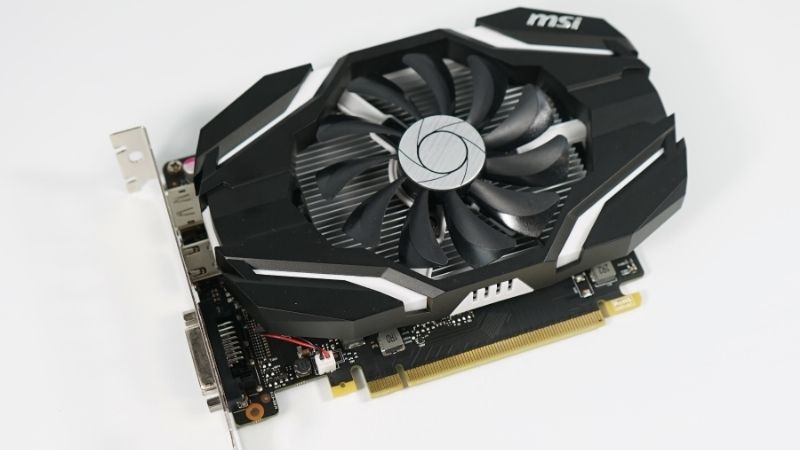
Nvidia GTX 1050 Ti Specs and What It Can Still Do
The 1050 Ti was never a powerhouse, but it was engineered to be effortless to install, and that quality is exactly why it refuses to die. Its specification explains both its lasting usefulness and its clear limits, so it is worth understanding what you are actually getting before you buy one for a budget or hand-me-down machine.
As an Amazon Associate we earn from qualifying purchases at no extra cost to you.




Core Specs and the No-Power-Connector Advantage
The card carries 768 CUDA cores and 4GB of GDDR5 memory, and it draws so little power, around 75 watts, that it runs entirely off the motherboard slot with no additional power cable required.
That single detail is its secret weapon for reviving old machines. Many pre-built office PCs ship with weak power supplies that lack spare connectors, and the 1050 Ti drops straight into them where a hungrier card would not even power on. For a huge number of cheap upgrades, that compatibility is the whole reason to choose it. A more powerful budget card might be faster on paper, but if it needs a power connector the old machine does not have, it is simply the wrong tool, and this is the quiet detail that keeps the 1050 Ti selling long after faster cards arrived.
It is a compact, low-heat, quiet card as well, which suits the small and poorly cooled cases these budget builds usually live in.
Esports and Older-Game Performance at 1080p
Where the 1050 Ti still shines is popular esports and older titles at 1080p. In lighter competitive games it delivers smooth, playable frame rates at reasonable settings, which is exactly what its typical owner wants.
Older single-player games and indie titles also run well, often at high settings, because they were built for hardware of this class or lighter. For someone playing a back catalogue or the biggest free-to-play games rather than the newest AAA releases, the card remains genuinely capable. The key is matching expectations to the hardware: aim for smooth 1080p in lighter titles rather than maximum settings in demanding ones, and the 1050 Ti delivers a perfectly enjoyable experience for the audience it was always meant to serve.
Where the 4GB and Missing Features Hold It Back
The limits are just as important to be honest about. Modern AAA games will struggle badly, and the 4GB frame buffer is quickly overwhelmed by current textures, forcing low settings and still delivering choppy results in demanding titles.
It also predates modern features entirely: there is no ray tracing and no DLSS-style AI upscaling to lean on. That means no safety net when a game gets heavy, so the card lives or dies on brute simplicity rather than clever software, which firmly fixes it as a light-duty part. Where a modern budget card can lean on AI upscaling to claw back frames in a demanding title, the 1050 Ti has nothing to fall back on, so a game that is too heavy for it stays too heavy, full stop.
Real-World Use Cases for the GTX 1050 Ti in 2026
Rather than judging the card against modern flagships, the fair test is whether it does its intended jobs well, and here it still earns its keep. There are two scenarios where a 1050 Ti is not just acceptable but genuinely sensible, and recognising them helps you decide whether it fits your situation or falls short of it.
Reviving an Old Office or Family PC
The classic use is turning a basic office or family computer into a light gaming machine. Dropping a 1050 Ti into an old pre-built instantly adds real graphics capability for tasks the integrated chip could never handle, from light gaming to smoother media.
Because it needs no power upgrade and fits small cases, this transformation usually costs nothing beyond the card itself. For parents kitting out a child’s first gaming PC on a tight budget, that simplicity and low cost are hard to argue with. It is also a low-risk experiment: if the young gamer later outgrows it, the small outlay was never a big loss, and the card can move on to a secondary machine rather than being wasted.
A Cheap Esports and Emulation Card
The 1050 Ti is also a tidy choice for a dedicated esports or emulation box. It comfortably runs the most popular competitive titles and handles a wide range of console emulation well, making it a low-cost heart for a secondary or living-room machine.
For this role its efficiency is a bonus, since the quiet, cool, low-power operation suits a compact build that sits in a cabinet or under a TV. It does a focused job cheaply, which is exactly what this kind of build calls for. Because it sips power and stays cool and quiet, it also suits a machine that is left on for long sessions or tucked into a media cabinet, where a hotter, louder card would be a nuisance rather than a help.
GTX 1050 Ti Pros and Cons
Weighing what it does well against where it falls short makes the decision straightforward for a budget buyer.
| Pros | Cons |
|---|---|
| No power connector needed; fits almost anywhere | Struggles badly with modern AAA games |
| Great for esports and older titles at 1080p | 4GB memory is quickly overwhelmed today |
| Low power, quiet and cool | No ray tracing or DLSS-style upscaling |
| Cheap way to revive an old PC | Poor value if priced near a modern budget card |
The takeaway is that it is excellent for light, focused use and a poor choice for anyone hoping to play current demanding games.
Should You Buy a GTX 1050 Ti or Spend a Little More
The final question is not whether the 1050 Ti is fast, it is not, but whether it is the right amount of card for your goal and your budget. For some buyers it is perfect; for others a small extra spend changes the experience entirely, and being clear about which group you fall into prevents a purchase you will outgrow in weeks. The good news is that the choice becomes obvious once you are honest about two things: the games you actually intend to play, and how much you are truly willing to spend to play them well.
Ideal Buyer Profile
The perfect buyer wants a dirt-cheap way to add basic gaming to an old, low-power PC, plays mostly esports or older games, and has no intention of running the latest AAA titles. For that person the 1050 Ti is a sensible, low-risk pick.
It is also ideal when the alternative is spending real money on a system that does not justify it, such as an ageing office machine you simply want to make a little more capable without a full rebuild. In that scenario the 1050 Ti is less a gaming purchase than a sensible, minimal upgrade that squeezes a bit more life out of hardware you were not planning to replace anyway.
When to Step Up to a Modern Budget Card
If you want to play any current games at respectable settings, the small extra cost of a modern budget card is money well spent. Newer entry cards bring far more memory, real ray tracing and AI upscaling, and dramatically better performance that the 1050 Ti cannot approach.
The tipping point is price and ambition. Once a used 1050 Ti costs close to a modern budget option, or once your games list includes anything demanding, stepping up is clearly the wiser long-term choice rather than buying a card you will soon outgrow. The trap to avoid is paying almost-modern money for genuinely old hardware, since a little more spent on a current entry card buys years more relevance and features the 1050 Ti can never gain.
See More:
Buying and Compatibility
If the 1050 Ti fits your needs, buying is refreshingly simple: its low power and compact size mean it works in almost any system without a supply or case upgrade, which is the whole point of the card.
Just confirm your PC has a free PCIe slot and check the physical fit, then you are set. Because most 1050 Ti cards on sale today are used, a quick look at the seller’s rating and the card’s condition is worthwhile, but there is no power supply or case upgrade to plan around, which keeps the whole purchase about as painless as a GPU upgrade ever gets. When you are ready, you can compare current prices on the GTX 1050 Ti and a few modern budget alternatives through the links on this page and choose the one that matches your games and budget best.
To wrap up, the Nvidia GTX 1050 Ti is still a genuinely useful little card in 2026 for one specific job: cheaply reviving an old, low-power PC for esports, older games and light use, all without touching the power supply. Just go in with clear eyes, because its 4GB memory and lack of modern features rule out current AAA gaming. If your needs are modest it is a smart, low-cost pick, but if you want to play today’s demanding titles, a small step up to a modern budget card is the better investment.
Frequently Asked Questions
Can the GTX 1050 Ti still play modern games?
Only at low settings and often below 1080p in recent AAA titles. It handles esports games such as CS2, Valorant, League of Legends and Rocket League acceptably at 1080p, and it runs older libraries well. For anything released in the last few years with modern rendering features, expect to use low presets and upscaling.
Does it need a PCIe power connector?
No. Board power is 75 watts, drawn entirely through the PCIe slot, which is exactly why the card remains popular for upgrading office prebuilt machines with weak proprietary power supplies. It is one of the few cards that can meaningfully improve such a system without also replacing the power supply and possibly the case.
Is 4GB of VRAM a hard limit today?
It is a real constraint. Many modern games now recommend six or eight gigabytes even at low settings, and exceeding four causes texture streaming stutter or outright refusal to launch on the highest texture presets. Lowering textures usually restores playability, at obvious visual cost, and it is the first setting to reduce.
Does it support DLSS or ray tracing?
Neither. Pascal predates both RT cores and tensor cores, so hardware ray tracing and DLSS are unavailable. You can use AMD FSR or Intel XeSS in their shader based compatibility modes where games offer them, which is the practical way to squeeze extra frames out of this card in newer titles.
Is it worth buying used, or should I spend more?
If you specifically need a slot powered card for a low wattage prebuilt, it still fills that niche alongside the GTX 1650. Otherwise the money is better spent on an RTX 3050, RTX 5050 or RX 6600 class card, all of which deliver several times the performance if your power supply can handle them.


Write Your Review
No reviews yet. Be the first to share your experience!