
- Top Pick: 51RISC GeForce GTX 1660 Ti Graphics Card, 6GB GDDR6 192bit Video Card for Gaming GPU PCIe 3.0 x16 DP HDMI DVI 1080P 2K Game PC Card 1660ti 4K 8K Display (GTX 1660 Ti – Red)
- Best Value: ASUS Dual GeForce RTX 3050 6GB GDDR6 OC Edition Gaming Graphics Card
- Premium Choice: MSI Gaming GeForce GTX 1660 Ti 6GB GDRR6 – 192-bit HDMI/DP, Dual Fan, VR Ready, OC Graphics Card for Gaming PC, NVIDIA Video Card GPU (GTX 1660 TI Ventus XS 6G OC) Computer Graphics Cards (Renewed)
Nvidia GeForce GTX 1660 Ti was one of the most popular 1080p cards ever made, and years later it remains a common used buy for gamers on a budget. The question in 2026 is a focused one: what can it still run well, where does its 6GB of memory start to bite, and is it still worth the money on the used market? This review works through its real-world 1080p performance, its honest limitations, and the point where a modern card becomes the smarter spend, so you can decide with clear expectations rather than nostalgia.


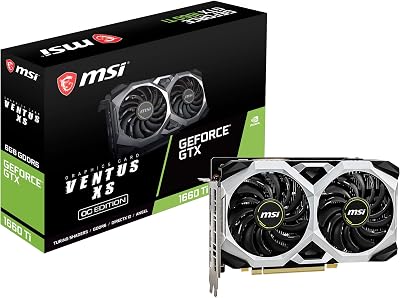
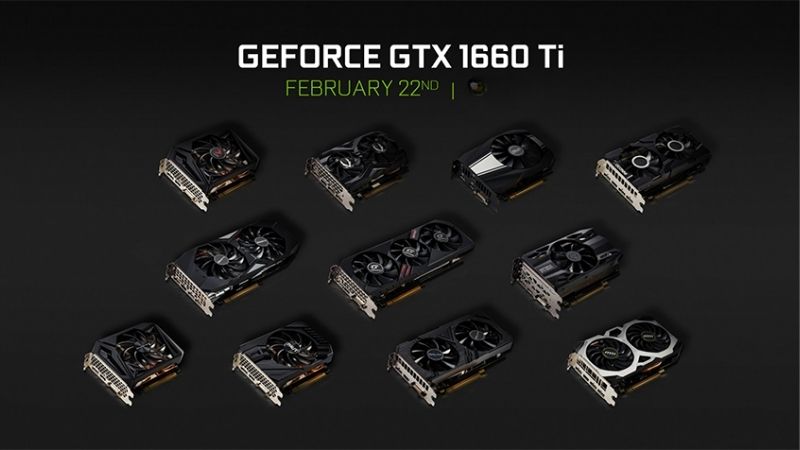
Nvidia GeForce GTX 1660 Ti Specs and Performance
The 1660 Ti was built as a no-frills 1080p performer, and its specifications explain both its enduring popularity and its clear ceiling. It delivered strong frame rates for its price without the extra features of the RTX line, and understanding exactly where it lands today separates the games it still handles comfortably from those that expose its age. That focus is the key to being happy with it. Expect a smooth 1080p card and it delivers; expect a do-everything modern GPU and it will disappoint, so setting the right frame of reference is half the battle with a card of this age.
As an Amazon Associate we earn from qualifying purchases at no extra cost to you.


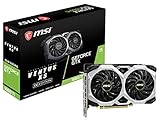


Core Specs and Efficient Design
The GTX 1660 Ti uses Nvidia’s Turing architecture but without the ray-tracing and Tensor cores of the RTX cards, pairing 1536 CUDA cores with 6GB of GDDR6 memory. That trimmed-down design is exactly why it hit such a strong price-to-performance ratio at launch.
It is also efficient, drawing around 120 watts, which keeps it cool, quiet and easy to fit into modest systems without an exotic power supply. That practicality is part of why it became a favourite for budget builds and prebuilt upgrades. That efficiency also meant it slotted into older prebuilt machines a hungrier card would overwhelm, asking almost nothing of the rest of the system, which broadened its appeal well beyond dedicated gaming builds and helped keep whole builds affordable.
The absence of RTX features is the defining trait: no hardware ray tracing and no DLSS, which matters more today than it did at launch as those technologies have become more common. At launch that omission was a fair trade for the price, but in 2026 it is the single biggest thing separating the 1660 Ti from even the budget cards that came after it.
Real-World 1080p Performance
At 1080p the 1660 Ti remains genuinely capable, pushing high frame rates in mainstream and competitive titles at high settings. For esports, older games and many current titles at sensible settings, it still delivers a smooth experience that belies its age.
The most demanding recent AAA games are where it works harder, often needing medium settings to hold a steady frame rate. It is not a card for maxing out the latest releases, but for the huge population of 1080p gamers with realistic expectations, it covers most of what they play.
Frame-time consistency is generally good in titles it handles well, which is why it still feels smooth rather than merely posting a high average that hides stutter. That consistency is a big reason the card is still pleasant to play on rather than merely acceptable, which matters as much to the experience as any average frame-rate figure.
Where Its 6GB Memory Holds Up
The card’s 6GB of memory was reasonable at launch and remains adequate for most 1080p gaming, but it is the specification that dates it fastest. At high textures in the most demanding recent titles, 6GB can become a limit and cause stutter.
In practice this is manageable at 1080p with sensible settings, where the card rarely runs short. The pressure appears mainly when pushing textures to their maximum in the newest games, and dropping them a notch keeps the card comfortable across the vast majority of real-world play. The honest way to frame it is that 6GB is enough for the games this card is realistically used for, and only becomes a hard limit when you push settings the card could not sustain anyway.
Strengths, Weaknesses and Value in 2026
Judged as what it is, a budget 1080p card, the 1660 Ti has a clear balance of pros and cons, and its appeal today rests almost entirely on price. Weighing its strengths against its limits, and being honest about the value equation, is what tells you whether it is the right buy for your situation or a false economy. Context and price are everything here.
Nvidia GeForce GTX 1660 Ti Pros and Cons
Here is the honest balance for a budget buyer weighing this specific card.
| Pros | Cons |
|---|---|
| Strong, smooth 1080p performance | No ray tracing or DLSS |
| Efficient, cool and quiet | 6GB memory dates it in newer games |
| Easy to fit; modest power needs | Aging Turing design, no modern extras |
| Cheap and plentiful on the used market | Poor value if priced near a newer card |
The takeaway is that it remains a capable 1080p card that wins on price and efficiency but loses on modern features, so its value depends entirely on buying it cheap for the right job.
The Missing RTX Features
The biggest thing that dates the 1660 Ti is the absence of RTX features. It cannot do hardware ray tracing, and crucially it lacks DLSS, the AI upscaling that helps newer cards stretch their performance in demanding games.
For pure 1080p gaming at sensible settings, this matters less than the spec sheet suggests, since many games run well without upscaling. But as more titles lean on DLSS to hit high frame rates, the 1660 Ti increasingly relies on raw power alone, which is a growing disadvantage against even budget RTX cards. As DLSS becomes closer to a default than a bonus, that gap will only widen, which is worth bearing in mind if you plan to keep the card for a while.
Is It Worth Buying at the Right Price
This card only makes sense when it is genuinely cheap and used as a 1080p gaming card for someone on a tight budget. At a low used price, it is a reasonable, no-hassle way into smooth 1080p gaming.
The moment it costs anywhere near a modern budget card, the argument collapses, because a newer card adds ray tracing, DLSS and often more memory for a small step up in price. Value here is entirely a function of paying little for solid 1080p performance. Get it cheap and it is a bargain; pay near-new-card money and it is a mistake, so the price you find is genuinely the deciding factor rather than the card itself.
When to Upgrade to a Modern Card
For many buyers looking at the 1660 Ti, a slightly larger budget buys a noticeably better and more future-proof experience, so it is worth knowing when to walk past it. Recognizing that line early saves you from buying a card whose limits you will meet quickly as new games arrive. The signals are usually clear. Nobody enjoys admitting a trusted card has been outgrown, but reading the signs early saves money, since the alternative is a frustrating stretch of low settings before you upgrade anyway.
Signs the 1660 Ti Is Not Enough
If you want ray tracing, DLSS, high 1440p settings, or a card that will stay relevant for years, the 1660 Ti is not the answer. Its performance ceiling and missing features are fixed, and no configuration will lift them.
Wanting any of those things is the clear signal to look at a modern card instead, because you will hit the 1660 Ti’s limits quickly and find yourself shopping again sooner than you would like.
Compatibility and Choosing an Upgrade
Stepping up means checking a little more, since better cards can draw more power. Confirm your power supply provides the wattage and connectors a modern card needs, that it fits your case, and that your processor can keep up.
A current-generation budget or mid-range card delivers a large jump over the 1660 Ti and adds the modern features it lacks. Once you have confirmed your system is ready, you can compare affordable modern GPUs that suit your budget through the links on this page and pick one that brings your setup up to date.
See More:
Getting the Best From an Upgrade
When you do move on from the 1660 Ti, the goal is to buy a card that matches your resolution and system rather than simply the most expensive option you can stretch to. For most 1660 Ti owners, a modern budget or lower mid-range card is a large, satisfying jump without overspending on power they will not use.
It also pays to sell or repurpose the old card rather than leaving it idle, since a working 1660 Ti still has value as a used 1080p card or a spare for another build, which offsets part of the cost of your upgrade and makes the whole move cheaper than it first looks.
In summary, the Nvidia GeForce GTX 1660 Ti is still a genuinely capable 1080p card in 2026, delivering smooth performance in most games for a low used price, with efficiency and easy compatibility on its side. Its weaknesses are its 6GB memory and the complete absence of ray tracing and DLSS. Buy it cheap for budget 1080p gaming and it remains solid value, but if modern features or long-term headroom matter to you, a current budget card is the smarter place to put your money. Judged honestly against its price and its age, the 1660 Ti still earns its keep in the one job it was built for. That is a rare kind of staying power for a budget card of its age.
Frequently Asked Questions
Does the GTX 1660 Ti support DLSS?
No. It uses the Turing TU116 die, which deliberately omits both RT cores and tensor cores to reduce cost. Without tensor hardware there is no DLSS support of any kind. You can use AMD FSR or Intel XeSS in their compatibility modes since those run on standard shaders, and both are widely available in modern titles.
Is 6GB of VRAM still enough in 2026?
It is the card’s clearest limitation. Six gigabytes handles 1080p at medium settings in most games, but high resolution texture packs and newer open world titles will exceed it, producing texture pop-in and stutter. Dropping textures one notch usually restores smoothness, and it is generally a better trade than reducing resolution or shadow quality.
What kind of performance should I expect at 1080p today?
Esports titles such as CS2, Valorant, Rocket League and Overwatch run comfortably above 100fps. Modern AAA releases typically need medium presets and upscaling to hold 60fps, and the most demanding recent games may only reach the 40s. It remains a competent 1080p card for older libraries but is well past its prime for new releases.
Is it still receiving driver updates?
Turing GTX parts have moved onto a maintenance footing alongside older architectures, meaning security and critical fixes rather than fresh per-game optimisations. Existing drivers remain stable and functional, so the card keeps working, but do not expect launch day tuning for new titles or support for newly introduced DirectX feature levels.
What is a sensible upgrade path from a 1660 Ti?
An RTX 4060, RTX 5050 or Radeon RX 7600 roughly doubles performance while adding hardware ray tracing, modern upscaling and AV1 encoding, and all fit similar power budgets. If your budget stretches, an RTX 5060 Ti 16GB or RX 9060 XT 16GB solves the VRAM problem outright and moves you comfortably into 1440p territory.


Write Your Review
No reviews yet. Be the first to share your experience!