

Best Seller
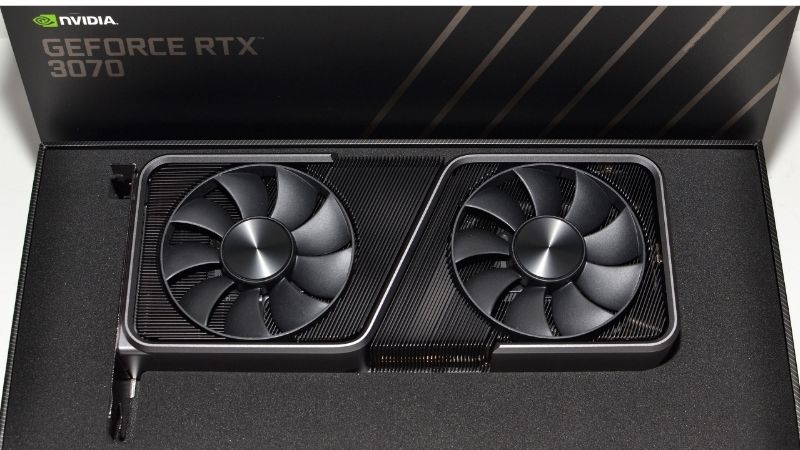
NVIDIA GeForce RTX 3070 8GB GDDR6 PCI Express 4.0 Graphics Card – Dark Platinum and Black
Editor's Pick
NVDIA GeForce RTX 3070 8GB GDDR6 PCI Express 4.0 Graphics Card – Dark Platinum and Black (Renewed)

The nvidia rtx 3070 was one of the most beloved graphics cards of its generation, but the honest question in 2026 is whether it still makes sense to buy, now that it lives mainly on the used market. This review looks past nostalgia at what the RTX 3070 actually delivers today: its real 1440p performance, the ongoing debate over its 8GB of memory, its DLSS and ray tracing features, and the complaints owners raise. By the end you will know whether this classic card is a smart secondhand buy for your build.
As an Amazon Associate we earn from qualifying purchases at no extra cost to you.


What the Nvidia RTX 3070 Delivers Today
Before weighing a purchase, it helps to understand where the RTX 3070 stands years after launch. It remains a genuinely capable card in many games, but time and rising game requirements have exposed a few limits. Here is an honest look at what it brings to a modern system.
Performance at 1080p and 1440p
At 1080p, the RTX 3070 is still a strong performer, comfortably driving high frame rates in mainstream and competitive games. For fast-paced play on a high-refresh 1080p monitor, it has plenty of muscle to keep everything smooth.
At 1440p, its intended sweet spot, the card remains very capable in most titles, holding solid frame rates at high settings. In the heaviest modern games you may need to trim a setting or lean on DLSS, but the overall 1440p experience is still good.
Where it shows its age is only in the most demanding, cutting-edge titles, and even then sensible settings keep it playable. For the vast majority of games people actually play, the RTX 3070 continues to deliver a smooth, enjoyable experience years after its debut.
It also helps to judge the card against its intended audience rather than the latest flagships. The RTX 3070 was never meant to max out every future title at 4K; it was built for excellent 1440p gaming, and by that standard it continues to hold up remarkably well for a card of its age.
The 8GB VRAM Question
The most debated aspect of the RTX 3070 today is its 8GB of memory. When it launched, that was ample, but modern games increasingly push past 8GB, especially at 1440p with high textures and ray tracing enabled.
In practice, this means a handful of the newest, most demanding titles can strain the buffer, causing stutter or forcing you to lower texture settings. It is the single clearest sign of the card’s age and the main caution for buyers considering it now.
That said, the issue is often overstated for typical use. Most games run perfectly well within 8GB at sensible settings, and for players who are not chasing maximum textures in the very latest releases, the memory rarely becomes a real problem.
The smart way to handle the memory limit is proactive rather than reactive. Setting textures to high instead of ultra and enabling DLSS keeps most demanding games comfortably within budget, which sidesteps the issue entirely. Owners who understand this get a great experience, while those who insist on maxing everything are the ones most likely to feel the pinch.
DLSS, Ray Tracing, and Features
The RTX 3070 supports DLSS, Nvidia’s AI upscaling, which can meaningfully boost frame rates in supported games while preserving image quality. This feature remains valuable and helps the card stay competitive in titles that support it.
It also offers capable ray tracing for its class, handling ray-traced effects far better than non-Nvidia cards of its era, though heavy ray tracing at 1440p will ask a lot of it. Paired with DLSS, light ray tracing remains enjoyable.
One limitation to note is that it predates the frame generation feature of newer cards, so it does not benefit from that particular boost. Even so, its core feature set holds up reasonably well for a card of its generation.
It is worth remembering how much value DLSS alone adds over rival cards of the same era that lacked it. In supported games, the frame-rate boost effectively extends the card’s useful life, letting it keep pace with newer titles it might otherwise struggle in. That software advantage is a quiet but meaningful reason the 3070 has aged better than many contemporaries.
Living With the RTX 3070 in 2026
Specs only tell part of the story; what matters is how the card fits into a real system and daily gaming. From in-game performance to power and heat, here is what owning an RTX 3070 actually feels like today, and where its practical strengths and quirks lie.
Real-World Gaming and Settings
In everyday gaming, the RTX 3070 rewards you with a smooth 1440p experience across most titles. Competitive games run at high frame rates, and demanding single-player games hold comfortable numbers at high settings with only occasional tuning needed.
For the heaviest ray-traced or newest AAA games, enabling DLSS and choosing high rather than ultra textures keeps things smooth and respects the 8GB buffer. Treated this way, the card handles modern games with far less compromise than its age might suggest.
The overall impression is of a card that still gets the job done well for typical gaming. Only when you push maximum textures in the very latest titles does it start to feel its years, and even then the fix is usually a minor settings change.
Power, Heat, and System Fit
The RTX 3070 draws around 220W, so a quality 650W power supply is comfortable for most builds. Buyers pairing it with an existing system should confirm their supply and connectors, but it rarely demands a major upgrade elsewhere.
Thermally, it is a well-understood card with plenty of cooler designs available, so keeping it running cool and quiet is straightforward. Its power draw is higher than the newest efficient cards, but it is far from excessive for its performance.
Physically, most models fit comfortably in standard cases, though it is always wise to check card length. As a mature product, there is a wealth of owner knowledge available to help you get it running well.
That maturity is an underrated advantage of buying an established card. Years of community guides, driver refinements, and troubleshooting write-ups mean almost any issue you encounter has already been solved and documented. For a used buyer, that support ecosystem removes much of the uncertainty that comes with older hardware.
Pros and Cons on the Used Market
The pros are real. On the used market, the RTX 3070 can offer strong 1440p performance for a modest price, complete with DLSS and capable ray tracing, making it a genuine value play for budget-conscious gamers.
The cons center on memory and age. The 8GB buffer is the main concern for the newest games, it lacks frame generation, and buying used means no warranty and unknown history unless you choose carefully from a reputable seller.
Weighed together, the RTX 3070 is a smart used buy for the right price and the right expectations, and a poor one if you overpay or expect it to max out the very latest titles at 1440p.
Should You Buy an RTX 3070 Now?
The final question is whether a secondhand RTX 3070 is a wise purchase today, which depends on price, owner experiences, and the wider market. Weighing all three tells you whether it is a bargain or whether your money is better spent elsewhere. Here is the honest verdict.
What Owners Praise and Complain About
Owner feedback praises the card’s longevity and value. Many users note how well it has aged, how DLSS keeps it competitive, and how strong its 1440p performance remains for the money on the used market. It retains a loyal following for good reason.
The complaints are predictable and center on memory. Owners of the newest, most demanding games sometimes hit the 8GB limit, and some wish for the frame generation found on newer cards. These are age-related caveats rather than fundamental flaws.
Read together, the sentiment is that of a still-capable card whose main weakness is a memory buffer that modern games are beginning to outgrow, tempering enthusiasm rather than erasing it.
Used Prices and Buying Timing
Because the RTX 3070 is now a used purchase, its value depends heavily on price, and the wider market shapes that. Component prices in 2026 have generally climbed rather than fallen, and that pressure extends to used cards, keeping secondhand prices firmer than you might expect.
There is modest good news, but it is limited. The steep increases of late 2025 have eased into relative stability, though the market can still swing, so prices have leveled off rather than dropped in a meaningful way for buyers.
With no near-term crash likely and new supply years away, the practical advice is to judge each RTX 3070 listing on its price. If a used card is genuinely cheap for the performance and comes from a trustworthy seller, it can be a smart buy rather than a gamble.
The key discipline is to compare the used price against new alternatives rather than judging it in isolation. If a secondhand 3070 costs nearly as much as a newer card with more memory and a warranty, the newer option wins. The 3070 only makes sense when its price is low enough to clearly reflect its age.
Who Should Buy It and Alternatives
The RTX 3070 is the right pick if you find one at a good used price, play mostly at 1080p or 1440p, and are comfortable with an 8GB card and sensible settings. For budget builders, it can offer excellent value per dollar.
If you want more memory headroom or modern features, weigh a current card like the RTX 5060 Ti 16GB or an RX 9060 XT 16GB instead, which add a larger buffer and newer technology for a fresh-card price and warranty.
Whichever way you lean, comparing used prices against new alternatives is the smartest step. Use the links on this page to check current graphics card prices and see whether the RTX 3070 or a newer option offers you the better deal.
See More:
- nvidia meaning
- rx 9070 vs rx 9070 xt
- 9060 xt 16gb vs 5070 ti
- radeon rx 9070 xt vs 5080
- windows graphics driver update
Conclusion
Years after its debut, the nvidia rtx 3070 remains a capable 1440p graphics card whose value now hinges almost entirely on used pricing. It still delivers strong performance with DLSS and ray tracing in the vast majority of games, with its 8GB memory being the main caveat as the newest titles grow more demanding. At a genuinely low secondhand price, it is a smart buy for realistic expectations, while a newer card may serve you better if memory and features matter. Compare current prices through the links on this page and decide whether the RTX 3070 or a modern alternative is right for you.
Frequently Asked Questions
Is a used RTX 3070 a smart buy in 2026?
It can be, provided the price is well below current 8GB cards. You get strong 1440p rasterized performance and DLSS support, but no frame generation, no warranty in most private sales, and an 8GB buffer that increasingly limits texture settings in newer releases.
How do I check a used card for mining wear?
Ask for original purchase records, inspect for dust, thermal paste residue and altered stickers, and run a stress test while watching memory junction temperatures. Sustained high memory temperatures or a card requiring a large negative core offset to stay stable suggests heavy use and possible degraded thermal pads.
What frame rates can I expect at 1440p?
Well-optimized titles run comfortably above sixty frames per second at high settings, especially with DLSS quality mode enabled. Heavy ray-traced releases and games with large texture packs push it below that, and enabling ray tracing at 1440p usually requires performance-mode upscaling to remain playable.
What are its power and connector requirements?
The card is rated around 220W with a 650W recommended supply. Founders Edition models use a 12-pin connector with a supplied adapter, while partner cards typically use one or two standard 8-pin PCIe connectors. Ampere cards have sharp transient spikes, so a good quality unit matters more than headline wattage.
What newer cards should I compare it against?
Compare against current entry and mid-range options in the same price bracket, particularly 16GB models. Those newer cards bring warranty coverage, lower power draw, updated media engines and frame generation support. The RTX 3070 only wins when its used price is dramatically lower.

Write Your Review
No reviews yet. Be the first to share your experience!