
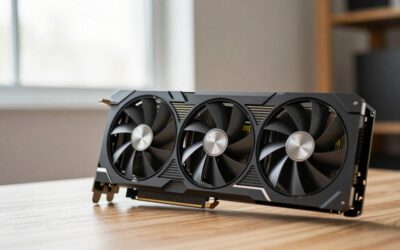
- Top Pick: AISURIX RX 5500 XT 8gb GDDR6 Graphics Card,128 Bit, 3XDP, HDMI, PCI Express 4.0X8, 8pin with Fan Intelligent System,Gaming PC Computer Video Cards with 3X DisplayPort +1X HDMI (Style 1)
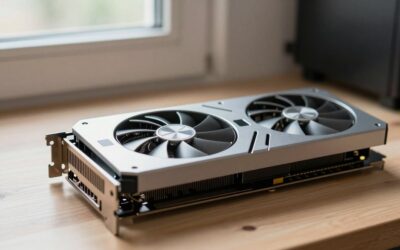
- Best Value: Vandossy Radeon RX 5700 XT Graphics Card, 8GB GDDR6 256-Bit RDNA Architecture 1755/19050 MHz (Base/Boost Clock) DirectX 12 Metal Backplate HDMI DP PCIe4.0 AAA PC Gaming Video Card
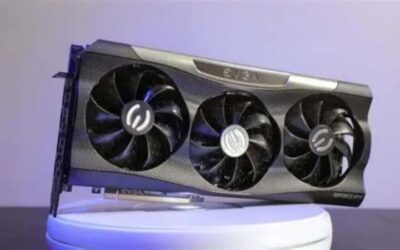
- Premium Choice: Sapphire Technology 11293-03-40G Radeon NITRO+ RX 5700 XT 8GB GDDR6 Dual HDMI Dual DP OC (UEFI) PCIe 4.0 Graphics Card (Renewed)
RX 5700 XT is now a genuinely old card, and that puts most readers in one of two camps: existing owners wondering whether it is finally time to upgrade, or bargain hunters eyeing a cheap used one for a budget 1440p build. Either way, the honest questions are the same. How does this RDNA 1 card hold up in modern games, what are you giving up compared with newer options, and is it still worth buying or keeping. This review covers the 1440p performance, the practical realities, and a clear-eyed look at whether the RX 5700 XT still makes sense.
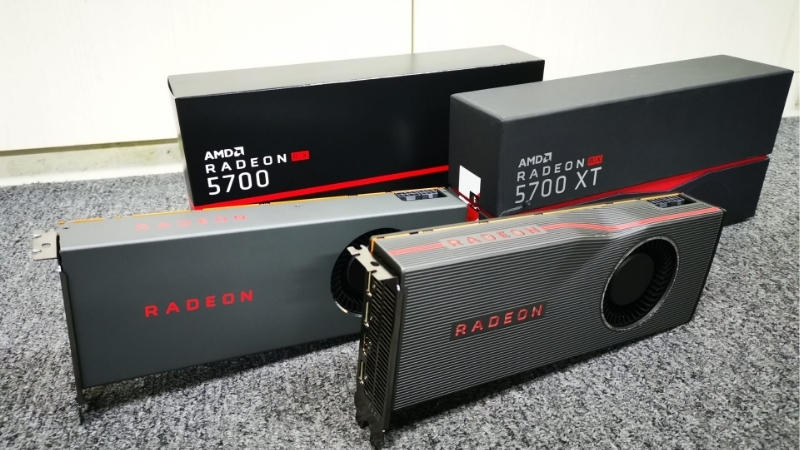
RX 5700 XT Performance: An Aging 1440p Performer
The RX 5700 XT is built on the original RDNA 1 architecture, with 8GB of GDDR6 on a 256-bit bus and a 225W board power. It was a strong 1440p card in its day, and it can still play modern games, but as the oldest architecture covered here it comes with real limitations, most notably no dedicated ray-tracing hardware at all. Below, the performance is broken down the way an upgrade-minded or used-market buyer evaluates an older card.
As an Amazon Associate we earn from qualifying purchases at no extra cost to you.





1440p and 1080p Frame Rates
At 1080p the RX 5700 XT is still a capable card, delivering smooth high frame rates in many modern and competitive titles, which is why it remains usable for budget and esports-focused gaming. For someone who plays mostly online and competitive games, it can still get the job done.
At 1440p it has aged more noticeably. It can still run many titles at high settings, but the heaviest modern games increasingly push it to medium settings or require upscaling to stay smooth, and the 8GB of VRAM is now on the tight side for some texture-heavy releases. It is best described as a 1080p card today that can stretch to 1440p with compromises.
The practical takeaway is that the RX 5700 XT still has life left for 1080p and lighter 1440p gaming, but it no longer has the headroom of newer cards. For existing owners, that means it remains usable; for buyers, it only makes sense at a genuinely low used price.
No Ray Tracing, FSR and Feature Gaps
The defining limitation of the RX 5700 XT is that, as an RDNA 1 card, it has no dedicated ray-tracing hardware whatsoever. It simply cannot run ray tracing in any meaningful way, which is the single biggest reason buyers step up to a newer card if those effects matter to them at all.
On upscaling it can use FSR, which is software-based and broadly compatible, giving the card a useful way to lift frame rates in demanding titles and extend its life. This is genuinely valuable for an older card, since it helps the 5700 XT stay playable in games that would otherwise overwhelm it, though it does not support the newest RDNA 4-exclusive FSR 4.
It also predates AV1 encoding, found on newer cards, and its overall feature set is the most dated covered here. For pure rasterized 1080p gaming none of this is fatal, but the accumulation of missing features is the clearest sign of the card’s age.
What Owners Praise and Criticize
Owner sentiment among long-time users is appreciative but realistic. The most common praise is how long the card has lasted, its continued usability at 1080p, and the value it offered over its lifetime, with FSR support credited for keeping it relevant longer than expected.
The criticisms are squarely about age: no ray tracing at all, 8GB of VRAM that is now tight in some titles, the lack of modern features, and early-life driver issues that, while long resolved, left a mixed reputation. The consensus is that the 5700 XT was a great card that has simply been overtaken, and is now a buy only at a low used price.
Taken together, owners describe a card that has aged gracefully into retirement: still useful at 1080p, but clearly a hold-or-bargain proposition rather than a card to actively seek out new.
| Strengths | Trade-offs |
|---|---|
| Still capable at 1080p and lighter 1440p | No dedicated ray-tracing hardware at all |
| FSR support helps it stay relevant | 8GB VRAM tight in some newer titles |
| Good value over its long lifetime | No AV1 encoding; most dated feature set here |
| Fine for esports and competitive gaming | Overtaken by newer, more capable cards |
RX 5700 XT Build Fit: Power, Size and Cooling
The RX 5700 XT is straightforward to build around, but a clean install or a sensible used purchase still depends on three practical things: the power draw and supply it needs, whether it fits your case, and how it handles heat and noise after years of use. Each is covered below.
Power Draw and PSU Requirements
With a 225W board power, the RX 5700 XT is moderate in its demands, and a quality 600W power supply is plenty for most builds. It uses standard 8-pin connectors, keeping the install simple.
That sensible draw means it rarely forces a power-supply upgrade in an existing build. For a used purchase, the modest requirements make it easy to drop into a typical older system without changing anything else, which is part of its budget appeal.
Card Size and Case Compatibility
Most RX 5700 XT models are moderate in size, with many dual and triple-fan designs that fit standard mid-towers comfortably. Dimensions vary by brand, so check the exact length against your case, but the card is rarely a tight fit in a typical build.
For a used purchase, it is worth inspecting the specific model’s condition as much as its size, since the fans and thermal paste on an older card may be due for maintenance. A clean, well-kept example will run far better than a neglected one.
Cooling, Noise and Temperatures
The RX 5700 XT runs reasonably cool and quiet on most partner coolers, with fan-stop on many models keeping it silent at idle. Under sustained load it stays within comfortable thermal limits on a healthy cooler, though performance depends on the specific model and its condition.
For an older used card, a fresh application of thermal paste and a fan clean can noticeably improve temperatures and noise, restoring much of the original cooling performance. A mild undervolt can further reduce heat and noise if desired.
This is one area where buying used demands a little care: an older card that has run hot for years may need that maintenance to perform at its best. Budget a few minutes for a clean and repaste, and a healthy 5700 XT will run much closer to its original cooling performance.
RX 5700 XT Pricing, Value and When to Buy
The RX 5700 XT’s only real case today is as a low-cost used card, so price is everything, and the current component market is part of the picture. This section covers where prices sit, how the card compares to newer options, and whether to buy, keep, or upgrade.
Where Prices Stand Right Now
For a budget buyer, the market backdrop matters. PC component prices have broadly trended upward, driven mainly by memory costs, and that pressure reaches graphics cards and the rest of a build. The encouraging side is real but limited: the steep climb seen at the end of 2025 has cooled, and some makers, Framework among them, have reported a relatively stable recent stretch while still warning of further movement.
New memory supply is on the way but not soon. OEMs can now source DDR5 from suppliers like CXMT, and Micron is building two fabs in Idaho, yet those plants are not expected to come online until 2027–2028. In short, prices have stopped spiking rather than started falling, so genuine relief is still some distance out, which matters when weighing an old used card against a new one.
The practical implication for an RX 5700 XT buyer is that it only makes sense at a very low used price, since newer cards offer ray tracing, modern features, and more longevity. If the price is not significantly lower than a newer budget card, the newer option is almost always the better buy.
RX 5700 XT vs Newer Cards and the Upgrade Question
Against newer budget cards like the RX 7600 or RX 6650 XT, the 5700 XT gives up ray tracing entirely, modern features, and some efficiency, while offering similar or lower rasterized performance. The newer cards are simply more complete, so the 5700 XT only wins on price when it is dramatically cheaper used.
For existing owners, the upgrade question comes down to your games and resolution: if you are happy at 1080p in titles that run well, there is no urgency to upgrade, but if you want ray tracing, higher 1440p settings, or more VRAM headroom, a newer card is a meaningful step up. The 5700 XT is a card to keep using rather than to seek out new.
That distinction is the heart of the verdict. For an owner, the absence of a compelling reason to upgrade is itself a kind of value, since the card still does the job at 1080p. For a buyer, the absence of ray tracing and modern features means a newer card is almost always the wiser spend unless the used price is unusually low.
Who Should Buy the RX 5700 XT
Buy it only if you find a well-kept used example at a very low price, game primarily at 1080p, do not care about ray tracing, and want the cheapest possible path to capable rasterized gaming. For that narrow case, it can still represent value on the second-hand market.
Look at a newer card like the RX 7600 or RX 6650 XT instead if you want ray tracing, modern features, or more longevity, and existing owners can comfortably hold the card until their games demand more. If you do find a cheap, healthy RX 5700 XT, check the current price and availability through the link here, and compare it against a newer budget card before deciding.
See More:
- Colorful iGame RTX 4090
- Founders Edition vs AIB
- Best RTX 4080 Super card
- Best RTX 5080 AIB
- Best RTX 5070 Ti card
Conclusion: Is the RX 5700 XT Worth It?
The RX 5700 XT is a card that served well for years and still has life left for 1080p and lighter 1440p gaming, but its age shows clearly in the absence of ray-tracing hardware, its tight 8GB of VRAM, and its dated feature set. For existing owners it remains a usable card worth keeping until your games demand more; for buyers it only makes sense at a very low used price, since newer budget cards are simply more complete. With component prices stabilizing rather than falling, the move is straightforward: keep the RX 5700 XT if it still meets your needs, but if you are buying, compare it against a newer card and choose the 5700 XT only when the used price is genuinely low.
Top-Rated Picks


| Product | Brand | Rating | Reviews | Price |
|---|---|---|---|---|
| ARCTIC MX-4 (4 g) – Premium Performance Thermal Paste… | ARCTIC | ★ 4.8 | 104k | $4.99 |
| ARCTIC MX-4 (incl. Spatula, 4 g) – Premium Performanc… | ARCTIC | ★ 4.8 | 71.9k | under $10 |
| Crucial 8GB DDR4 RAM 3200MHz (PC4-25600), Downclockab… | Crucial | ★ 4.8 | 62.8k | under $80 |
| AMD Ryzen 5 5600X 6-core, 12-thread unlocked desktop … | — | ★ 4.8 | 30.2k | under $200 |
| NVIDIA Shield Remote; Voice Search, Motion-Activated,… | — | ★ 4.7 | 10.6k | under $30 |
Frequently Asked Questions
Is the RX 5700 XT still worth buying in 2026?
Only at a very low price. It remains capable of 1080p high settings in many games, but RDNA 1 has no ray tracing hardware at all, and its 8GB buffer is now marginal in recent releases. As a stopgap for an old build it is fine; as a planned purchase it is hard to recommend.
Can it run FSR?
It runs FSR 1 through FSR 3.1 upscaling, since those are shader based and vendor agnostic. It cannot run FSR 4, which requires RDNA 4 hardware, and driver-level Fluid Motion Frames needs RDNA 2 or newer, so AFMF is unavailable too. In-game FSR 3 frame generation may still work in some titles.
What power supply does it need?
Total board power is 225W using one 8-pin and one 6-pin connector on reference designs, with AMD recommending 600W. Many partner cards ran hot and loud, so check fan condition on any used unit and be prepared to repaste, since thermal paste in these cards is now several years old.
How does it compare with a modern budget card?
An RX 7600 or Arc B570 will roughly match or beat it in raster while drawing less power, adding ray tracing hardware, better encoders and current upscaling support. Given that new budget cards start around the used price of a 5700 XT, the newer options are usually the smarter purchase.
Are the driver issues from launch fixed?
Yes, the black screen and timeout problems that plagued early Navi 10 drivers were resolved years ago. The bigger concern now is longevity of support: as AMD focuses optimisation on RDNA 3 and RDNA 4, RDNA 1 cards receive fewer game-specific improvements and will eventually move to legacy status.
Ready to decide? Our #1 pick for 2026 is the Still capable at 1080p and lighter 1440p.
Live price & availability on Amazon.

Write Your Review
No reviews yet. Be the first to share your experience!