
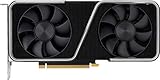
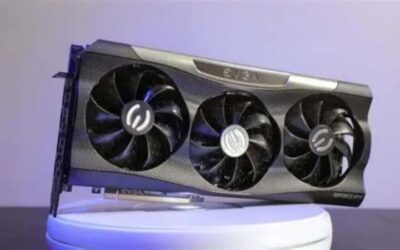
- Top Pick: NVIDIA GeForce RTX 3060 Ti Founders Edition 8GB GDDR6 PCI Express 4.0 Graphics Card (Renewed)
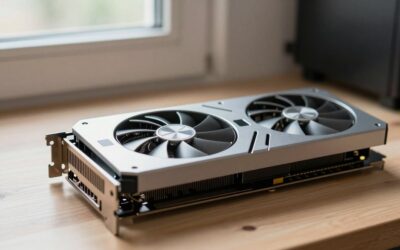
- Best Value: maxsun Graphics Card GeForce RTX 3060 Ti OC Edtion 8G Vidoe Gaming Computer Graphics Cards for Copmputer Gaming PC PCI Express 4.0 x16 HDMI 2.1 GPU (GDDR6 8G)
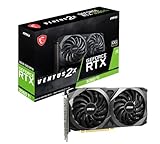
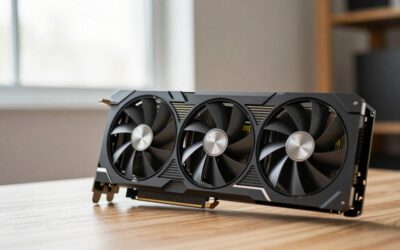
- Premium Choice: MSI Gaming GeForce RTX 3060 Ti LHR 8GB GDRR6 256-Bit HDMI/DP Nvlink Torx Fan 3 Ampere Architecture OC Graphics Card (RTX 3060 Ti Ventus 2X 8G OCV1 LHR) (Renewed)
RTX 3060 Ti 8GB remains one of the most searched cards on the used and budget market, and for good reason: years after launch it still handles modern games at settings that shame its price. The real question in 2026 is not whether it is fast, but whether it is the right buy today given its 8GB of memory, the state of used pricing, and where component costs are heading. This review works through the measured performance, the honest limitations, and the buying math so you can decide with numbers rather than nostalgia.

Prime
Best Seller
NVIDIA GeForce RTX 3060 Ti Founders Edition 8GB GDDR6 PCI Express 4.0 Graphics Card (Renewed)
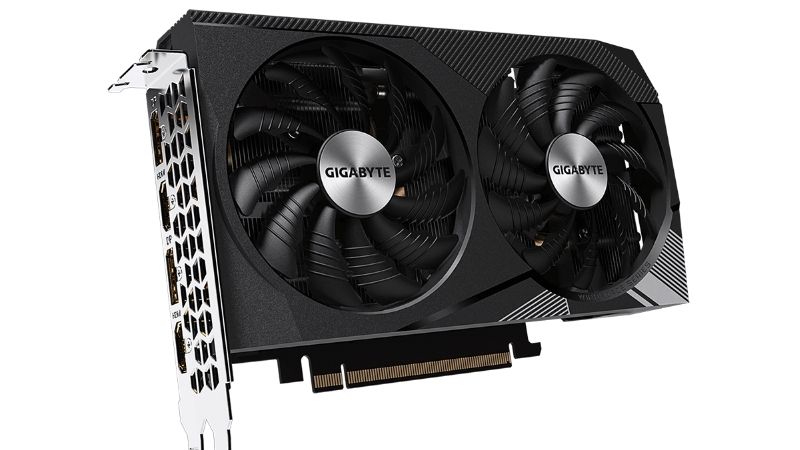
RTX 3060 Ti 8GB Specs and 1080p to 1440p Performance
The appeal of this card has always been its performance-per-dollar rather than any headline feature. It pairs a capable GPU with 8GB of memory on a 256-bit bus, and that combination is what lets an older mid-range part keep pace with current titles at sensible settings. Understanding exactly where it lands helps separate the games where it still excels from the ones where its age shows.
As an Amazon Associate we earn from qualifying purchases at no extra cost to you.



Core Specs and Where the Card Sits Today
The RTX 3060 Ti uses Nvidia’s Ampere architecture with 4864 CUDA cores and 8GB of GDDR6 on a 256-bit bus, which gives it more memory bandwidth than the plain 3060 despite the similar name. That bandwidth is a big part of why it punches above its tier.
In the current stack it sits below the newer generations but comfortably above true entry cards. For a buyer comparing options, it typically trades blows with cards a full class newer at lower resolutions, which is the crux of its value case.
Its typical board power sits around 200 watts, which is modest enough that it does not demand an exotic power supply, a practical point we return to when discussing compatibility. For context, that modest draw is one reason the card stays popular in compact and budget builds, since it slots into systems with a smaller power supply already installed and keeps heat and running costs low across long sessions, unlike the heavier current-generation cards it competes with on performance.
1080p and 1440p Gaming Performance
At 1080p this card is still a strong performer, pushing high frame rates in the majority of competitive and mainstream titles at high settings. For the huge population of gamers still on 1080p monitors, that makes it more than adequate for a smooth experience.
At 1440p the picture is more nuanced. It remains very playable in most games at medium to high settings, but the most demanding recent titles will force compromises, particularly with ray tracing enabled. This is where DLSS earns its keep, using AI upscaling to recover frame rate that native rendering gives up.
The 8GB Memory Question in 2026
The single biggest concern with this card in 2026 is its 8GB frame buffer. A growing number of modern games push past 8GB at higher texture settings and 1440p, and when that happens you see stutter and sudden frame drops rather than a gentle slowdown.
In practice this is manageable rather than fatal. Dropping texture settings one notch, or leaning on DLSS, keeps memory usage in check for the vast majority of titles. But it is the clearest sign of the card’s age, and anyone planning to game heavily at 1440p with maxed textures should weigh it seriously against a higher-memory alternative. It helps to be specific about the trigger, though: the trouble shows up mainly when ultra textures, 1440p and ray tracing are stacked together, not at the 1080p high settings the majority of owners actually run. Seen that way, the 8GB ceiling is a limit on maxed-out edge cases rather than a problem you meet every day.
Buying in 2026: Prices, the Used Market and Value
A card this old lives or dies on price, and 2026’s component landscape has a direct effect on what that price should be. The used market is where most of these cards now change hands, and the wider cost picture explains why waiting for a dramatic discount is probably a mistake. Getting the buying math right matters more here than any single benchmark number. A card’s value is set as much by what surrounds it, the price of a newer alternative, the cost of memory and the direction of the wider market, as by its own silicon, and in 2026 all three currently point the same way.
New Versus Used Pricing Right Now
New stock of the RTX 3060 Ti is increasingly scarce, so most buyers are shopping the used market or open-box listings. That means condition, warranty and seller reputation matter as much as the sticker figure, and a slightly higher price from a reputable source is often the safer spend.
The value test is simple: this card only makes sense if it costs clearly less than a newer card that offers similar performance with more memory. When a used 3060 Ti drifts too close to the price of a fresh entry card from a current generation, the newer part with its longer support window becomes the smarter choice.
That threshold is not fixed; it moves with the market. Because component and memory costs are holding prices up across the board in 2026, both used 3060 Ti listings and new entry cards sit higher than they did a year ago, which narrows the gap between them and makes checking live prices on both options, before you commit to either, more important than it used to be.
How Rising Memory and Component Prices Affect Its Value
Component costs feed directly into this decision. Prices on laptops and PC parts have been trending upward, with memory a particular pressure point, and that keeps a floor under both new and used graphics card prices rather than letting them fall freely. Graphics cards are especially exposed to this because memory is a large part of their bill of materials, so when memory prices climb, card prices tend to follow rather than absorb the increase, and that pressure lands on used and new stock alike.
There is cautious good news, but it is weak and lies in the future. Prices have stopped climbing as steeply as they did in late 2025, and some hardware makers have reported a stretch of relative stability while still warning that volatility is not over. New supply is opening up too, with manufacturers able to source DDR5 from suppliers such as CXMT and Micron building two new plants in Idaho.
The catch is timing: those plants only come online around 2027 to 2028. In plain terms, prices have merely leveled off rather than dropped, and real relief is still years away. For a value shopper that argues against waiting: a fairly priced 3060 Ti in hand today is a better bet than a hoped-for crash that the supply timeline says will not arrive soon.
RTX 3060 Ti 8GB Pros and Cons
Weighing the strengths against the compromises gives the clearest picture for a value buyer.
| Pros | Cons |
|---|---|
| Excellent 1080p performance for the price | 8GB memory strains modern 1440p textures |
| Strong memory bandwidth from the 256-bit bus | New stock is scarce; mostly a used-market buy |
| Modest 200-watt power draw | Weaker ray tracing than newer cards |
| DLSS support extends its useful life | Value collapses if priced near a new entry card |
The verdict is that it is a superb value at the right used price and a poor one if it drifts toward current-generation money.
Who Should Buy the RTX 3060 Ti 8GB and Alternatives
The final decision comes down to matching this specific card to your resolution, your budget and your system. It is a fantastic fit for a clear group of buyers and a compromise for others, and being honest about which camp you fall into is what makes this a good purchase rather than a regret.
Ideal Buyer Profile
The perfect owner is a 1080p gamer on a tight budget who wants high frame rates in mainstream and competitive titles without paying current-generation prices. For that person this card is close to ideal and represents some of the best value on the market.
It is also a strong pick for a first proper gaming build or a hand-me-down upgrade from integrated graphics, where the jump in capability is enormous and the modest power draw keeps the rest of the build affordable. Pairing it with a mainstream processor and a standard power supply produces a balanced 1080p machine that plays today’s titles well without current-generation pricing, which is exactly the sweet spot this card was designed to occupy and a big part of why it refuses to disappear from buyers’ shortlists.
When to Step Up to a Newer Card
If you game primarily at 1440p with high textures, want serious ray tracing, or plan to keep the card for many years, the 8GB memory becomes a real constraint. In that case a newer card with more memory is worth the extra outlay for the longer runway it buys. That runway matters more when prices are not falling, since a card you keep for several years amortizes its cost far better than one you have to replace the moment its memory runs short.
The tipping point is price. Once a used 3060 Ti costs almost as much as a new higher-memory card, the argument for buying old evaporates and the newer part wins on both future-proofing and warranty.
See More:
Checking Compatibility Before You Buy
Before committing, confirm the basics: your power supply comfortably provides its wattage and connectors, the card fits your case length, and your processor is strong enough not to bottleneck it. For most builds from the last several years this is a non-issue given the card’s modest requirements. A quick look at your supply’s wattage and connectors, plus a glance at your case clearance, is usually all the checking this card needs before it drops straight in.
Once you have matched it to your system and settled on a fair used or open-box price, you can compare current listings and pricing on the RTX 3060 Ti and its closest alternatives through the links on this page, and grab the option that lines up with your budget while the deal is live.
All told, the RTX 3060 Ti 8GB is still a genuinely smart buy in 2026, but only as a price-sensitive 1080p champion rather than a maxed-out 1440p card. Its performance holds up, DLSS keeps it relevant, and with component prices merely stabilizing rather than falling, a fairly priced card today beats waiting on relief that is years out. Match it to your resolution and system, buy it at the right price, and it delivers value few cards its age can match.
Frequently Asked Questions
How well does the RTX 3060 Ti hold up today?
Its GA104 die with 4864 CUDA cores and 448GB/s of GDDR6 bandwidth still delivers strong 1080p performance and workable 1440p with settings adjusted. In raster terms it sits close to an RTX 4060 Ti, which is remarkable for its age. The limitation is its feature set rather than its raw shader throughput.
Is the 8GB buffer a problem at 1440p?
Increasingly yes. Modern titles with high resolution texture packs, ray tracing or heavy asset streaming can exceed eight gigabytes at 1440p, producing stutter and sharply reduced one percent lows. Dropping textures a notch usually resolves it. The card has ample bandwidth and shader power, so capacity is the binding constraint rather than speed.
Does it support DLSS frame generation?
No. Frame generation requires the optical flow hardware introduced with Ada Lovelace, so Ampere cards are limited to DLSS super resolution and ray reconstruction, both of which the 3060 Ti does support through DLSS 4’s transformer model. You can also use FSR 3 frame generation in games that implement it, since that runs on shaders.
What power supply does it need?
Total board power is 200 watts, so a quality 600 watt unit is a sensible minimum, particularly given Ampere’s transient spike behaviour that occasionally trips protection on marginal or older supplies. Most models use a single 8-pin connector, though some partner cards use two, and Founders Edition variants use the 12-pin adapter.
Should I buy one used or spend more on a new card?
Used prices can make it a reasonable value if you game at 1080p and accept the 8GB ceiling. If you can stretch to a 16GB card such as an RX 9060 XT or RTX 5060 Ti 16GB, you gain warranty coverage, better efficiency, newer encode support and considerably longer useful life.

Write Your Review
No reviews yet. Be the first to share your experience!