
- Top Pick: NVIDIA Shield Remote; Voice Search, Motion-Activated, Backlit Buttons, Customizable Menu Buttons, and IR Blaster to Control Your TV (930-13700-2500-100)
- Best Value: Voice Replacement Remote Control for NVIDIA Shield TV and NVIDIA Shield TV Pro Streaming Media Player 2015/2017/2019 All Models
- Premium Choice: Voice Replacement for Nvidia Shield TV Remote Control,with Backlit Buttons
Nvidia Control Panel missing from your right-click menu and your system tray is one of the most common headaches after a fresh Windows install or a routine driver update. The panel is where you tune resolution, refresh rate, G-Sync, and colour, so losing it feels like losing the keys to your own GPU. The good news, echoed across countless user reports, is that the fix is almost always free and quick once you know which of a few causes is to blame. This guide breaks down every cause, the tools buyers rate highest, and the moments when a missing panel is quietly hinting at a bigger upgrade.
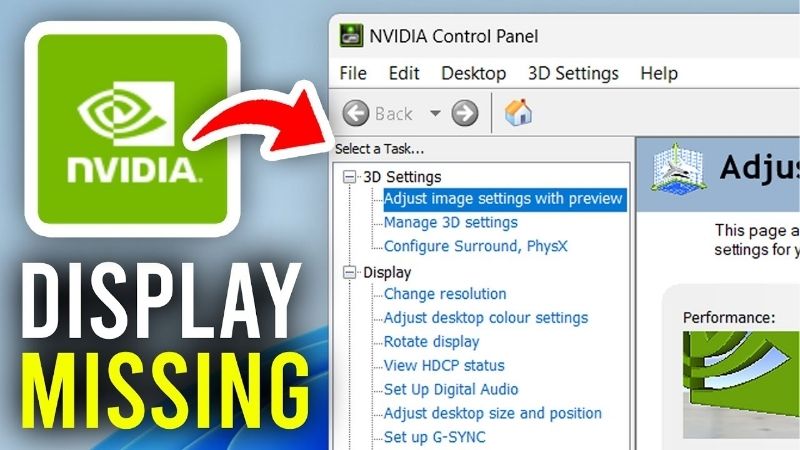
Why the Nvidia Control Panel Goes Missing
The panel rarely disappears at random. It vanishes because something interrupted the driver, hid a menu entry, or replaced one version of the software with another. Pinning down which of these happened tells you exactly which fix to reach for instead of guessing and wasting an afternoon.
As an Amazon Associate we earn from qualifying purchases at no extra cost to you.




Incomplete or Corrupted Driver Installs
The most frequent cause by a wide margin is a driver that did not install cleanly. If the graphics driver package downloaded with an error, or a previous version was only partially removed, the control panel component can simply fail to register with Windows even though the display itself keeps working.
This is precisely why users so often report the panel vanishing immediately after a major driver update. The core driver loaded and the screen lit up, but the control panel application never got installed alongside it, leaving the GPU running without its management front end.
A clean reinstall almost always brings it straight back, which is why this single step tops nearly every successful troubleshooting thread and resolves the issue for the majority of people who try it first.
A Disabled or Hidden Context Menu Entry
Sometimes the panel is installed and fully working, but the right-click shortcut that everyone relies on to open it has been stripped out. Cleanup utilities, debloat scripts, and even some Windows 11 context-menu changes are common culprits behind this.
In this scenario the software is perfectly healthy. You can still launch it from the Start menu or directly from its installation folder, even though the familiar right-click entry has quietly disappeared from the desktop.
Restoring that one menu item is dramatically quicker than a full reinstall, so it is always worth confirming the panel really is gone before you uninstall a single thing.
Windows Updates and the Microsoft Store Version
NVIDIA now distributes the control panel through the Microsoft Store, and a Windows update can occasionally remove it or fail to reinstall it correctly. When that happens, the GPU runs fine but the management app is genuinely gone from the machine.
Users frequently solve this by simply reinstalling the NVIDIA Control Panel from the Store, which restores the app in a couple of minutes without touching the display driver at all. It is the cleanest fix when the driver itself was never the problem.
If the Store version stubbornly refuses to install, a clean driver package from the NVIDIA app bundles the panel directly and sidesteps the Store entirely, which is the workaround most often recommended in user reports.
The Fixes and Tools Users Rate Highest
Once you know the cause, the matching fix is usually a five-minute job. Here are the methods that consistently earn praise in user reports, ordered from the least disruptive to the most thorough, so you can stop at the first one that works for you.
Reinstalling Through the NVIDIA App
The NVIDIA app has largely replaced the old GeForce Experience and is the tool users now recommend most for restoring a missing panel. It detects your exact GPU, downloads the correct driver, and reinstalls the control panel component in a single pass with no manual version hunting.
Reviewers consistently highlight how much friction this removes compared with tracking down driver versions by hand. For anyone nervous about the process, choosing the express install inside the NVIDIA app is the safest and most reliable route back to a working panel.
Because it always pulls the latest verified driver, it tends to quietly clear up other small glitches at the same time, which is why so many users treat it as their default first move.
Restoring the Right-Click Shortcut
If the panel is installed but the menu entry is gone, you do not need to reinstall anything at all. Opening the panel once from the Start menu, then re-enabling the desktop context menu option inside its View or Desktop settings, usually pins the shortcut back where it belongs.
This is the fix most often missed by people who jump straight to a full reinstall. It takes mere seconds and carries no risk of disrupting a perfectly healthy driver in the process.
Users who discover this step late frequently note that it would have saved them an hour of needless reinstalling, making it well worth trying early. If the toggle is greyed out or missing, that usually means the panel component itself failed to install, which points you back toward a driver reinstall as the real fix.
It is also worth checking that the NVIDIA Display Container service is running in the background, since the right-click entry depends on it. Setting that service to start automatically resolves a stubborn subset of cases where the shortcut keeps vanishing after every reboot.
Pros and Cons of a Full Clean Driver Reinstall
When the lighter fixes fail, a complete clean reinstall is the heavy-duty option. It is highly effective, but it is worth understanding the trade-offs before you commit to wiping your existing driver entirely.
On the plus side, a clean install using a dedicated uninstaller in safe mode removes every trace of corrupted files and all but guarantees the control panel returns. Users facing the most stubborn cases describe it as the fix that finally stuck after everything else had failed them.
On the downside, it is the most time-consuming route, it resets your custom GPU settings, and it briefly drops you onto a basic display driver mid-process. For a problem that a context-menu toggle might have solved, that is a lot of effort, so it genuinely belongs last in the queue rather than first.
Hardware and Accessories Worth Considering
A missing control panel is usually a software matter, but occasionally the underlying problem is hardware or an aging card that is overdue for replacement. A few inexpensive accessories also make any future driver trouble far less painful to handle.
When the GPU or Connection Is the Real Issue
If Windows cannot detect your NVIDIA GPU at all, the control panel will never appear, because there is no recognised card for it to manage. A card sitting loose in its PCIe slot or a failed power connector can cause exactly this kind of total no-show.
Users who reseated the GPU firmly or replaced a faulty power cable frequently found the control panel returned the instant Windows properly detected the card again. It is a quick physical check that rules out the genuinely worst-case scenarios for very little effort.
When the card is detected but behaves erratically, however, the issue has shifted out of software and into real hardware territory that no reinstall will fix.
Tools That Make Driver Management Painless
Keeping a clean copy of your drivers on hand turns a future panic into a five-minute fix. A reliable USB flash drive, such as a well-rated high-speed model, lets you store the latest NVIDIA driver package offline so you can reinstall even when the panel and your internet are both misbehaving at once.
Buyers who keep a dedicated driver drive describe it as a tiny purchase that has saved them hours, especially after Windows updates that strip the panel out without warning.
It is the kind of cheap insurance that experienced builders quietly swear by, and the reviews on fast, durable drives reflect exactly that reputation.
When an Upgrade Solves More Than the Control Panel
If your card is several generations old, fighting the same software problems over and over may be a sign that it is time to move on. A current-generation NVIDIA GPU ships with full support for the latest NVIDIA app, cleaner driver handling, and a feature set the old card simply cannot match.
Reviewers upgrading from older hardware often mention that nagging driver and panel issues simply stopped after the switch, on top of the obvious leap in performance, ray tracing, and DLSS support.
If you have been on the fence anyway, this can be the practical nudge to compare current graphics cards and leave recurring panel headaches behind for good, so it is worth checking today’s listings before you commit.
See More:
- GPU pink screen
- Nvidia Control Panel not opening
- GeForce Experience won’t open
- Nvidia app won’t install
Final Word on a Missing Nvidia Control Panel
Finding the Nvidia Control Panel missing is far less serious than it first appears. In the overwhelming majority of cases it comes down to an interrupted driver, a stripped context-menu entry, or a Store version that a Windows update quietly removed, and every one of those has a free, fast fix waiting.
Work from the lightest solution to the heaviest, keep a clean driver package on a USB drive for next time, and only consider new hardware if the card is genuinely old or unstable. The pattern in user reports is remarkably consistent: the people who fix it fastest are the ones who diagnose the cause before reinstalling, rather than wiping their driver on the first attempt. Handle it in that order and a missing nvidia control panel becomes a minor, momentary annoyance rather than a reason to dread your next driver update.
Top-Rated Picks


Prime
Editor's Pick
P3700 Replace Voice Remote Control fit for NVIDIA 2015 2017 2019 Edition | Shield TV, For NVIDIA Shield Android TV Pro, Voice Search, Motion-Activated, Customizable Menu Buttons

Limited Time
Replaced Voice G20S Remote Control 2.4G Wireless Air Mouse for Nvidia Shield Projector PC Android TV Box Smart TV

| Product | Brand | Rating | Reviews | Price |
|---|---|---|---|---|
| NVIDIA Shield Remote; Voice Search, Motion-Activated,… | — | ★ 4.7 | 10.6k | $25.99 |
| P3700 Replace Voice Remote Control fit for NVIDIA 201… | WINFLIKE | ★ 4.3 | 57 | $15.95 |
| Replaced Voice G20S Remote Control 2.4G Wireless Air … | WDZP | ★ 3.5 | 14 | $14.99 |
| New G20s Voice Remote 2.4G Wireless Air Mouse Replace… | professionalremoteseller | ★ 3.9 | 6 | $14.99 |
Frequently Asked Questions
Why is the Control Panel missing from my desktop right-click menu?
Windows 11 hides most legacy entries behind Show more options, so press Shift+F10 or click that item to reveal it. If it is genuinely absent, the Control Panel package was not installed, which happens when the driver arrived through Windows Update rather than the full package from Nvidia’s website.
How do I reinstall just the Control Panel?
Search the Microsoft Store for Nvidia Control Panel and install it, which works when the display driver is already present. Alternatively, download the full driver package from Nvidia, run Custom installation, and tick Perform a clean installation so the panel, PhysX, and audio driver are all reinstalled together.
Can a laptop with switchable graphics hide the panel?
Yes. On systems where the integrated GPU drives the display, some options are limited and vendor utilities such as Armoury Crate or Lenovo Vantage manage the switching. Setting the laptop to discrete or Ultimate mode in the vendor software usually restores the full set of Nvidia Control Panel pages after a reboot.
Is the missing panel a sign of GPU failure?
Almost never. It is a software packaging problem. Confirm the card itself is healthy by checking Device Manager for a properly listed adapter with no warning icon, and by running a short GPU-Z render test or 3DMark run. Healthy detection plus normal frame rates rules out hardware.
What settings do I lose without it?
You lose direct control over image scaling, DSR, anisotropic filtering, vertical sync mode, low latency mode, colour range, and per-game 3D profiles. The Nvidia app exposes all of the same controls, and nvidiaProfileInspector reaches even deeper driver settings for users who need per-title tweaks that neither front end shows.

Write Your Review
No reviews yet. Be the first to share your experience!