
The GTX 1070 was announced on May 6, 2016, alongside the GTX 1080, and went on sale on June 10, 2016. If you are trying to place the card in time, that makes it a mid-2016 Pascal product that arrived about two weeks after the GTX 1080 and a little over a month before the GTX 1060.
That gap between announcement and shelf availability is why you will see two different dates quoted for “the GTX 1070 release date.” This guide sorts out the timeline, the specs that mattered at launch, how the GTX 1070 Ti fit into the family in late 2017, which cards replaced it, and whether it still has a place in a PC as of late 2026.
The GTX 1070 Timeline From Reveal to Retirement
NVIDIA revealed the GTX 1080 and GTX 1070 at an event in early May 2016. The 1080 shipped on May 27, and the 1070 followed on June 10. Both used the GP104 chip, but the 1070 had part of it disabled, which is how NVIDIA created a clear gap between them while keeping manufacturing efficient.
Laptop GTX 1070 parts arrived in the second half of 2016 and were notable for being close to their desktop counterparts in core count, which was unusual at the time. In November 2017 NVIDIA introduced the GTX 1070 Ti, which slotted between the 1070 and the 1080 and sat closer to the 1080 in performance. After that the family’s story was mostly about being replaced.
The successor generation came in autumn 2018 when the RTX 20 series launched on the Turing architecture. The RTX 2070 arrived in October 2018 and brought hardware ray tracing and Tensor cores, and later “Super” refreshes in 2019 pushed the segment further. Since then the 1070 has been a used-market card rather than a current product.
Launch Specs That Still Matter
The GTX 1070 uses 1,920 CUDA cores, 8GB of GDDR5 on a 256-bit bus, and a board power rating of around 150W. Most models use a single eight-pin power connector, which keeps the power requirement manageable in older cases. NVIDIA recommended a 500W-class power supply for the card at launch, and that remains a sensible baseline for a quality unit.
| Card | Availability | CUDA cores | Memory | Bus | Board power |
|---|---|---|---|---|---|
| GTX 1070 | June 2016 | 1,920 | 8GB GDDR5 | 256-bit | About 150W |
| GTX 1070 Ti | November 2017 | 2,432 | 8GB GDDR5 | 256-bit | About 180W |
| GTX 1080 | May 2016 | 2,560 | 8GB GDDR5X | 256-bit | About 180W |
| RTX 2070 | October 2018 | Check the spec sheet | 8GB GDDR6 | 256-bit | Check the spec sheet |
The 8GB frame buffer is the single most important spec for buyers today. It is the same capacity as many current mid-range cards, which is why the 1070 has aged better than 2GB or 3GB siblings from the same year.
Where the GTX 1070 Fit in 2016
At launch the GTX 1070 was marketed as the enthusiast value pick, strong enough for 1440p gaming at high settings and capable of early VR headsets. It competed in the space where buyers wanted a large step up from the GTX 970 without paying for the flagship. Its efficiency was a major selling point: performance well beyond a GTX 980 Ti class card, with lower power draw.
The card supports DirectX 12, Vulkan, and the then-new Simultaneous Multi-Projection feature for VR. It does not include hardware ray tracing or Tensor cores. Output options on reference-style boards generally include several DisplayPort connectors, an HDMI port, and a DVI port, though partner models vary.
Another part of its history was the cryptocurrency mining wave in late 2017 and early 2018, when many 1070s were used for mining. That is relevant today because a significant share of used cards were run hard, so inspection matters.
What Came After the GTX 1070
The 1070 Ti filled the high end of the Pascal range, then Turing replaced the entire line. The RTX 2070 and RTX 2060 Super covered the same price tiers of their day with ray tracing and DLSS, and later generations extended that approach. If you want a modern equivalent rather than a used Pascal card, current mid-range RTX cards offer better efficiency, newer video encoders, and DLSS support. Check NVIDIA’s current product pages for the lineup because it changes.
Listings often say only “Nvidia 1070” and leave out whether the card is a plain 1070, a 1070 Ti, or a notebook chip, which is another reason to verify the exact model on the board and in the system information.
Is It Still Worth Considering Today?
Before the verdict, it helps to know how the card was used. Many 1070s spent their early years in gaming rigs driving 1440p monitors, VR headsets, and, for a period, mining rigs. Some were later moved into prebuilt systems and refurbished stock, so two cards with identical labels can have very different histories. Fans wear, thermal paste dries out, and a card that ran at full load for years may need new paste and pads to hold its original temperatures.
For 1080p gaming at medium to high settings in many titles, the 8GB frame buffer and solid raw shader speed still make the GTX 1070 usable. For esports, older AAA games, and emulation it remains capable. At 1440p, expect to lower settings in recent games, and at 4K treat it as a classic-game card.
The lack of DLSS and ray-tracing hardware is a real limitation, because many new games lean on upscaling to hit playable frame rates. Pascal has also moved to NVIDIA’s legacy driver track, so check NVIDIA’s legacy driver notes for the most recent supported branch and the security-update window before you depend on it.
Power draw is a modest argument against: current cards offer similar performance at lower wattage. If electricity costs or case heat matter, that may justify an upgrade even if the 1070 still works fine.
Founders Edition and Partner Variety
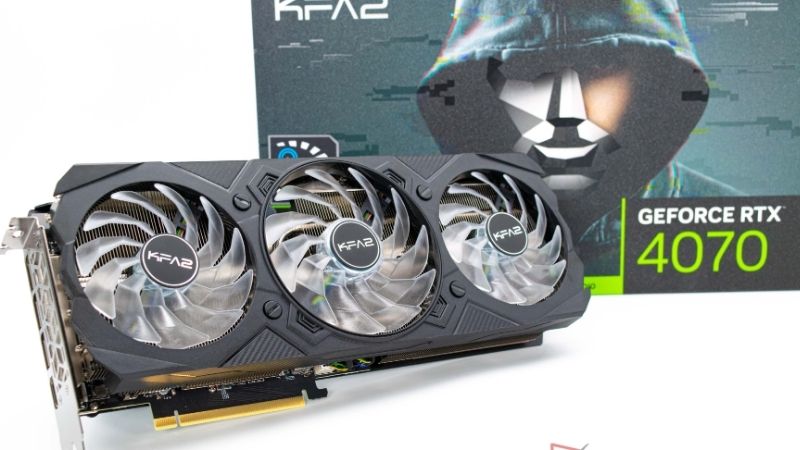
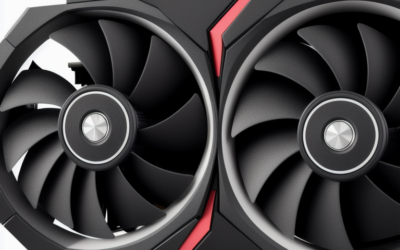
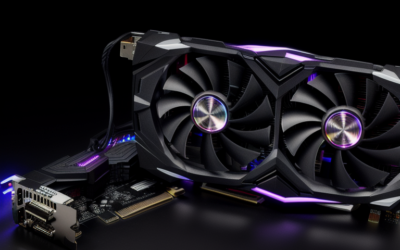
As with the 1080, the GTX 1070 shipped in a Founders Edition and in many partner designs. The reference model is a compact blower card that is easy to fit into small cases, while partner cards range from slim two-fan versions to large triple-fan heatsinks. Some use a six-pin plus eight-pin power layout for more overclocking headroom, so do not assume every model has the same connector.
Who Should Buy or Skip It
The Budget Used-Market Gamer
If you find a clean, well-priced card from a seller you trust, it can serve a 1080p build well. Look for a model with intact cooling and no signs of heavy mining wear.
The Retro and Emulation Fan
Older libraries, emulators, and indie games run comfortably on it. Pair it with a modern CPU and enough system memory and you get a flexible machine for the genre.
The New-Build Planner
Skip it if you want long-term driver updates, DLSS, or hardware ray tracing. A current-generation card gives you a longer runway and typically better efficiency.
Used GTX 1070 Checklist
- Confirm the model is a GTX 1070 and not a 1070 Ti or a laptop part.
- Check that your power supply has an eight-pin PCIe cable.
- Inspect the fans, heatsink, and PCB for corrosion, dust packs, or tampering.
- Ask whether it was used for mining and whether a BIOS flash was ever performed.
- Plan for a clean driver install and read NVIDIA’s legacy driver notes.
- Measure your case for card length and slot width.
Frequently Asked Questions
What is the GTX 1070 release date?
NVIDIA announced it on May 6, 2016, and it went on sale on June 10, 2016. The GTX 1070 Ti followed in November 2017.
Is the GTX 1070 older than the GTX 1080?
They launched from the same announcement, but the GTX 1080 reached shelves first, on May 27, 2016. The 1070 arrived about two weeks later.
What replaced the GTX 1070?
The RTX 2070 from October 2018 was the direct successor, followed by later RTX generations. The 1070 Ti was a sibling rather than a replacement.
Can the GTX 1070 run DLSS or ray tracing?
No, it lacks the dedicated hardware for both. It supports standard rasterized rendering, DirectX 12, and Vulkan.
Related Guides
- GTX 1070 Review 2026: Still a Great Budget Used GPU?
- GTX 1070 Ti Review: Is This Pascal GPU Still Usable in 2026?
- Best GTX 1070
- GTX 1070 Drivers: How to Download, Update, and Fix Them

Write Your Review
No reviews yet. Be the first to share your experience!