
- Top Pick: ZOTAC Gaming GeForce RTX 5050 Twin Edge OC DLSS 4 8GB GDDR6 128-bit 20 Gbps PCIE 5.0 Gaming Graphics Card, SFF-Ready Compact Card, ZT-B50500H-10M
- Best Value: ZOTAC Gaming GeForce RTX 5050 Solo DLSS 4 8GB GDDR6 128-bit 20 Gbps PCIE 5.0 Gaming Graphics Card, SFF-Ready Super Compact Card, ZT-B50500G-10L
- Premium Choice: HIDevolution [2026] EVOC High Performance Systems V3601A (V360WNMQ) 16" QHD+ 300Hz, 2.7 GHz Ultra 9-290HX Plus, RTX 5050, 16 GB DDR5 RAM, 1 TB PCIe SSD, Windows 11 Pro


The rtx 5050 benchmark numbers tell a more interesting story than the spec sheet alone, because Nvidia’s cheapest Blackwell card wins some tests and loses others depending on how you measure it. In synthetic runs it can edge out the older RTX 4060, yet in native gameplay it often trails, only pulling ahead once DLSS 4 Multi Frame Generation is switched on. This review digs into the real 1080p frame rates, the 3DMark scores, how the RTX 5050 stacks up against rivals, and whether those benchmarks justify the buy in 2026.
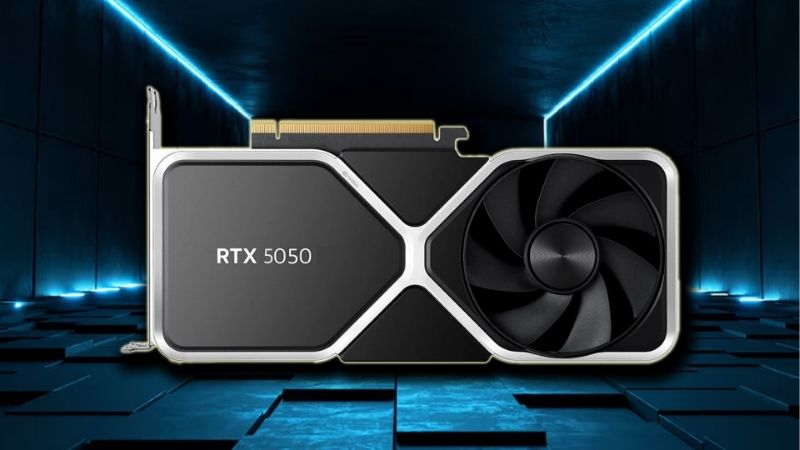
RTX 5050 Benchmark Results Overview
The RTX 5050 is a $249 entry-level card built for 1080p, and its benchmarks reflect exactly that positioning. Across synthetic and in-game testing it lands near the older RTX 4060 and RTX 3060, delivering competent but not remarkable numbers that are best judged against its low price rather than against pricier cards. Early buyers have had to lean on partner and community benchmarks, since Nvidia did not seed review samples, but a consistent performance picture has emerged.
As an Amazon Associate we earn from qualifying purchases at no extra cost to you.


![HIDevolution [2026] EVOC High Performance Systems V3601A (V360WNMQ) 16" QHD+ 300Hz, 2.7 GHz Ultra 9-290HX Plus, RTX 5050, 16 GB DDR5 RAM, 1 TB PCIe SSD, Windows 11 Pro](https://m.media-amazon.com/images/I/31FtJusGNXL._SL160_.jpg)


3DMark and Synthetic Scores
In synthetic testing the RTX 5050 punches slightly above its gaming weight. Partner benchmarks show it outperforming the RTX 4060 in several 3DMark tests including Steel Nomad, Speed Way, Port Royal, and Fire Strike, where its newer Blackwell architecture shows its strengths.
The gap narrows or reverses in Time Spy, where the RTX 4060 edges ahead, though the margin sits under 10%. These synthetic results establish the RTX 5050 as broadly in the same class as the last-generation card rather than a clear step below it.
The key caveat is that synthetic scores do not always translate directly into game frame rates. The RTX 5050 tends to look stronger in 3DMark than it does in raw native gameplay, so these numbers are a useful baseline rather than the full story. This gap between synthetic and gaming results is common for entry cards, and it is precisely why relying on 3DMark alone can flatter the RTX 5050 more than real gameplay does.
Real 1080p Gaming Frame Rates
In actual games at 1080p the RTX 5050 delivers a solid experience for its price. Owners report frame rates roughly between 80 and 120 FPS in many modern titles at high settings with DLSS 4 enabled, comfortably clearing 60 FPS in most games.
Native performance without upscaling is more modest. In a broad multi-game native suite the RTX 5050 falls slightly behind both the RTX 4060 and Intel’s Arc B580, while trading blows with and sometimes beating the older RTX 3060 depending on the title.
The practical read is that the RTX 5050 is a genuine 1080p card rather than a 1440p one. Pushed to higher resolutions its 8GB buffer and narrow bus become limits, so its best benchmark results come at the resolution it was designed for. Buyers who set their sights on 1080p will find the numbers reassuring, while anyone benchmarking it at 1440p will watch the frame rates fall away as the memory and bandwidth limits take hold.
What Owners Say About the Performance
Aggregating owner feedback, the positive theme is value: buyers upgrading from older GTX 10-series or 16-series cards report a large, satisfying jump and praise the smooth 1080p experience with DLSS 4 in supported games.
The critical theme is raw power. Some owners feel the native performance is underwhelming for a new-generation card, noting it does not clearly beat the two-year-old RTX 4060 without leaning on frame generation.
A recurring nuance is that satisfaction depends heavily on expectations. Owners who bought the RTX 5050 as a budget 1080p card are happy, while those expecting more from the 50-series name came away feeling the benchmarks fell short of the hype. That split in sentiment is a useful buying signal in itself: judged as a cheap 1080p card the RTX 5050 satisfies, but judged as a new-generation leap it disappoints, so your expectations largely determine your verdict.
How the RTX 5050 Benchmarks Compare
A score means little in isolation, so here is how the RTX 5050 measures up against its main rivals, what DLSS 4 does to the numbers, and how its price shapes the value verdict in 2026.
RTX 5050 vs RTX 4060 and RTX 3060
Against the RTX 4060, the picture is mixed. The RTX 5050 wins several synthetic tests but generally trails in native gaming by a modest margin, making the older card the stronger raw performer while the 5050 counters with a lower price and newer features.
Against the RTX 3060, the RTX 5050 is competitive and often slightly ahead in raster, though the 3060’s larger 12GB buffer helps it in a few memory-heavy scenarios. The 5050’s efficiency and DLSS 4 support give it the overall edge for most buyers.
The RTX 5060 sits well above all three, benchmarking around 38% faster than the RTX 5050, which frames the 5050 firmly as the entry point of the range rather than a mid-tier contender. Choosing among them comes down to budget and resolution. The benchmarks make the hierarchy clear, so a buyer can pick a rung deliberately rather than assuming the newest card is automatically the fastest, which in the 5050’s case it plainly is not.
How DLSS 4 Changes the Benchmark Picture
DLSS 4 Multi Frame Generation is where the RTX 5050’s numbers transform. By inserting AI-generated frames in supported titles, it can lift frame rates dramatically, and with higher multiplier modes the 5050 can post figures that exceed even the RTX 4060 Ti on paper.
The honest caveat is that these gains come with trade-offs. At higher multipliers frame generation can add latency and visual artifacts, and the experience is best when the base frame rate is already reasonable, so the inflated numbers are a bonus rather than proof of raw power.
Read correctly, DLSS 4 makes the RTX 5050 more capable than its native benchmarks suggest, especially in supported titles. It is a genuine advantage over older cards that lack the feature, and it should factor into any fair benchmark comparison. Ignoring DLSS 4 understates the card in supported games, while over-crediting it overstates the card in titles that lack support, so the honest approach is to weigh both native and upscaled figures together.
RTX 5050 Price and Value in 2026
Benchmarks only matter next to price, and the RTX 5050 launched at $249, with partner models often between $269 and $299. That low entry price is the number that makes its otherwise modest benchmarks look reasonable, since it undercuts the cards it competes with.
The market context matters, though. A tight 2026 memory market has pushed budget GPU prices up rather than down, and component prices across PC parts have trended higher, so paying well above MSRP erodes the value that makes the 5050 worth considering.
There is cautious good news, but it is weak and in the future. Prices have stopped climbing as steeply as they did in late 2025, and new memory capacity, including DDR5 from Chinese suppliers and two Micron plants in Idaho, is coming but not until 2027-2028. The practical takeaway: an RTX 5050 near its $249 MSRP is a fair-value buy, while anything much higher weakens the case its benchmarks already make modest. Framed as timing advice, the memory schedule means a dramatic price drop is unlikely before those new fabs come online, so a buyer who needs a budget card now should optimize for a fair price today rather than wait.
Is the RTX 5050 Worth Buying? Pros, Cons and Advice
With the benchmarks and value on the table, the verdict comes down to matching the card to the right buyer. This section gives the honest pros and cons, the build notes that prevent regret, and the tactics for landing the best deal.
RTX 5050 Pros and Cons at a Glance
The pros are clear from the benchmarks: competitive synthetic scores, solid 1080p frame rates with DLSS 4, strong efficiency, and a low $249 price that makes its performance look reasonable for the money.
The cons are equally clear: native performance that does not beat the two-year-old RTX 4060, an 8GB buffer that limits higher resolutions, and results that lean on frame generation to look their best rather than winning on raw power.
Net assessment: the RTX 5050’s benchmarks make it an easy recommendation as a budget 1080p card for new buyers, but a weak one for anyone already on an RTX 3060 or better, where the measured gains simply are not there. The benchmark data is the fairest judge here, and it consistently points the RTX 5050 at newcomers and owners of much older hardware rather than at anyone holding a recent mid-range card.
Who Should Buy It and Build Compatibility Notes
The benchmarks point to a clear buyer: someone upgrading from an older GTX 10-series, 16-series, or entry RTX 20-series card, or a first-time builder wanting modern features at 1080p. For those users the measured jump is real and satisfying.
On compatibility, the card’s modest 130W runs on a 450W to 550W supply, and it pairs best with a mid-range CPU to avoid bottlenecking its results. Its PCIe 5.0 x8 interface runs at reduced bandwidth on older PCIe 3.0 boards, which can trim benchmark scores slightly.
For a new budget build the RTX 5050 slots in easily, but buyers on aging platforms should factor that PCIe caveat into their expectations. Matched to the right system, it delivers exactly the 1080p numbers its benchmarks promise.
Best-Buy Tips and Final Recommendation
Practical tactics help at this tier. Target models near the $249 MSRP rather than heavily overclocked cards whose small benchmark gains rarely justify the markup, and confirm any deal includes a solid warranty given the tight market.
If your budget can stretch, the RTX 5060 or RX 9060 XT 16GB post meaningfully stronger benchmarks and, in the AMD case, more VRAM, so they are worth comparing before you settle on the entry card.
When you find the RTX 5050 at or near MSRP with a clean warranty, its benchmarks make it a sensible budget buy for 1080p. Use the link to compare current prices and availability, and lock in the best deal before stock shifts.
See more:
- amd driver auto-detect tool
- nvidia geforce rtx 5080 best buy
- TechPowerUp GPU-Z
- nvidia china
- nvidia etf price
Conclusion
The rtx 5050 benchmark results paint a consistent picture: a competent 1080p card that wins some synthetic tests, trails the older RTX 4060 in native gaming, and leans on DLSS 4 to post its best numbers, all at a low $249 price that makes those modest results reasonable. In a 2026 market where prices have merely flattened, it is a fair-value budget buy near MSRP and a genuine upgrade for owners of much older cards. Compare current prices through the link above and secure the GPU that fits your build and budget today.
Frequently Asked Questions
What frame rates should I expect at 1080p from an RTX 5050?
In competitive titles like Valorant, CS2 and Rocket League the RTX 5050 comfortably clears 200fps at high settings. In current AAA games at 1080p high without ray tracing, expect roughly 55 to 80fps depending on engine, with DLSS Quality lifting that meaningfully. Turning on heavy ray tracing without upscaling will drop many titles below 40fps.
Do benchmark numbers include frame generation?
They should be labelled clearly, because it changes everything. NVIDIA marketing charts often include DLSS 4 multi frame generation, which can triple or quadruple the displayed frame rate versus native rendering. Generated frames improve smoothness but do not reduce input latency the way real frames do, so compare native or DLSS-only numbers when judging raw capability.
Does the RTX 5050 hit VRAM limits in benchmarks?
Yes, in specific titles. With 8GB, games such as Indiana Jones and the Great Circle at high texture pools, Hogwarts Legacy with ray tracing, or heavily modded Skyrim can exceed capacity. The tell is inconsistent frame times and texture pop-in rather than a lower average. Dropping texture quality one notch usually resolves it with minimal visual cost.
What CPU was used and does it affect the results?
Reputable reviews pair budget GPUs with a fast CPU such as a Ryzen 7 9800X3D so the GPU is the only limit. That produces higher numbers than you will see with a midrange CPU in esports titles. For AAA games at 1080p high, the RTX 5050 is the bottleneck anyway, so those figures translate reasonably well.
How does the RTX 5050 perform at 1440p?
It is usable but compromised. Expect 40 to 55fps in AAA titles at 1440p medium to high, and you will lean on DLSS Quality or Balanced to reach 60fps. Combined with only 8GB of memory, 1440p is a stretch goal rather than the target. Treat the RTX 5050 as a 1080p card that can occasionally reach higher.

Write Your Review
No reviews yet. Be the first to share your experience!