
The GeForce RTX 5080 went on sale on January 30, 2025, alongside the flagship RTX 5090, after NVIDIA introduced the RTX 50 series at CES in early January that year. It replaced the RTX 4080 Super as the second-tier Blackwell card and was aimed at buyers who wanted high-end 4K-capable performance without paying for the flagship. If you want the short version: announced January 2025, available January 30, 2025, with 16GB of GDDR7 memory.
Interest in the release date has not faded because the card keeps coming up in upgrade decisions, especially against the RTX 4080 Super, the RTX 5070 Ti and rumored refreshes. This article covers the launch timeline, the headline specifications, what the card replaced and what has followed in the lineup, and whether it still fits a build as of late 2026. Always confirm details on NVIDIA’s own product page, since board partners vary.
From Announcement to Shelves
NVIDIA unveiled the RTX 50 series during its CES keynote in January 2025. The RTX 5090 and RTX 5080 were the first to ship, both on January 30, followed by the RTX 5070 Ti in late February and the RTX 5070 in March. Lower-tier cards continued through spring and summer. The initial weeks were marked by strong demand and thin supply, which shaped how many buyers experienced the launch.
| Generation step | Card | Launch window | Memory |
|---|---|---|---|
| Ada Lovelace | RTX 4080 | November 2022 | 16GB GDDR6X |
| Ada Lovelace refresh | RTX 4080 Super | January 2024 | 16GB GDDR6X |
| Blackwell | RTX 5080 | January 30, 2025 | 16GB GDDR7, 256-bit bus |
| Blackwell refresh | RTX 5080 Super | No official date | Not announced by NVIDIA |
Launch Specifications
The RTX 5080 uses 16GB of GDDR7 memory on a 256-bit bus, 10,752 CUDA cores and a board power of 360 watts. It connects over PCIe 5.0 and uses the 16-pin 12V-2×6 power connector on the reference design. NVIDIA suggested an 850 watt class power supply, and partner cards may differ in size, cooling and connector arrangement, so read the exact model’s spec sheet before you buy.
As a Blackwell GPU, it supports DLSS 4 with Multi Frame Generation, fifth-generation Tensor cores and fourth-generation ray tracing cores. Display outputs on reference-style cards include DisplayPort 2.1b and HDMI 2.1b, which matter for high-refresh 4K and some ultrawide monitors.
What It Replaced
The RTX 5080 succeeded the RTX 4080 Super, itself a January 2024 refresh of the original RTX 4080 from November 2022. All three cards share a 16GB memory capacity, which is why the generational move was a point of debate. The 5080 offered faster memory and new Blackwell features, but not more VRAM, so the change felt incremental to owners of the 4080 Super and more substantial to people coming from older generations.
For someone on an RTX 3070, RTX 3080 or earlier, the step up is considerable. For someone already on a 4080 Super, the upgrade case is thinner and depends on how much you value DLSS 4 and ray tracing improvements.
What Realistic Use Looks Like
The card is positioned as a 4K option with upscaling and as a very fast 1440p card. Real results depend on the game, settings and CPU, so treat any claim of a specific frame rate with caution. VRAM is the main long-term question: 16GB is ample for most current games but is not the ceiling that the RTX 5090’s 32GB provides.
- 4K gaming: comfortable in many titles with upscaling enabled.
- 1440p high refresh: far more than most monitors need, which is why some call it overkill.
- Creative work: useful for editing, rendering and local AI tools within 16GB limits.
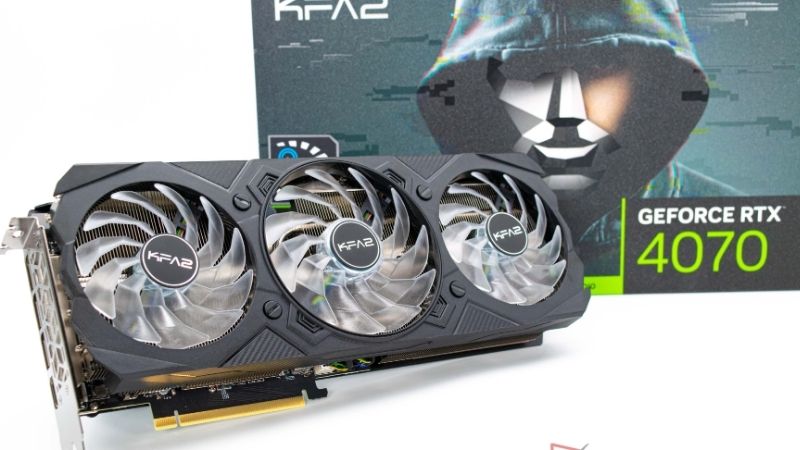
- HTPC or small builds: check cooler dimensions closely, since many partner cards are large.
The Launch-Day Experience
The first weeks after January 30, 2025 were defined by tight supply. Founders Edition units sold quickly, partner boards appeared in small batches, and many shoppers saw prices drift above what NVIDIA had described at launch. That is a typical pattern for a new high-end release, and it matters when you read an old launch date: the card existed on paper long before it was easy to buy.
Over the following months availability improved, and the card became easier to find in a range of cooler designs. Today the buying questions are different. Rather than racing for stock, shoppers compare board partners for noise, size and warranty, and decide whether a used or refurbished unit makes sense. Used buyers should verify the model, check for physical damage around the power connector and ask for proof of working condition.
The launch also introduced features that shaped later software. DLSS 4 with Multi Frame Generation became a selling point, and game support for it grew through 2025. If a feature matters to you, check which games you play actually support it, since the technology only helps where developers have implemented it.
What Came Next
NVIDIA continued the 50 series with the RTX 5070 Ti, RTX 5070, the 5060 family and a lower entry card, and extended Blackwell to laptops and professional workstations. A refresh such as an RTX 5080 Super has not been announced as far as public information goes, so any specification or date you read for it is rumor. Check NVIDIA’s newsroom for the latest word.
Power, Cooling and Case Planning
At 360 watts, the RTX 5080 draws noticeably less than the flagship, but it still asks for a quality power supply and a case with real airflow. Many partner cards are three-slot designs with long heat sinks, so measure length and thickness before ordering. Check that your supply has the right connector for the model you choose, since some boards use a single 16-pin cable and others use adapters.
Small-form-factor builders should look for compact variants and confirm that their case supports the card’s dimensions and cooling needs. A compact card in a cramped case can run hot and loud, which undermines the performance you paid for.
Who Should Buy and Who Should Skip
4K Players Upgrading From Older Cards
If you are on an RTX 20 series or RTX 30 series card and play at 4K, the 5080 is a major step up with DLSS 4 and strong ray tracing performance. It also gives you a modern connector and display outputs.
Buyers Weighing It Against the 5070 Ti
The 5070 Ti has the same 16GB of memory at a lower tier, so the 5080’s extra cost buys speed, not capacity. If you play mostly at 1440p, the cheaper card may serve you equally well.
Owners of Recent High-End Cards
If you already own an RTX 4080 Super or RTX 4090, skip. The generation gap is not large enough to justify a swap, and a better moment will come with the next architecture.
Checklist Before Buying
- Confirm the card is a genuine RTX 5080 with 16GB of GDDR7.
- Check power supply capacity and the connector your model needs.
- Measure your case for card length and thickness.
- Make sure your monitor can use DisplayPort 2.1b or HDMI 2.1b.
- Compare warranty terms between board partners.
- Avoid listings with unclear stock or sellers with thin histories.
Frequently Asked Questions
What was the RTX 5080 release date?
It launched on January 30, 2025, the same day as the RTX 5090. NVIDIA had announced the series at CES earlier that month. Board partner availability varied in the first weeks.
How much memory does the RTX 5080 have?
It carries 16GB of GDDR7 on a 256-bit bus. That is the same capacity as the RTX 4080 Super but with faster memory technology. The RTX 5090 offers 32GB for users who need more.
Did the RTX 5080 replace the RTX 4080 Super?
Yes, it took over the second-tier position in NVIDIA’s desktop lineup. The 4080 Super remained available while stock lasted, but the 5080 became the current model. Check the spec sheets to compare.
Is the RTX 5080 worth buying?
For 4K gaming with upscaling and for creators who value Blackwell features, it is a strong choice. It is less compelling for current 4080 Super owners. Decide based on your resolution and what you already own.
Related Guides
- Zotac RTX 5080 Review: Is the Cheaper 5080 Worth It?
- RTX 5080 1440p: Is This Blackwell Card Overkill in 2026?
- RTX 5080 Deals in 2026: How to Spot a Real Discount Fast
- RTX 5080 Price in 2026: Is Blackwell Worth the Money Now?



Write Your Review
No reviews yet. Be the first to share your experience!