
- Top Pick: ASRock Intel Arc B580 Challenger 12GB OC Graphics Card, 2740 MHz GPU Clock, 12GB GDDR6, DisplayPort 2.1, HDMI 2.1a, Dual Fan Cooling, 0dB Silent Operation
- Best Value: ASRock Intel Arc B580 Steel Legend 12GB OC Graphics Card, 2800 MHz GPU Clock, 12GB GDDR6, DisplayPort 2.1, HDMI 2.1a, Triple Fan Cooling, Polychrome SYNC
- Premium Choice: Sparkle Intel Arc B580 Titan OC, 12GB GDDR6, Torn Cooling 2.0, Axial Fan, Breathing Light, Metal Backplate, SB580T-12GOC

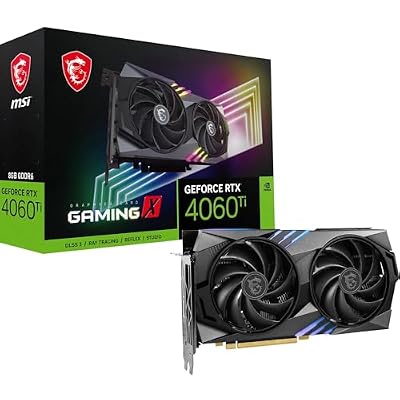


Arc B580 Vs 4060 Ti is the defining mid-range graphics card battle of 2026 as gamers scramble to find the best bang-for-your-buck hardware upgrade. With modern video games demanding increasingly massive system resources, choosing between Intel’s newly refined Battlemage architecture and NVIDIA’s highly established Ada Lovelace lineup has become a complex decision. This in-depth analysis breaks down real-world frame rates, software features, and market conditions to help you make an informed purchase.
Comprehensive Comparison of Intel Battlemage and NVIDIA Ada Lovelace
Navigating the mid-range GPU market requires looking beyond simple promotional marketing to understand how these competing architectures handle modern gaming workloads. Intel has taken massive strides with its second-generation Battlemage graphics cards, attempting to disrupt NVIDIA’s long-standing dominance in the sub-$400 price bracket. To see how these architectural philosophies translate to real-world gaming, we must compare their technical specifications, silicon layouts, and direct performance characteristics side by side.
As an Amazon Associate we earn from qualifying purchases at no extra cost to you.




Spec Breakdown and the Quick Verdict
For buyers seeking a rapid answer, the battle between these two cards comes down to a choice between raw hardware value and established software maturity. Intel’s Battlemage card offers an impressive hardware configuration, boasting a larger memory bus and generous VRAM allocation at a highly competitive introductory price point. Meanwhile, NVIDIA’s candidate relies on its class-leading power efficiency and the unmatched strength of its proprietary DLSS 3 frame generation suite.
| Feature / Specification | Intel Arc B580 | NVIDIA GeForce RTX 4060 Ti |
|---|---|---|
| Architecture | Xe2-HPG (Battlemage) | Ada Lovelace |
| VRAM Capacity | 12GB GDDR6 | 8GB or 16GB GDDR6 |
| Memory Bus Width | 192-bit | 128-bit |
| Total Board Power (TBP) | 190W | 160W |
| Interface | PCIe 5.0 x8 | PCIe 4.0 x8 |
| Ray Tracing Cores | 20 Xe2 RT Cores | 34 Ada RT Cores |
| Primary Target Resolution | 1440p / 1080p | 1080p / 1440p |
If you prioritize modern ray-tracing games, rely heavily on creative software, or want a plug-and-play experience without occasional driver troubleshooting, the NVIDIA GeForce RTX 4060 Ti remains the safest pick. However, if you are looking to maximize your dollar-to-performance ratio at 1440p and want a card that handles high-resolution texture packs with ease, the Intel Arc B580 offers an incredible alternative.
- [Check the latest price on Amazon for the Arc B580]
Architecture Innovations: Xe2-HPG vs Ada Lovelace
At the core of the Arc B580 lies Intel’s refined Xe2-HPG architecture, which represents a massive generational leap over the original Alchemist series. Intel has completely overhauled the graphics pipeline, drastically improving the efficiency of its execution units and fixing the high-idle power consumption issues that plagued previous models. Additionally, the inclusion of a 192-bit memory bus ensures that the GPU is not choked for bandwidth when streaming massive game assets.
NVIDIA’s Ada Lovelace architecture, on the other hand, is built on a highly efficient TSMC custom process that delivers unrivaled performance per watt. While the 128-bit memory bus on the RTX 4060 Ti has drawn criticism from hardware enthusiasts, NVIDIA offsets this physical limitation with a massive L2 cache. This design choice keeps critical rendering data close to the GPU core, reducing the frequency of memory accesses and maintaining excellent frame rates at standard gaming resolutions.
Furthermore, both manufacturers have integrated dedicated hardware accelerators to drive artificial intelligence and ray tracing workloads. NVIDIA’s third-generation RT Cores and fourth-generation Tensor Cores remain the industry gold standard, enabling complex ray reconstruction and DLSS Frame Generation. Intel has countered with its own dedicated XeSS technology, leveraging powerful XMX engines to upscale images intelligently with minimal loss in overall visual fidelity.
Real-World Gaming Performance at 1080p and 1440p
When testing these graphics cards across a wide selection of modern games, the performance differences highlight the unique strengths of each architecture. At a standard resolution of 1080p, the RTX 4060 Ti consistently leads in traditional rasterized gaming, delivering incredibly high frame rates in competitive multiplayer shooters like Valorant and Call of Duty: Warzone. Its mature driver package ensures that older DirectX 11 and eSports titles run smoothly without sudden frame drops.
However, when the resolution is bumped up to 1440p, the performance gap narrows significantly due to the Arc B580’s wider memory bus. In demanding, visually heavy open-world games like Horizon Forbidden West, the Intel GPU maintains incredibly stable minimum frame rates, hovering around 75 FPS with high settings. The 12GB VRAM buffer on the B580 prevents the micro-stuttering and asset-loading delays that occasionally impact the 8GB version of the RTX 4060 Ti in modern titles.
In ray-tracing scenarios, NVIDIA continues to hold a noticeable advantage, as its dedicated RT hardware manages complex lighting pathways far more efficiently. Even so, the Arc B580 represents a massive step forward for Intel, matching or occasionally exceeding the RTX 4060 Ti in games that utilize lighter implementations of ray-traced shadows. When utilizing upscaling technologies, DLSS 3 still provides cleaner image reconstruction than XeSS, though the visual difference is difficult to notice during fast-paced gameplay.
Check the latest price on Amazon:
Market Dynamics and the 2026 GPU Inventory Crisis
Purchasing a computer component in 2026 requires a keen understanding of global economic pressures and semiconductor manufacturing trends. The days of evaluating graphics cards purely based on their theoretical MSRP are long gone, as supply chains are heavily influenced by the high-demand enterprise sector. To make a smart buying decision, consumers must understand how geopolitical shifts and raw material costs are impacting the availability and retail pricing of mid-range gaming hardware.
The H200 AI Chip Shipments and the NVIDIA Supply Shift
The consumer graphics card market in 2026 has been heavily disrupted by major policy shifts surrounding enterprise artificial intelligence silicon. Following the United States government’s regulatory decisions allowing NVIDIA to ship its highly advanced H200 AI chips to the Chinese market, manufacturing priorities at major semiconductor foundries have shifted dramatically. Because these massive enterprise AI processors yield incredibly high profit margins, silicon manufacturers are dedicating a massive portion of their production capacity to them.
This intense focus on corporate AI chips has left limited foundry space for mainstream gaming GPUs, including the popular RTX 4060 Ti. As a result, NVIDIA has had to carefully manage its consumer-grade production runs, leading to tighter retail inventory and keeping prices stubbornly high. For mainstream gamers, this means waiting for major discounts on high-demand mid-range graphics cards is a risky strategy, as supply shortages prevent traditional price drops.
Intel, however, has used this market dynamic to its advantage by securing alternative manufacturing pipelines and pricing its Battlemage series aggressively to capture market share. Because Intel is actively looking to establish itself as a dominant third player in the desktop graphics space, they are willing to accept lower profit margins on cards like the Arc B580. This makes the Intel card a highly attractive option for budget-conscious builders who are tired of fighting artificial supply constraints.
Rising Component Inflation and Your Hardware Budget
Compounding the supply limits is a broader macroeconomic trend: general component and manufacturing pricing across laptops and desktop PCs has continued to rise throughout 2026. Everything from copper heat pipes and aluminum heatsinks to the advanced packaging substrates used in modern GPUs has experienced steady price inflation. These rising material costs have made it increasingly expensive for manufacturers to assemble and ship graphics cards to retail shelves.
For PC builders, this inflationary environment creates an element of buying urgency that did not exist in previous hardware cycles. Waiting six to twelve months in hopes of securing a cheaper deal may actually result in paying more, as retail prices adjust upward to cover rising logistics and raw material expenses. Buying a reliable mid-range card early in its lifecycle protects your budget against these unpredictable macroeconomic shifts.
Furthermore, this inflation has made the price gap between different VRAM tiers even more pronounced. The price premium for the 16GB variant of the RTX 4060 Ti has remained high, making the well-equipped, lower-cost Arc B580 look like an absolute bargain by comparison. If you want to secure a future-proof system without overspending, locking in your purchase before further global shipping and manufacturing costs rise is a highly logical choice.
- [Check the latest price on Amazon for the Arc B580]
Pros and Cons of Arc B580 Vs 4060 Ti
To help you visualize the trade-offs between these two graphics cards, we have gathered their primary benefits and drawbacks based on technical data and extensive reviewer feedback.
Pros of the Arc B580:
- Offers a spacious 12GB VRAM buffer combined with a wide 192-bit bus, preventing performance bottlenecks at 1440p.
- Features cutting-edge PCIe 5.0 compatibility, ensuring maximum bandwidth on modern motherboards.
- Highly competitive pricing makes it an incredibly cost-effective choice for budget-conscious PC builders.
- Includes excellent hardware-accelerated AV1 encoding, perfect for modern game streaming and video editing.
Cons of the Arc B580:
- Driver optimization, while vastly improved, can still result in minor graphical bugs or performance drops in obscure or older games.
- Slightly higher power consumption under load compared to NVIDIA’s ultra-efficient mid-range offerings.
Pros of the RTX 4060 Ti:
- Exceptional power efficiency with a low 160W power draw, allowing it to run cool and quiet in compact cases.
- Access to DLSS 3 Frame Generation and superior Ray Reconstruction, delivering unparalleled performance in supported AAA titles.
- Solid, ultra-stable driver ecosystem that offers hassle-free, plug-and-play performance right out of the box.
- Excellent performance in professional creative suites, such as Blender and DaVinci Resolve.
Cons of the RTX 4060 Ti:
- The 8GB variant’s limited VRAM buffer and narrow 128-bit memory bus can struggle with high-resolution texture packs.
- Retail prices remain elevated due to enterprise AI chip production priorities limiting consumer GPU supply.
- [Check the latest price on Amazon for the RTX 4060 Ti]
Power Efficiency, Thermal Performance, and Alternatives
While frame rates and purchase costs are critical, owning a graphics card also involves considering its physical compatibility, power requirements, and everyday operating temperatures. A card that runs too hot or draws excessive power can lead to hidden costs, such as requiring a more expensive power supply or causing thermal throttling in a compact case. Exploring alternative options is also incredibly useful for buyers who find themselves caught between these two major competitors.
Power Consumption, Heat Output, and System Requirements
In terms of power design, NVIDIA’s card is a masterclass in modern hardware efficiency. Requiring only a single 8-pin power connector and drawing a modest 160W at peak gaming loads, the card can easily be paired with a standard, budget-friendly 500W power supply. This low power draw also means the GPU generates very little heat, allowing dual-fan cooling models to maintain whisper-quiet operation with temperatures rarely exceeding 65 degrees Celsius.
The Intel Arc B580 is slightly more demanding, with a total board power rating of approximately 190W. While it still utilizes standard power connectors and is highly compatible with older power supplies, we recommend pairing it with at least a 600W power supply to ensure adequate headroom during sudden system power spikes. Fortunately, Intel’s partner manufacturers have equipped these cards with robust triple-fan and thick dual-fan cooling solutions that keep temperatures in check, averaging 68 degrees Celsius under heavy loads.
It is also worth noting that both cards fit comfortably into standard ATX and Micro-ATX computer cases, making them excellent choices for upgrading older pre-built systems. However, users running compact Mini-ITX cases should carefully double-check the physical dimensions of triple-fan Battlemage models before making a final purchase, as these custom cooling shrouds can sometimes be surprisingly long.
The Strategic Alternative: Radeon RX 7700 XT
If you find yourself torn between the software-rich experience of NVIDIA and the raw hardware value of Intel, the AMD Radeon RX 7700 XT serves as an incredibly compelling third option. AMD has positioned this card as a high-performance, mid-range competitor that bridges the gap beautifully. Armed with 12GB of GDDR6 memory and a generous 192-bit memory bus, it offers superb raw rasterization performance that easily competes with both cards.
- [Check the latest price on Amazon for the Radeon RX 7700 XT]
The Radeon RX 7700 XT excels at pure 1440p gaming performance, often delivering higher average frame rates than the RTX 4060 Ti in non-ray-traced games. While its ray-tracing capabilities fall slightly short of NVIDIA’s class-leading standards, its competitive pricing in 2026 makes it a highly viable alternative. If you want a traditional, high-performance gaming experience without worrying about early-stage driver issues or high brand markups, AMD’s mid-range contender is well worth your consideration.
Final Verdict: Who Should Purchase Which Graphics Card?
Ultimately, choosing between these two graphics cards comes down to identifying your specific priorities as a gamer or creator. If you want a hassle-free, highly efficient graphics card that works flawlessly with every game in your library, offers superior ray-tracing performance, and grants you access to the industry’s best upscaling software, the NVIDIA GeForce RTX 4060 Ti is the card to get. It is also the ideal choice for content creators who rely on CUDA-accelerated software for their daily work.
On the other hand, if you want to maximize your hardware budget, refuse to pay inflated prices for an 8GB card, and want a future-proof 12GB frame buffer for high-end 1440p gaming, the Intel Arc B580 is an outstanding purchase. Intel’s rapid driver updates have turned their graphics platform into a highly viable, exciting option that offers incredible value for modern PC builders.
Conclusion
When finalizing your decision in the battle of Arc B580 Vs 4060 Ti, consider both the immediate performance gains and the long-term viability of your gaming setup. NVIDIA offers an efficient, mature, and feature-rich product that continues to set the standard for modern mid-range gaming, albeit at a premium price point. Intel counters with an aggressive, high-value alternative that addresses the memory limitations of previous generations, making it a highly compelling disruptor in a challenging 2026 hardware market. Whichever card you choose, upgrading your GPU today secures your system’s performance for the exciting wave of upcoming game releases.
Frequently Asked Questions
Does the Arc B580 require Resizable BAR?
Effectively yes. Intel Arc architecture depends heavily on Resizable BAR, and performance can fall dramatically without it. That means a reasonably modern platform with the feature available and enabled in BIOS. The RTX 4060 Ti benefits slightly from Resizable BAR but works perfectly well without it on older boards.
Is 12GB on the B580 better than 8GB on the 4060 Ti?
For longevity, yes. Twelve gigabytes on a 192-bit bus gives the B580 more headroom at 1440p with high textures and ray tracing, where the 8GB RTX 4060 Ti stutters. The 16GB version of the 4060 Ti matches capacity but is limited by its narrow 128-bit memory bus.
How does driver overhead affect the B580?
Intel drivers carry more CPU overhead than NVIDIA, so paired with an older or lower core count processor the B580 can underperform noticeably at 1080p. With a modern mid-range CPU the issue largely disappears. If you are upgrading a budget machine with an old CPU, this matters a great deal.
What power supply do they need?
The Arc B580 is rated around 190W with a single 8-pin connector, and the RTX 4060 Ti sits near 160W, also on one 8-pin. A good quality 550W unit covers either comfortably. Neither requires a 12V-2×6 cable, so existing ATX 2.x supplies are fine.
How does XeSS compare with DLSS?
XeSS 2 running on Arc hardware uses the dedicated matrix engines and looks considerably better than the fallback version other vendors get, and it now includes frame generation. DLSS still has broader game support and a stronger reputation for motion stability, so NVIDIA retains an advantage on ecosystem breadth.
Ready to decide? Our #1 pick for 2026 is the Feature / Specification.
Live price & availability on Amazon.




Write Your Review
No reviews yet. Be the first to share your experience!