
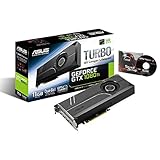
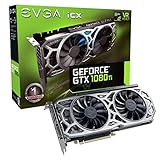
- Top Pick: EVGA GeForce GTX 1080 Ti SC Black Edition Gaming, 11GB GDDR5X, iCX Cooler & LED, Optimized Airflow Design, Interlaced Pin Fin Graphics Card 11G-P4-6393-KR (Renewed)
- Best Value: NVIDIA GEFORCE GTX 1080 Ti – FE Founders Edition (Renewed)
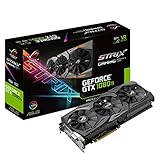
- Premium Choice: EVGA GeForce GTX 1080 Ti FTW3 Gaming, 11GB GDDR5X, iCX Technology – 9 Thermal Sensors & RGB LED G/P/M, 3X Async Fan Control, Optimized Airflow Design Graphics Card 11G-P4-6696-KR (Renewed)

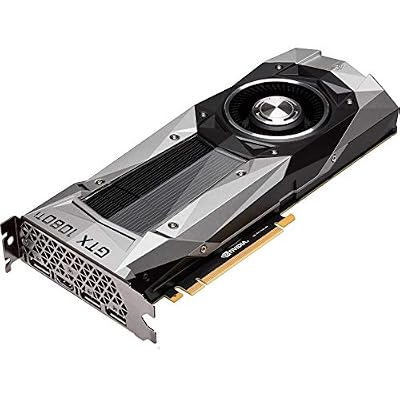


1080 Ti Vs 3060 is a classic GPU debate that still rages on in 2026. As hardware demands evolve and global PC component prices continue to climb, choosing between these two iconic graphics cards requires a deep look at performance, modern features, and long-term value.
The Quick Verdict and Key Differences in 2026
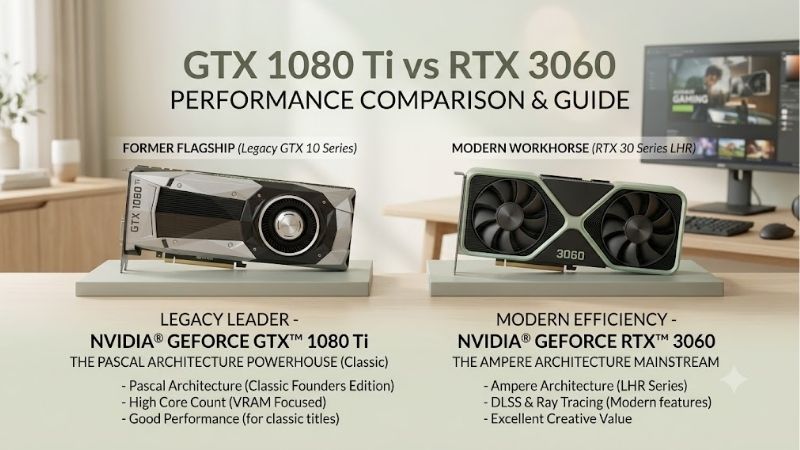
Understanding the core technological gap between these two GPUs is the first step toward making an informed investment. The legacy GeForce GTX 1080 Ti, released in 2017 based on the Pascal architecture, represents the pinnacle of raw, brute-force rasterization of its era. On the other side, the GeForce RTX 3060, built on the Ampere architecture and launched in 2021, represents a modern, feature-rich approach to mainstream gaming, introducing Ray Tracing and Deep Learning Super Sampling (DLSS) to the masses. In 2026, these contrasting philosophies create a fascinating matchup for budget-conscious builders.
As an Amazon Associate we earn from qualifying purchases at no extra cost to you.


The Quick Verdict: Who Wins Which Battle?
For gamers looking for a quick recommendation, the winner depends heavily on what games you play and what features you value most. The GTX 1080 Ti remains a beast for pure rasterization in older DirectX 11 and DirectX 12 titles, leveraging its massive physical memory bandwidth and wider bus interface to deliver impressive raw frame rates. If you primarily play competitive multiplayer games like Counter-Strike 2, League of Legends, or older AAA games without modern upscaling, the legendary Pascal card still holds its ground.
However, the RTX 3060 easily wins the battle of longevity, efficiency, and modern feature sets. Thanks to its dedicated Tensor Cores, the RTX 3060 can access NVIDIA DLSS 2, which vastly improves frame rates in modern 2026 titles where raw rasterization struggles. Additionally, its native support for Ray Tracing and superior driver support make it far more resilient to the grueling software demands of modern gaming. If you want a trouble-free experience with current AAA titles, the Ampere card is the superior overall package.
Check the latest price on Amazon:
Core Specifications Comparison
To truly appreciate the contrast between these two legendary offerings, we must look beneath the shroud and evaluate their physical blueprints. The GTX 1080 Ti was designed as an uncompromising ultra-enthusiast card, which is why it features an unusually large 11GB frame buffer and a wide 352-bit memory bus. This grants it an astronomical 484 GB/s of memory bandwidth. By comparison, the RTX 3060 is a mainstream card featuring a slightly larger 12GB frame buffer but paired with a narrower 192-bit bus, resulting in a lower memory bandwidth of 360 GB/s.
Let us look at the detailed physical specification comparison to see how these architectures stack up against each other on paper:
| Specification | NVIDIA GeForce GTX 1080 Ti | NVIDIA GeForce RTX 3060 |
|---|---|---|
| Architecture | Pascal (16nm TSMC) | Ampere (8nm Samsung) |
| VRAM Capacity | 11GB GDDR5X | 12GB GDDR6 |
| Memory Bus Width | 352-bit | 192-bit |
| Memory Bandwidth | 484 GB/s | 360 GB/s |
| CUDA Cores | 3584 | 3584 |
| Ray Tracing Cores | None (Software simulated) | 28 (2nd Generation) |
| Tensor Cores | None | 112 (3rd Generation) |
| PCIe Interface | PCIe 3.0 x16 | PCIe 4.0 x16 |
| Thermal Design Power (TDP) | 250 Watts | 170 Watts |
While both cards coincidentally share the exact same number of CUDA cores (3,584), their underlying execution pipelines are vastly different. The Ampere CUDA cores are capable of concurrent FP32 and INT32 operations, making them significantly more efficient clock-for-clock compared to Pascal’s older architecture. Furthermore, the RTX 3060’s modern GDDR6 memory runs at higher clock speeds, partially mitigating the narrower bus constraint.
Architectural Shifts: Pascal vs. Ampere
The historical transition from the 16nm TSMC process node of Pascal to the 8nm Samsung process node of Ampere represents a massive leap forward in transistor density and architectural efficiency. The GTX 1080 Ti relies completely on raw rasterization speed, meaning it must calculate every single pixel mathematically on its traditional shaders. This approach was highly effective in 2017 but struggles under the weight of modern gaming engines that rely on complex volumetric lighting, physical simulation, and specialized shading techniques.
The RTX 3060, by contrast, relies on a heterogeneous computing model. By dedicating silicon real estate to physical Ray Tracing (RT) cores and Tensor cores, NVIDIA shifted the rendering paradigm from raw execution to intelligent approximation. Tensor Cores, in particular, enable deep-learning-driven upscaling via DLSS. This allows the GPU to render games at a lower internal resolution (such as 720p or 960p) and upscale them to a crisp 1080p or 1440p output without losing image quality, effectively bypassing physical hardware rendering limits.
Deep Dive Performance and Real-World Gaming Face-Off
Synthetic benchmarks can only tell us so much; the true test of a graphics card lies in how it handles modern, highly demanding game engines in real-world scenarios. In 2026, games have become increasingly optimized for multi-threading, modern API pipelines like DirectX 12 Ultimate and Vulkan, and advanced upscaling technologies. This shift has altered how these two cards perform in actual gameplay, presenting a dynamic where raw power clashes directly with modern architectural efficiency.
1080p and 1440p Gaming Benchmarks
At a native 1080p resolution in standard rasterized games, the GTX 1080 Ti frequently outperforms the RTX 3060 by about 10% to 15%. Thanks to its massive memory bandwidth and higher fill rate, the legacy flagship pushes exceptionally high frame rates in older competitive titles. In games like Apex Legends, Destiny 2, or GTA V, the 1080 Ti easily takes the crown, delivering a smoother high-refresh-rate experience that competitive gamers adore.
However, when we step up to 1440p resolution or test modern AAA titles, the performance gap narrows dramatically. In games utilizing heavy DirectX 12 features, such as Red Dead Redemption 2 or Assassin’s Creed Valhalla, the RTX 3060’s modern architecture handles geometry pipelines and asynchronous compute much more efficiently, matching or even exceeding the 1080 Ti’s output. The 1080 Ti’s 11GB VRAM and the 3060’s 12GB VRAM both provide plenty of capacity to avoid texture bottlenecks, but the 3060’s modern memory allocation algorithms ensure smoother frame pacing and fewer micro-stutters during heavy scenes.
Ray Tracing, DLSS, and Future-Proofing Features
The moment you toggle Ray Tracing “On” in modern games like Cyberpunk 2077 or Control, the GTX 1080 Ti is completely outclassed. Because Pascal lacks dedicated RT hardware, it must run ray-tracing calculations via software emulation on standard shaders. This results in an absolute slideshow, with frame rates plummeting into the unplayable single digits. The RTX 3060, utilizing its second-generation RT cores, can handle ray-traced reflections and shadows at respectable frame rates, particularly when combined with upscaling.
DLSS is the ultimate game-changer in this comparison and the primary reason the RTX 3060 is far more future-proof. While the GTX 1080 Ti is limited to spatial upscalers like AMD FidelityFX Super Resolution (FSR) or NVIDIA Image Scaling (NIS), these spatial methods often introduce shimmering, ghosting, and a soft, blurry image. The RTX 3060’s access to DLSS 2 ensures temporal stability and remarkably crisp image reconstruction. In modern games, enabling DLSS Quality mode on the RTX 3060 easily pushes its performance past a native GTX 1080 Ti, all while maintaining superior image quality.
Professional Workloads, CUDA Rendering, and AI Tasks
For content creators, designers, and developers, a graphics card is much more than a gaming device; it is a critical workplace tool. In professional application suites, software optimization favors modern GPU architectures heavily. In Blender 3D rendering benchmarks, the RTX 3060 utilizes NVIDIA’s OptiX render engine, which leverages RT cores to accelerate ray-traced rendering. This allows the mainstream RTX 3060 to render scenes up to two times faster than the legacy GTX 1080 Ti, despite the latter’s massive raw CUDA horsepower.
The divide is even more pronounced in modern artificial intelligence and machine learning applications. If you are interested in running local Large Language Models (LLMs) or Stable Diffusion image generation on your desktop, the RTX 3060 is the clear choice. Its 112 third-generation Tensor Cores are specifically designed for FP16 tensor operations, which form the mathematical backbone of AI workloads. Combined with its 12GB VRAM buffer—which is crucial for loading larger AI models—the RTX 3060 offers an accessible, high-performance entry point for developers that the Pascal-based 1080 Ti simply cannot match due to its lack of specialized AI silicon.
Market Dynamics, Pros and Cons, and the Final Verdict
Navigating the hardware marketplace in 2026 requires looking beyond pure specifications to understand wider economic realities. Graphic card pricing, stock availability, and global hardware manufacturing trends heavily influence whether you should buy an older used flagship or a modern mainstream card. By examining these market dynamics, we can better understand the real-world value proposition of both options.
Global Tech Trends: AI Chip Shipments and Component Inflation
The global semiconductor landscape in 2026 is experiencing a massive realignment. Crucially, recent trade policy adjustments have allowed NVIDIA to resume shipments of its highly profitable H200 AI enterprise chips to major technology firms in China. Because these enterprise-level chips command astronomical profit margins compared to consumer gaming hardware, NVIDIA and its primary manufacturing partner TSMC have heavily prioritized enterprise-grade silicon production. This shift in manufacturing focus has restricted the overall supply of consumer GPUs, keeping desktop graphics card prices unexpectedly high.
Simultaneously, the general PC hardware market is facing persistent inflationary pressure. The cost of manufacturing and shipping heavy desktop components, such as high-quality power supplies (PSUs), motherboards, high-speed RAM, and gaming laptops, continues to rise. For budget-conscious PC builders, this means that every dollar counts more than ever. Securing a reliable, highly efficient GPU like the RTX 3060 is a smart, defensive financial decision to build a long-lasting, stable gaming rig before further component inflation drives retail prices up even higher.
Check the latest price on Amazon.
1080 Ti Vs 3060 Pros and Cons
When weighing the overall value proposition of the 1080 Ti Vs 3060 matchup, it helps to look at their relative strengths and weaknesses side-by-side. Both cards offer compelling advantages depending on your specific budget constraints and system requirements.
Here is a comprehensive breakdown of the pros and cons of each card to help guide your decision-making process:
GTX 1080 Ti Pros:
- Outstanding raw rasterization performance in older, DX11-based games.
- Massive 352-bit memory bus providing 484 GB/s of high-speed memory bandwidth.
- Premium, heavy-duty build quality typically found on legacy ultra-enthusiast flagship models.
GTX 1080 Ti Cons:
- High power draw (250 Watts TDP) requiring a beefy power supply and generating significant heat.
- No dedicated Ray Tracing or Tensor Cores, locking users out of hardware ray tracing and DLSS upscaling.
- Only available on the used market, which carries risks of hardware wear, fan failures, and no warranty coverage.
RTX 3060 Pros:
- Full support for modern features including ray tracing, DLSS 2, and NVIDIA Broadcast.
- Large 12GB VRAM buffer offers excellent protection against modern memory-heavy AAA titles.
- Highly efficient energy consumption (170 Watts TDP), leading to lower electricity costs and quieter system operation.
- Widely available brand new with manufacturer warranty protection.
RTX 3060 Cons:
- Slightly lower raw rasterization speeds in older titles compared to the GTX 1080 Ti.
- Narrower 192-bit memory bus limits performance at high native resolutions without upscaling.
Final Recommendation and Smart GPU Alternatives
Ultimately, the choice between these two cards boils down to your specific risk tolerance and gaming preferences. The GTX 1080 Ti is an incredible piece of engineering history, but buying one in 2026 is a major gamble. Most 1080 Ti units on the used market have been running for nearly a decade, meaning thermal paste, pads, and fan bearings are likely nearing the end of their lifespan. If you are a hardware enthusiast who enjoys maintaining old gear and mostly plays older competitive titles at native resolutions, the 1080 Ti remains a fun, powerful option.
For the vast majority of mainstream gamers, students, and content creators, the RTX 3060 is the far wiser investment. Its modern feature set, lower power consumption, driver support, and access to DLSS 2 ensure that you can play modern releases with smooth frame rates and reliable stability. However, if you find that neither of these cards fits your needs perfectly, there is a fantastic alternative to consider: the NVIDIA GeForce RTX 4060. The RTX 4060 offers even greater energy efficiency, faster raw performance, and access to DLSS 3 Frame Generation, making it a stellar modern choice if you have a slightly higher budget.
Check the latest price on Amazon.
Conclusion
In conclusion, comparing the 1080 Ti Vs 3060 highlights the fascinating evolution of graphics hardware over the past decade. While the legendary Pascal flagship still commands respect for its brute-force rasterization power, the modern feature set, AI upscaling, and energy efficiency of the Ampere card make it the superior, hassle-free choice for gaming in 2026. As manufacturing priorities shift and global supply chains remain tight, upgrading your system now with a modern, reliable GPU is the best way to secure your gaming setup for years to come. Check the latest price of the RTX 3060 on Amazon and secure your upgrade today!
Frequently Asked Questions
Which is faster in traditional games?
The GTX 1080 Ti generally edges ahead in pure rasterisation, sometimes by ten percent or more at 1440p, thanks to its 352-bit memory bus and 11GB frame buffer. The RTX 3060 catches up or wins in newer engines and pulls decisively ahead once DLSS or ray tracing enter the picture.
Is 12GB better than 11GB in practice?
The capacities are close enough that neither card is limited by memory size at 1440p. The more meaningful difference is bandwidth, where the GTX 1080 Ti has a clear advantage, versus the RTX 3060 modern compression and its usefulness for CUDA-accelerated AI and video work.
What is the driver situation for the GTX 1080 Ti?
Pascal is now a legacy architecture, receiving security updates rather than new Game Ready feature branches. New titles may launch without driver optimisation and some increasingly assume newer feature levels. The RTX 3060 remains on the current branch with full DLSS 4 upscaling support.
How do power requirements compare?
The GTX 1080 Ti draws about 250W and typically needs an 8-pin plus a 6-pin connector, while the RTX 3060 runs at roughly 170W from a single 8-pin. Moving to the RTX 3060 lowers heat, noise and running cost, and lets you use a smaller power supply.
Which should I buy used?
If the prices are similar, the RTX 3060 is the more sensible purchase because of active driver support, DLSS, ray tracing and lower power draw. Only choose a GTX 1080 Ti if it is significantly cheaper and you play older titles where raw rasterisation is all that matters.
Ready to decide? Our #1 pick for 2026 is the Specification.
Live price & availability on Amazon.




Write Your Review
No reviews yet. Be the first to share your experience!