
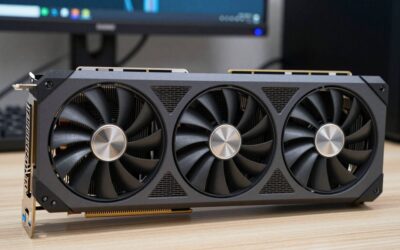
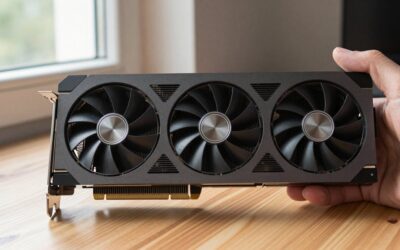
- Top Pick: ASRock Radeon RX 9060 XT Steel Legend 8GB GDDR6 OC Graphics Card | 3320 MHz Boost | Triple Fan | 0dB Cooling | Metal Backplate | PCIe 5.0 | DisplayPort 2.1a, HDMI 2.1b
- Best Value: ASRock Radeon RX 9070 XT Taichi 16GB OC & Phantom Gaming 360 LCD AIO Cooler Bundle | Ultimate Flagship with 3.4" LCD Display & Dual BIOS
- Premium Choice: ASRock Radeon RX 6800 XT Taichi X 16GB GDDR6 OC Graphics Card (2360 MHz Boost, 16Gbps, PCIe 4.0, RDNA 2, Ray Tracing, 3X 8-Pin, 2X DP 1.4, HDMI 2.1, USB-C, 0dB Cooling, Dual BIOS, RGB)
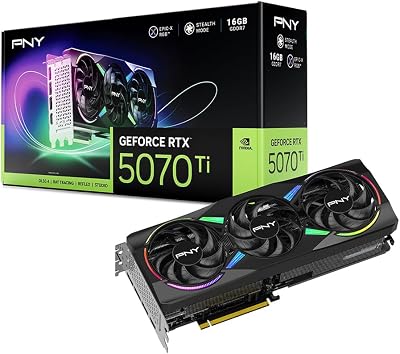
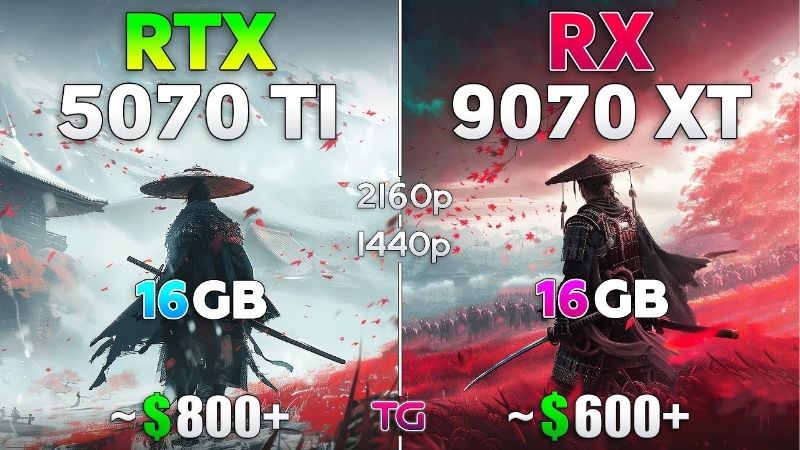
5070 Ti vs 9070 XT ray tracing is the exact matchup on the mind of anyone shopping for a high-end 1440p or entry 4K card in 2026. Both the Nvidia RTX 5070 Ti and the AMD RX 9070 XT are excellent GPUs with 16GB of memory, but when ray tracing enters the picture, the gap between them tells a very different story than raw rasterization does. This comparison cuts straight to it: a quick verdict for the impatient, a full spec table, a detailed ray tracing face-off, the real pricing situation, and a clear recommendation on who should buy which card. No hype — just the data you need to choose confidently.


5070 Ti vs 9070 XT: The Quick Verdict and Specs
If you only remember one thing, remember this: for pure ray tracing and path tracing, the RTX 5070 Ti holds the lead, while the RX 9070 XT counters with outstanding value and strong rasterization. Which matters more depends entirely on the games you play and the features you care about — and the sections below break that down in detail. The good news for shoppers is that there is no wrong answer here; both cards land in the same 16GB, high-end 1440p class, so the decision is about matching strengths to your priorities rather than avoiding a weak product.
As an Amazon Associate we earn from qualifying purchases at no extra cost to you.




The Quick Verdict: Who Wins on Ray Tracing
For the ray tracing question specifically, the RTX 5070 Ti is the winner. Nvidia’s fourth-generation RT cores and its DLSS 4 feature set give it a meaningful edge in the heaviest ray-traced and path-traced titles, where AMD cards have historically struggled most.
That said, the RX 9070 XT is not the pushover AMD’s older cards were. RDNA4 dramatically narrowed the ray tracing gap, and in lighter RT workloads the 9070 XT trades blows respectably while undercutting Nvidia on price.
So the honest quick answer is nuanced: choose the 5070 Ti if ray tracing is your priority, and the 9070 XT if you want most of the experience for less money. Both are genuinely good; they simply optimize for different buyers. If you’re the kind of player who leaves ray tracing on in every game that offers it, that preference alone points you toward Nvidia; if you toggle it on occasionally for a showcase title, the value math swings back toward AMD.
Head-to-Head Comparison Table
Before the deep dive, here’s a side-by-side look at the core specifications that shape how these two cards behave in ray-traced games.
| Specification | RTX 5070 Ti (Nvidia) | RX 9070 XT (AMD) |
|---|---|---|
| Architecture | Blackwell | RDNA4 |
| Memory | 16GB GDDR7 | 16GB GDDR6 |
| Memory bus | 256-bit | 256-bit |
| Ray tracing cores | 4th-gen RT cores | 3rd-gen RT accelerators |
| Upscaling | DLSS 4 (incl. Multi Frame Generation) | FSR 4 (AI-based) |
| Ray tracing strength | Leading, especially path tracing | Much improved, strong in lighter RT |
| Typical positioning | Premium RT performance | Value and rasterization |
On paper the two look closely matched — identical memory capacity and bus width — but the ray tracing hardware and upscaling ecosystems are where they diverge, and that divergence is the heart of this comparison.
Understanding the Two Architectures
The RTX 5070 Ti is built on Nvidia’s Blackwell architecture, which refines the RT and Tensor cores that power ray tracing and DLSS. Nvidia’s long head start in dedicated ray tracing hardware is a big part of why it leads in the most demanding effects.
The RX 9070 XT uses AMD’s RDNA4, the generation where AMD finally made ray tracing a first-class priority rather than an afterthought. The improvement over RDNA3 is substantial, closing much of the gap that defined earlier AMD-versus-Nvidia RT comparisons.
The takeaway for buyers is that this is the closest AMD has come in ray tracing, but Nvidia still sets the ceiling. How much that ceiling matters to you is the real decision. It’s also worth remembering that architecture shapes more than raw speed: Nvidia’s longer investment in RT and Tensor hardware feeds a wider ecosystem of games and creative apps that lean on those cores, which is a subtle but real part of the value equation.
Ray Tracing Face-Off: 5070 Ti vs 9070 XT in Detail
With the specs established, the interesting part is how these cards actually differ where it counts. This face-off compares them on ray tracing performance, upscaling technology, and the practical realities of power and rasterization. Rather than declaring a blanket winner, it’s more useful to see how each card behaves in the specific situations you’ll actually encounter, because the “right” choice shifts depending on which of these dimensions matters most to you.
Ray Tracing Performance and Path Tracing
In games with light to moderate ray tracing — reflections or shadows layered onto a traditional render — the two cards are competitive, and the 9070 XT often delivers a very playable experience that would have been unthinkable on older AMD hardware. This is the category most current games fall into, which is exactly why AMD’s RDNA4 progress matters so much for everyday buyers rather than just benchmark enthusiasts.
The gap widens as ray tracing gets heavier. In path-traced titles, which trace far more light rays and represent the most demanding workload, the RTX 5070 Ti’s dedicated hardware pulls clearly ahead, holding smoother frame rates where the 9070 XT strains.
So the answer depends on ambition. If you play a few RT-enhanced games casually, either card satisfies; if you chase the most cutting-edge path-traced showcases, the 5070 Ti is built for exactly that. The distinction is really between “ray tracing as an occasional bonus” and “ray tracing as the main event” — and buyers who fall into the second camp will feel the 5070 Ti’s extra headroom every time they load a heavy scene.
Upscaling: DLSS vs FSR and Frame Generation
Upscaling is where ray tracing becomes playable, because it recovers the frames that RT effects consume. Here Nvidia’s DLSS 4 is the standout, and crucially its Multi Frame Generation can multiply frame rates in supported titles — a feature the 9070 XT cannot match.
AMD’s answer is FSR 4, a genuine leap forward that moves to an AI-based approach and dramatically improves image quality over previous FSR versions. In many games the difference between DLSS and FSR 4 is now much smaller than it used to be.
Still, for ray tracing specifically, DLSS 4 plus frame generation gives the 5070 Ti a compounding advantage: it renders RT faster and then multiplies the result. That combination is Nvidia’s strongest argument in this matchup. For a buyer who cares about ray tracing, upscaling isn’t a side feature — it’s the technology that makes demanding RT playable, which is why the DLSS-versus-FSR gap carries so much weight in this particular comparison.
Rasterization, Power, and Thermals
Outside ray tracing, the RX 9070 XT is a rasterization powerhouse, frequently matching or beating the 5070 Ti in traditional non-RT games while costing less — a compelling proposition if most of your library doesn’t use ray tracing.
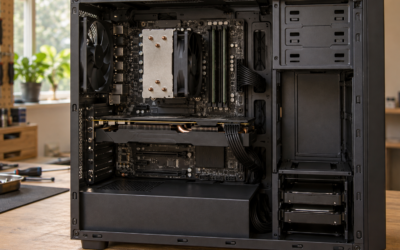
On the practical side, both cards need a capable power supply and a case with good airflow, so check your PSU headroom and clearance before buying either. Neither is exotic to run, but both are high-end cards that reward proper cooling.
This is the crux of the value argument: if you rarely enable ray tracing, the 9070 XT’s rasterization and price make Nvidia’s RT lead far less relevant to your daily experience. Many players spend most of their time in competitive or fast-paced games where ray tracing is either absent or switched off for maximum frame rate, and for that audience the 9070 XT can genuinely be the better card despite losing the ray tracing headline.
Price, Alternatives, and the Final Verdict
A ray tracing comparison isn’t complete without money and context, because the best card on paper isn’t always the smartest buy. This section covers the 2026 pricing climate, a cheaper alternative if both are a stretch, and the final recommendation. Price is where many buyers ultimately make their decision, so understanding not just the sticker but the wider market forces behind it will help you judge whether either card represents good value right now.
Pricing in the 2026 Market
Pricing is central to the 5070 Ti vs 9070 XT decision, and the market backdrop isn’t kind to bargain hunters. Graphics-card and component prices have trended upward, and while the steep climb of late 2025 has cooled into relative stability, suppliers still warn the situation remains volatile rather than settled.
Fresh supply is coming — memory makers such as CXMT can feed DDR5 into the market, and Micron is building two new plants in Idaho — but those facilities aren’t expected online until roughly 2027 to 2028. In plain terms, prices have plateaued rather than fallen, and real relief is still years away.
The practical read is to buy on merit, not on hope. The 9070 XT generally undercuts the 5070 Ti, so if ray tracing isn’t your focus, AMD’s pricing advantage is real money saved today rather than a discount you should wait around for. And because the supply picture points to a plateau rather than a fall, timing the market makes little sense — the sensible move is to decide which card fits your games and buy when you actually need it.
The Alternative if Both Are Too Pricey
If either card stretches your budget too far, there are sensible fallbacks that still deliver a strong 1440p experience. Stepping down to a non-XT or lower-tier current-generation card from either brand keeps modern upscaling while trimming the price.
A previous-generation card can also be a smart value play, especially for buyers who mainly want rasterization performance and only occasional ray tracing. You give up the newest frame-generation features but keep excellent everyday performance.
Whichever alternative you consider, you can compare current options and their prices through the links on this page to find the best balance of ray tracing and value for your specific budget.
See More:
- AMD graphics driver download
- Is Nvidia American
- Nvidia 1080 Ti drivers
- Radeon graphics driver update
- Nvidia RTX 3060 drivers
Final Verdict: Who Should Buy Which
The clearest way to decide is by priority, so here’s a focused pros-and-cons summary of the two cards for the ray tracing shopper.
| Card | Best For (Pros) | Watch-Outs (Cons) |
|---|---|---|
| RTX 5070 Ti | Leading ray/path tracing; DLSS 4 Multi Frame Generation; strongest RT ecosystem | Usually the pricier option |
| RX 9070 XT | Excellent value; superb rasterization; big RDNA4 RT gains; FSR 4 | Trails in the heaviest path-traced titles |
Buy the RTX 5070 Ti if ray tracing and future-facing AI features top your list and you want the best RT experience in this class. Buy the RX 9070 XT if you want most of that experience, superior rasterization value, and a lower price — a fantastic choice for buyers who enable ray tracing only sometimes. If you’re still torn, let your game library decide: tally how many titles you play that use heavy ray tracing, and if the number is small, the value card wins; if it’s large and growing, the Nvidia card will keep rewarding you longer.
In the 5070 Ti vs 9070 XT ray tracing battle, Nvidia takes the crown for pure ray tracing and path tracing thanks to its RT hardware and DLSS 4, while AMD’s 9070 XT wins on value and rasterization and closes the gap further than ever before. Match the card to how you actually play, factor in the flat-but-firm 2026 pricing climate, and you’ll get a GPU you’re happy with for years. Compare the latest prices and availability for both cards through the links on this page to lock in the right choice for your build.
Frequently Asked Questions
Which card is genuinely better at ray tracing?
The RTX 5070 Ti. Nvidia’s RT cores and denoising through Ray Reconstruction still lead, and the gap grows in path traced titles such as heavy Cyberpunk and Alan Wake configurations. RDNA 4 narrowed the deficit substantially compared with previous Radeon generations, but it has not closed it.
How close is the gap in lighter ray tracing workloads?
Much closer. In games using ray traced shadows or a single reflection pass rather than full path tracing, the RX 9070 XT often lands within a modest margin of the 5070 Ti and can be the better value. The divergence appears specifically when multiple ray traced effects stack.
Does upscaling change the outcome?
Yes, significantly. DLSS 4 with the transformer model plus multi frame generation gives Nvidia a large advantage in perceived smoothness and image stability at a given render resolution. FSR has improved but remains a step behind in fine detail and temporal stability, particularly at lower internal resolutions.
Do both cards have enough VRAM for ray traced 1440p and 4K?
Both carry 16GB, which is sufficient for ray traced 1440p and workable at 4K with upscaling. Ray tracing increases memory usage notably through acceleration structures, so 16GB is the right minimum here and neither card is memory limited in current titles at these resolutions.
What power supplies do they need?
The RTX 5070 Ti is a 300W card and Nvidia recommends around 750W with a 12V-2×6 connector. The RX 9070 XT is roughly 304W and similarly wants 750W or more using two or three 8-pin connectors. Both benefit from a good quality unit because ray traced loads produce sustained high draw.
Ready to decide? Our #1 pick for 2026 is the Specification.
Live price & availability on Amazon.

Write Your Review
No reviews yet. Be the first to share your experience!