
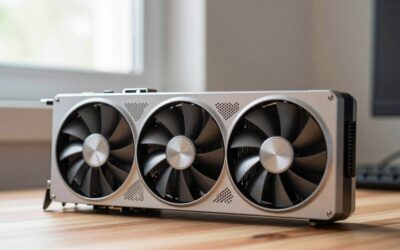
- Top Pick: GIGABYTE Radeon™ RX 9070 XT Gaming OC ICE 16G Graphics Card (16GB GDDR6, 256-bit, PCIe 5.0, HDMI/DP 2.1, 2.7 Slot, Hawk Fan, Server-Grade Thermal Gel, Reinforced Structure)
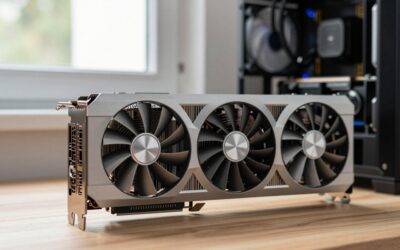
- Best Value: GIGABYTE Radeon RX 9070 XT Gaming OC 16G Graphics Card, PCIe 5.0, 16GB GDDR6, GV-R9070XTGAMING OC-16GD Video Card
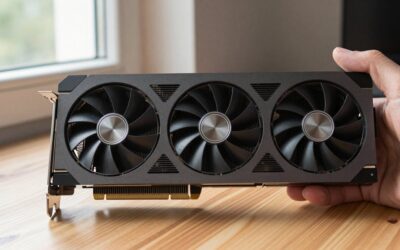
- Premium Choice: Sapphire 11348-03-20G Pulse AMD Radeon™ RX 9070 XT Gaming Graphics Card with 16GB GDDR6, AMD RDNA 4


Editor's Pick
XFX Swift AMD Radeon RX 9070 OC Triple Fan Gaming Edition with 16GB GDDR6 HDMI 3xDP, AMD RDNA 4 RX-97SWFB3B9

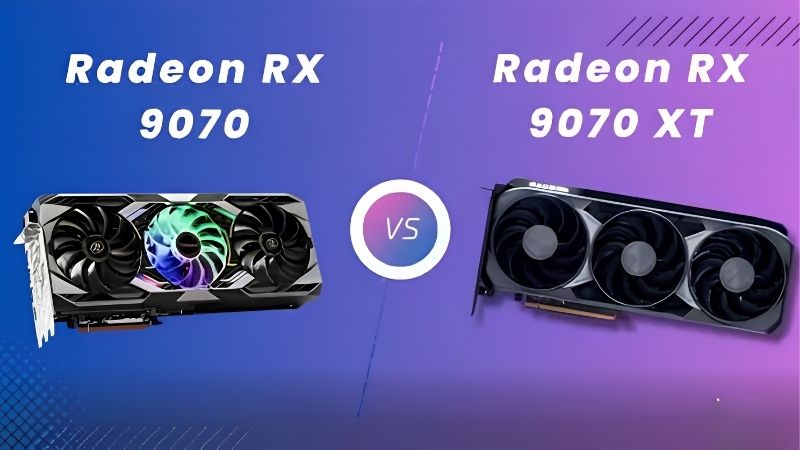
The rx 9070 vs rx 9070 xt debate comes down to one honest question: is the XT’s extra speed worth the higher price and power draw in 2026? Both cards share 16GB of memory and the same RDNA 4 architecture, so on paper they look like twins. In practice, one is a cooler, quieter value pick and the other is a faster card built for high-refresh 1440p and entry-level 4K. This face-off gives you the quick verdict, a full spec table, the real performance gap, and a clear recommendation for your exact build.
As an Amazon Associate we earn from qualifying purchases at no extra cost to you.


Quick Verdict and Full Spec Comparison
If you only have thirty seconds, this section is for you. Below is the short answer, the numbers that matter, and a plain-English explanation of what those numbers actually change when you sit down to play. The two cards are closer than most buyers expect, which is exactly why the details decide it.
The 30-Second Answer
Buy the RX 9070 XT if you game at 1440p with a high-refresh monitor, dabble in 4K, or simply want the most future-proof option and can supply the extra power. Buy the standard RX 9070 if you want the best performance per dollar, a cooler and quieter system, or a card that slots into a mid-range power supply without a second thought.
Neither card is a mistake. The XT wins on raw frames; the non-XT wins on efficiency and value. Your monitor, your case, and your power supply matter more here than brand loyalty.
RX 9070 vs RX 9070 XT Spec Comparison Table
Here are the core specs side by side. Clock speeds, board power, and prices are launch/reported figures, so always confirm the current listing before you buy, since 2026 pricing moves week to week.
| Spec | RX 9070 | RX 9070 XT |
|---|---|---|
| Architecture | RDNA 4 (Navi 48) | RDNA 4 (Navi 48) |
| Compute Units | 56 | 64 |
| Memory | 16GB GDDR6 | 16GB GDDR6 |
| Memory Bus | 256-bit | 256-bit |
| Boost Clock (approx.) | ~2.5 GHz | ~2.97 GHz |
| Typical Board Power | ~220W | ~304W |
| Recommended PSU | 650W | 750W |
| Interface | PCIe 5.0 | PCIe 5.0 |
| Launch MSRP | $549 | $599 |
What the Core Numbers Actually Mean
Both cards use the same Navi 48 chip and the same 16GB frame buffer, so they will run the same games at the same settings; the difference is how many extra frames you get. The XT enables 64 compute units versus 56 and clocks meaningfully higher, which is where its lead comes from.
The 16GB of memory on both is the standout detail. That capacity is generous for 1440p and comfortable at 4K, and it protects you against the memory limits that hurt some cheaper cards in modern, texture-heavy titles. In short, neither card will run out of memory anytime soon.
It also helps to read the power figures as part of the value equation, not just the performance one. The XT’s higher clocks and extra compute units are the reason it draws roughly 84 more watts, and that relationship is worth remembering: on these two cards, most of the speed you gain is paid for in power and heat rather than in a fundamentally different chip. That is why the “which is better” question has no single answer.
Deep Dive Face-Off: Performance, Power, and Value
Specs only tell part of the story. What matters is how that roughly 50-dollar price gap and 84-watt power gap translate into real gaming, real heat, and real value. This is where the rx 9070 vs rx 9070 xt choice becomes personal to your setup rather than a spec-sheet contest.
Gaming Performance at 1440p and 4K
At 1440p, the resolution both cards are built for, the XT typically leads the non-XT by roughly 10 to 15 percent in demanding titles. In practice that can be the difference between a locked 100 fps and a locked 115 fps, which matters most on a high-refresh 165Hz or 240Hz monitor.
Step up to 4K and that gap holds or widens slightly, because the extra compute units stretch their legs under heavier loads. Broadly, the RX 9070 trades blows with an RTX 5070, while the RX 9070 XT reaches toward RTX 5070 Ti territory. If you already own a 1440p 60Hz panel, the non-XT will feel identical in most games; if you chase high frame rates or 4K, the XT is the safer buy.
Both cards also benefit from RDNA 4’s improved ray tracing and FSR upscaling, which is where the experimental, forward-looking value lives. Turning on quality upscaling can lift frame rates substantially while keeping the image sharp, and as more games adopt the latest FSR version, both cards should age better than their raw numbers suggest. The XT simply starts from a higher baseline, so it has more room before you ever need to lean on those features.
Power Draw, Cooling, and System Fit
This is the practical dividing line. The RX 9070 draws around 220W and pairs happily with a quality 650W power supply, which means many owners can drop it into an existing mid-range build without upgrading anything else. It also runs cooler and quieter, a real plus in a small case or a warm room.
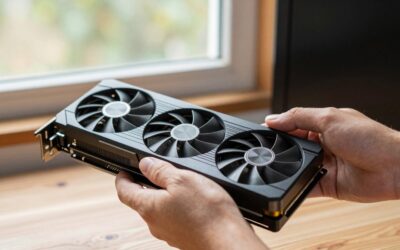
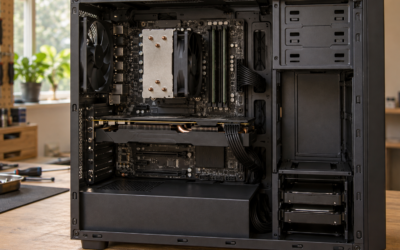
The RX 9070 XT pushes around 304W and wants a 750W supply for comfortable headroom. That extra draw means more heat to move, so XT models tend to be larger, triple-fan designs. Before you commit to the XT, measure your case clearance and check your PSU wattage and connectors, because a card you cannot power or fit is no bargain.
These practical details quietly decide a lot of purchases. If you are upgrading an older prebuilt with a 550W or 600W supply, the standard RX 9070 may drop straight in while the XT would force a power-supply upgrade that erases its value. Factor the total cost of ownership, including any new PSU, cooling, or case, into the comparison rather than judging the two cards on their sticker prices alone.
Pros and Cons of Each Card
Here is the honest trade-off, distilled. The RX 9070 XT’s pros are clear: higher frame rates, better 4K headroom, and stronger longevity for high-refresh gaming. Its cons are higher power draw, more heat and fan noise, bigger physical size, and a higher price that can climb further when stock is tight.
The standard RX 9070’s pros are excellent value per dollar, lower power and noise, easier PSU and case compatibility, and the same 16GB memory buffer as its faster sibling. Its cons are a modest performance deficit at 1440p and 4K, and slightly less headroom for future titles that lean hard on GPU compute. For most 1440p players, those cons are easy to live with.
Buying in a Rising-Price GPU Market
You are not shopping in a vacuum. Component prices in 2026 have been climbing, and that changes the calculus of buying now versus waiting. Understanding where the market is headed helps you decide whether to lock in a card today or gamble on a cheaper tomorrow, so it is worth a close look before you check out.
Why Component Prices Are Climbing in 2026
Across the PC market, laptops and components have trended upward in price rather than down, and graphics cards have not been immune. Memory is a big part of the story: when the modules that feed GPUs and systems get more expensive, that cost tends to reach the sticker price you pay, which is one reason well-priced 16GB cards like these are worth grabbing when you spot a fair deal.
There is some good news, but it is modest and mostly in the future. The steep climb seen in late 2025 has cooled, and at least one hardware maker, Framework, has noted a stretch of relative price stability, while still warning that things remain volatile. In other words, prices have stopped sprinting, not started falling.
Fresh supply is also opening up. Device makers can now source DDR5 memory from Chinese suppliers such as CXMT, and Micron is building two new plants in Idaho to expand output. The catch is timing: those Idaho facilities are not expected to run until 2027 or 2028, so their relief arrives years from now, not this quarter.
Why does memory pricing matter so much to a graphics-card buyer? Both the RX 9070 and RX 9070 XT carry 16GB of GDDR6, and memory is one of the pricier ingredients on the board. When module costs rise, card makers either raise prices or quietly trim the value they offer, so a stable, fairly priced 16GB card in this climate is worth more than the sticker suggests. It is also a reason not to assume that waiting six months guarantees a cheaper card; the same pressures that lift laptop and RAM prices can keep GPU prices firm.
The practical takeaway for a buyer weighing the RX 9070 against the RX 9070 XT is simple. Do not hold out for a dramatic price crash in the near term, because the evidence points to a plateau rather than a plunge, with meaningful new supply still years away. If you find either card at or near its listed price and it fits your build, buying now is a defensible, well-timed move rather than a rushed one, and you get to start enjoying the hardware today instead of gambling on an uncertain tomorrow.
The Alternative: A Third Card Worth Considering
If both cards stretch your budget in this pricing climate, look one tier down at the RX 9060 XT 16GB. It keeps the same generous 16GB memory, sips less power, and lands at a friendlier price for 1080p and lighter 1440p gaming, making it a smart fallback for value-focused buyers.
If you want to cross-shop the green team instead, the RTX 5070 Ti is the natural rival to the RX 9070 XT, adding DLSS and strong ray tracing at a comparable performance level. Comparing all three through the links on this page is the quickest way to see which offers the best price on the day you actually buy.
Final Verdict: Who Should Buy Which Card
Choose the RX 9070 XT if you own or plan to own a high-refresh 1440p or 4K monitor, you have a 750W-class power supply, and you want the longest useful life from your purchase. It is the enthusiast-leaning pick that leaves the least performance on the table.
Choose the standard RX 9070 if value, efficiency, and a quieter, cooler system rank above chasing every last frame. It is the sensible mainstream champion, and with identical 16GB memory it will not feel starved for years. Whichever way you lean, check current stock and pricing through the links here before you decide.
If you are still on the fence, let your monitor break the tie. A 1440p high-refresh or 4K display leans the decision toward the XT, while a 1080p or 1440p 60Hz panel makes the non-XT the smarter spend. That single question resolves the rx 9070 vs rx 9070 xt debate for the vast majority of buyers, faster than any benchmark chart can.
See More:
Conclusion
The rx 9070 vs rx 9070 xt matchup is really a question of priorities, not winners and losers. The XT delivers more frames and more 4K headroom for a higher price and higher power draw, while the RX 9070 offers outstanding value, lower heat, and the same 16GB memory that keeps it competitive for years. With component prices plateauing rather than crashing, a fair deal today is a reasonable buy. Compare the latest prices on both cards through the links on this page and pick the one that fits your monitor, your case, and your budget.
Frequently Asked Questions
What is the actual difference between the 9070 and 9070 XT?
Both use the same RDNA 4 silicon and carry 16GB of GDDR6 on a 256-bit bus. The XT enables more compute units and runs at higher clocks with a much larger power budget, roughly 304W against 220W. That translates to a mid-teens percentage performance advantage in most games.
Is the XT worth the extra money?
It depends on the gap at retail. When the XT costs around ten percent more, it is the better buy for 1440p high refresh and 4K. When the gap is twenty-five percent or more, the plain 9070 is the value pick, especially since it can often be tuned upward with a modest overclock.
How do their power supplies and connectors differ?
The 9070 at 220W is happy on a good 650W supply with two 8-pin connectors. The XT at around 304W wants 750W to 850W depending on your CPU, and many partner models use three 8-pin connectors. Do not rely on daisy-chained PCIe splitters on the XT under sustained load.
Which one runs cooler and quieter?
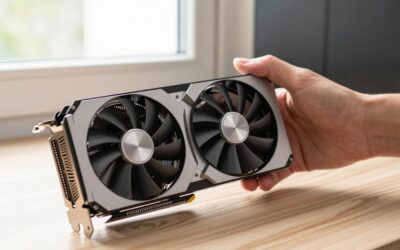
The non-XT is easier to cool by a wide margin because it dissipates roughly eighty watts less. Many 9070 models are dual-slot and stay quiet in a mid-tower with average airflow. XT cards are usually triple-slot with faster fan curves, so plan for more case ventilation if noise matters.
Do both handle ray tracing equally well?
They use the same improved RDNA 4 ray tracing hardware, so the quality and feature support are identical and only the throughput differs. Both are a large step up from RDNA 3 in ray traced titles, and both benefit from FSR upscaling and frame generation to keep 1440p and 4K playable.
Ready to decide? Our #1 pick for 2026 is the Architecture.
Live price & availability on Amazon.

Write Your Review
No reviews yet. Be the first to share your experience!