
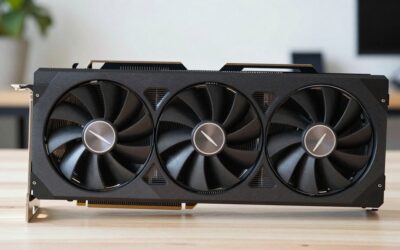
- Top Pick: GIGABYTE Radeon RX 9070 XT Gaming OC 16G Graphics Card, PCIe 5.0, 16GB GDDR6, GV-R9070XTGAMING OC-16GD Video Card
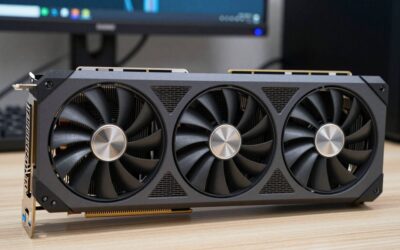
- Best Value: GIGABYTE Radeon™ RX 9070 XT Gaming OC ICE 16G Graphics Card (16GB GDDR6, 256-bit, PCIe 5.0, HDMI/DP 2.1, 2.7 Slot, Hawk Fan, Server-Grade Thermal Gel, Reinforced Structure)
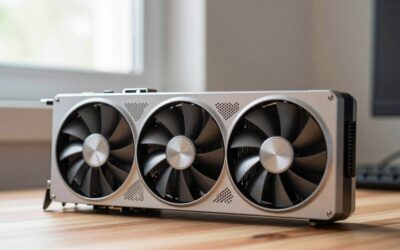
- Premium Choice: ASUS Prime Radeon RX 9070 XT 16GB GDDR6 OC Edition Gaming Graphics Card


RX 9070 XT vs RTX 4080 Super pits AMD’s newer, value-focused high-mid card against NVIDIA’s previous-generation heavyweight, and the result is a genuinely interesting clash of value versus raw power. One offers strong performance at a friendlier price with modern FSR 4, while the other brings more outright horsepower and the mature DLSS ecosystem, but often at a higher cost and with shrinking availability. This comparison gives you the fast verdict, a full specification table, a criteria-by-criteria face-off, a sensible alternative, and a clear recommendation so you can pick the right high-performance GPU without overthinking it.
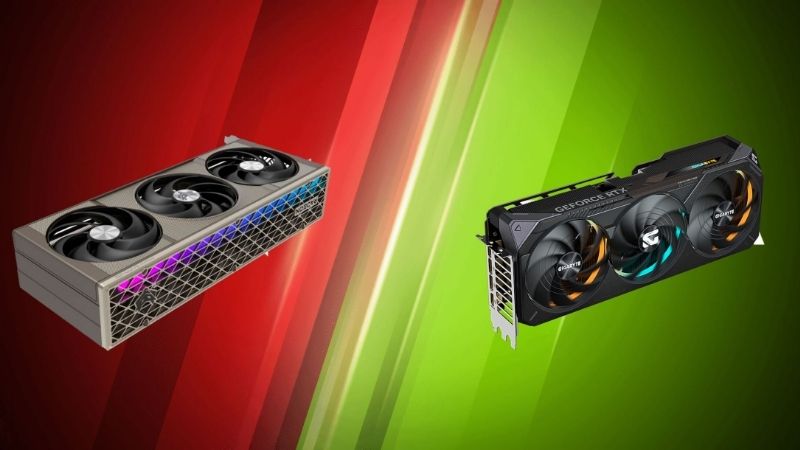
RX 9070 XT vs RTX 4080 Super: The Quick Verdict and Specs
These two cards approach the same goal from opposite directions: the RX 9070 XT chases the best value in the upper-mid tier, while the RTX 4080 Super sits a class above on raw performance but at a premium and with limited new stock as it winds down. The decision hinges on whether you prioritize price and modern efficiency or maximum frames and NVIDIA’s feature set. Here is the short answer and the numbers that drive it.
As an Amazon Associate we earn from qualifying purchases at no extra cost to you.


The 30-Second Verdict for Busy Buyers
If you want the best value, strong 1440p and entry-4K gaming, lower power draw, and the newest AMD features, the RX 9070 XT is the smart pick. If you want maximum raw performance, the strongest ray tracing, and the widest DLSS support, and you can find one at a fair price, the RTX 4080 Super is the more powerful card.
The honest framing is that the RTX 4080 Super is faster, but the RX 9070 XT is often the better buy because it delivers most of the experience for meaningfully less money and remains widely available as new stock. Which one wins for you depends on whether you are chasing peak frames or the best performance per dollar.
It is worth being clear about the generational context. The RTX 4080 Super is a previous-generation flagship that remains fast, while the RX 9070 XT is a current-generation card built to deliver strong performance at a mainstream-enthusiast price. That means you are weighing older raw power against newer efficiency and value, which is a different calculation than comparing two cards from the same release window.
Full Specification Comparison Table
The core numbers below explain most of the behavior discussed later, including why the value argument leans one way and the raw-power argument the other.
| Specification | RX 9070 XT | RTX 4080 Super |
|---|---|---|
| Architecture | AMD RDNA 4 | NVIDIA Ada Lovelace |
| Memory | 16GB GDDR6 | 16GB GDDR6X |
| Memory bus | 256-bit | 256-bit |
| Board power | ~304W | ~320W |
| Upscaling | FSR 4 | DLSS + Frame Gen |
| Approx price | $599 | $999 |
Both carry 16GB and similar power draw, so the real separators are raw performance, upscaling ecosystem, and price. The RTX 4080 Super leads on outright speed and ray tracing, while the RX 9070 XT counters with a much lower price and newer architecture.
Price, Availability, and What You Actually Get
The roughly $400 gap between launch prices is the headline, but availability is the quieter factor. The RX 9070 XT is a current card with steady new stock, whereas the RTX 4080 Super has been winding down since the newer generation arrived, so finding one new at a fair price is increasingly hit or miss, and inflated listings are common.
What you get for the money differs accordingly. The RX 9070 XT gives you modern value with a full warranty and current features, while the RTX 4080 Super gives you more raw power but may require paying a premium or buying used. That practical reality often matters as much as the benchmark gap when you actually go to buy.
For buyers, this turns availability into a core part of the value story rather than a footnote. A card you can actually purchase new, at its intended price, with a full warranty, is worth more in practice than a faster card that is scarce and often marked up. The RX 9070 XT’s steady stock is a quiet but real advantage that pure benchmark comparisons tend to ignore.
RX 9070 XT vs RTX 4080 Super: Deep-Dive Face-Off
Instead of reviewing each card alone, the most useful approach is to compare them directly across the criteria that decide a purchase: rasterization performance, ray tracing and upscaling, and power, value, and real-world buying. Each section names a winner so the trade-offs stay concrete.
Rasterization and High-Resolution Performance
In traditional rasterized gaming at 1440p and 4K, the RTX 4080 Super holds a clear raw-performance lead, delivering higher native frame rates in most demanding titles thanks to its heavyweight silicon. If you want the highest possible frames without leaning on upscaling, it is the stronger card. Winner on raw rasterization: the RTX 4080 Super.
The RX 9070 XT, however, is no slouch and stays within a competitive range for far less money, comfortably handling 1440p and entry-level 4K in most games. For the vast majority of players, the gap is smaller in real gameplay than the price difference suggests, which is the heart of the value argument. It closes much of the distance while costing hundreds less.
The practical read is that the RTX 4080 Super wins the benchmark, but the RX 9070 XT wins the value-per-frame calculation. Whether that matters depends on how much you are willing to pay for the last increment of performance.
Ray Tracing, FSR 4, and DLSS
Ray tracing has historically favored NVIDIA, and the RTX 4080 Super continues that trend with strong ray-traced performance and the mature, widely supported DLSS ecosystem. For buyers who lean heavily on ray tracing or want the broadest upscaler support, that remains a real advantage. Winner on ray tracing and upscaling breadth: the RTX 4080 Super.
AMD has closed much of the gap with FSR 4, which is a credible, much-improved upscaler that makes the RX 9070 XT far more competitive than earlier AMD cards in demanding scenarios. It is not quite the ecosystem NVIDIA offers, but for most games it delivers excellent results, and it removes the historical reason many buyers automatically chose NVIDIA. The gap is now a preference rather than a dealbreaker.
The practical implication is that ray tracing is no longer a one-sided category. If you enable it occasionally, either card handles it well and the difference barely registers. If ray tracing is central to how you play, the RTX 4080 Super still holds an edge, but you should weigh that against its higher price and thinner availability rather than treating it as an automatic win.
Power, Value, and Real-World Buying
Power draw is close, with both cards sitting in the roughly 300 to 320W range, so neither has a decisive efficiency edge and both want a capable power supply and good airflow. On that front, the two are effectively matched, and either will run well in a properly specified system.
That said, do confirm your power supply has comfortable headroom for either card, since both sit in genuine high-performance territory. A quality unit and a case with real airflow keep either GPU cool and quiet under sustained load, and skimping there can undermine an otherwise strong card regardless of which brand you choose.
Value and availability are where the RX 9070 XT pulls firmly ahead. It costs hundreds less, ships as current new stock with full warranty, and delivers a large share of the flagship experience, while the RTX 4080 Super increasingly requires paying a premium or accepting a used unit. Winner on value and buying practicality: the RX 9070 XT.
Choosing Between the RX 9070 XT and RTX 4080 Super
With the face-off settled, the final decision comes down to your priorities, how the current market shifts the value math, and whether a different card would serve you better. This section closes those loops so you can buy with confidence.
Pros and Cons of Each Card at a Glance
The summary below captures the strengths and weaknesses that matter most for this matchup.
| RX 9070 XT | RTX 4080 Super | |
|---|---|---|
| Strengths | Value, new stock, FSR 4, current warranty | Higher raw power, best ray tracing, DLSS |
| Weaknesses | Slightly behind on peak frames and ray tracing | Expensive, limited new stock, often inflated |
| Best for | Value-focused 1440p and entry-4K gamers | Buyers chasing maximum frames who find a deal |
Neither list is a knockout; the right column depends on whether you value price and availability or outright performance and the DLSS ecosystem. For most real-world buyers today, availability and value carry unusual weight, which is worth remembering as you decide.
How Rising Prices Reshape the Decision
The current market makes availability as important as raw specs. Component and laptop prices have been trending upward, and graphics-card memory has been under particular pressure, which pushes street prices above launch figures and makes older, winding-down cards like the RTX 4080 Super especially prone to inflated pricing. That dynamic strengthens the case for a current card with steady stock like the RX 9070 XT.
There is a cautiously positive note: the steep climbs of late 2025 have eased into a stretch of relative stability, though suppliers still warn the situation can shift again. New supply from additional memory vendors and Micron’s two upcoming Idaho plants is not expected until roughly 2027 to 2028, so meaningful relief remains years away. The practical conclusion is that a fairly priced, readily available card today beats waiting for a crash the timeline does not support, which again tilts the everyday buyer toward the RX 9070 XT.
The Alternative: If You Want to Spend Less
If both cards stretch your budget, the sensible step down is the standard RX 9070 or an RTX 5070, both of which deliver strong 1440p gaming for less money while keeping modern features. They trade some raw performance for a friendlier price, which suits players who do not need entry-4K headroom.
Whichever direction you lean, compare the live prices of these alternatives against the two headline cards before deciding. In this shifting market the gaps move constantly, and a well-timed discount on a step-down card can easily make it the smartest overall value for your specific needs.
Do not overlook the used market either, particularly for the RTX 4080 Super. Because new stock is thin, a carefully vetted used unit can be the only sensible way to get one at a fair price, though that path carries the usual risks and no full warranty. Weigh that trade-off honestly against buying a new RX 9070 XT with the security a fresh purchase provides.
See More:
- NVIDIA
- NVIDIA DeepStream
- NVIDIA GPU driver update
- NVIDIA GeForce NOW download
- NVIDIA RTX A2000 12GB driver
Final Verdict: RX 9070 XT vs RTX 4080 Super
The RX 9070 XT vs RTX 4080 Super decision ultimately rewards clarity about what you value. Choose the RX 9070 XT if you want the best value, current new stock, modern FSR 4, and strong 1440p and entry-4K performance for hundreds less. Choose the RTX 4080 Super if you want maximum raw power and the best ray tracing and DLSS support, and you can find one at a fair price rather than an inflated one. For most buyers in today’s market, the RX 9070 XT is the more practical and better-value choice, since it pairs strong performance with steady stock and a friendlier price, while the RTX 4080 Super rewards those who specifically want maximum frames and can find one without paying an inflated premium. Both are capable cards, so match the pick to your priorities, check current pricing and availability, and buy when the deal is genuinely fair rather than settling for a marked-up listing.
Frequently Asked Questions
Which card is faster overall?
The RTX 4080 Super holds a clear lead in raw rasterization and a larger one in ray tracing, sitting roughly a tier above. The RX 9070 XT closes the gap considerably in lighter ray traced workloads and typically costs substantially less, which is where its argument lives rather than in outright speed.
Do they have the same memory capacity?
Both ship 16GB, but the 4080 Super uses GDDR6X on a 256-bit bus with higher effective bandwidth, while the 9070 XT uses GDDR6 with RDNA 4’s improved compression and cache. In practice both are comfortable at 4K today, and neither has a meaningful capacity advantage over the other.
How do power draw and PSU needs compare?
The RX 9070 XT is rated near 304W with two 8-pin connectors and a 750 to 800W system recommendation. The RTX 4080 Super is 320W using a 12V-2×6 connector on a 750W recommendation. Efficiency per frame favors NVIDIA slightly, but the difference will not show meaningfully on your electricity bill.
Which upscaler is better, FSR 4 or DLSS 4?
DLSS 4 with the transformer model still leads on fine detail retention and ghosting, and it is supported in far more games with driver-level overrides for older titles. FSR 4’s move to a machine learning model on RDNA 4 hardware closed most of the visible gap, making it genuinely competitive now.
Which is the better buy at current prices?
If the 9070 XT is meaningfully cheaper and you play mostly rasterized games at 1440p or 4K, it is the value choice. If you play path traced titles, stream, or rely on CUDA for creative and AI work, the 4080 Super’s ecosystem advantages justify the premium.
Ready to decide? Our #1 pick for 2026 is the Architecture.
Live price & availability on Amazon.

Write Your Review
No reviews yet. Be the first to share your experience!