
- Top Pick: ASRock Intel Arc A580 Challenger 8GB OC Graphics Card, Intel Xe HPG Architecture, 8GB GDDR6, PCIe 4.0, Dual Fans, 0dB Silent Cooling, DisplayPort 2.0
- Best Value: ASRock Intel Arc A380 Challenger ITX 6GB OC, 2250MHz GPU, 6GB GDDR6 96-bit, PCIe 4.0, Single Fan, 0dB Silent, DP 2.0, HDMI 2.0b
- Premium Choice: MSI Claw A1M Handheld Gaming Device, Intel Core Ultra Processor, Intel XeSS Technology
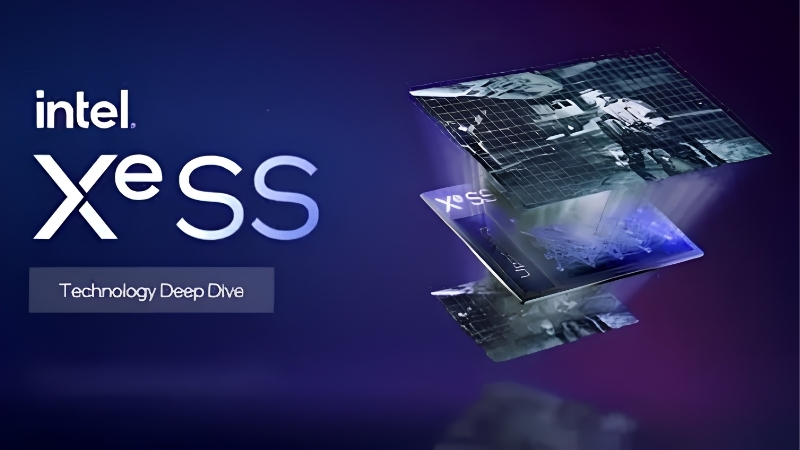
intel xess is Intel’s answer to DLSS and FSR, an AI-assisted upscaling technology that boosts frame rates by rendering games at a lower resolution and intelligently reconstructing them to look sharp. What makes it distinctive is its cross-vendor design: it runs at its best on Intel Arc hardware but also works on Nvidia and AMD cards, making it one of the more widely usable upscalers available. This review explains how XeSS works, the difference between its two quality paths, what the newer XeSS 2 adds, and how it stacks up against its rivals, so you can understand exactly what it offers.
What Intel XeSS Is
Intel XeSS, short for Xe Super Sampling, is an AI-assisted upscaling technology designed to increase gaming performance while preserving image quality. It renders a game internally at a lower resolution and reconstructs a higher-resolution image using machine learning. Understanding how the upscaling works, the two different quality paths it can run on, and what the newer XeSS 2 generation adds is essential to grasping why XeSS occupies a unique position among upscalers.
As an Amazon Associate we earn from qualifying purchases at no extra cost to you.




How XeSS Upscaling Works
XeSS works by rendering a game at a lower internal resolution to save performance, then using an AI-trained model to reconstruct a sharp, higher-resolution output, drawing on motion data and prior frames to maintain detail.
The result is a significant frame-rate boost with image quality that aims to approach native rendering, letting players enable higher settings or resolutions than their hardware could otherwise sustain.
Like its rivals, XeSS offers multiple quality presets that trade image fidelity for performance, so players can tune the balance to suit their hardware and preferences in each game.
The AI element is what distinguishes modern upscalers like XeSS from older, simpler resolution-scaling methods. Rather than naively stretching a low-resolution image, XeSS uses a trained model that understands how to reconstruct detail, drawing on motion vectors and previous frames to fill in what a naive upscale would miss. That intelligence is why a well-implemented upscaler can approach native quality while still delivering the performance benefit of rendering fewer pixels, which is the whole appeal of the technology.
XMX vs DP4a: The Two Quality Paths
The defining technical feature of XeSS is that it runs on two different paths. On Intel Arc GPUs, it uses the dedicated XMX matrix engines for the highest quality and best performance, closely rivaling the best upscalers.
On non-Arc GPUs from Nvidia and AMD, XeSS falls back to a DP4a path that works across vendors but delivers lower image quality and smaller gains than the XMX version running on Arc hardware.
This dual-path design is XeSS’s key differentiator: it is genuinely cross-vendor, usable by almost anyone, while still rewarding Arc owners with a premium experience through the dedicated hardware path.
XeSS 2: Frame Generation and Low Latency
The newer XeSS 2 generation expands the technology beyond upscaling by adding XeSS Frame Generation, which inserts AI-generated frames between rendered ones to further boost smoothness, much like rival frame-generation features.
XeSS 2 also introduces a low-latency component, Xe Low Latency, designed to counteract the input lag that frame generation can add, keeping the experience responsive as well as smooth.
Together, these additions turn XeSS from a pure upscaler into a fuller performance suite, aligning it with the broader feature sets offered by its main competitors.
The pairing of frame generation with a dedicated low-latency component is important, because frame generation on its own can introduce a feeling of input lag that undermines its smoothness benefit. By bundling Xe Low Latency alongside it, XeSS 2 aims to deliver the extra frames without the responsiveness penalty, which is the same combined approach the leading rivals take. For players, that means the smoothness gains are meant to come without the trade-off that would otherwise make frame generation a mixed blessing.
Real-World Quality and User Impressions
A technology is only as good as the experience it delivers, so a fair review blends its real-world image quality and performance with what users report. Combining the enthusiastic 4-5 star feedback with the more critical 2-3 star reviews shows where XeSS impresses and where it falls short. Here is the consistent pattern from both testing and the community.
Image Quality and Performance Gains
On Arc hardware using the XMX path, XeSS delivers strong image quality and substantial performance gains, producing a clean, detailed result that competes closely with the best upscalers available.
On the DP4a path used by other GPUs, the gains are still worthwhile but the image quality is a step below, so cross-vendor users get a useful but less polished experience than Arc owners.
The analytical takeaway is that XeSS’s quality is genuinely tiered by hardware, so evaluating it fairly means specifying which path you will actually use rather than treating it as a single uniform technology.
This tiering has a practical consequence for how buyers should read XeSS reviews and comparisons. A glowing assessment based on Arc hardware may not reflect the experience an Nvidia or AMD owner will have on the DP4a path, and vice versa. The honest way to judge XeSS for your situation is to look specifically at results from the path your GPU will use, since the two can differ enough to change whether the technology is a highlight or merely a useful fallback.
What 4-5 Star Users Praise
Positive users on Arc hardware praise the high image quality and strong performance gains from the XMX path, describing it as a first-class upscaler that makes their cards far more capable.
Cross-vendor users appreciate that XeSS is available to them at all, valuing the option to use a quality upscaler in games where their preferred alternative may not be supported.
Many also welcome the XeSS 2 additions, praising the frame generation and low-latency features for broadening what the technology can do and keeping it competitive with rivals.
Arc owners in particular express satisfaction that their choice of a less mainstream GPU brand does not mean settling for a second-rate upscaler, since the XMX path gives them a genuinely premium experience. That reassurance matters to buyers who took a chance on Intel, and it features prominently in positive reviews as evidence that the Arc ecosystem has matured into something that competes on quality rather than just price.
Common Complaints from 2-3 Star Reviews
The most common criticism is the quality gap on the DP4a path, since non-Arc users sometimes find the cross-vendor version noticeably softer or more artifact-prone than the Arc experience.
A second theme is game support, since XeSS is available in fewer titles than the most widely adopted upscaler, so players cannot always rely on it being present in the games they play.
As with all upscalers, a minority note occasional artifacts in challenging scenes, such as fine detail or fast motion, though these are common trade-offs across the whole category.
These artifacts are rarely dealbreakers and tend to improve as the technology matures and developers refine their implementations, but they are worth knowing about, since no current upscaler is entirely free of them in every situation.
Value, Comparison, and Buying Advice
An upscaler is best understood against its rivals and its role in a GPU purchase, so this section compares XeSS with DLSS and FSR, lays out the pros and cons, and considers how much it should weigh in a 2026 buying decision in a market where card pricing remains a key factor.
XeSS vs DLSS and FSR
Against Nvidia’s DLSS, XeSS on Arc hardware is competitive on quality, but DLSS enjoys wider game support and a longer track record, which remain meaningful advantages for Nvidia owners.
Against AMD’s FSR, XeSS’s cross-vendor DP4a path fills a similar role, while its XMX path on Arc can offer better quality than FSR, so the comparison depends heavily on which hardware you own.
The practical verdict is that XeSS is a strong upscaler that is excellent on Arc and useful everywhere else, sitting as a genuine third option alongside DLSS and FSR rather than a clear leader or also-ran.
For most players, the sensible approach is to treat all three technologies as tools to try rather than to pick a single winner in the abstract. Implementation quality varies from game to game, so the best upscaler in one title may not be the best in another, and having XeSS available as an option, especially the cross-vendor version, simply gives players more chances to find the setting that looks and runs best in each game they play.
Pros and Cons of Intel XeSS
Here is the balanced summary drawn from testing and user feedback.
Pros: excellent quality on Arc via XMX, genuine cross-vendor support through DP4a, strong performance gains, and a growing feature set with XeSS 2 frame generation and low latency. Cons: lower quality on the DP4a path, narrower game support than the most popular rival, and the usual upscaling artifacts in tough scenes.
Because XeSS is at its best on Arc hardware, if its quality path appeals to you, checking live pricing on an Arc GPU through the link on this page is a sensible next step.
Should XeSS Influence Your GPU Choice in 2026?
Since XeSS runs best on Arc, it can factor into a GPU purchase, and 2026’s market shapes that. After the steep climb at the close of 2025, graphics-card pricing has settled into a calmer phase, but calm here means flat rather than falling, so cards remain relatively firm in price.
With fresh memory supply from sources like CXMT and Micron’s two new Idaho plants not arriving until 2027–2028, meaningful price relief is still years away, so waiting for a dramatic drop is a weak strategy.
For a buyer drawn to the premium XeSS experience, an Arc card at today’s steady prices is a reasonable move now. If one fits your budget, check its current price through the link on this page and buy while the market holds steady.
See More:
Conclusion
The verdict on intel xess is that it is a genuinely strong and unusually flexible upscaler, delivering first-class quality on Intel Arc hardware through its XMX path while remaining usable across Nvidia and AMD cards via DP4a, with XeSS 2 adding frame generation and low latency to round out the package. Its caveats are the quality gap on the cross-vendor path and narrower game support than the most popular rival, but as a third major option alongside DLSS and FSR, it holds its own. For Arc owners especially, it is a valuable, capable technology — and with GPU prices only holding steady rather than dropping, there is little reason to wait. Use the link above to compare live pricing on an Arc GPU and get the best of XeSS today.
Top-Rated Picks


| Product | Brand | Rating | Reviews | Price |
|---|---|---|---|---|
| ARCTIC MX-4 (4 g) – Premium Performance Thermal Paste… | ARCTIC | ★ 4.8 | 104k | $4.99 |
| ARCTIC MX-4 (incl. Spatula, 4 g) – Premium Performanc… | ARCTIC | ★ 4.8 | 71.9k | $5.49 |
| Crucial 8GB DDR4 RAM 3200MHz (PC4-25600), Downclockab… | Crucial | ★ 4.8 | 62.8k | $74.99 |
| AMD Ryzen 5 5600X 6-core, 12-thread unlocked desktop … | — | ★ 4.8 | 30.2k | $177.60 |
| NVIDIA Shield Remote; Voice Search, Motion-Activated,… | — | ★ 4.7 | 10.6k | $25.99 |
Frequently Asked Questions
Does XeSS work on NVIDIA and AMD cards?
Yes. On Intel Arc GPUs it runs on the dedicated XMX matrix engines for best quality and speed, while on other vendors’ cards it falls back to a DP4a integer path that is slower and slightly lower quality. That cross-vendor support is XeSS’s main structural advantage over DLSS.
How does image quality compare to DLSS and FSR?
XeSS generally sits between them: cleaner and more temporally stable than older FSR 2 implementations, but still behind DLSS’s transformer model on fine detail and disocclusion handling. On Arc hardware with XMX acceleration the gap to DLSS narrows considerably, particularly at Quality preset and 1440p or above.
What is XeSS 2 and frame generation?
XeSS 2 bundles the upscaler with XeSS Frame Generation and Xe Low Latency. Frame generation interpolates additional frames for smoother motion, while XeLL reduces input lag to offset the latency that interpolation adds. Frame generation is restricted to Arc GPUs, unlike the upscaler which runs anywhere.
Which preset should I choose?
Ultra Quality or Quality at 1440p and 4K preserve most detail while delivering a worthwhile frame rate gain. At 1080p, avoid Performance and Ultra Performance, since the low internal resolution leaves too little information for reconstruction and produces visible shimmer on thin geometry and foliage.
Can I swap XeSS versions manually?
Often yes, by replacing the libxess DLL in the game folder with a newer build, which can improve stability and reduce artefacts in titles shipping older versions. Keep a backup of the original file, and be aware that anti-cheat systems in multiplayer games may object to modified files.







Write Your Review
No reviews yet. Be the first to share your experience!