
What is G-Sync is a question worth answering for anyone tired of screen tearing ruining an otherwise smooth game. In simple terms, G-Sync is Nvidia’s variable refresh rate technology that synchronizes your monitor’s refresh rate with your graphics card’s frame rate in real time, eliminating tearing and reducing stutter. The result is noticeably smoother motion, especially when your frame rate fluctuates. This guide explains how G-Sync works, the different tiers you will encounter when shopping, the real pros and cons, and how to set it up so you get the buttery-smooth gameplay the technology promises without paying for features you do not need.
Understanding What G-Sync Is
Before deciding whether you need it, it helps to understand the problem G-Sync solves and how it does so. G-Sync addresses the mismatch between how often your monitor refreshes and how fast your graphics card produces frames, a mismatch that causes the visual artifacts many gamers find distracting.
As an Amazon Associate we earn from qualifying purchases at no extra cost to you.



How G-Sync Works
A standard monitor refreshes at a fixed rate, such as 60 or 144 times per second, regardless of how many frames your graphics card delivers. When the two do not line up, the screen can show parts of two frames at once, producing a torn image.
G-Sync solves this by letting the monitor adjust its refresh rate dynamically to match the graphics card’s output, frame by frame. The display waits for each new frame and shows it the moment it is ready.
This real-time synchronization means every frame appears whole and at the right moment, eliminating tearing and smoothing out the stutter that fixed refresh rates can introduce when frame rates vary during demanding scenes. Instead of the display and the graphics card working on separate schedules and occasionally colliding, the two move in lockstep, which is the fundamental reason variable refresh rate looks so much cleaner than a traditional fixed display.
G-Sync vs Standard Refresh Rates
On a standard fixed-refresh monitor without synchronization, you typically face a choice between tearing or the input lag and stutter that older sync methods introduce. Neither option is ideal for fast, responsive gaming.
G-Sync removes that compromise by adapting the refresh rate to the frame rate, so you get tear-free images without the heavy lag of traditional fixed-rate solutions. This is the core advantage that makes variable refresh rate so popular.
The difference is most obvious in games where the frame rate rises and falls, since a fixed refresh rate struggles with that variation while G-Sync handles it seamlessly. In steady, capped scenarios the gap is smaller, but few games hold a perfectly constant frame rate, so the benefit shows up often in real play.
The Different G-Sync Tiers
Nvidia offers G-Sync in a few tiers, which is useful to understand when buying a monitor. The original G-Sync uses a dedicated hardware module for the most rigorous performance and quality validation.
G-Sync Compatible is a certification for monitors that use the open adaptive sync standard and have been tested by Nvidia to work well, often at lower cost. There is also a premium Ultimate tier aimed at high-end displays.
For most buyers, a G-Sync Compatible monitor delivers an excellent experience at a friendlier price, while the dedicated-module tiers target enthusiasts who want guaranteed top-end performance. Knowing which tier a monitor belongs to helps you understand what you are paying for, since the jump to a dedicated module mostly buys rigorous validation and a guaranteed wide refresh range rather than a night-and-day change in everyday gameplay for the average gamer.
Why G-Sync Matters for Gaming
The technology only matters if it improves how your games look and feel, so let us look at what G-Sync actually delivers. Its benefits are most noticeable in fast-paced and graphically demanding games where frame rates fluctuate, which is precisely where a fixed refresh rate struggles to keep motion clean and tear-free.
Eliminating Screen Tearing and Stutter
The headline benefit of G-Sync is the removal of screen tearing, that distracting horizontal split that appears when frames are out of sync with the display. With G-Sync, every frame is shown whole.
It also smooths out stutter that occurs when frame delivery is uneven. By matching the refresh to the frame rate, motion stays fluid even as the frame rate rises and falls during gameplay.
For everyday gaming, this means a cleaner, more immersive experience, particularly in titles where the action and frame rate vary, which is exactly where fixed refresh rates show their weaknesses most clearly. Once you have played on a properly configured G-Sync display, the tearing and uneven motion of a fixed-rate screen become hard to ignore, which is why so many gamers consider variable refresh rate an essential feature rather than a luxury.
The Pros and Cons of G-Sync
G-Sync delivers a real improvement, but it has trade-offs worth understanding before you buy a monitor around it.
Pros:
- Eliminates screen tearing without the heavy input lag of older sync methods.
- Smooths stutter for fluid motion even when frame rates fluctuate.
- Dedicated-module tiers offer rigorously validated, top-tier performance.
Cons:
- Dedicated G-Sync module monitors can carry a price premium.
- The biggest benefits come within the monitor’s supported refresh range.
- Historically tied to Nvidia GPUs, though compatibility has broadened.
G-Sync and Input Lag
A key advantage of G-Sync over older sync methods is its low input lag. Traditional fixed-rate synchronization could add noticeable delay, which competitive players disliked, whereas G-Sync keeps latency low.
Because the display shows each frame as soon as it is ready rather than holding it, the responsiveness stays close to having no sync at all, but without the tearing. This balance is why it suits both immersive and competitive play.
For the best results, pairing G-Sync with a high frame rate and a frame-rate cap just below your monitor’s maximum keeps latency low while staying within the variable refresh range. This combination gives you the responsiveness competitive players want alongside the tear-free smoothness that makes immersive single-player games look their best, which is why G-Sync suits a wide range of playstyles rather than just one.
How to Set Up and Use G-Sync
Getting the most from G-Sync comes down to a few settings and the right hardware pairing. Enabling it is simple, and a couple of tweaks ensure it works optimally. Here is the practical approach to a tear-free, smooth experience that gets the best out of both your monitor and your graphics card.
Enabling G-Sync on Your System
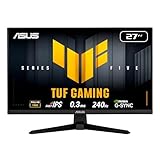
To use G-Sync, you need a compatible monitor and a supported graphics card connected with the right cable. Once connected, you enable G-Sync in the Nvidia control software, where you can turn it on for full-screen and windowed modes.
Most modern setups detect a compatible monitor automatically, but it is worth confirming the setting is active. Updating your graphics drivers ensures the latest compatibility and smoothest behavior across your games.
It is also worth checking which connection you are using, since variable refresh rate behavior can differ between cable types, and using the recommended one for your monitor avoids surprises. Once G-Sync is on, you can verify it is working through an indicator in the Nvidia control software or a built-in monitor display, giving you confidence that every frame is now being synchronized rather than shown on the old fixed schedule.
Pairing G-Sync With Frame Rates
G-Sync works within your monitor’s refresh range, so the experience is best when your frame rate stays inside that window. A common recommendation is to cap your frame rate a few frames below the monitor’s maximum.
This cap keeps you within the variable refresh range and avoids any tearing or added lag that can occur when frames exceed the display’s ceiling. Many games and tools let you set this limit easily.
Combining G-Sync with a sensible frame-rate cap and a strong graphics card gives the smoothest, most responsive result, letting the technology do its job without edge-case issues. The cap matters because it keeps your frames inside the window where G-Sync operates, and a capable card matters because it keeps your frame rate high enough to stay comfortably within that window during demanding scenes rather than dropping below it.
Choosing a G-Sync Monitor
When shopping, decide whether you want a dedicated-module G-Sync monitor for guaranteed top performance or a G-Sync Compatible display that offers excellent results at lower cost. For most gamers, the Compatible tier is the sweet spot.
Match the monitor’s refresh rate and resolution to your graphics card so the pairing makes sense, since a very high refresh display needs a capable card to take full advantage. To find a monitor and card that work well together, compare current options and their verified prices through the links on this page.
It also pays to think about the variable refresh range a monitor advertises, since a wider range means G-Sync keeps working smoothly across more of your frame rates, including the lower dips that fixed displays handle worst. A well-chosen G-Sync monitor that matches your card and resolution will feel like a genuine upgrade, turning uneven, tear-prone gameplay into consistently smooth motion that makes every game you play more enjoyable.
See More:
Final Thoughts on G-Sync
To wrap up, G-Sync is Nvidia’s variable refresh rate technology that syncs your monitor to your graphics card in real time, eliminating screen tearing and smoothing stutter for a cleaner, more responsive picture. Understanding what is G-Sync shows why it shines when frame rates fluctuate, how the different tiers let you balance cost and performance, and why pairing it with a sensible frame-rate cap matters. Choose the tier that fits your budget, match the monitor to your graphics card, and G-Sync will deliver the smooth, tear-free gaming it is known for, session after session of demanding, fast-paced play.
Top-Rated Picks


| Product | Brand | Rating | Reviews | Price |
|---|---|---|---|---|
| ARCTIC MX-4 (4 g) – Premium Performance Thermal Paste… | ARCTIC | ★ 4.8 | 104k | $4.99 |
| ARCTIC MX-4 (incl. Spatula, 4 g) – Premium Performanc… | ARCTIC | ★ 4.8 | 71.9k | $5.49 |
| Crucial 8GB DDR4 RAM 3200MHz (PC4-25600), Downclockab… | Crucial | ★ 4.8 | 62.8k | $74.99 |
| AMD Ryzen 5 5600X 6-core, 12-thread unlocked desktop … | — | ★ 4.8 | 30.2k | $177.60 |
| NVIDIA Shield Remote; Voice Search, Motion-Activated,… | — | ★ 4.7 | 10.6k | $25.99 |
Frequently Asked Questions
How does G-Sync improve gameplay?
It makes the monitor refresh in step with the GPU’s frame output rather than on a fixed schedule. That eliminates tearing without the input lag penalty of traditional V-Sync, and removes the judder that occurs when frame rate falls between refresh multiples, which is where fixed-refresh displays feel worst.
What are the differences between the G-Sync tiers?
G-Sync Compatible means a VESA Adaptive-Sync display Nvidia has validated. G-Sync uses a hardware module with variable overdrive and a wider refresh range. G-Sync Ultimate adds stricter HDR and luminance requirements. Most users are well served by a good Compatible panel at far lower cost.
Do I need an expensive monitor?
No. The vast majority of modern FreeSync monitors work as G-Sync Compatible over DisplayPort, including inexpensive models. Panels with a hardware module cost more and mainly benefit those chasing the widest variable range and the cleanest overdrive tuning at low frame rates.
What frame rate cap should I use?
Cap three to five frames below your maximum refresh rate so you stay inside the variable window instead of hitting the ceiling, where V-Sync behaviour and its latency would take over. Combine that with G-Sync on, driver V-Sync on and in-game V-Sync off.
Does G-Sync work over HDMI?
It depends on the display. Native G-Sync module monitors generally require DisplayPort, while HDMI variable refresh works on HDMI 2.1 panels and on televisions supporting HDMI VRR. DisplayPort remains the more reliable connection for desktop monitors at high refresh rates.

Write Your Review
No reviews yet. Be the first to share your experience!