
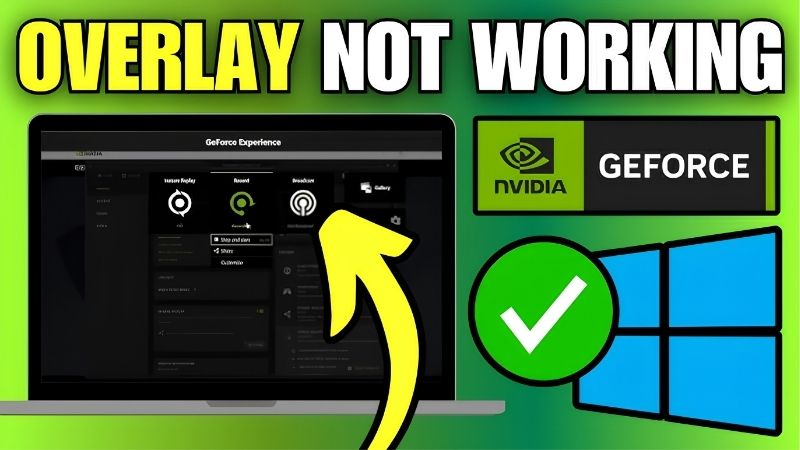
GeForce Experience won’t open is one of those faults that always seems to strike at the worst possible moment, usually right before you want to record a clip, update a driver, or optimise a new game. You click the icon and either nothing happens, a blank window appears, or the app gets stuck on an endless login or loading screen. The reassuring news, repeated across thousands of user reports, is that this is almost always a fixable software issue rather than a dead card. This review-style guide walks through the real causes, the fixes buyers rate highest, and the point where moving on makes more sense than fighting it.
Why GeForce Experience Won’t Open
When the app refuses to launch, the cause almost always sits in one of three areas: a login or server hiccup, a broken installation, or security software blocking it in the background. Working out which one applies is the difference between a thirty-second fix and a frustrating afternoon, so it pays to recognise the fingerprints of each before you start changing anything on your system.
As an Amazon Associate we earn from qualifying purchases at no extra cost to you.





Login Loops and Server-Side Hiccups
A huge share of cases come down to the login system rather than the app itself. GeForce Experience requires an account login to function, and when NVIDIA’s authentication servers are busy or your saved credentials have expired, the app can spin endlessly on the sign-in screen without ever reaching the main interface.
Users frequently describe a maddening loop where the app accepts their password, appears to load, then bounces straight back to the login prompt. That exact pattern is the classic sign of a server-side or token problem, not a corrupted install, and it often clears on its own within a few hours.
Signing out completely and back in, or simply waiting and retrying later, resolves a large portion of these cases at no cost. Reviewers consistently note that what looked like a dead app was really just a temporary authentication snag.
Outdated or Broken Installations
The second common cause is a version of the app that has aged out or installed badly. A Windows update, an interrupted driver install, or a half-finished update to the app itself can leave key files in a broken state, so the program launches its process but never paints a window on screen.
This is especially common on systems that have carried the same GeForce Experience installation across several years and many driver updates. The accumulated cruft eventually trips the app on launch, even though the underlying GPU is working perfectly well for games.
A clean reinstall of the current version, or a move to the newer NVIDIA app, almost always cures this category of failure. Users who finally reinstalled after weeks of struggling often wish they had done it far sooner.
Antivirus and Firewall Interference
Security software is the third frequent offender, and one of the easiest to overlook. Aggressive antivirus suites and strict firewall rules sometimes flag GeForce Experience or block the network connections it needs to authenticate, which leaves the app unable to finish loading and therefore unable to open at all.
The tell-tale sign here is an app that worked fine until you installed or updated a security product, after which it suddenly stalls on launch. Nothing about the GPU changed, but a new gatekeeper quietly started blocking the app behind the scenes.
Adding an exception for GeForce Experience in your antivirus and firewall, then relaunching, is a quick test that rules this cause in or out. Many users report the app springing back to life the instant the block was lifted.
The Fixes That Get It Running Again
Once you have a sense of the cause, the matching fix is usually fast and free. Here are the methods that earn the strongest praise in user reports, arranged from the least disruptive to the most thorough, so you can stop the moment the app finally opens and gets out of your way.
Restarting Services and Running as Admin
The highest-value first step is restarting the NVIDIA background services and launching the app with administrator rights. Many open-failures trace back to a stalled service or a permissions gap, and giving the app elevated rights lets it reach the files and network calls it was being denied.
Opening the Windows Services manager, restarting the NVIDIA services, then right-clicking the app and choosing run as administrator takes under a minute. Users repeatedly call this combination the step that finally got a stubborn app to load after everything simpler had failed.
Because it touches no files and changes nothing permanent, it is a risk-free first move that resolves a meaningful share of cases on its own.
Moving to the New NVIDIA App
NVIDIA has been replacing GeForce Experience with the unified NVIDIA app, and switching over solves a great many open-failures outright. The new app is lighter, no longer forces a mandatory login, and consolidates drivers, optimisation, and recording in one cleaner package.
Users who migrated frequently report that the chronic loading and login problems of the old app simply disappeared, since the new app removes the very authentication step that caused so many of them. It is increasingly the recommended path rather than a mere workaround.
Installing the NVIDIA app cleanly, after removing the old GeForce Experience, is fast and free, and it future-proofs your setup against an app NVIDIA is steadily phasing out anyway.
Pros and Cons of a Full Reinstall
When lighter steps fail, a complete reinstall is the dependable heavy option. It works, but it is worth weighing the trade-offs before you tear the whole thing down and start fresh on a busy day.
On the plus side, a clean removal followed by a fresh install wipes out every corrupted file and almost always restores a stubborn app to working order. Users with the most persistent cases describe the reinstall as the fix that finally stuck, and it gives you a clean, current version in the process.
On the downside, it is the slowest route, it signs you out and clears your in-app settings, and it depends on a stable download to complete. Since a service restart or a switch to the NVIDIA app solves most cases, the full reinstall genuinely belongs near the end of your list rather than the start.
Hardware, Tools, and When to Upgrade
An app that will not open is almost always software, but a small share of cases point to a failing card or an aging system that is overdue for replacement. A couple of cheap accessories also make every future driver hiccup far less painful, so they are worth keeping in mind even as you fix the immediate problem.
Ruling Out a Failing GPU
If GeForce Experience opens only sometimes, or fails alongside crashes and graphical glitches in games, an unstable GPU may be the real story. When Windows loses contact with an overheating or dying card, the app can stall because the very hardware it manages keeps dropping out from under it.
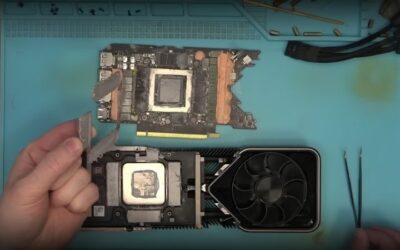
Users who tracked temperatures often found app failures coinciding with thermal spikes past 85 degrees Celsius under load. Improving airflow, clearing dust, or repasting the card resolved both the app trouble and the in-game instability together in those reports.
When the card itself is unstable, no amount of reinstalling will help, and the sensible focus shifts to cooling or a replacement.
Accessories That Make Updates Painless
Keeping a clean driver package offline turns a future failure into a quick recovery. A reliable USB flash drive, such as a well-rated high-speed model, lets you store the latest NVIDIA driver and app installer so you can rebuild your setup even when the app and your connection both let you down.
Builders who keep a dedicated driver drive describe it as a small purchase that has repeatedly saved them time, particularly after Windows updates that disturb the NVIDIA software stack without warning.
It is inexpensive insurance, and the strong reviews on fast, durable drives reflect just how useful they prove in exactly these situations.
When a New Card Solves Everything at Once
If your card is several generations old and you keep wrestling with the same software faults, that pattern itself is telling you something. A current-generation NVIDIA GPU pairs naturally with the streamlined NVIDIA app, handles drivers more cleanly, and leaves behind the legacy quirks that made the old GeForce Experience so temperamental.
Reviewers upgrading from older hardware often mention that chronic app and driver headaches simply stopped after the switch, on top of a substantial jump in performance, ray tracing, and DLSS support that transformed their games.
If an upgrade was already on your mind, this can be the practical nudge to compare current graphics cards and put recurring app failures behind you, so it is worth checking today’s listings before prices shift.
See More:
- GPU pink screen
- Nvidia Control Panel missing
- Nvidia Control Panel not opening
- Nvidia app won’t install
Final Word When GeForce Experience Won’t Open
Discovering that GeForce Experience won’t open feels alarming, but it is rarely as serious as it looks. The vast majority of cases come down to a login loop, a broken installation, or security software blocking the app, and every one of those has a free, fast remedy that thousands of users have already proven.
Restart the services and run as administrator first, switch to the NVIDIA app if the old one keeps fighting you, and keep a clean installer on a USB drive for next time. Reserve a full reinstall for the stubborn cases and look to hardware only if the card is old or unstable. Approach it in that order and a situation where geforce experience won’t open becomes a brief, manageable hiccup rather than a recurring source of frustration.
Top-Rated Picks


| Product | Brand | Rating | Reviews | Price |
|---|---|---|---|---|
| ARCTIC MX-4 (4 g) – Premium Performance Thermal Paste… | ARCTIC | ★ 4.8 | 104k | $4.99 |
| ARCTIC MX-4 (incl. Spatula, 4 g) – Premium Performanc… | ARCTIC | ★ 4.8 | 71.9k | $5.49 |
| Crucial 8GB DDR4 RAM 3200MHz (PC4-25600), Downclockab… | Crucial | ★ 4.8 | 62.8k | $74.99 |
| AMD Ryzen 5 5600X 6-core, 12-thread unlocked desktop … | — | ★ 4.8 | 30.2k | $177.60 |
| NVIDIA Shield Remote; Voice Search, Motion-Activated,… | — | ★ 4.7 | 10.6k | $25.99 |
Frequently Asked Questions
Why does GeForce Experience do nothing when I click the icon?
Typically the Nvidia Display Container LS service has stopped or the app is already running hidden in the background. Open Task Manager, end every Nvidia process, then restart the Display Container LS service from services.msc and relaunch. Setting the service to Automatic prevents the problem from returning after each reboot.
Is GeForce Experience still supported?
Nvidia has moved development to the unified Nvidia app, which merges GeForce Experience and the Control Panel. GeForce Experience still functions on existing installs, but new features and fixes arrive only in the Nvidia app. If you are troubleshooting repeatedly, migrating is usually faster than repairing the older software.
Does a corrupt login or account issue block startup?
It can, since older builds require a login for ShadowPlay and driver features. Delete the local account cache in AppData Local NVIDIA Corporation, then sign in again. If the login window itself never appears, the missing component is usually the embedded browser runtime rather than the account service.
Will a clean driver install fix it?
Very often. Run Display Driver Uninstaller in Safe Mode to remove all Nvidia components, reboot, then install the current driver package with the clean installation option. This clears mismatched DLLs between the driver and the client application, which is the single most common root cause of a silent launch failure.
Do I lose anything by uninstalling it permanently?
You lose automatic driver notifications, one-click game optimization, ShadowPlay recording, and Nvidia Freestyle filters. Every one has a free alternative: manual driver downloads, per-game settings you control yourself, OBS Studio for capture, and ReShade for filters. Raw gaming performance is entirely unaffected because the display driver is a separate component.






Write Your Review
No reviews yet. Be the first to share your experience!