
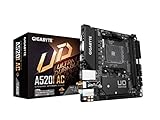
- Top Pick: GIGABYTE B550 Eagle WIFI6 AMD AM4 ATX Motherboard, Supports Ryzen 5000/4000/3000 Processors, DDR4, 10+3 Power Phase, 2X M.2, PCIe 4.0, USB-C, WIFI6, GbE LAN, PCIe EZ-Latch, EZ-Latch, RGB Fusion
- Best Value: Asus ROG Strix B550-F Gaming WiFi II AMD AM4 (3rd Gen Ryzen) ATX Gaming Motherboard (PCIe 4.0,WiFi 6E, 2.5Gb LAN, BIOS Flashback, HDMI 2.1, Addressable Gen 2 RGB Header and Aura Sync)
- Premium Choice: GIGABYTE B550M K AMD AM4 Micro-ATX Motherboard, Supports Ryzen 5000/4000/3000 Series Processors, DDR4, 3+3 Power Phase, 2X M.2, PCIe 4.0, USB 3.2 Gen 1, GbE LAN, Q-Flash
Best Motherboard Manufacturers lists usually stop at features and power delivery, which is fine until something goes wrong. Warranty terms, how a claim is handled and how long firmware keeps arriving decide what your board is worth three years after you bought it.
As an Amazon Associate we earn from qualifying purchases at no extra cost to you. Product prices and availability are accurate as of the date shown and are subject to change.



As an Amazon Associate we earn from qualifying purchases at no extra cost to you. Product prices and availability are accurate as of the date shown and are subject to change.
By Ryan Cole, hardware writer at NVIDIAReview.
How to Rank the Best Motherboard Manufacturers on Support
Boards fail rarely, but when they do the process is slow and your machine is down for the duration. Four factors decide how painful that experience will be.
Warranty Length and Who Actually Handles the Claim
Three years is the common term across the major brands, though it varies by region, retailer and occasionally by product line. Premium boards sometimes carry longer coverage in specific markets.
Who you deal with matters as much as the length. In many regions consumer law makes the retailer responsible for the first period, which is usually faster than dealing with the manufacturer directly.
Keep the invoice and the packaging. Serial number stickers and original boxes are frequently required, and a missing accessory can complicate an otherwise straightforward claim.
Read what the term actually covers as well. Wear items, accessories such as antennas and cables, and anything affected by overclocking are commonly excluded, even when the board itself is covered for three years.
RMA Turnaround and What Gets Rejected
Ask what happens after you ship the board. Some manufacturers repair and return, others replace with a refurbished unit, and turnaround ranges from days to several weeks depending on region and stock.
Physical damage is the common rejection. Bent socket pins are usually treated as user damage regardless of when they occurred, which is why the CPU installation step deserves care rather than confidence.
Downtime is the hidden cost. If a board is your only machine, a three-week turnaround matters more than the repair being free, which is an argument for buying from a retailer with a fast replacement policy.
Firmware Cadence and Processor Support Over Time
A board only accepts a processor its firmware knows about. Manufacturers that keep issuing updates let you drop a newer chip into an older board, which is the single biggest determinant of long-term value.
Check the support page of a two or three-year-old model from the same brand. A recent release date tells you the company still maintains older products; a two-year gap tells you the opposite.
Among the best motherboard manufacturers this is the clearest differentiator, because it costs real engineering time. Firmware maintenance for discontinued models earns nothing directly, so only companies that value the reputation keep doing it.
Documentation, Memory Lists and Spare Parts
Good manuals, published memory qualification lists and clear block diagrams save hours when a build misbehaves. They also indicate a manufacturer that validates properly rather than shipping and hoping.
Spare parts are the overlooked detail. Replacement M.2 heatsink screws, standoffs and Wi-Fi antennas are trivial items that become build-stopping when no one sells them.
Support channels vary too. Some manufacturers answer through a ticket system with a stated response window, others route everything through regional distributors, and the difference becomes obvious the first time you need help.
Top Picks Among the Best Motherboard Manufacturers
These six are compared on support behaviour rather than features. Warranty terms vary by region and retailer, and retail pricing at the time of writing in August 2026 changes weekly, so confirm the terms that apply to you.
| Manufacturer | Typical warranty | Firmware cadence | Documentation | Notes |
|---|---|---|---|---|
| ASUS | Three years, region dependent | Frequent, long-running | Detailed manuals and lists | Policies revised after criticism |
| MSI | Three years typical | Regular | Clear and consistent | Straightforward claims process |
| Gigabyte | Three years typical | Regular, sometimes slow at launch | Adequate | Q-Flash Plus on most models |
| ASRock | Two to three years | Varies by model | Basic | Support depends on distributor |
| NZXT | Three years typical | Depends on partner | Limited range coverage | Small model lineup |
| Biostar | Varies widely | Infrequent | Minimal | Thin regional presence |
ASUS
Among the best motherboard manufacturers ASUS maintains firmware for older boards longest, which is why an ageing chipset from the brand often still accepts newer processors. Documentation, memory qualification lists and recovery tools are the most thorough in the industry.
The company drew significant criticism over warranty handling and default voltage settings in recent years and subsequently revised policies and firmware defaults. Check current terms in your region rather than relying on either the old complaints or the marketing.
MSI
MSI’s support experience is generally consistent, with a clear claims process and a regular firmware release schedule across the MAG and MPG families. Manuals and support pages are laid out predictably.
Advanced firmware options are fewer than the ASUS equivalent, and the overlapping product families make it easy to check documentation for the wrong model. Confirm the exact suffix on your board first.
Gigabyte
Gigabyte ships Q-Flash Plus across most of its range, which lets you recover or update firmware with no processor installed. That single feature resolves the most common support case before it becomes a support case.
Firmware at launch is sometimes rough, with early adopters waiting for updates to fix memory compatibility. Documentation is functional rather than generous, and the BIOS layout adds friction to troubleshooting.
ASRock
ASRock offers strong hardware value, and firmware support for popular models is reasonable. For a budget build where the board costs less than a good cooler, the terms are acceptable.
Support quality depends heavily on the distributor in your region, and coverage terms are less consistent than the larger brands. Less popular models can go long periods without firmware updates.
NZXT
NZXT provides a tidy support experience for a small range, with the same consumer-facing approach as its cases and coolers. For someone buying a matched set of components, that is a genuine convenience.
The boards are produced in partnership rather than designed in-house, so firmware updates ultimately depend on that relationship. The narrow lineup also means fewer community resources when troubleshooting.
Biostar
Biostar competes on price alone, and for a basic office or spare machine the boards function as intended. Nothing about them is inherently defective, and for a machine that will never be opened again that is enough.
Warranty terms, firmware cadence and regional service all vary widely and are the weakest here. For a system you intend to keep and upgrade, the savings do not cover the risk.
What 2026 Conditions Mean for Support Expectations
The market has tightened this year in ways that make the best motherboard manufacturers more relevant, not less, since boards are being kept longer. Three points matter.
Boards Are Staying in Service Longer
With no new processor or chipset generation arriving before CES in January 2027, and graphics card pricing elevated, systems are being kept rather than replaced. A board bought now will likely be in use for several more years.
That makes firmware cadence the specification to check. A manufacturer still updating three-year-old models is offering something concrete that no feature list conveys.
AM5 Runs Through 2029
AMD has committed to new processors on the AM5 socket through the end of 2029, while Intel’s next generation moves to a different socket. Accepting a future chip depends entirely on your board receiving a firmware update.
Buying from a manufacturer with a strong update record is therefore worth more on AM5 than on any platform in recent memory.
The Budget Tier Is Shrinking
Motherboard sales have fallen more than twenty five percent, manufacturers have concentrated on mid and upper tiers, and promotional pricing ended in early 2026. Cheap boards with modern features are becoming rarer.
Since the price gap to the mid-range has narrowed, the additional support and firmware attention that mid-tier boards receive is easier to justify than it was a year ago.
Popular models also get the most attention. A board that sold in volume receives more firmware revisions and has more troubleshooting information available, which is a practical reason to buy a mainstream model rather than an obscure one.
Frequently Asked Questions
These come up most often once someone starts comparing the best motherboard manufacturers on what happens after the purchase rather than before it.
Most are answered in the warranty document, but few people read it until they need to, so they are worth checking while you still have a choice of which board to order.
Does updating the BIOS void the warranty?
Not when using the manufacturer’s own firmware and tools. A failed update caused by a power cut is usually recoverable on boards with flash-from-USB recovery, which is another reason to prioritise that feature.
Are bent CPU socket pins covered?
Almost never. They are treated as physical damage regardless of how they happened, so handle the socket carefully and inspect it before mounting a cooler over the top.
Should I register my board with the manufacturer?
It is quick and occasionally required for the full term. It also creates a record of the purchase date, which helps if the retailer’s paperwork goes missing later.
Is it faster to claim through the retailer?
Usually yes, in the first period after purchase. Retailers often replace outright while manufacturers repair and return, so check the shop’s policy before shipping anything to the brand.
See More:
- What Is the Best Thermal Paste
- Best PC Case Fans 120mm
- Thermal Paste Best Brand
- Best Thermal Paste Brands
- Best CPU Cooler Reddit
Final Thoughts
Judged on support, the best motherboard manufacturers are the ones with the longest firmware records and the clearest claims process, which puts ASUS and MSI ahead for most buyers, with Gigabyte close behind thanks to processor-free firmware recovery. Check the support page of an older model from the same brand before ordering, since that record predicts your experience better than any spec sheet.



Write Your Review
No reviews yet. Be the first to share your experience!