
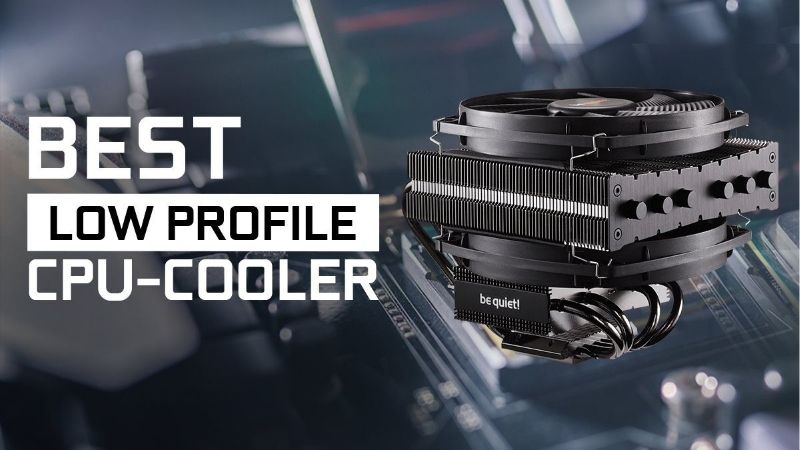
- Top Pick: be quiet! Pure Rock Low Profile 100W TDP CPU Cooler | Intel 1700 1200 1150 1151 1155 | AMD -AM5 AM4 | BK034
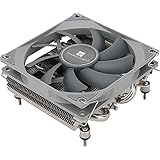
- Best Value: Thermalright AXP-90 X53 Black Low Profile CPU Air Cooler with Quite 90mm TL-9015B Low Profile PWM Fan, 4 Heat Pipes, 53mm Height, for AMD AM4/Intel LGA 1150/1151/1155/1156/1200/1851 (AXP-90 X53 Black)
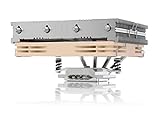
- Premium Choice: Noctua NH-L9x65, Quiet High-Performance Low-Profile CPU Cooler
The best small form factor CPU cooler is the one that clears your case lid, your memory and your graphics card at the same time. In an ITX build the millimetre budget matters more than raw capacity, so this guide starts with measurements and finishes with five coolers that fit real chassis. Measure twice before ordering.
As an Amazon Associate we earn from qualifying purchases at no extra cost to you. Product prices and availability are accurate as of the date shown and are subject to change.




As an Amazon Associate we earn from qualifying purchases at no extra cost to you. Product prices and availability are accurate as of the date shown and are subject to change.
By Ryan Cole
How to Choose the Best Small Form Factor CPU Cooler
Compact builds fail on clearance long before they fail on thermals. Work through these four checks in order and you will avoid the return shipping that catches out most first-time ITX builders. Get them right and the best small form factor CPU cooler for your build is usually obvious within a few minutes.
Case clearance and cooler height classes
Small chassis fall into rough height bands: sandwich cases around 47mm to 55mm, slim console-style boxes near 67mm, and taller cube designs that accept 110mm to 130mm. Manufacturers list a maximum cooler height, and that figure includes the fan, not just the fin stack. Manufacturers state that limit in the case specification sheet.
Leave two or three millimetres of margin. Motherboard standoffs, thicker thermal pads and a slightly proud backplate can all eat into the stated gap, and a lid that will not close is the most common reason a low-profile cooler gets returned. Two millimetres of slack costs nothing and saves a return shipment.
Footprint, memory and VRM clearance
A 92mm or 120mm downdraft cooler overhangs the socket area in every direction. On ITX boards that can mean the fin stack sits over the first DIMM slot or the VRM heatsink, so check the cooler footprint in millimetres rather than trusting a product photo. Product photos flatten perspective and hide most of these collisions.
Low-profile memory solves most collisions and costs very little. If you already own tall RGB modules, look for coolers with an asymmetric or square footprint that pushes fins away from the memory side of the socket instead of over it. Low-profile memory modules are cheap and remove the problem permanently.
Airflow direction and case intake
Downdraft coolers push air onto the board and out through the vents, which also cools the VRM and the memory. Small tower designs move air sideways toward a rear or top exhaust, which works better in cases with a clear front-to-back path. Neither approach is better in the abstract.
Match the cooler to the chassis airflow rather than the other way around. In a sandwich case with the motherboard side vented, a downdraft unit pulling cool outside air is usually quieter than a tower fighting recirculated warm air from the graphics card. Look at where your case vents before choosing the cooler format.
Thermal capacity versus the chip you have
Low-profile coolers with two or four heatpipes generally suit 65W chips. Once you move to a 105W or 125W processor you need a taller fin stack, six heatpipes, or a 120mm fan, and you should expect the fans to run harder than they would in a mid-tower. Manufacturer capacity ratings are optimistic in a sealed enclosure.
If your CPU allows it, an undervolt or a reduced power limit is a legitimate tool here. Trimming a package limit by 20W often costs a few percent of multi-core performance while dropping noise noticeably in a sealed compact case. Most modern platforms expose that setting directly in the BIOS power menu.
Top Picks: Best Small Form Factor CPU Cooler for ITX Builds
These five options cover the common height bands from 37mm up to 110mm. Read the height column first, because the fastest way to choose the best small form factor CPU cooler is to eliminate everything that will not physically fit. Each pick below was a current listing when this guide was updated in August 2026.
| Cooler | Height | Fan | Suits |
|---|---|---|---|
| Noctua NH-L9a-AM5 | 37mm | 92mm slim | Ultra-thin AM5 cases |
| Thermalright AXP90-X47 | 47mm | 92mm slim | Sandwich ITX builds |
| ID-COOLING IS-47-XT | 47mm | 92mm slim | Budget compact builds |
| Thermalright AXP120-X67 | 67mm | 120mm slim | Console-style chassis |
| Noctua NH-D9L | 110mm | 92mm | Cube and small tower cases |
Noctua NH-L9a-AM5
At 37mm tall with a 95mm by 95mm footprint, this is the cooler for chassis where nothing else fits. The NF-A9x14 HS-PWM fan is rated at 2,500 RPM with 2.32 mmH2O of static pressure and 23.6 dBA, and the footprint deliberately avoids overhanging the DIMM slots. It is the safest choice when your case quotes a 40mm limit.
Capacity is the trade-off, and Noctua is candid about it: this is a cooler for 65W-class chips in well-ventilated cases, not for a 105W processor under sustained load. The 92mm fan also spins fast enough at full duty to be audible in a quiet room. Set a shallow fan curve and it stays civil in normal use.
Thermalright AXP90-X47
Thermalright squeezes four heatpipes and a copper base into a 47mm package here, with a slim 92mm PWM fan on top. It costs a fraction of the Noctua and has become the default answer for sandwich cases that quote a 50mm cooler limit. It has effectively become the default answer in sandwich case build guides.
The mounting hardware is fiddlier than premium kits and the fan is noticeably louder at maximum speed. Thermalright sells a taller X53 version too, so if your case allows an extra six millimetres, that variant buys useful thermal margin for very little money. Measure twice before deciding between the two heights.
ID-COOLING IS-47-XT
This is the budget entry in the 47mm class, with four direct-contact heatpipes and a slim 92mm PWM fan. Mounting hardware covers current AMD and Intel sockets, and the low profile keeps it clear of both memory and the top-side M.2 heatsink on most ITX boards. It is the cheapest way into this height class right now.
Build quality reflects the price. Fin edges are less refined than the Thermalright equivalent and the bundled paste is basic, so budget for a decent compound. It is best matched with a 65W chip rather than anything that boosts hard for long stretches. A better compound is a small cost against the price of the cooler.
Thermalright AXP120-X67
Moving up to 67mm unlocks a 120mm slim fan and six heatpipes, which is a different class of cooling. In console-style cases with a vented lid, this handles mid-range chips at far lower fan speeds than any 92mm design can manage. That fan size is the single biggest acoustic upgrade available in this category.
The wide footprint is the catch: it overhangs the memory slots on many ITX boards, so low-profile modules are effectively mandatory. Double check that your case measures 67mm of true clearance, since some list the figure from the board surface rather than the socket. Case makers are not always consistent about how they measure it.
Noctua NH-D9L
If your compact case allows 110mm, this dual-tower 92mm design is the most capable option here. It keeps a narrow footprint that clears memory and the top PCIe slot, and the SecuFirm2 mounting is the easiest system to install in a cramped chassis. It is the only pick here that behaves like a normal tower cooler.
It is expensive for its size and, being a tower, it depends on a clear exhaust path to work well. In a sealed case with only a side vent it will underperform a good downdraft cooler despite the larger heatsink and higher rated capacity. In a sealed chassis a downdraft cooler often does better for less.
What the 2026 Market Means for Compact Builds
Small builds are more exposed than usual to this year’s pricing shifts, because they rarely leave room for cheap alternatives. Two factors are worth weighing before you commit to a parts list. Both are worth factoring in before you commit to a chassis, because the best small form factor CPU cooler is often the one still in stock.
The budget tier is thinning out
Motherboard sales have fallen more than 25% and manufacturers have shifted attention to mid and high-end models, while cooler pricing has moved up roughly 6% to 8%. Entry-level ITX boards and cheap low-profile coolers are the first things to disappear from stock. Compact coolers are exactly the kind of low-volume product that disappears.
The practical response is to buy the compact cooler when you see it rather than waiting for a lower price. These are low-volume products, and a discontinued 47mm model rarely gets a direct replacement at the same price point. Second-hand availability is thin in this category too.
Cooling deals are still real this November
Memory, storage and prebuilt systems will not see genuine discounts this year, because November stock was manufactured against high 2026 contract prices. Coolers, fans, cases and paste sit outside that problem and should still see legitimate reductions. That distinction matters if you are timing a full build.
If your compact build is already running, that timing is useful. Pricing here reflects August 2026 and is worth rechecking, but there is no strong argument for delaying a cooler purchase beyond the late November window. Cooling parts are the one part of the list where waiting a few weeks costs nothing.
Spend the savings on airflow, not just the cooler
In a small chassis the case fans matter as much as the heatsink. A pair of quality 120mm intakes with decent static pressure often lowers CPU temperatures more than upgrading from a 47mm cooler to a 67mm one, and they cost less. Static pressure matters far more than raw airflow ratings in a restricted case.
Fresh thermal compound belongs in the same budget. On a compact build that has run for two or three years, replacing dried paste and clearing dust filters is the cheapest meaningful thermal improvement available right now. Both jobs together take under an hour and need nothing beyond a tube of paste.
Frequently Asked Questions
Common questions from readers planning ITX and small form factor systems, covering liquid cooling, noise, socket support and fan orientation. They also touch on the questions that decide whether the best small form factor CPU cooler for a given build is a downdraft design or a compact tower.
Is a 240mm AIO better than a low-profile air cooler?
Only if your case has a proper radiator mount and enough clearance behind it. In cases without that space, a good downdraft cooler wins on simplicity, cost and reliability, and it avoids routing tubing around a graphics card in a tight enclosure. Simplicity is worth a great deal in a case this tight.
Are small coolers always loud?
Smaller fans need higher RPM to move the same air, so they tend toward higher-pitched noise. You can offset a lot of it with a gentle fan curve, a slightly reduced CPU power limit, and a case that provides genuine intake rather than recirculating warm air. A quieter fan curve costs a couple of degrees at most.
Do these coolers support AM5 and LGA1851?
Current revisions of all five generally include hardware for recent AMD and Intel sockets, but stock varies. Check the socket list on the exact listing you are buying, since older boxed units sometimes ship with earlier bracket sets only. Bracket kits are also available directly from most manufacturers.
Should the fan blow down or up?
Blowing down onto the heatsink is the default and also cools the VRM and memory. Reversing it to exhaust upward can help in cases with a solid side panel and a vented lid, so it is worth testing both if your chassis allows it. Test both orientations before you close the panel for the last time.
See More:
- best CPU cooler for Ryzen 5 5600X
- best SFF CPU cooler
- best CPU cooler for i9-14900K
- What is the best AIO CPU cooler
Final Thoughts
The best small form factor CPU cooler for your build is decided by three measurements: case clearance, memory height and the power limit of your processor. Confirm those numbers first, then choose the largest heatsink that still leaves a couple of millimetres of margin. Everything else is a detail by comparison.


Write Your Review
No reviews yet. Be the first to share your experience!