
Best motherboard processor combo for gaming is really a question about balance: a CPU with enough cache to feed your graphics card, on a board with the right socket lifespan. These five pairings cover budget 1080p rigs through high-refresh 1440p builds, with the compromises stated plainly.
As an Amazon Associate we earn from qualifying purchases at no extra cost to you. Product prices and availability are accurate as of the date shown and are subject to change.


As an Amazon Associate we earn from qualifying purchases at no extra cost to you. Product prices and availability are accurate as of the date shown and are subject to change.
By Ryan Cole, PC hardware writer at NVIDIA Review.
How to Choose the Best Motherboard Processor Combo for Gaming
CPU and board are bought together because one constrains the other. Four decisions determine whether a pairing is the best motherboard processor combo for gaming at the resolution and refresh rate you actually play at.
Start With Resolution, Not With Core Count
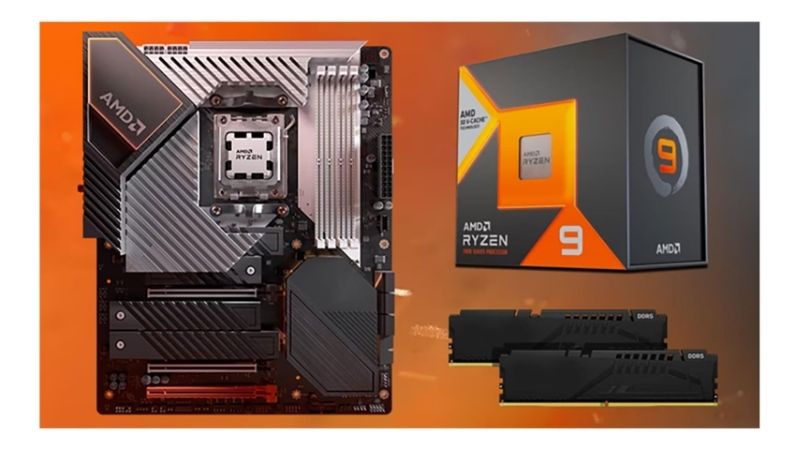
At 4K the graphics card does almost all the work, so a six-core chip often performs within a few percent of a sixteen-core one. At 1080p with a high-refresh monitor, the CPU becomes the limiter and cache-heavy chips pull noticeably ahead.
This reverses the usual buying instinct. If you play at 1440p or 4K, spending less on the CPU and more on the graphics card generally produces higher frame rates than the other way round, provided the chip has at least six modern cores.
Weigh Socket Lifespan Against Price Today
AM5 has confirmed CPU support running through the end of 2029, so a board bought now can accept a future chip without replacing DDR5 or the cooler mount. That matters if you plan to upgrade the processor once and keep everything else.
Intel’s current sockets are at the end of the line, since the next platform moves to LGA 1954, so those pairings are best treated as complete builds. That is not automatically bad; it just means you should not pay a premium for upgrade headroom that does not exist.
Check Cooler Requirements Before You Commit
Power figures decide cooling. A 65W chip runs happily on a decent tower air cooler, while a 170W part under a sustained load needs a large dual-tower cooler or a 240 mm-class AIO to avoid hitting its thermal ceiling during long sessions.
Physical clearance is the other half. AM5 uses the same mounting spacing as AM4, so many existing coolers carry over with the right bracket, whereas moving between Intel sockets often requires a new mounting kit from the cooler manufacturer.
Do Not Overspend on the Board
Beyond a certain point, extra board cost buys rear I/O and networking rather than frames. A mid-tier B650 or B850 board with a 12-phase-class VRM runs an eight-core gaming chip at full speed, exactly as a flagship model does.
Spend the difference on storage or memory instead. What is worth paying for is M.2 slot count, a usable BIOS flashback button and 2.5 Gb Ethernet, since those affect daily use far more than a heavier heatsink ever will.
Top Picks: Best Motherboard Processor Combo for Gaming in 2026
Each entry pairs a CPU with a board suited to its power draw and target resolution. The best motherboard processor combo for gaming is usually bought as two separate items rather than a bundled kit, so confirm both are in stock before ordering.
| CPU | Cores / Threads | Suggested Board | Socket | Best For |
|---|---|---|---|---|
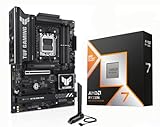
| Ryzen 7 9800X3D | 8 / 16 | MSI MAG B850 Tomahawk MAX WiFi | AM5 | High-refresh 1440p |
| Ryzen 7 7800X3D | 8 / 16 | ASUS TUF Gaming B650-PLUS WiFi | AM5 | Value 1440p |
| Ryzen 5 9600X | 6 / 12 | ASRock B650M Pro RS WiFi | AM5 | Mid-range 1080p |
| Ryzen 5 7600 | 6 / 12 | Gigabyte B650M DS3H | AM5 | Budget builds |
| Core Ultra 7 265K | 20 cores | MSI PRO Z890-P WiFi | LGA 1851 | Game plus workload |
Ryzen 7 9800X3D + MSI MAG B850 Tomahawk MAX WiFi
This is the pairing for anyone chasing frame rates at 1080p or 1440p. The 9800X3D is an eight-core, sixteen-thread Zen 5 chip with 3D V-Cache bringing total cache to 104 MB, boosting to 5.2 GHz within a 120W TDP envelope.
The B850 board gives it a PCIe 5.0 graphics slot, Gen5 storage and a 14+2+1 80A power stage design with room to spare. The drawback is cost: this is the most expensive combination here, and at 4K much of the CPU advantage disappears behind the graphics card.
Ryzen 7 7800X3D + ASUS TUF Gaming B650-PLUS WiFi
The previous-generation X3D chip remains excellent value when stock is available. It is also eight cores and sixteen threads with 104 MB of total cache, boosting to 5.0 GHz at a 120W TDP, and it sits within a few percent of its successor in most games.
The TUF board contributes four DDR5 slots, two M.2 sockets and 2.5 Gb Ethernet at a reasonable price. The honest caveat is supply: the 7800X3D has been intermittently scarce, and when it is priced close to the 9800X3D the newer chip is the better buy.
Ryzen 5 9600X + ASRock B650M Pro RS WiFi
For 1440p gaming on a mid-range graphics card, six Zen 5 cores are plenty. The 9600X runs twelve threads, boosts to 5.4 GHz and carries a 65W TDP, so it stays cool under a modest tower cooler and leaves budget for the GPU.
The Micro-ATX board keeps things affordable while retaining DDR5 support and Wi-Fi. What you give up is cache: without 3D V-Cache, the 9600X trails X3D chips in CPU-limited titles like large-scale strategy games and heavily modded simulators.
Ryzen 5 7600 + Gigabyte B650M DS3H
This is the cheapest sensible way onto AM5. The 7600 is a six-core, twelve-thread chip boosting to 5.1 GHz at 65W, and it ships with a bundled cooler that is adequate for stock operation in a case with reasonable airflow.
The DS3H board is deliberately basic and that shows in rear I/O and VRM heatsinking. It is fine for a 65W CPU but not the board to pair with a future 16-core upgrade, so treat this as a starting point you will replace rather than build on.
Core Ultra 7 265K + MSI PRO Z890-P WiFi
If your machine also handles editing or compiling, this Intel pairing makes sense. The 265K combines eight performance cores with twelve efficiency cores, boosting to 5.5 GHz, and the Z890 board supports memory overclocking plus multiple M.2 drives.
In pure gaming the 265K generally sits behind AMD’s X3D parts at 1080p, which is the main reason to look elsewhere if frames are the only goal. Platform cost is also higher because LGA 1851 boards start at a steeper price than B650.
Timing Your Purchase in the 2026 Market
Two market factors affect the best motherboard processor combo for gaming right now, and both concern timing rather than urgency. Neither is a reason to rush an order, but both change what waiting actually costs you.
The Next CPU Generation Is a Long Wait Away
Zen 6 desktop chips and Intel’s Nova Lake have both moved to CES in January 2027. If you are asking whether to hold out for the next generation, the realistic answer is that you would be waiting well over half a year with nothing launching in between.
That also means current chips will not be discounted by new competition in the near term. Buying when you need the machine is reasonable; delaying in the hope of an imminent price drop is not supported by the current schedule.
AM5 Buys You a Second CPU Later
AMD’s commitment to AM5 through 2029 is the strongest argument for choosing an AM5 combo over LGA 1700 today. A B650 or B850 board bought now can host a 2027 or 2028 processor with only a BIOS update, keeping the memory and cooler in place.
For an Intel build the equivalent upgrade means a new board and possibly new cooler hardware. That is worth factoring into total cost when two combos look similarly priced on paper at the moment of purchase.
Budget DDR5 Into the Total, Not as an Afterthought
Memory contract pricing rose steeply through 2026 and analysts expect further increases into the fourth quarter, with no meaningful new production capacity arriving before late 2027. DDR5 is now a larger share of a build budget than it was a year ago.
The practical response is simple: price the memory at the same time as the CPU and board rather than treating it as a small add-on. A 32 GB kit is the sensible target for a gaming build, and buying more than you need is harder to justify at current levels.
Frequently Asked Questions
These questions come up most often when people compare pairings for a gaming machine.
Is a bundled combo cheaper than buying parts separately?
Sometimes, but the discount is usually modest online. Bundles are more common in physical retail. Buying separately gives you control over the exact board revision and lets you pick a model with BIOS flashback, which is often worth more than a small saving.
How many cores do I actually need for gaming?
Six modern cores remain sufficient for the vast majority of games, and eight is comfortable if you stream or run background applications. Beyond that, extra cores help productivity software far more than they help frame rates in current titles.
Do I need a Z-series or X-series board to get full performance?
No. B-series AMD boards allow CPU boost behaviour and memory EXPO profiles to work normally. On Intel, B-series blocks CPU overclocking but not the stock boost algorithm, so a locked or lightly used chip loses nothing on a B760 board.
Will I need a BIOS update before the CPU posts?
It depends on when the board was manufactured. Boards produced before a CPU launched may need updating, which is why a BIOS flashback button is valuable. Boards bought recently for current chips almost always ship with compatible firmware already installed.
See More:
- Best MSI motherboard
- Best B550 motherboard
- Best CPU for streaming
- What is the best AM4 CPU for gaming
Final Thoughts
The best motherboard processor combo for gaming is the one matched to your monitor rather than to a spec sheet. High-refresh 1080p and 1440p players benefit most from cache-heavy AMD chips on a mid-tier AM5 board, while 4K players can spend less on the CPU and put the savings into the graphics card and memory.




Write Your Review
No reviews yet. Be the first to share your experience!