
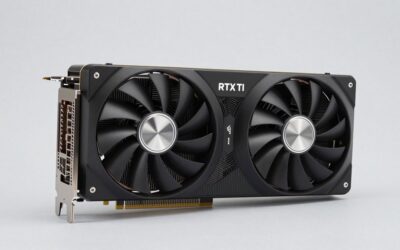
- Top Pick: ASUS Dual GeForce RTX 3050 6GB GDDR6 OC Edition Gaming Graphics Card
- Best Value: msi Gaming RTX 3050 Ventus 2X 6G OC Graphics Card (NVIDIA RTX 3050, 96-Bit, Boost Clock: 1492 MHz, 6GB GDDR6 14 Gbps, HDMI/DP, Ampere Architecture)
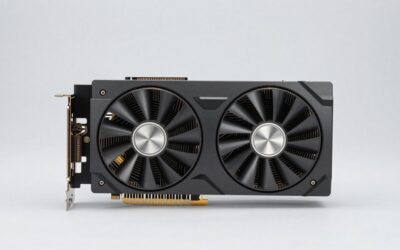
- Premium Choice: ASRock AMD Radeon RX 6600 Challenger D 8GB GDDR6 DisplayPort 14Gbps HDMI 0dB Silent Cooling 128-bit 7680 x 4320 Dual Fan Graphics Card PCI Express 4.0 x8 8-pin
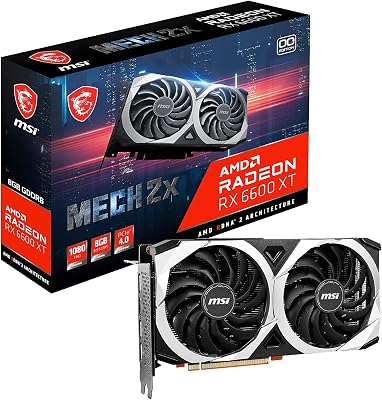


rx 6600 vs rtx 3050 is a question that usually gets asked with a tight budget, a browser full of marketplace listings, and not much patience left. Good news: this is one of the least complicated comparisons in the entire GPU stack, because the answer is not close. This piece gives you the verdict in the next paragraph, the full spec and fps table, a straight look at where the RTX 3050 still makes sense despite losing, and an honest read on what these cards cost on the used market right now – which, in 2026, is not what it was.
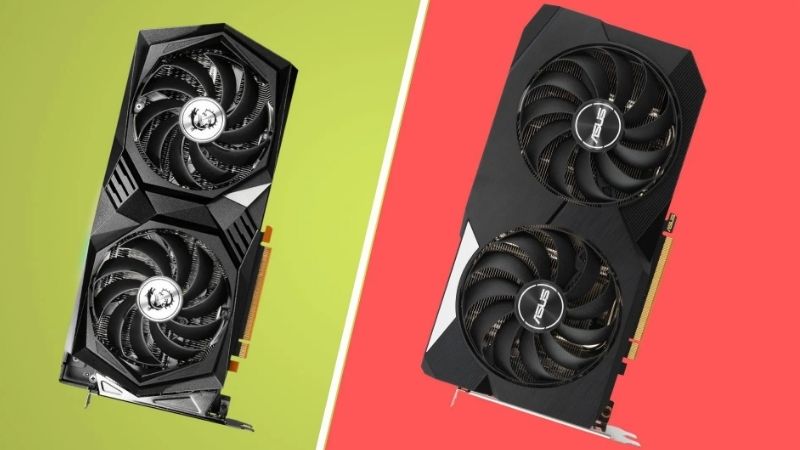
Quick Verdict: RX 6600 vs RTX 3050 for Budget 1080p Gaming
The RX 6600 is roughly 25-30% faster than the RTX 3050 8GB in rasterised games at 1080p, uses less power, and typically costs the same or less on the used market. For pure gaming on a budget, it wins – and it is not a narrow win, it is a full performance tier. The RTX 3050 only makes sense if you specifically need Nvidia features: NVENC for streaming, CUDA for Blender or Resolve, or DLSS support in a game list where FSR coverage is thin.
As an Amazon Associate we earn from qualifying purchases at no extra cost to you.


Why the RX 6600 Wins on Raw Performance
The gap is structural, not marginal. The RX 6600 carries 1,792 stream processors on a 128-bit bus with 8GB GDDR6, while the RTX 3050 runs 2,560 CUDA cores on the same 128-bit bus. Core counts across vendors are not comparable, so ignore them – what matters is the output, and in practice the 6600 lands roughly a tier above.
Translated into games at 1080p high settings: the 6600 typically delivers 75-95 fps in modern AAA titles where the 3050 manages 55-75. In esports titles both clear 144 fps comfortably, so the difference only shows up when the game gets heavy. That is the exact scenario a budget buyer cares about, because nobody worries about their frame rate in Valorant.
Power tells the same story from the other direction. The 6600 draws roughly 132W against the 3050 at 130W – effectively identical consumption for meaningfully more performance. Both run on a 450-500W PSU with a single 8-pin, which means neither forces a power supply upgrade. That matters when the whole budget is the point.
Where the RTX 3050 Still Makes Sense
Losing on fps does not make a card useless, and pretending the 3050 has no case is the kind of thing that gets budget buyers into trouble.
If you stream or record, NVENC is a genuine advantage – it offloads encoding cleanly and AMD encoder quality at this generation is a step behind. If you touch Blender, DaVinci Resolve, or any CUDA-dependent tool, the 3050 is not slower, it is the only one of the two that works properly. That is a hard blocker rather than a performance gap, and no amount of raster advantage fixes it.
DLSS is the other argument. FSR has improved a great deal, but Nvidia support in older and smaller titles remains broader. On a card this weak, upscaling is not a luxury feature – it is the difference between 45 fps and 65 fps in a demanding game. If your library leans on titles with DLSS but no FSR, the 3050 can close part of the raw gap.
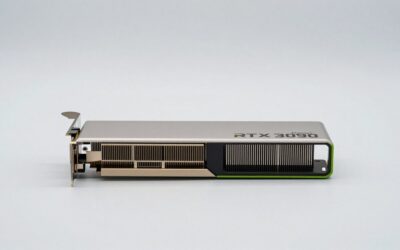
There is also the low-profile angle. Several 3050 variants exist as single-fan, compact, or 75W LP models designed for office prebuilts with no power connector at all. If you are upgrading a Dell or HP small form factor machine, the 3050 6GB LP may be the only card on this page that physically fits and runs.
Full Spec and Performance Table
Everything that decides this in one scan. Prices reflect typical used-market ranges rather than MSRP, since neither card is meaningfully available new.
| Specification | AMD RX 6600 | Nvidia RTX 3050 8GB |
|---|---|---|
| Typical used price | $110-140 | $110-150 |
| VRAM | 8GB GDDR6 | 8GB GDDR6 |
| Memory bus | 128-bit | 128-bit |
| Board power | ~132W | ~130W |
| Recommended PSU | 450W | 450W |
| Power connector | 1x 8-pin | 1x 8-pin |
| AAA 1080p high (avg) | ~75-95 fps | ~55-75 fps |
| Esports 1080p | 200+ fps | 160+ fps |
| Ray tracing | Weak | Weak but ahead |
| Upscaling | FSR | DLSS |
| Encoder | AMD VCE | NVENC (better) |
| Best for | Pure 1080p gaming | Streaming, CUDA, SFF builds |
Read the last four rows together and the decision writes itself. Identical VRAM, identical bus, identical power, identical PSU requirement, identical price band – and one card is a full tier faster. The 3050 is not winning this on merit. It is winning on ecosystem, or not at all.
Deep Dive: What These Cards Feel Like in Real Use
Average fps is a poor guide at this price tier, because neither card has enough headroom for averages to be comfortable. What matters is where each one breaks – and they break in different places, which is more useful to know than any bar chart.
The 8GB VRAM Trap and the 6GB Variant Warning
Both cards carry 8GB in their standard form, and in 2026 that is the floor rather than a comfort zone. At 1080p high settings, most current titles fit. At 1080p with maxed textures plus ray tracing, several do not – and when either card runs out of memory, the result is not a gentle slowdown but stutter and texture pop-in.
The practical rule for both: keep textures at high rather than ultra, and treat ray tracing as off. Neither card has the RT hardware to make it worth the frames anyway, and turning it off is what keeps you inside the 8GB budget.
The trap to avoid is the RTX 3050 6GB. It is a different, cut-down card – fewer cores, lower power, noticeably slower than the 8GB version – sold under the same name. If a listing says 3050 and does not specify capacity, assume 6GB and price accordingly. This single naming decision has cost more budget buyers more money than any performance gap on this page.
Buying Used: What to Check Before You Pay
Both of these cards are used-market purchases now, which means the seller matters as much as the silicon. Four checks, in order.
Ask for a photo of the card running with GPU-Z or Afterburner open, showing core clock and temperature under load. It takes the seller thirty seconds and it filters out most problems. A card idling at 60C in a photo is a card with a cooling problem you will inherit.
Ask whether it was used for mining. This matters less than internet folklore claims – a mining card run at a fixed undervolt is often healthier than a gaming card thermal-cycled daily – but it does mean the fans and thermal paste have hours on them. Budget $15-25 for paste and pads if the answer is yes.
Check physical length against your case, and check that your PSU has a genuine 8-pin PCIe cable rather than an adapter from Molex. And test it the same day: run a twenty-minute loop of a real game and watch for artifacts, driver timeouts, or temperatures above 80C. Almost every dead-card story starts with someone who did not test it during the return window.
Pros and Cons: RX 6600 vs RTX 3050
| RX 6600 | RTX 3050 8GB | |
|---|---|---|
| Pros | 25-30% faster at 1080p; same 132W power; same 450W PSU; usually cheaper used; 8GB adequate for 1080p high; strong fps per dollar in this tier | NVENC for streaming; CUDA support is a hard requirement for creator apps; broader DLSS coverage; low-profile and 75W variants for OEM prebuilts; slightly better RT |
| Cons | Weak encoder; no CUDA, which blocks Blender and Resolve entirely; FSR coverage thinner in older titles; RT effectively unusable | A full tier slower for the same money; 6GB variant sold under the same name creates buying confusion; poor fps per dollar; RT still too weak to actually use |
The asymmetry is the point. The 6600 loses on features you might never use. The 3050 loses on frames you will feel in every heavy game you play. For a gaming-only budget build, that is not a close call.
Why Budget GPU Prices Are Not Coming Back Down
Everyone reading a comparison at this price tier is really asking the same background question: should I wait and buy something better later? It deserves an answer grounded in the supply picture rather than hope, because budget buyers get hurt worst when that answer is wrong.
The Price Surge Has Flattened – But Nothing Is Getting Cheaper
The memory-driven price surge through late 2025 pushed laptop and component costs up broadly, and the used GPU market followed – when new cards get expensive, used cards get expensive with a lag. The genuinely positive development is real but narrow: prices have stopped climbing at the steep rate seen at the end of 2025, and manufacturers including Framework have reported a stretch of relative stability, while still warning openly that volatility has not ended.
The distinction decides your purchase. Flat is not falling. A $130 RX 6600 today is unlikely to be a $100 RX 6600 in three months, because the entry-level new cards that would normally drag used prices down are themselves not getting cheaper.
What this changes for you: the old budget strategy of buying the weaker card now and upgrading in eighteen months assumes upgrades get cheaper. They are not. That makes the extra 25-30% of performance in the RX 6600 worth more than its price gap suggests, because you are buying time as much as frames.
New Memory Capacity Exists – But Not Until 2027 or 2028
Real relief is being built. OEMs can now source DDR5 from Chinese suppliers such as CXMT, and Micron is constructing two fabrication plants in Idaho. These are funded, structural additions to global supply, not speculation.
The obstacle is the calendar. Those Idaho plants do not come online until 2027-2028. Fabrication capacity takes years to stand up, and the entire 2026 buying cycle – including this purchase – happens well before a single wafer ships from them.
So the strategy for a budget buyer is not to wait. It is to buy the most frames per dollar available today and keep the card healthy long enough to reach the point where supply actually loosens. Clean the fans, fix the airflow, and stop it cooking at 80C – that is what turns a $130 card into a three-year card.
The Alternative If Both Cards Disappoint You
If neither card excites you, two options deserve a price check before you commit. The RX 6600 XT or RX 6650 XT often sell for $20-40 more used and deliver another 15-20% – frequently the best fps per dollar on the entire used market right now. And the Intel Arc B580 is worth considering new if your platform supports Resizable BAR, since it brings 12GB of VRAM at a price these cards cannot match.
If you already own either card and the frame rate is the complaint, check temperatures before you spend anything. A card throttling at 82C in a case with one intake fan is losing performance you already paid for.
See More:
Final Verdict and Recommendation
On rx 6600 vs rtx 3050, the recommendation is unusually simple, and anyone telling you otherwise is padding a video runtime.
Buy the RX 6600 if you are gaming at 1080p and nothing else. It is 25-30% faster for the same power, the same PSU, and usually the same or less money. There is no version of a pure-gaming budget build where the 3050 is the better spend.
Buy the RTX 3050 only if you have a specific, named reason: you stream and need NVENC, you use Blender or Resolve and need CUDA, your game list is DLSS-heavy and FSR-thin, or you are upgrading a small form factor prebuilt where a low-profile 75W card is the only thing that physically fits. Those are real reasons. Brand preference is not.
And buy on today’s price rather than a hoped-for drop. With component pricing flat rather than falling and new memory capacity years away, the used card in front of you is about as cheap as this tier is going to get for a while.
Frequently Asked Questions
Which card is faster overall?
The RX 6600 wins clearly, typically by twenty-five to thirty-five percent in rasterized 1080p gaming. Both carry 8GB of memory, so the difference is raw shader throughput and bandwidth rather than capacity. The RTX 3050 only catches up in ray-traced scenes, and even then both are too slow to enjoy ray tracing.
Does the RTX 3050 justify itself with DLSS?
DLSS is a genuine advantage in image quality over FSR, and it can close part of the raw performance gap in supported titles. But the 6600 raw lead is large enough that it usually stays ahead even after upscaling, and FSR support is broad. DLSS alone does not flip this comparison.
What are the power requirements?
The RX 6600 draws around 132W and the 8GB RTX 3050 around 130W, both on a single 8-pin connector and both fine on a 450W to 500W quality supply. The cut-down 6GB RTX 3050 runs near 70W with no external connector, which makes it the only real option for locked OEM prebuilts.
Is 8GB enough for these cards?
For the performance level, yes. Neither card is fast enough to run the ultra texture presets that overflow an 8GB buffer, so memory capacity is rarely the first limit you hit. At 1080p medium to high settings both stay within budget, which is why capacity is not the deciding factor here.
Which is better for encoding and streaming?
The RTX 3050 has NVENC, which remains the most widely supported hardware encoder in streaming and video applications, and that is its strongest non-gaming argument. The RX 6600 encoder is usable but weaker in quality at low bitrates. For pure gaming value the 6600 still wins; for streaming the 3050 has a case.
Ready to decide? Our #1 pick for 2026 is the Typical used price.
Live price & availability on Amazon.

Write Your Review
No reviews yet. Be the first to share your experience!