


Limited Time
RTX 3060 12GB Low Profile Graphics Card | GDDR6 192-Bit,PCIe 4.0 x16,DisplayPort HDMI Ports,Ray Tracing DLSS

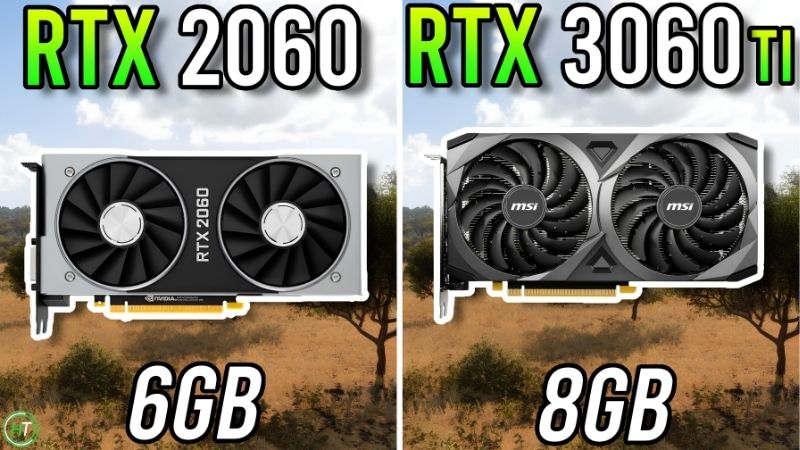
2060 vs 3060 is a comparison almost nobody makes in a shop – it gets made standing in a car park, phone in hand, with a seller waiting for an answer. So this is written to be read fast. The verdict is in the next paragraph, the numbers are in a table you can scan while someone watches you, and the section on what to check before handing over cash is the part that actually saves you money. Both of these cards are used purchases in 2026, and the seller matters as much as the silicon.
Quick answer: Our top pick in 2026 is the Typical used price — our #1 rated choice. See the full ranked comparison, alternatives and buying advice below.
Quick Verdict: RTX 2060 vs RTX 3060 for Used Buyers
The RTX 3060 12GB is the better buy in almost every case, and the reason is not the 15-20% frame rate advantage – it is the 12GB of VRAM against the 2060’s 6GB. Raw performance between these two is closer than people expect. Memory capacity is not close at all, and in 2026 that is what decides whether a card is usable at high settings or falls apart in stutter. Pay up to about 30% more for the 3060 and it is still the right call. Beyond that, the 2060 becomes defensible.
The Performance Gap Is Smaller Than You Think
In pure rasterisation at 1080p, the 3060 typically leads the 2060 by roughly 15-20%. That is a real gap but not a generational chasm – the 2060 was a strong card, and Nvidia positioned the 3060 conservatively against it. In practice: modern AAA titles at 1080p high land around 65-85 fps on the 3060 and 55-70 fps on the 2060. Esports titles clear 144 fps on both.
At 1440p the gap widens slightly, to about 20-25%, because the 3060’s 192-bit bus and larger buffer have more room to work. But neither card is really a 1440p card in 2026 outside of lighter titles and older games.
The honest read: if VRAM did not exist as a factor, this would be a close comparison where price decided everything. VRAM does exist, and it is why it is not close.
Why 6GB vs 12GB Decides This Comparison
This is the whole article compressed into one section. The 2060 ships with 6GB. In 2026, 6GB is below the working floor for modern titles at high textures, and the failure mode is ugly – not a smooth 10% decline but hitching, texture pop-in, and 1% lows collapsing to a fraction of the average.
The 3060 ships with 12GB, an oddity of its 192-bit bus configuration that made it look overspecced at launch and looks prescient now. It has more VRAM than the RTX 5070 that sells today for four times the price. That is not a small footnote – it means the 3060 can hold high textures in games where the 2060 physically cannot.
Watch for the two variants that muddy this. The RTX 2060 12GB exists and is genuinely worth hunting for, since it removes the 2060’s single biggest weakness. The RTX 3060 8GB also exists, with a narrower 128-bit bus, and it is slower than the 12GB version despite the name. If a listing does not state capacity and bus width, ask before you agree a price.
Full Spec and Used Price Table
Scan this while the seller is talking.
| Specification | RTX 2060 6GB | RTX 3060 12GB |
|---|---|---|
| Typical used price | $110-150 | $160-210 |
| VRAM | 6GB GDDR6 | 12GB GDDR6 |
| Memory bus | 192-bit | 192-bit |
| Board power | ~160W | ~170W |
| Recommended PSU | 500W | 550W |
| Power connector | 1x 8-pin | 1x 8-pin (some 12-pin) |
| AAA 1080p high (avg) | ~55-70 fps | ~65-85 fps |
| 1440p high (avg) | ~40-50 fps | ~50-62 fps |
| DLSS support | DLSS 2/3 (no Frame Gen) | DLSS 2/3 (no Frame Gen) |
| Encoder | NVENC (Turing) | NVENC (Ampere) |
| Relative performance | 100% | ~117% |
| Best for | Tight budgets, esports | 1080p high textures, longevity |
Two rows carry the decision. The price row shows roughly a 35-40% premium for the 3060 – just above the 30% threshold where it stops being an automatic yes. The VRAM row shows a 100% advantage. If you find a 3060 12GB within 30% of a 2060 price, stop reading and buy it.
Deep Dive: What Each Card Actually Does Well
These cards are seven and six years into their lives respectively. Comparing them like new products misses the point – what matters now is which one ages better and which one is more likely to arrive at your door already damaged.
DLSS, Ray Tracing and What Neither Card Can Do
Both support DLSS 2 and 3, which is genuinely valuable on hardware this old – it is often the difference between 45 fps and 65 fps in a demanding title, and it keeps both cards viable years past when raw raster would have retired them. This is Nvidia’s software cadence quietly adding value to hardware after purchase, and it is a real part of why used RTX cards hold price better than their AMD equivalents.
Neither card gets Frame Generation. That requires Ada or newer, and no driver update changes it. If someone selling you a 3060 mentions Frame Gen, they are either confused or hoping you are.
Ray tracing exists on both and is effectively unusable on both outside of light implementations at 1080p with DLSS carrying the load. The 3060 is somewhat less bad. That is the entire RT conversation for these two cards, and any listing that advertises ray tracing as a selling point is marketing at you.
What to Check Before You Pay a Seller
The card is only half the purchase. Four checks, in order of how much money they save you.
First, confirm the exact variant. Ask for a GPU-Z screenshot showing VRAM capacity and bus width. This one question separates a 3060 12GB from a 3060 8GB, and a 2060 6GB from a 2060 12GB – a difference worth $40-60 either way. Sellers who refuse are telling you something.
Second, ask for a photo under load with temperature showing. A card sitting above 80C in someone else’s case will not magically be cooler in yours. Budget $15-25 for thermal paste and pads on any card this age regardless of the answer – six years is well past the pump-out point for factory paste.
Third, test it the same day. Run a real game for twenty minutes and watch for artifacts, driver timeouts, or throttling. Every dead-card story begins with someone who tested it next weekend, after the return window closed.
Fourth, check your PSU honestly. The 3060 wants 550W with a genuine 8-pin PCIe cable, not a Molex adapter. Some 3060 models use a 12-pin connector requiring the included adapter – if the seller lost it, factor that into the price.
Pros and Cons: RTX 2060 vs RTX 3060
| RTX 2060 6GB | RTX 3060 12GB | |
|---|---|---|
| Pros | Cheapest entry to DLSS; strong esports performance; 500W PSU and single 8-pin; compact models common; fine for 1080p medium and older titles | 12GB VRAM outlasts cards costing far more today; 15-20% faster; better NVENC for streaming; holds high textures where the 2060 cannot; strong resale |
| Cons | 6GB is below the 2026 floor and fails as stutter, not slowdown; seven years old, so paste and fans are worn; 1440p is out of reach; poor headroom for anything ahead | 35-40% price premium over the 2060; 8GB variant sold under the same name; 170W and 550W PSU; six years old with the same wear issues |
Notice what the cons column does not say: neither card has a performance problem so much as an age problem. You are buying someone else’s thermal history in both cases. The 3060 simply gives you more room to live with that.
Why Used GPU Prices Stopped Falling in 2026
Anyone shopping at this tier has noticed that used prices have not behaved the way used prices are supposed to. Six-year-old cards should be nearly worthless. They are not, and the reason has nothing to do with these cards themselves.
The Component Surge Pushed the Whole Used Market Up
The memory-driven price surge through late 2025 raised laptop and component costs broadly. Used GPUs follow new GPUs with a lag – when the cheapest new card gets expensive, every used card underneath it gets pulled up, because the used market is priced against the new alternative rather than against age.
The genuinely positive news is real but modest: prices have stopped rising at the steep rate seen at the end of 2025, and manufacturers including Framework have reported a period of relative stability, while still warning that further volatility remains possible.
Read that carefully before you negotiate. Flat is not falling. A $180 RTX 3060 is unlikely to be a $140 RTX 3060 by spring, which means the leverage you have with a seller comes from finding a motivated one, not from waiting them out. And it means the 3060’s price premium over the 2060 is unlikely to close on its own.
New Supply Is Real – and It Arrives in 2027 or 2028
Genuine relief is under construction. OEMs can now source DDR5 from Chinese suppliers such as CXMT, and Micron is building two fabrication plants in Idaho. These are funded, structural additions to global supply.
The catch is timing. Those Idaho plants do not come online until 2027-2028. Fabs take years, not quarters. Your 2026 purchase concludes long before any of that capacity reaches a shelf.
Which reframes the entire 2060 vs 3060 question. If cards were getting cheaper annually, buying the 6GB card and upgrading in eighteen months would be rational. In a flat market, the card with double the VRAM is worth more than the fps chart implies – because your escape route got expensive.
The Alternative If Both Feel Too Old
Two options are worth pricing before you commit to six-year-old silicon. The RTX 3060 Ti often sells for $30-50 more than a 3060 and delivers roughly 25-30% more performance – the catch being it carries only 8GB, which drags you straight back into the VRAM problem you are trying to escape. The RX 6600 or 6650 XT frequently offer better fps per dollar if you do not need NVENC or CUDA.
And if you already own a 2060, be honest about whether the 3060 is worth it. A 15-20% raster gain is not transformative; the 12GB buffer is the actual reason to move. Before you spend anything, check whether your existing card is throttling – a six-year-old card in a case with one intake fan is losing performance you already own.
See More:
- A fan curve msi afterburner
- amd radeon rx 9070 vs rtx 5070
- 5060 ti vs 5070 benchmark
- rx 6600 vs rtx 3050
Final Verdict and Recommendation
On 2060 vs 3060, the frame rate chart is a distraction and the VRAM column is the answer.
Buy the RTX 3060 12GB if you can find one within 30% of a 2060 price. The 12GB buffer is why this card is still relevant in 2026 while cards that beat it on paper have aged out – it holds high textures, it does not stutter, and it has more memory than GPUs selling new today for several times the money. Confirm it is the 12GB 192-bit version, not the 8GB.
Buy the RTX 2060 only if the budget genuinely does not stretch, if you play esports titles primarily, or if you find the rare 12GB variant at a fair price. At 1080p medium with DLSS on, it still works. At 1080p high with modern textures, 6GB is where it stops being a performance question and starts being a stutter problem.
Either way, buy on today’s price. With used values propped up by a new market that is flat rather than falling, and real memory supply still two to three years out, the card in front of you is not going to get cheaper by waiting.
Frequently Asked Questions
Which used card is the better buy today?
The RTX 3060 12GB, almost always. It is roughly twenty percent faster in rasterization, notably better in ray tracing, and carries double the memory of a 6GB 2060. The 2060 only makes sense if the price difference is severe and you play older titles at 1080p medium settings.
How do I check a used GPU before buying?
Ask for a photo of the card running in a system, check for bent fins, cracked fan blades and heavy dust. Once installed, run a demanding loop for thirty minutes while watching temperature, clock behaviour and memory error counters. Artefacts, sudden clock drops or fan noise like grinding are immediate red flags.
Does a mining-used card matter?
Less than reputation suggests, since mining runs a steady load at reduced clocks, but the fans and thermal pads wear. Budget for a repaste and possibly new pads on any older card. Warranty status matters more, so check whether the manufacturer warranty is transferable and still in date.
What power supply do these need?
Both sit around 160W to 170W with a single 8-pin connector and are fine on a quality 550W supply. If the card is going into an old office prebuilt, verify the PSU has a PCIe connector at all and check the 12V rail amperage, since many OEM units are underspecified.
Can either card handle 1440p?
The 3060 12GB manages 1440p at medium to high settings with DLSS in most titles and holds up well because it never runs out of memory. The 2060 is a 1080p card in 2026, and its 6GB buffer causes stutter at 1440p high textures regardless of what the average frame rate suggests.
Ready to decide? Our #1 pick for 2026 is the Typical used price.
Live price & availability on Amazon.

Write Your Review
No reviews yet. Be the first to share your experience!