
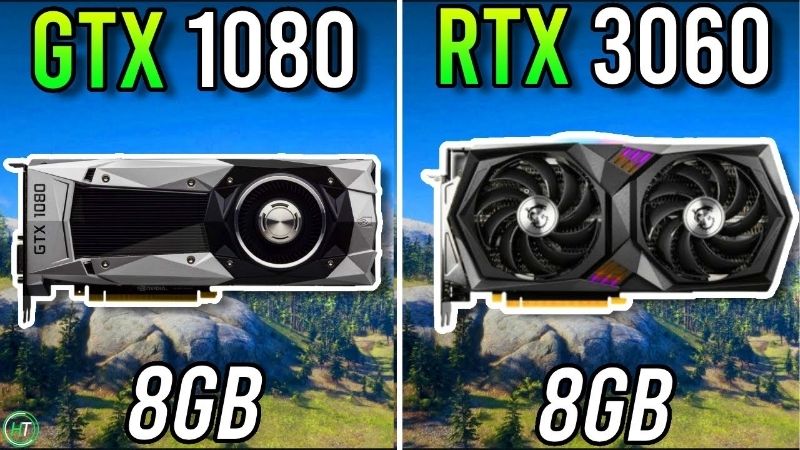
GTX 1080 Ti vs RTX 3060 is the decision that splits every PC gamer sitting on an aging flagship: hold onto the raw power of a legendary card, or trade it for a newer GPU with DLSS and ray tracing? These two cards land remarkably close on the used market, yet they win in completely different ways. This side-by-side breaks down the specs, the real frame rates, and a clear verdict on which one actually deserves your money in 2026.
The Quick Verdict and Full Spec Comparison
Let us open with the answer, then prove it with numbers. This matchup is not a simple case of newer beats older, because the GTX 1080 Ti was a genuine flagship in its day and still hits hard in raw rasterized performance. The real question is whether modern features are worth giving up a little brute force, and the table below lays out every spec that shapes that call so you can weigh it for yourself.
As an Amazon Associate we earn from qualifying purchases at no extra cost to you.



Quick Verdict: Who Wins at a Glance
For pure rasterized gaming and heavy VRAM situations, the GTX 1080 Ti still holds its own. Its 11GB of memory and wide bus keep it competitive with the RTX 3060 in traditional performance, and in some 1440p titles it even edges ahead, which is remarkable for a card of its age.
The RTX 3060 wins on everything modern. It brings DLSS, ray tracing, a newer video encoder, and far lower power draw, making it the more flexible and future-ready card despite similar raw numbers. For most buyers in 2026, that feature set tips the balance.
Short version: buy the GTX 1080 Ti if you want maximum raw power and VRAM with no interest in ray tracing, and buy the RTX 3060 if DLSS, efficiency, and modern features matter to you.
Full Spec Comparison Table
Numbers first. These reference specs explain both where these cards feel similar and where they pull apart in real games.
| Spec | GTX 1080 Ti | RTX 3060 |
|---|---|---|
| Architecture | Pascal | Ampere |
| VRAM | 11GB GDDR5X | 12GB GDDR6 |
| Memory bus | 352-bit | 192-bit |
| CUDA cores | 3,584 | 3,584 |
| Ray tracing | No | Yes (RT cores) |
| DLSS | No | Yes (Tensor cores) |
| Board power | ~250W | ~170W |
| Typical used price | ~$200–$280 | ~$200–$230 |
The headline is how evenly matched these cards are on raw resources. Both carry a similar core count and roughly 11–12GB of VRAM, but the GTX 1080 Ti’s much wider 352-bit memory bus gives it enormous bandwidth, while the RTX 3060 counters with modern features and a far lighter 170W power draw.
What the Raw Numbers Actually Mean
That 352-bit bus is the GTX 1080 Ti’s secret weapon. It moves data at a rate the RTX 3060’s narrower 192-bit interface cannot match, which is exactly why the older card stays competitive—and occasionally faster—in bandwidth-hungry games at 1440p.
The VRAM situation is close to a wash. Both cards carry generous buffers, so neither will run short in the vast majority of modern titles, and both comfortably handle high textures where cheaper cards choke. This shared strength is a big reason the matchup is so tight.
The clearest gap is efficiency. The GTX 1080 Ti’s 250W appetite runs hot and demands a strong power supply, while the RTX 3060 delivers similar raw performance at just 170W, translating into less heat, less noise, and lower running costs over time.
Deep Dive Face-Off: Performance, Features, and Real-World Fit
Spec sheets set the stage; real use decides the winner. To choose correctly you need to see how these cards behave in traditional games, what the RTX features genuinely add, and how each fits into a real system. This is where the GTX 1080 Ti vs RTX 3060 debate stops being about age and starts being about what you actually play.
Rasterization Performance at 1440p and 1080p
In traditional rasterized games at 1440p, the two cards trade blows, often finishing within a few frames of each other. In bandwidth-heavy titles the GTX 1080 Ti’s wide memory bus can push it slightly ahead, while in others the RTX 3060’s newer architecture keeps pace comfortably.
At 1080p, both cards are overkill for esports and handle demanding AAA titles at high settings with ease. Either one will feed a high-refresh 1080p monitor well in most games, so raw playability is not the deciding factor at this resolution.
The practical takeaway is that in pure raster, these cards are effectively peers. If traditional performance were the only metric, the choice would come down purely to price—but modern features change that equation significantly.
It is worth appreciating just how well the GTX 1080 Ti has aged to make this possible. Launched as a flagship, it carried far more raw horsepower than a typical mid-range card, and that surplus is exactly why it can still trade blows with a modern 3060-class GPU years later. Buyers cross-shopping these two are effectively comparing an old flagship against a newer mainstream card, which is what makes the matchup so unusually even.
Ray Tracing, DLSS, and the Modern Feature Gap
This is where the RTX 3060 pulls decisively ahead. Its Tensor cores run DLSS, Nvidia’s AI upscaler, which can lift frame rates substantially in supported games and even enable playable ray tracing on a mid-range card—capabilities the GTX 1080 Ti simply has no hardware to access.
Ray tracing itself is off the table for the GTX 1080 Ti. While the RTX 3060 offers entry-level ray-traced lighting and reflections, the older flagship is locked to traditional rendering, which increasingly matters as more games build ray tracing into their design.
Because Nvidia keeps pouring resources into DLSS and AI-driven rendering, the RTX 3060’s feature set continues to gain new capabilities over time, while the GTX 1080 Ti’s abilities are frozen where they were years ago. For long-term relevance, that widening gap favors the newer card.
There is also a real performance angle to DLSS beyond image quality. In supported games, the RTX 3060 can switch on upscaling to reclaim frames the GTX 1080 Ti simply cannot, effectively giving the newer card a second performance lever. That means in DLSS-enabled titles the RTX 3060 can pull ahead of the older flagship even where raw raster would have them tied, which is an increasingly common scenario as more games adopt the technology.
Power, Heat, and System Compatibility
The RTX 3060 is the easier card to live with. At 170W it runs cool and quiet on a modest power supply, making it a straightforward upgrade for most systems including compact builds.
The GTX 1080 Ti’s 250W draw is a real consideration. It runs hotter, demands a stronger power supply, and takes up more space as a larger, older flagship card, so you need a case and PSU that can handle it comfortably.
For anyone building in a smaller case or wanting a low-fuss, efficient system, the RTX 3060 is clearly the more practical fit, while the GTX 1080 Ti rewards a roomy, well-cooled tower with a strong power supply already in place.
Value, the 2026 Market, and Final Verdict
Raw performance is close, so value and timing decide the smart buy. With component prices climbing again and the used market shifting, when you purchase matters as much as which card you choose. Here are the honest trade-offs, the current market picture, and a clear recommendation.
Pros and Cons of Each GPU
Both cards involve meaningful trade-offs. Here is the direct breakdown so you can match them to your priorities.
The key thing to notice is that these are not strengths and weaknesses of the same kind. The GTX 1080 Ti’s advantages are about raw power and memory, while the RTX 3060’s are about features and efficiency—so the right choice depends entirely on which of those two categories you weigh more heavily.
GTX 1080 Ti
- Pros: Enormous memory bandwidth, 11GB VRAM, strong raw raster performance, still capable at 1440p.
- Cons: No ray tracing or DLSS, high 250W power draw, runs hot, aging with no new features.
RTX 3060
- Pros: DLSS and ray tracing, 12GB VRAM, far more efficient, newer encoder, better long-term relevance.
- Cons: Narrower memory bus, can trail the 1080 Ti in some bandwidth-heavy titles, similar used price.
Should You Buy Now? What Rising Prices Signal
Timing genuinely affects this decision. Across the PC market, component and system prices have been trending upward again, and used graphics cards have followed, so both of these GPUs cost a little more than they did a year ago. Waiting for a steep drop is fighting the current direction of the market rather than working with it.
There is a nuance worth understanding on the feature side. Nvidia’s heavy focus on AI and data-center hardware—recently underlined by the US permitting sales of its powerful H200 chips to China—keeps the company investing in the very AI features, like DLSS, that make an RTX card such as the 3060 more valuable over time than a feature-frozen card like the GTX 1080 Ti. In that sense, the RTX side of this matchup is aligned with where the industry is heading.
The practical takeaway is simple: prices are stable but not falling, so if a fairly priced RTX 3060 or GTX 1080 Ti appears today, it is smarter to buy than to wait for relief the market is not promising. You can compare current listings on both cards through the links here in seconds.
See More:
The Alternative and Final Recommendation
If your budget can stretch, a used RTX 3060 Ti or RX 6600 XT sits a tier above both cards and is worth pricing out, especially if you want more raw performance alongside modern features. But within this specific matchup, the decision comes down to your priorities.
Choose the GTX 1080 Ti if you value raw rasterized power and huge memory bandwidth, never plan to use ray tracing, and already have a case and power supply that can feed it. Choose the RTX 3060 if you want DLSS, ray tracing, lower power, and a card built to stay relevant longer.
Prices shift constantly, so compare live listings before you commit. You can check the latest deals on both cards through the links on this page and pick the one that matches how you play.
In the end, the GTX 1080 Ti vs RTX 3060 choice is a rare case where an old flagship and a modern mid-ranger are genuinely close. The GTX 1080 Ti remains a raw-performance powerhouse with bandwidth and VRAM to spare, while the RTX 3060 answers with DLSS, ray tracing, and efficiency that keep it relevant far longer. Match the card to whether you prioritize brute force or modern features, buy while pricing is stable, and either way you will land a capable GPU that punches well above its used-market price.
Top-Rated Picks
Best Seller
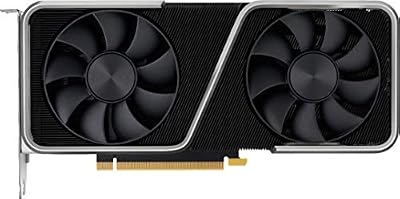
NVIDIA GeForce RTX 3060 Ti Founders Edition 8GB GDDR6 PCI Express 4.0 Graphics Card (Renewed)
Save $148.03


| Product | Brand | Rating | Reviews | Price |
|---|---|---|---|---|
| ARCTIC MX-4 (4 g) – Premium Performance Thermal Paste… | ARCTIC | ★ 4.8 | 104k | $4.99 |
| ARCTIC MX-4 (incl. Spatula, 4 g) – Premium Performanc… | ARCTIC | ★ 4.8 | 71.9k | $5.49 |
| Crucial 8GB DDR4 RAM 3200MHz (PC4-25600), Downclockab… | Crucial | ★ 4.8 | 62.8k | $74.99 |
| AMD Ryzen 5 5600X 6-core, 12-thread unlocked desktop … | — | ★ 4.8 | 30.2k | $177.60 |
| NVIDIA Shield Remote; Voice Search, Motion-Activated,… | — | ★ 4.7 | 10.6k | $25.99 |
Frequently Asked Questions
Is the GTX 1080 Ti still faster than the RTX 3060?
In raw rasterization yes, the GTX 1080 Ti generally leads the RTX 3060 by roughly 10 to 20 percent at 1440p, and its 352-bit memory bus with 11GB of GDDR5X handles high-resolution textures well. The RTX 3060 closes and often reverses that gap once DLSS is enabled.
How much power does each card need?
The GTX 1080 Ti has a 250W TDP and typically requires both an 8-pin and a 6-pin PCIe connector, so a solid 600W to 650W supply is sensible. The RTX 3060 is far more efficient at 170W with a single 8-pin, running fine on a good 550W unit and producing much less heat.
Does 11GB versus 12GB of VRAM matter?
The capacity difference is trivial, but the type matters. The GTX 1080 Ti uses GDDR5X on a wide 352-bit bus giving about 484GB/s bandwidth, while the RTX 3060 uses GDDR6 on 192-bit for roughly 360GB/s. Both have enough capacity for 1440p textures well beyond typical mid-range cards.
What features do you gain by upgrading to the RTX 3060?
You gain DLSS upscaling and frame reconstruction, hardware ray tracing cores, the newer NVENC encoder with better streaming quality, AV1 decode, HDMI 2.1 for 4K high-refresh displays, and continuing driver support. Pascal cards like the GTX 1080 Ti have moved to legacy driver branches with security-only updates.
Should I keep my GTX 1080 Ti or sell it?
If you play mostly rasterized titles at 1440p and your power supply and cooling are adequate, keeping it makes financial sense since a side-grade to the RTX 3060 gains little raw speed. Upgrade only if you want DLSS, ray tracing, lower power draw, or better streaming encode quality.





Write Your Review
No reviews yet. Be the first to share your experience!