
- Top Pick: Gigabyte GeForce RTX 4080 Super WINDFORCE V2 Graphics Card – 2550MHz Core, 16GB GDDR6X 23000MHz 256-bit Memory, PCI-E 4.0, 3X DP 1.4, 1x HDMI 2.1a, NVIDIA DLSS 3.5, GV-N408SWF3V2-16GD
- Best Value: NVIDIA – GeForce RTX 4080 16GB GDDR6X Graphics Card
- Premium Choice: ASUS TUF Gaming NVIDIA GeForce RTX 4080 Super OC Edition Gaming Graphics Card (PCIe 4.0, 16GB GDDR6X, HDMI 2.1a, DisplayPort 1.4a), 3 Year Warranty
Top Rtx 5070 Rtx 4080 New Picks for 2026
Here are our current top rtx 5070 rtx 4080 new picks, compared on real Amazon owner reviews, price, and features. Live prices update below.

Prime
Best Seller
ASUS SFF-Ready Prime NVIDIA GeForce RTX 5070 Graphics Card (PCIe 5.0, 12GB GDDR7, HDMI/DP 2.1, 2.5-Slot, Axial-tech Fans, Dual BIOS), 3 Year Warranty
Dropped $2.52

Dropped $19.61


RTX 5070 vs RTX 4080 frames a question that comes up every generation: can a fresh, affordable mid-range card stand in for last generation’s expensive high-end flagship? The RTX 5070 is Blackwell’s value champion at a $549 launch price, armed with DLSS 4 Multi Frame Generation, while the RTX 4080 is the Ada Lovelace heavyweight that originally cost more than twice as much and still carries 16GB of VRAM. The answer hinges on whether you game at 1440p or 4K, how much you value the newest features, and what these cards actually cost today, all of which this comparison breaks down in detail.
As an Amazon Associate we earn from qualifying purchases at no extra cost to you. Product prices and availability are accurate as of the date shown and are subject to change.


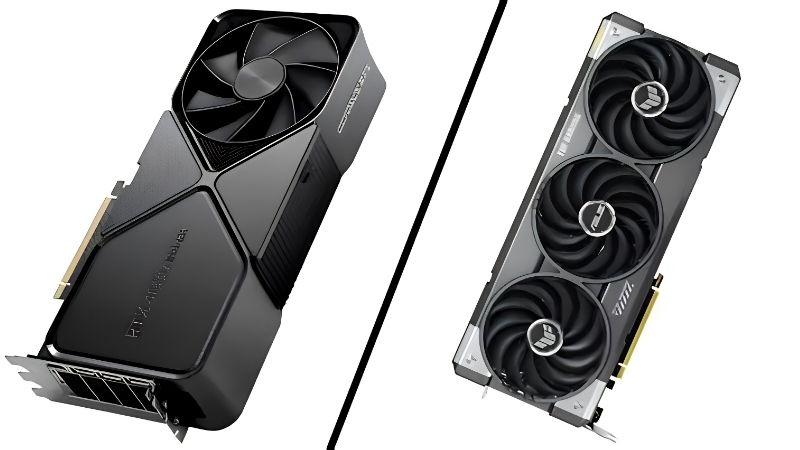
Quick Verdict and Specifications
Here is the high-level take on this new-versus-old matchup, followed by the spec sheet that explains the tension between modern features and raw hardware.
The Short Answer
The RTX 4080 remains the stronger card in raw rasterized performance and carries more VRAM, making it the better choice for demanding 4K gaming. The RTX 5070 fights back with a far lower price, lower power draw, and exclusive DLSS 4 Multi Frame Generation that can transform performance in supported titles.
For 1440p gamers chasing value, the 5070 is the smart, modern pick that covers their needs while leaving budget for the rest of the build. For 4K players who want maximum native muscle and a larger buffer, the 4080 still earns its keep.
This is less a fight over which card is faster and more a question of which philosophy suits you: affordable modern features, or proven high-end raw power.
Specs Head to Head
The numbers reveal two cards built for different eras and price brackets, which is the heart of the comparison.
| Spec | RTX 5070 | RTX 4080 |
|---|---|---|
| Architecture | Blackwell | Ada Lovelace |
| CUDA cores | 6144 | 9728 |
| VRAM | 12GB GDDR7 | 16GB GDDR6X |
| Memory bus | 192-bit | 256-bit |
| Total graphics power | 250W | 320W |
| Launch MSRP | $549 | $1199 |
| DLSS support | DLSS 4 (Multi Frame Gen) | DLSS 3 Frame Gen |
The 4080’s larger core count, wider bus, and 16GB buffer point to a native-performance lead, while the 5070’s far lower price and DLSS 4 support define its value-and-features counterargument.
What the Numbers Mean
With 9728 cores against 6144 and a 256-bit bus against 192-bit, the 4080 has more raw compute and bandwidth, advantages that grow most visible at 4K where memory pressure peaks. In native terms, it is the bigger, more capable chip.
The 5070’s Blackwell architecture and GDDR7 memory close part of that gap through efficiency, so the spec sheet overstates the 4080’s real-world lead, particularly at 1440p where neither card is bandwidth-starved in most titles.
VRAM is a meaningful divider: the 4080’s 16GB offers more headroom for memory-heavy 4K gaming and creative work, while the 5070’s 12GB is comfortable at 1440p but tighter for the most demanding 4K scenarios over time.
Performance Face-Off
The specs set up a split decision, and the way each card behaves across resolutions and features confirms exactly where each one wins.
1440p: The 5070’s Home Turf
At 1440p both cards are excellent, and the practical gap between them narrows considerably. The 4080 posts higher native frame rates, but the 5070 stays close enough that many players would not notice a difference in everyday gameplay at this resolution.
This is where the 5070 makes its strongest case. It delivers a premium 1440p experience at a fraction of the 4080’s original price, and with DLSS 4 it can match or exceed the older card’s smoothness in supported titles.
For the large and growing population of 1440p gamers, the 5070 covers the resolution comfortably, making the 4080’s extra raw power more surplus than necessity at this target.
4K: Where the 4080 Pulls Ahead
At 4K the picture changes. The 4080’s additional cores, wider bus, and 16GB buffer let it sustain higher native frame rates and handle memory-heavy scenes more gracefully than the 5070, which has to work harder at this resolution.
The 5070 can still play at 4K, especially with upscaling and frame generation, but it is operating closer to its limit, while the 4080 has genuine headroom. For a dedicated 4K gamer focused on native performance, that advantage is the 4080’s clearest argument.
The 5070’s 12GB buffer is also more likely to feel tight in the most demanding 4K titles over time, where the 4080’s 16GB provides reassuring extra capacity.
DLSS 4 and the Frame Generation Edge
The feature divide is the 5070’s trump card. It supports DLSS 4 with Multi Frame Generation, which the 4080 cannot access, so in supported titles the 5070 can multiply its on-screen frames and close or overturn the native performance gap.
The 4080 still supports DLSS 3 Frame Generation, a strong feature in its own right, but it is a generation behind the 5070’s capabilities. In the growing list of DLSS 4 games, the newer card’s smoothness can be striking despite its smaller hardware.
This makes the decision partly philosophical: prioritize native raster and VRAM with the 4080, or embrace AI-driven frame generation and efficiency with the 5070 as more games adopt the technology.
Value, Alternatives, and Market Forces
Performance only tells half the story; price and current market conditions determine whether either card is a smart purchase today.
The Price Story
At a $549 launch price against the 4080’s original $1199, the 5070 starts from a dramatically stronger value position. Even accounting for the 4080’s higher native performance, the 5070 usually wins decisively on cost per frame at 1440p.
The 4080 is now largely a used or clearance product, so its real value depends on the asking price. A cheap 4080 can be a strong 4K performer, but an overpriced one loses easily to the cheaper, newer, warranty-backed 5070.
If neither fits your needs precisely, a higher Blackwell tier offers more 4K headroom, while the 5070 remains the safe, modern choice for value-focused 1440p builds.
Why Rising Prices Favor Acting Now
Laptop and PC-component prices are trending upward and are expected to keep climbing. That pressure makes locking in a card at today’s price more appealing than waiting, since delays may simply mean paying more for the same hardware.
For this matchup, rising prices strengthen the case for the better-value 5070 if budget is a concern, while also meaning that a well-priced used 4080 can disappear quickly as the secondhand market drifts higher.
Either way, the trend rewards decisive buyers. Setting a target price and acting when it appears beats holding out for discounts that are unlikely to materialize in the current climate.
Nvidia’s AI Push and Supply
The U.S. recently cleared Nvidia to sell its H200 AI chips to China. The H200 is a data-center accelerator, not a GeForce card, so it has no direct effect on how either gaming card performs.
The indirect impact is on supply and pricing: heavy demand for Nvidia’s AI silicon can keep the company’s capacity and focus tilted toward accelerators, which historically firms up consumer GPU prices and slows discounts across the lineup.
That context reinforces buying when you find a fair price, since the broader market dynamics make meaningful price drops on either of these cards less likely in the near term.
Final Verdict: Which Should You Buy?
With the numbers, features, and market context in view, the decision comes down to your resolution, budget, and feature priorities.
Pick the RTX 5070 if…
Choose the 5070 if you game at 1440p, want the best value, prefer lower power draw, and want access to DLSS 4 Multi Frame Generation for future titles. It is the modern, efficient, budget-friendly choice.
For the majority of mainstream gamers, this is the more sensible purchase, delivering near-flagship smoothness in supported games at a fraction of the 4080’s original cost and with a current warranty.
Pick the RTX 4080 if…
Choose the 4080 if you game primarily at 4K, want the largest VRAM buffer for memory-heavy titles, and value native rasterized performance over generated frames, provided you can find it at a fair price.
It also suits creators who benefit from the 16GB buffer, as long as you can supply the power and cooling it needs and accept that it is now mostly a used-market purchase.
Pros and Cons Recap
Here is the concise trade-off summary for both cards.
RTX 5070 pros: excellent value, efficient at 250W, DLSS 4 Multi Frame Generation, current warranty. Cons: 12GB buffer, narrower bus, lower native raster than the 4080. RTX 4080 pros: stronger native raster, 16GB VRAM, excellent 4K. Cons: higher power draw, used-only with no warranty, no DLSS 4 Multi Frame Generation.
Frequently Asked Questions
Quick answers to the questions buyers most often ask when comparing the RTX 5070 with the RTX 4080.
Is the RTX 5070 as good as the RTX 4080?
At 1440p they are close, and with DLSS 4 the 5070 can match or exceed the 4080 in supported titles despite weaker native hardware.
At 4K the 4080 pulls ahead thanks to more cores, a wider bus, and 16GB of VRAM.
The right answer depends on your monitor: a 1440p gamer will barely notice the difference, while a 4K gamer will feel the 4080’s extra muscle in the most demanding titles.
Is 12GB of VRAM enough on the RTX 5070?
For 1440p gaming, 12GB is generally sufficient today across most modern titles at high settings.
For demanding 4K or texture-heavy games, the 4080’s 16GB buffer offers more long-term headroom.
If you plan to keep the card for many years of new releases, that larger buffer is worth weighing, since VRAM demands tend to rise over time.
Should I buy a used 4080 or a new 5070?
If you game at 4K and find a cheap, tested 4080, it is a strong native performer worth considering.
For 1440p, value, warranty, and the newest features, the new 5070 is usually the smarter buy.
Factor in warranty too, as a new 5070 comes with full support while a used 4080 carries the usual secondhand risks.
Conclusion
In the RTX 5070 vs RTX 4080 comparison, the new mid-range card and the old high-end flagship each win on different terms. The 4080 remains the stronger native performer for 4K with its larger 16GB buffer, while the 5070 is the smarter pick for value-focused 1440p gamers who want modern efficiency and DLSS 4 Multi Frame Generation at a far lower price. With component prices trending upward, both arguments favor buying decisively once you find a fair price, but for most gamers in 2026 the RTX 5070 delivers the better overall balance of cost, features, and everyday performance.










Write Your Review
No reviews yet. Be the first to share your experience!