
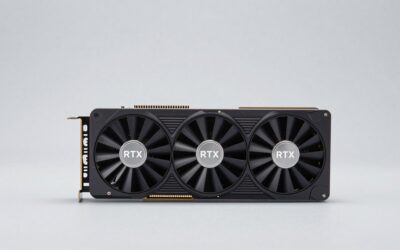
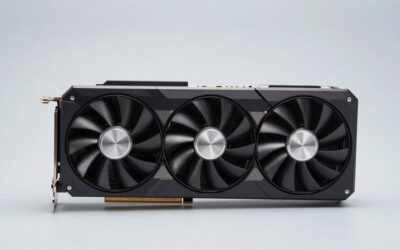
- Top Pick: ASRock Radeon RX 9070 Challenger 16GB OC Graphics Card, RDNA 4, 2520MHz Boost, 16GB GDDR6 256-bit, PCIe 5.0, Triple Fans, 0dB Silent, LED Indicator
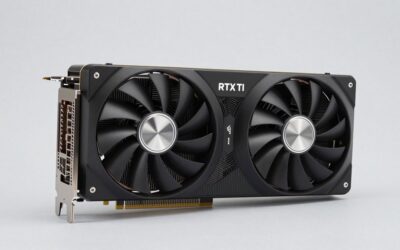
- Best Value: GIGABYTE Radeon™ RX 9070 XT Gaming OC ICE 16G Graphics Card (16GB GDDR6, 256-bit, PCIe 5.0, HDMI/DP 2.1, 2.7 Slot, Hawk Fan, Server-Grade Thermal Gel, Reinforced Structure)
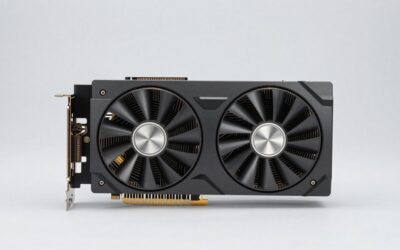
- Premium Choice: GIGABYTE Radeon RX 9070 XT Gaming OC 16G Graphics Card, PCIe 5.0, 16GB GDDR6, GV-R9070XTGAMING OC-16GD Video Card


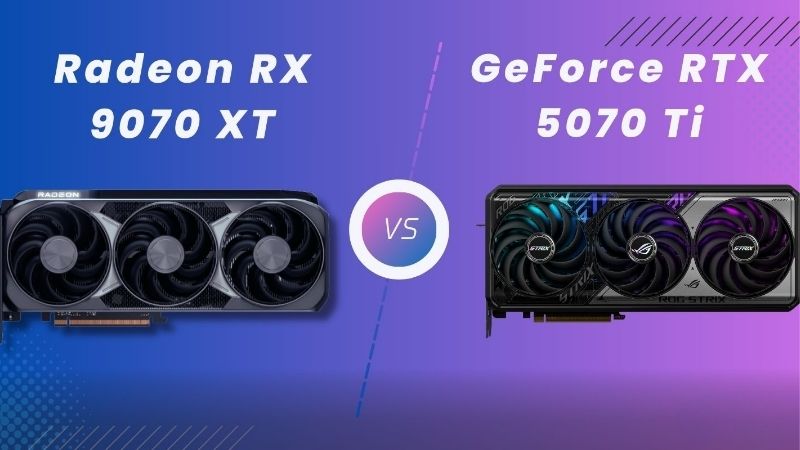
amd radeon rx 9070 vs rtx 5070 is the last decision standing between a lot of people and a checkout button right now, and it is a genuinely close one – two cards launched at the same $549 price, separated by 4GB of VRAM, one generation of memory technology, and two completely different software philosophies. This comparison skips the twenty-minute benchmark montage. You get the verdict in the first paragraph below, the full spec table you can scan in ten seconds, an honest face-off on the three things that actually decide the purchase, and a straight answer on whether waiting for prices to drop in 2026 is a strategy or a fantasy.
The Quick Verdict: AMD Radeon RX 9070 vs RTX 5070 at a Glance
If you want one sentence: the RX 9070 wins on raw raster performance and VRAM headroom, the RTX 5070 wins on ray tracing and upscaling quality, and at identical MSRP the tiebreaker is which of those two you will actually use in the games you actually play. There is no blowout here. Anyone telling you one card destroys the other is selling a thumbnail. The gap in rasterised 1440p averages sits in the low single digits – close enough that a $30 price swing at retail matters more than the silicon.
As an Amazon Associate we earn from qualifying purchases at no extra cost to you.




Who Should Buy the RX 9070
Buy the 9070 if you play primarily rasterised titles at 1440p or 4K, if you keep cards for four or more years, or if you run anything that touches VRAM hard – texture mod packs, heavy simulation titles, local AI models, or Unreal Engine 5 games at high texture settings.
The 16GB frame buffer on a 256-bit bus is the argument. It is not marketing. Several 2025-2026 releases at 1440p with maxed textures and ray tracing already push past 12GB, and when a card runs out of VRAM the failure is not a gentle 5% slowdown – it is stutter, texture pop-in, and 1% lows collapsing. That is the one failure mode no driver update fixes.
It also draws roughly 220W against the 5070’s 250W, which sounds trivial until you factor in a smaller case, a 600W power supply you would rather not replace, or a room that already runs warm.
Who Should Buy the RTX 5070
Buy the 5070 if ray tracing is non-negotiable, if you stream or record, if you use Blender, DaVinci Resolve, or any CUDA-accelerated production tool, or if you want the upscaler with the wider game support list.
DLSS 4 with transformer-model upscaling is, at the time of writing, still ahead of FSR 4 on image stability – particularly on fine detail in motion, like foliage, chain-link fences, and hair. Multi Frame Generation adds frames that feel smooth on a high-refresh panel even when the underlying render rate is modest. Whether generated frames “count” is a philosophical argument; whether they look and feel good on a 144Hz monitor is an empirical one, and mostly they do.
The 12GB buffer is the compromise you are accepting in exchange. At 1080p and most 1440p workloads it is sufficient today. The honest question is whether you are comfortable with “sufficient today” on a card you intend to keep until 2029.
The Full Spec Comparison Table
Everything that decides this purchase, in one scan.
| Specification | AMD Radeon RX 9070 | Nvidia RTX 5070 |
|---|---|---|
| Launch MSRP | $549 | $549 |
| VRAM | 16GB GDDR6 | 12GB GDDR7 |
| Memory bus | 256-bit | 192-bit |
| Board power | ~220W | ~250W |
| Recommended PSU | 650W | 650W |
| Power connector | 2x 8-pin | 1x 16-pin (12V-2×6) |
| Upscaling | FSR 4 | DLSS 4 + Multi Frame Gen |
| Raster (1440p, relative) | 100% | ~95-98% |
| Ray tracing (relative) | ~85-90% | 100% |
| Encoder | AMD AV1 | NVENC AV1 |
| Best for | Raster, VRAM, longevity | RT, streaming, creator apps |
Two rows deserve a second look. The power connector row matters physically: the 5070 needs the 16-pin cable, and if your PSU is older you are using an adapter that must be seated fully – a partially seated connector is the single most reported cause of melted 12V-2×6 plugs. The memory bus row explains why the 9070 holds up better as resolution climbs, while the 5070’s faster GDDR7 partly offsets its narrower bus at lower resolutions.
Deep Dive Face-Off: Where Each Card Actually Wins
Averages hide everything interesting. A card that wins the average by 3% but collapses in the one title you play 20 hours a week is a bad buy for you specifically. So here is the split by category rather than by product – because that is how the decision actually gets made.
Raster Performance and Real 1440p Frame Rates
In pure rasterisation at 1440p, the two trade blows within a few percent, with the 9070 typically nosing ahead. Broadly: competitive shooters land in the 180-240 fps range on both, well past what most panels display. Modern AAA titles at high settings sit in the 90-120 fps band on both. At 4K the 9070’s wider bus and larger buffer stretch its lead modestly, to roughly 5-8% in memory-heavy titles.
The number that actually matters is the 1% low, not the average. Averages tell you how fast the card is; 1% lows tell you how the game feels. In VRAM-constrained scenarios – 1440p with maxed textures plus ray tracing – the 12GB card’s 1% lows drop disproportionately, and that shows up as a hitch you feel rather than a bar you read.
Practical translation: if your monitor is 1440p 144Hz or 1440p 165Hz, both cards drive it comfortably today. The divergence is not about now. It is about whether the settings you enjoy in 2029 still fit in 12GB.
Ray Tracing, DLSS 4 and FSR 4
This is Nvidia’s category and pretending otherwise is dishonest. With ray tracing enabled at 1440p, the 5070 typically leads by 10-15% in mixed RT titles, and by more in path-traced showcases where AMD’s RT hardware simply has less headroom. If your list includes the heaviest path-traced games and you intend to actually use those settings, the 5070 is the correct answer and the VRAM debate is secondary.
On the upscaling side, FSR 4 closed most of the gap that made earlier FSR versions a genuine liability – it is now a legitimately good upscaler rather than a compromise. But DLSS 4’s transformer model still holds an edge in temporal stability, and Nvidia’s game support list remains longer. Multi Frame Generation is the more forward-looking piece: it points at a future where raw raster matters less than how well a card manufactures the frames between the frames.
That is worth weighing if you buy hardware for the next four years rather than the next four months. Nvidia’s software cadence has consistently added value to cards after purchase, and the AI-driven direction of its feature set suggests the 5070 you buy in 2026 will do things in 2028 it cannot do today. That is a real, if unquantifiable, part of the value.
Pros and Cons: RX 9070 vs RTX 5070
RX 9070 – strengths: 16GB VRAM with genuine longevity value; slightly better raster at 1440p and 4K; 220W board power that is friendlier to smaller cases and existing PSUs; conventional 8-pin connectors with no adapter risk; historically better price movement below MSRP at retail.
RX 9070 – weaknesses: ray tracing deficit of 10-15% that widens in path-traced titles; FSR 4 game support list shorter than DLSS; weaker in CUDA-dependent creator applications, which is a hard blocker rather than a slowdown if your workflow needs it; driver reputation still costs AMD buyers who have been burned before.
RTX 5070 – strengths: class-leading ray tracing at this price; DLSS 4 and Multi Frame Generation; NVENC for streaming and recording; CUDA ecosystem for Blender, Resolve, and local AI work; strong resale value historically.
RTX 5070 – weaknesses: 12GB on a 192-bit bus is the entire argument against it and it is a legitimate one; 250W and the 16-pin connector requiring correct seating; typically less discounting below MSRP at retail.
The pattern is clean. AMD sells you headroom. Nvidia sells you features. Both are real, and which one is worth $549 depends entirely on your library and your monitor.
Price, Supply and Whether Waiting Out 2026 Makes Sense
Every comparison like this eventually runs into the same question from readers: should I just wait? It deserves a data-driven answer rather than optimism, because the supply situation behind both of these cards has changed in ways that directly affect what you will pay.
Why Component Prices Stopped Climbing but Have Not Fallen
The memory-driven price surge through late 2025 raised costs across laptops and components broadly, and graphics cards were not exempt. The good news is real but narrow: prices have stopped rising at the steep rate seen at the end of 2025, and manufacturers including Framework have reported a stretch of relative stability – while still warning openly that volatility has not ended.
Parse that precisely, because the distinction decides your purchase. “Stopped climbing steeply” is not “falling.” Nothing in the current picture suggests either of these cards will be meaningfully cheaper in three months. The panic-buy urgency is gone – you are not punished for waiting a few weeks for a specific model or a better cooler. But you are not rewarded for waiting six either.
This has a direct consequence for the VRAM debate above. If GPUs were getting cheaper every year, buying the 12GB card and replacing it sooner would be a rational strategy. In a market where replacement cost is flat-to-up, the card with more headroom is quietly worth more than the spec sheet suggests, because your exit option got expensive.
The Nvidia H200 China Decision and What It Means for Gamers
The US has cleared Nvidia to sell the H200 – among its most capable AI accelerators – to China. That reads like data centre news with no relevance to a $549 gaming card, but the connection is direct and worth understanding before you buy.
Nvidia has finite advanced packaging and high-bandwidth memory allocation. Every unit of that capacity has to be assigned somewhere, and AI accelerators carry margins that gaming silicon cannot approach. Opening a large additional market for H200 increases the pull on the same upstream supply chain that feeds consumer GDDR7 production and board partner allocation. It does not mean the 5070 vanishes from shelves. It does mean the structural pressure runs toward tight supply and firm pricing rather than toward the deep discounts buyers keep hoping for.
The practical read: do not build a purchase plan around Nvidia cards getting cheap. If the 5070 at $549 is right for your library, the case for waiting is weak. And if AMD ends up discounting the 9070 more aggressively – which has historically been the pattern – the value gap could widen in AMD’s favour rather than close.
The Alternative: If Both Cards Are Out of Budget
If $549 is a stretch, do not force it. Two alternatives are worth a serious look before you overextend.
Step down: the RX 9060 XT 16GB or RTX 5060 Ti 16GB deliver a large share of 1440p capability for meaningfully less, and both keep the 16GB buffer that makes the longevity argument work. You lose headroom at 4K and in heavy RT. You keep the thing that ages best.
Step sideways: if you already own an RTX 3070, 3080, or RX 6800, the upgrade from either of these cards is real but not transformative – and a case airflow fix, a fresh thermal pad kit, or a proper fan curve may buy you another year for a fraction of $549.
See More:
Final Verdict and Recommendation
On amd radeon rx 9070 vs rtx 5070, the honest answer is that both are correct purchases for different people, and the mistake is letting a benchmark average make a decision that your game library should be making.
Buy the RX 9070 if you are a rasteriser: 1440p or 4K, long ownership horizon, heavy textures, smaller case, existing PSU with 8-pin cables, and no CUDA dependency. The 16GB buffer is the single most future-proof thing available at this price, and in a market where replacement cost is not falling, headroom is worth more than it used to be.
Buy the RTX 5070 if you are a feature user: ray tracing you will genuinely enable, streaming, Blender or Resolve, local AI work, or a 144Hz-plus panel where Multi Frame Generation changes how the game feels. Accept 12GB with clear eyes and be honest about your texture settings four years from now.
And whichever way you go, buy on the near-term window rather than a hoped-for crash. With supply pressure running toward AI silicon and new memory capacity not arriving until 2027-2028, the card you want at $549 today is unlikely to be a bargain by summer.
Frequently Asked Questions
Which card actually wins in 2026?
The RX 9070 usually leads in rasterization and carries 16GB against 12GB, making it the stronger general gaming buy. The RTX 5070 wins in path-traced titles, in CUDA-accelerated creative work, and in raw frame counters when multi frame generation is enabled. Your workload decides more than any single benchmark chart.
How do power draw and PSU needs compare?
The RX 9070 runs near 220W and the RTX 5070 near 250W, so the Radeon is the more efficient of the two. Both are safe on a good 650W to 750W ATX 3.1 supply. The GeForce typically uses a 12V-2×6 connector while the Radeon usually sticks with dual 8-pin plugs.
Is the VRAM difference a real problem for the 5070?
At 1440p, rarely. At 4K with ultra textures, ray tracing and frame generation stacked together, 12GB can run tight and produce stutter instead of a lower average frame rate. If you intend to keep the card for four or five years, 16GB is the more comfortable buffer.
How good is FSR 4 compared to DLSS 4?
FSR 4 runs a machine-learning model on RDNA 4 hardware and is dramatically better than FSR 3.1, close enough that most players will not pick a winner in motion. DLSS 4 keeps a small edge in fine detail stability and, more importantly, appears in far more games including older ones.
Which has the better driver experience?
AMD Adrenalin bundles tuning, undervolting, recording and per-game profiles in one application, which many users prefer. Nvidia splits duties between the Nvidia App and the classic Control Panel but delivers more reliable day-one profiles for new releases and wider third-party application support. Neither is a reason to reject a card outright.
Ready to decide? Our #1 pick for 2026 is the Launch MSRP.
Live price & availability on Amazon.

Write Your Review
No reviews yet. Be the first to share your experience!