
- Top Pick: XFX Swift AMD Radeon RX 9060 XT OC Triple Fan Gaming Edition with 16GB GDDR6 HDMI 2xDP, RDNA 4 RX-96TS316B7, Graphics Card, Compatible with Desktop PCs
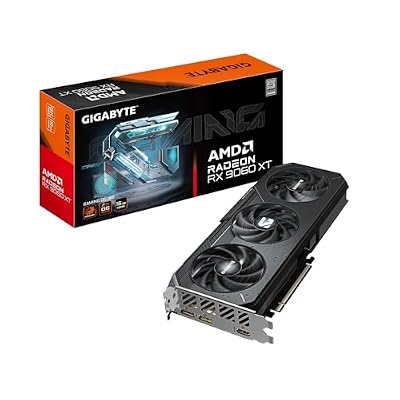
- Best Value: ASUS Dual Radeon RX 9060 XT 16GB GDDR6 Gaming Graphics Card
- Premium Choice: ASRock Radeon RX 9060 XT Steel Legend 16GB GDDR6 OC Graphics Card | 3275 MHz Boost | Triple Fan | 0dB Cooling | Metal Backplate | PCIe 5.0 | DisplayPort 2.1a, HDMI 2.1b
AMD Radeon RX 9060 XT 16GB vs RTX 5060 Ti is the definitive 16GB mid-range showdown, pitting AMD’s value-driven RDNA 4 card against Nvidia’s feature-rich Blackwell contender — both with the same generous memory. You are here to skip the long video and get the numbers: specs side by side, real 1440p frame rates, upscaling tech, and where pricing is heading, so you can buy smart. This comparison delivers all of that, then names the winner for your budget, your resolution, and how much you value features versus value.

Prime
Editor's Pick
ASUS Dual Radeon RX 9060 XT 16GB GDDR6 Graphics Card, AMD, for Desktop (PCIe 5.0, HDMI 2.1b, DisplayPort 2.1a, 2.5-Slot, Axial-tech Fan, 0dB Technology, and More)

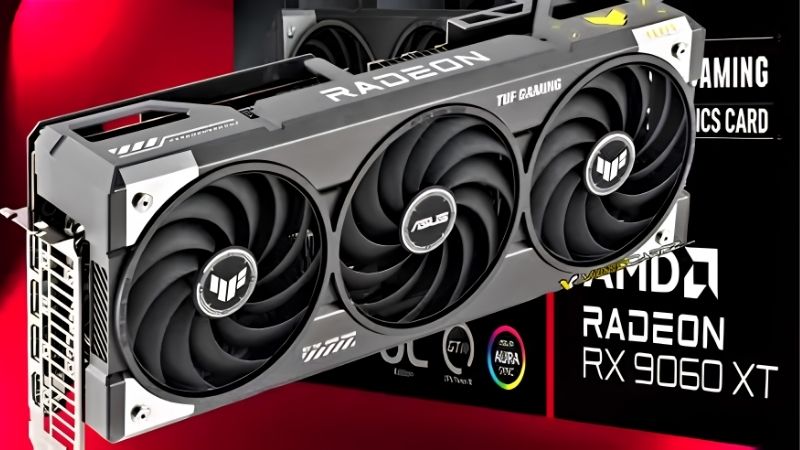
RX 9060 XT 16GB vs RTX 5060 Ti — Quick Verdict and Specs
Most buyers cross-shopping these two want the answer first, so here it is: with both offering 16GB, the decision comes down to priorities — the RTX 5060 Ti wins on ray tracing and DLSS 4, while the RX 9060 XT 16GB usually wins on rasterization value and often a lower price. This section backs that with the full spec table and the architectural context.
As an Amazon Associate we earn from qualifying purchases at no extra cost to you.




The Quick Verdict for Busy Buyers
Buy the RTX 5060 Ti if you want the best upscaling with DLSS 4 multi-frame generation, stronger ray tracing, and Nvidia’s software ecosystem. It is the feature leader of the pair.
Buy the AMD RX 9060 XT 16GB if you want the best rasterization performance per dollar, often at a lower price, and you do not prioritize heavy ray tracing. It is the value champion.
Because both carry 16GB, VRAM is a tie and cannot break the decision. The AMD Radeon RX 9060 XT 16GB vs RTX 5060 Ti choice truly comes down to features versus value, and your answer sets the winner.
This is actually a refreshing matchup precisely because the memory question is settled. With VRAM off the table, you can focus cleanly on what you value more: the RTX 5060 Ti’s superior upscaling and ray tracing, or the RX 9060 XT’s stronger price-to-performance in traditional rasterization.
Head-to-Head Specs Comparison Table
The table below lays out the specs that drive this closely matched decision.
| Spec | RX 9060 XT (16GB) | RTX 5060 Ti (16GB) |
|---|---|---|
| Architecture | RDNA 4 (Navi 44) | Blackwell |
| Memory | 16GB GDDR6 | 16GB GDDR7 |
| Memory bus | 128-bit | 128-bit |
| Bandwidth | ~320 GB/s | ~448 GB/s |
| Board power | ~182W | 180W |
| Upscaling | FSR 4 (AI) | DLSS 4 + Multi-Frame Gen |
| Ray tracing | Improved (RDNA 4) | Stronger (Blackwell) |
| Interface | PCIe 5.0 | PCIe 5.0 |
| Typical price | ~$349 MSRP | ~$429 MSRP |
The specs are close, with two key differences. Both share a 128-bit bus and 16GB, but the RTX 5060 Ti’s GDDR7 gives it more bandwidth, while the RX 9060 XT counters with a lower price. Feature strength versus price is the story.
If the spec sheet already tilts you one way, it is worth checking each card’s live listing before pricing shifts again.
RDNA 4 vs Blackwell — What the Architecture Means
The RX 9060 XT uses RDNA 4, AMD’s newest architecture, which sharply improves ray-tracing efficiency over prior generations and introduces FSR 4 AI upscaling. It closes much of the historical feature gap with Nvidia while keeping AMD’s aggressive pricing.
The RTX 5060 Ti runs on Blackwell, bringing DLSS 4 multi-frame generation, stronger ray-tracing cores, and Nvidia’s mature software stack. It is the more feature-complete architecture, especially for ray tracing and upscaling quality.
For buyers, both are current-generation designs with years of driver support ahead. This is a features-versus-value contest between two modern architectures, not an old-versus-new mismatch, which makes the price and your priorities decisive.
Deep Dive Face-Off — Performance, Upscaling, and Compatibility
Specs set expectations; frame rates and real-world fit decide satisfaction. This section compares the two on the criteria that shape daily gaming: performance across resolutions, upscaling and ray tracing, and how each card fits your build.
1080p and 1440p Gaming Performance
At 1080p, the two cards trade blows, landing within a handful of frames of each other in most modern titles. The RX 9060 XT often edges ahead in pure rasterization, while the RTX 5060 Ti pulls even or ahead once DLSS is enabled.
At 1440p, where both are capable performers thanks to their 16GB buffers, the picture stays close. Each typically lands in a similar high frame-rate band depending on the game, with neither running into VRAM limits at this resolution.
The practical conclusion is that raw rasterization performance is close enough that features and price should decide. Neither card leaves the other far behind in traditional gaming at the resolutions they target.
For competitive players chasing the highest frame rates in specific esports titles, it is worth checking benchmarks for that exact game, since driver maturity and engine quirks can tip the balance either way. The averages tell the general story, but individual titles can favor one card.
FSR 4 vs DLSS 4 and Ray Tracing
Upscaling is decisive, and here the RTX 5060 Ti has the clearer advantage. DLSS 4 with multi-frame generation can substantially boost frame rates in supported games and remains the industry benchmark for image quality. This is the strongest experimental argument for the Nvidia card, and Nvidia keeps refining it through driver updates.
The RX 9060 XT answers with FSR 4, a major leap over older FSR versions and increasingly competitive, though DLSS 4 still leads on adoption and polish across the game library.
In ray tracing the RTX 5060 Ti holds an edge thanks to Blackwell’s stronger RT cores. For value buyers who rarely enable ray tracing, this matters little; for those who prioritize ray-traced visuals and the best upscaling, it is a real reason to choose the Nvidia card.
Power, Card Size, and PC Compatibility
The practical build details matter before you order. Both cards are efficient and closely matched on power — the RX 9060 XT near 182W and the RTX 5060 Ti at 180W — so a quality 550W power supply comfortably handles either. Neither demands an expensive PSU upgrade.
Both are widely available as compact dual-fan models that suit standard ATX and many mini-ITX builds, but always confirm your case’s maximum GPU length and check your PCIe power connectors before buying.
Both use a PCIe 5.0 interface yet run fine on PCIe 4.0 boards, so neither forces a platform upgrade. That keeps the real cost limited to the card itself for most upgraders, making either an easy drop-in choice.
Their nearly identical power and size profiles also make them equally suited to compact builds. Whichever you choose, a small-form-factor system can accommodate it without the clearance and wattage headaches that come with higher-tier cards.
Price, Timing, and the Final Recommendation
Performance is half the decision; price and timing are the other half, and the current market context genuinely rewards buying deliberately. This section covers the pricing climate, the honest pros and cons, and a clear who-buys-what verdict, plus an alternative pick.
Is Now the Right Time to Buy?
Pricing context matters because both cards are exposed to a strained component market. Component and laptop prices have been trending upward, with memory a major driver, and that pressure feeds straight into street prices. In practice, the RX 9060 XT often sits near its $349 MSRP while the RTX 5060 Ti hovers around $429, though both can drift higher depending on stock and model.
The positive news is real but weak and distant. Prices have stopped climbing as steeply as they did in late 2025, and the market has entered a period of relative stability, though analysts still warn of ongoing volatility. “Stable” here means plateaued, not falling — the sharp increases paused, but a broad price cut has not started.
New supply is opening the long-term relief valve: OEMs can source DDR5 from Chinese suppliers such as CXMT, and Micron is building two plants in Idaho. The catch is timing — those fabs are not expected online until 2027–2028. For a buyer today, the conclusion is blunt: meaningful relief is years away, so waiting for a dramatic 2026 discount is a weak plan. Buying a well-matched card during a stable window beats gambling on a drop the supply data says will not arrive soon. It is worth locking in a fair current price before the next swing.
Pros and Cons of the RX 9060 XT 16GB and RTX 5060 Ti
RX 9060 XT 16GB strengths: excellent rasterization value, frequently lower price, 16GB VRAM, strong efficiency, and modern FSR 4 support. Its trade-offs: weaker ray tracing, slower GDDR6 with lower bandwidth, and an upscaler still catching DLSS on polish.
RTX 5060 Ti strengths: DLSS 4 multi-frame generation, superior ray tracing, faster GDDR7 bandwidth, 16GB VRAM, and Nvidia’s mature ecosystem. Its trade-offs: a higher price than the AMD card and a reliance on DLSS support to fully justify that premium.
The pattern is clean: the RX 9060 XT competes on value, the RTX 5060 Ti on features. Whichever trade-off you can live with should decide your pick.
The Alternative Pick and Final Verdict — Who Buys What
If both feel like a stretch, the 8GB versions of either card cut the price for strictly 1080p players, though the 16GB models are the smarter long-term buy given rising VRAM demands. For a step up, the RTX 5070 offers more performance if your budget can flex.
For the final call: buy the RTX 5060 Ti if you want the best ray tracing and DLSS 4 and the modest premium fits. Buy the AMD RX 9060 XT 16GB if value and rasterization-per-dollar are your priorities and you find it at the lower price.
A final practical filter can break a tie: buy whichever well-cooled model offers the better price when you are ready. Because these cards are so evenly matched, a fairly priced unit of either is a smarter purchase than waiting for the theoretically best card at an inflated price.
For most mid-range buyers in 2026, the RX 9060 XT 16GB is the value recommendation and the RTX 5060 Ti is the features recommendation — both are excellent 16GB cards, and your priorities plus the live price decide the winner. Ready to choose? Compare today’s prices on both and grab the card that fits your build.
See More:
- 3060 Ti vs 9060 XT
- Nvidia Shield TV Pro
- RTX 5070 vs RX 9060 XT
- RTX 3090 24GB
- Nvidia price prediction
Conclusion
The AMD Radeon RX 9060 XT 16GB vs RTX 5060 Ti decision comes down to features versus value, since both share the same 16GB of VRAM and closely matched rasterization. The RTX 5060 Ti wins on DLSS 4 and ray tracing, making it the pick for players who want the best upscaling and ray-traced visuals. The RX 9060 XT 16GB wins on rasterization-per-dollar and often a lower price, making it the smart value buy for traditional gaming. With pricing stable but real relief years away, buying a well-matched card now is the rational move. Check the current listings and secure the 16GB GPU that fits your budget and priorities today.
Frequently Asked Questions
Which is faster in raster and ray tracing?
In traditional rasterised games the two trade blows, with results swinging by title and driver version, so treat them as roughly equal at 1440p. Once heavy ray tracing is enabled the RTX 5060 Ti pulls ahead, since NVIDIA fourth generation RT cores still handle complex bounce lighting and path tracing more efficiently than RDNA 4.
They both have 16GB, so what is the memory difference?
Capacity is identical but the memory technology is not. The RX 9060 XT uses GDDR6 on a 128-bit bus for roughly 322GB per second, while the RTX 5060 Ti uses faster GDDR7 on the same width for about 448GB per second. That bandwidth advantage helps NVIDIA in texture-heavy and ray traced scenes.
What power supply and connectors do they use?
Both are efficient mid-range cards. The RX 9060 XT sits around 150W to 180W depending on partner tuning, and the RTX 5060 Ti near 180W, with each using a single conventional eight-pin PCIe connector on most designs. A good 550W to 600W supply covers either, which makes both easy upgrades for older prebuilt systems.
How do the upscaling ecosystems compare?
FSR 4 delivers much improved image quality on RDNA 4 hardware and AMD frame generation works broadly, including through driver-level injection in many titles. DLSS remains supported in more games and adds multi frame generation on Blackwell. Check whether the specific titles you play the most implement FSR 4 before assuming parity.
Which is better for creative and productivity work?
The RTX 5060 Ti has the clear edge because CUDA and OptiX acceleration are the default paths in Blender, DaVinci Resolve, Adobe applications and most local AI tooling. AMD support has improved through ROCm and HIP but remains less turnkey on Windows. Gamers can ignore this; creators generally should not.


Write Your Review
No reviews yet. Be the first to share your experience!