
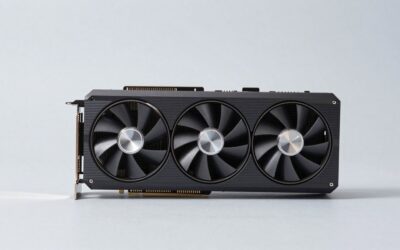
- Top Pick: GIGABYTE Radeon RX 9070 XT Gaming OC 16G Graphics Card, PCIe 5.0, 16GB GDDR6, GV-R9070XTGAMING OC-16GD Video Card
- Best Value: GIGABYTE Radeon™ RX 9070 XT Gaming OC ICE 16G Graphics Card (16GB GDDR6, 256-bit, PCIe 5.0, HDMI/DP 2.1, 2.7 Slot, Hawk Fan, Server-Grade Thermal Gel, Reinforced Structure)
- Premium Choice: ASUS Prime Radeon RX 9070 XT 16GB GDDR6 OC Edition Gaming Graphics Card


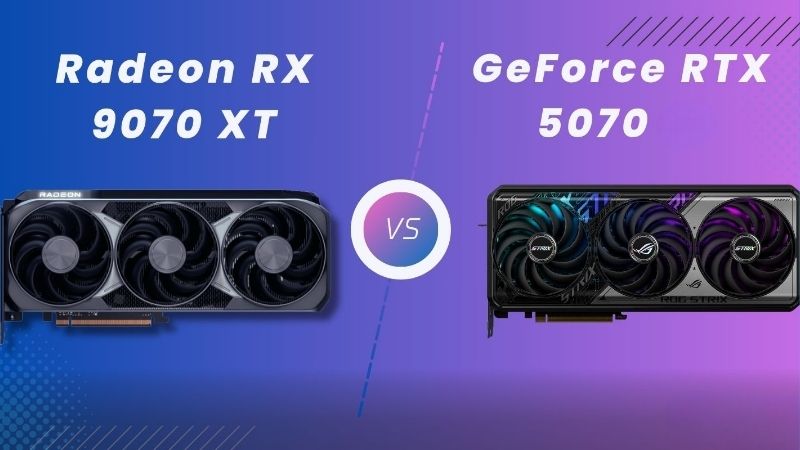
AMD Radeon RX 9070 XT 16GB vs 5070 is a comparison where the decisive factor turned out to be a decision AMD was criticised for. The RX 9070 XT ships with GDDR6 — last-generation memory, slower than the GDDR7 in every RTX 50 card, and widely called a cost-cutting compromise at launch. In 2026, with GDDR7 supply strangling Nvidia’s 16GB lineup to the point that board partners are declaring cards end of life, that compromise looks rather different. This breaks down both cards on the specs, the performance, and the market that actually exists.
The Quick Verdict
The RX 9070 XT wins on rasterization by roughly 7–20% depending on title, carries 4GB more VRAM, and costs $50 more at MSRP. The RTX 5070 wins on ray tracing by a wide margin, draws 54W less, and has DLSS 4.5 — still the better upscaler than FSR 4, though the gap has narrowed.
As an Amazon Associate we earn from qualifying purchases at no extra cost to you.


Who Should Buy Which
Buy the RX 9070 XT if you play mostly rasterized games at 1440p, want 16GB for longevity or local AI, and ray tracing is not central to how you play.
Buy the RTX 5070 if ray tracing matters, if your PSU headroom is tight, or if you want the strongest upscaling and the DLSS 5 neural rendering arriving this autumn.
The Factor That Decides It in 2026
AMD uses GDDR6. Nvidia uses GDDR7. GDDR7 is in short supply, and Nvidia’s 16GB cards have been the casualties — the RTX 5070 Ti and RTX 5060 Ti 16GB were both reported end of life at CES 2026. The RX 9070 XT’s 16GB sits on memory nobody is fighting over. That is not a spec advantage. It is an availability advantage, and this year it may matter more.
Comparison Table
These cards were built on opposite philosophies: AMD went wide and slow on memory, Nvidia went narrow and fast. The table shows how completely that diverges.
| Spec | RX 9070 XT | RTX 5070 | Advantage |
|---|---|---|---|
| Architecture | RDNA 4 | Blackwell | — |
| Process | TSMC 4nm N4P | TSMC 4N | — |
| Shaders | 4,096 (64 CUs) | 6,144 CUDA | Not comparable |
| RT cores | 64 (2nd gen) | 48 (4th gen) | Nvidia on quality |
| AI accelerators | 128 | 192 Tensor | Nvidia |
| Boost clock | 2,970 MHz | 2,512 MHz | AMD |
| VRAM | 16GB GDDR6 | 12GB GDDR7 | AMD on capacity |
| Memory speed | 20 Gbps | 28 Gbps | Nvidia |
| Bus | 256-bit | 192-bit | AMD |
| Bandwidth | ~640 GB/s | 672 GB/s | Nvidia, narrowly |
| TBP | 304W | 250W | Nvidia |
| Real gaming draw | ~351W | ~250W | Nvidia |
| Power connector | 2x 8-pin | 1x 16-pin | — |
| PSU recommended | 850W | 650W | Nvidia |
| Upscaling | FSR 4 | DLSS 4.5 + MFG | Nvidia |
| MSRP | $599 | $549 | Nvidia |
The Bandwidth Result Nobody Expects
Read the bandwidth row carefully, because it inverts the intuition. AMD has a 256-bit bus against Nvidia’s 192-bit — 33% wider. AMD should win comfortably.
It does not. Nvidia’s GDDR7 runs 28 Gbps against AMD’s GDDR6 at 20 Gbps, and the faster memory on the narrower road produces 672 GB/s against roughly 640. Nvidia wins bandwidth despite a bus two-thirds the width.
What AMD gets from the wider bus is capacity: 256-bit accommodates 16GB where 192-bit gives 12GB. AMD traded speed for size. Whether that was right depends entirely on your resolution — and, this year, on what you can buy.
Deep Dive Face-Off
Four criteria, ordered from where the cards are closest to where they are furthest apart.
Rasterization: AMD Wins, Consistently
In traditional rasterized games the RX 9070 XT leads the RTX 5070 by roughly 7–17% across most titles, with some testing showing closer to 20% at common resolutions. Independent benchmarking found the 9070 XT ahead by 24% in Dragon’s Dogma 2 at 4K, running 70 FPS against 56.
To place it: the RX 9070 XT trades with the RTX 5070 Ti — a card one tier up and $150 more expensive at MSRP. At 4K rasterized, the two land within roughly 6% of each other in either direction depending on the game. At 1440p the 9070 XT has come within 3% of the 5070 Ti.
That means this comparison is somewhat mismatched by design. AMD priced a card that competes with the 5070 Ti against the 5070’s price bracket. If rasterization is what you buy a GPU for, that is the whole argument.
Ray Tracing: Nvidia Wins, Also Consistently
RDNA 4 improved ray tracing by roughly 50% over RDNA 3, which is a substantial generational gain and still leaves AMD trailing Nvidia by 20–30% in ray-traced scenarios.
The reason is architectural rather than a matter of effort. Nvidia is on fourth-generation RT cores; AMD is on second. The 9070 XT’s 64 RT cores against the 5070’s 48 does not close that, because the units are not equivalent.
With FSR 4 enabled, ray-traced games become playable at 4K on the 9070 XT — roughly 50–60 FPS in most titles. It is not that AMD cannot do RT. It is that Nvidia does it better at the same price, and if path tracing is what you want, the comparison ends here.
Power: The Gap Is Larger Than the Spec Sheet
This is where AMD’s card gets expensive in ways the price tag hides. The 9070 XT is rated at 304W. Measured gaming draw runs around 351W — roughly 15% above the rating. Power spikes reach 417W, with rare transients to 600W lasting milliseconds.
The RTX 5070 draws about 250W and stays near it. That is a 100W gap in practice, not the 54W the specs suggest.
Practically: the 5070 runs on a quality 650W supply. The 9070 XT wants 850W to handle those transients without the machine shutting down under load. If your PSU is 650W, AMD’s $50 premium becomes $150–$200. That reverses the value argument for a lot of builds, and it is the single most overlooked line in this comparison.
Features: DLSS Still Leads, and the Gap Is About to Widen
FSR 4 is a genuine improvement over its predecessors and works across a wider hardware range. It still does not match DLSS 4.5 on image quality or performance uplift in titles supporting both. Nvidia’s own figure for DLSS 4.5 is that it now draws 23 of every 24 pixels on screen.
Multi Frame Generation has no direct FSR equivalent at the same maturity, and MFG 6x extended it further in 2026.
The forward-looking piece favours Nvidia more heavily. DLSS 5 arrives this autumn with real-time neural rendering — a different category from upscaling, adding photoreal lighting and materials rather than more frames. Nvidia has not confirmed hardware requirements, but the GTC demos ran on RTX 5090s and RTX 50 is the expectation. AMD has no announced answer.
The Alternative
Neither card may be the right answer, and two others deserve a look before you commit.
The RX 9070 Non-XT: Efficiency for $50 Less
The plain RX 9070 runs 56 CUs against the XT’s 64, same 16GB of GDDR6 on the same 256-bit bus, at $549 MSRP. It performs roughly 9–12% below the XT — which is almost exactly the MSRP difference.
The interesting part is power. Measured draw is around 224W against the XT’s 310W. That is 86W less for 9–12% less performance, and it makes the non-XT one of the most efficient cards on the market. For a build with a 650W supply, it is arguably the smarter AMD buy.
The RTX 5070 Ti: If You Can Find One
At $749 MSRP it beats both cards here. The catch is availability: ASUS told Hardware Unboxed at CES 2026 that Nvidia had stopped supplying the die and placed the model into end-of-life status. Nvidia disputes this. Prices have moved from roughly $730 in November to $979–$1,049 as of July 2026 regardless.
At $1,000 it is no longer competing with these cards. It is competing with the RTX 5080. Worth a look only if you find one near list.
Keeping What You Have
Worth saying plainly. If you own an RTX 3080, RX 6800 XT, or better and play at 1440p, neither card here is a transformative upgrade. Dropping settings from Ultra to High costs less than $600 and is frequently indistinguishable in motion.
The exception is VRAM. A 10GB RTX 3080 is genuinely constrained at 1440p Ultra in recent titles, and that is not something settings tuning fixes cleanly. If that describes your experience, the 16GB on the 9070 XT is the specific thing you are buying.
What the 2026 Market Does to This Comparison
Everything above assumes both cards are on shelves at list. One of those assumptions is holding better than the other, and it is not the one you would expect.
The GDDR6 Decision That Aged Into an Advantage
AMD was criticised at launch for using GDDR6 rather than moving to GDDR7 — slower memory, less bandwidth, a visible cost decision. That criticism was technically correct and has aged badly.
Component pricing has continued trending upward, with memory the dominant pressure, and GDDR7 has been the tightest link. Nvidia’s 16GB cards consume twice the modules of their 8GB siblings, and the results are on the record: the RTX 5070 Ti and RTX 5060 Ti 16GB were both reported end of life at CES 2026, with Nvidia’s allocation shifting toward 8GB parts. Nvidia disputes the EOL characterisation; the prices do not.
The RX 9070 XT’s 16GB sits on GDDR6 — older, slower, and not the component everyone is fighting over. As of July 2026, AIB models have listed around $729–$769 against a $599 MSRP, which is above list but has not seen the overnight jumps Nvidia’s 16GB cards have.
Why Relief Is Not Coming Soon
The positive news is real but weak. The steep climb through late 2025 has flattened, and Framework has reported a stretch of relative stability while still warning of volatility. New supply is opening — OEMs can source DDR5 from Chinese suppliers such as CXMT, and Micron is building two Idaho fabs — but those plants do not produce until 2027–2028.
Nvidia’s SUPER refresh depends on 3GB GDDR7 modules and has slipped repeatedly, from early 2026 toward Q3 2026 and, in other reports, 2027. Waiting for it means waiting on the component in shortest supply.
See More:
- Nvidia beta
- Nvidia CUDA 11.8
- Check CUDA version
- Nvidia GPU for gaming
- PNY GeForce RTX 5080 16GB OC review
Final Verdict and Recommendation
The AMD Radeon RX 9070 XT 16GB vs 5070 comparison splits cleanly on how you play. The 9070 XT wins rasterization by 7–20% and trades with a card one tier above it, carries 4GB more VRAM, and — the part that matters this year — runs GDDR6 that kept it out of the shortage strangling Nvidia’s 16GB lineup. The RTX 5070 wins ray tracing by 20–30%, draws 100W less in practice, needs a 650W rather than an 850W supply, and has the stronger upscaler with DLSS 5 arriving this autumn.
Buy the RX 9070 XT if you play rasterized games at 1440p, want 16GB for longevity or local AI, and have an 850W supply already. Buy the RTX 5070 if ray tracing matters, if your PSU is 650W and you are not replacing it, or if DLSS and the neural rendering roadmap are worth the raster deficit. Look at the RX 9070 non-XT if efficiency appeals — 224W measured for 9–12% less performance is the best power curve in this bracket.
Run the PSU numbers before the price numbers. That 351W measured draw against a 304W rating is the trap in this comparison, and it turns AMD’s $50 premium into $200 for anyone who has to buy a power supply alongside it. Check current listings on both — the gap between MSRP and street differs sharply between these two cards, and this is a year where that difference decides more than the benchmarks do.
Frequently Asked Questions
Why does the memory configuration favour the 9070 XT?
The RX 9070 XT carries 16GB of GDDR6 on a 256-bit bus, while the RTX 5070 carries 12GB of GDDR7 on a 192-bit bus. GDDR7 is faster per pin, but the AMD card wins on capacity, and at 1440p and 4K with ultra textures capacity is the constraint that produces frame time spikes rather than raw bandwidth.
Which is faster in games?
In rasterised titles the 9070 XT is generally ahead, often by ten to twenty percent at 1440p. In heavy ray traced workloads the gap narrows considerably and can reverse, because Nvidia retains an advantage in ray tracing throughput and in the maturity of its denoising and ray reconstruction path.
How do FSR 4 and DLSS 4 compare?
FSR 4 on RDNA 4 is a machine learning upscaler and closes much of the historic image quality gap with DLSS. DLSS still holds an edge in the breadth of game support and in multi frame generation. If your favourite games have DLSS but not FSR 4, that support gap is a legitimate reason to choose Nvidia.
What are the power and PSU differences?
The 9070 XT is rated around 304W and the RTX 5070 around 250W. AMD recommends roughly 750W for its card and Nvidia around 650W for the 5070. The 5070 uses a 12V-2×6 connector while most 9070 XT designs use conventional 8-pin connectors, which matters if you are keeping an older power supply.
Which should I buy for 1440p high refresh?
For pure rasterised frame rate and headroom in memory heavy titles, the 9070 XT is the stronger card and its 16GB will age better. Choose the 5070 if you specifically want DLSS coverage, frame generation in the widest range of titles, better ray tracing, or lower power draw in a compact build.
Ready to decide? Our #1 pick for 2026 is the Architecture.
Live price & availability on Amazon.




Write Your Review
No reviews yet. Be the first to share your experience!