
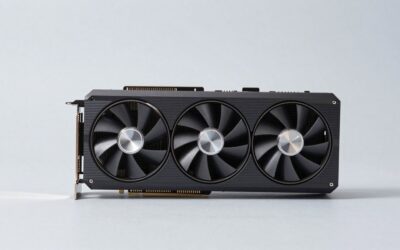
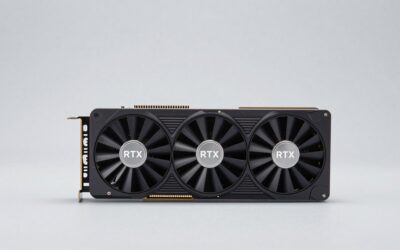
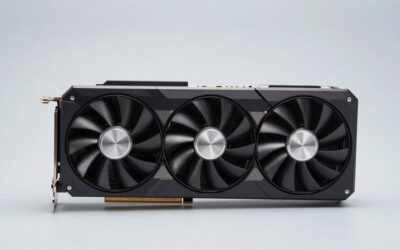
- Top Pick: GIGABYTE Radeon™ RX 9070 XT Gaming OC ICE 16G Graphics Card (16GB GDDR6, 256-bit, PCIe 5.0, HDMI/DP 2.1, 2.7 Slot, Hawk Fan, Server-Grade Thermal Gel, Reinforced Structure)
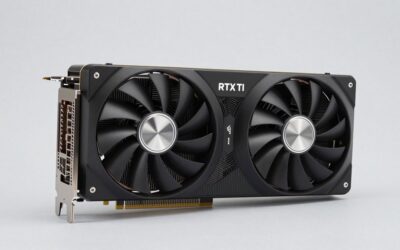
- Best Value: Sapphire 11348-03-20G Pulse AMD Radeon™ RX 9070 XT Gaming Graphics Card with 16GB GDDR6, AMD RDNA 4
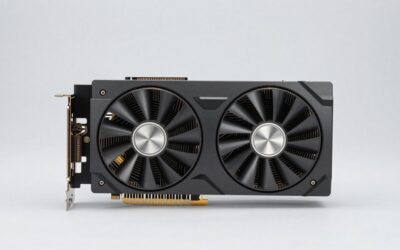
- Premium Choice: GIGABYTE Radeon RX 9070 XT Gaming OC 16G Graphics Card, PCIe 5.0, 16GB GDDR6, GV-R9070XTGAMING OC-16GD Video Card


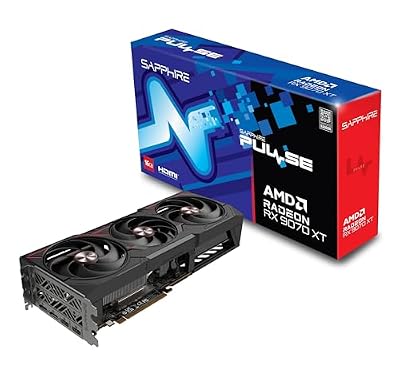
Best Seller
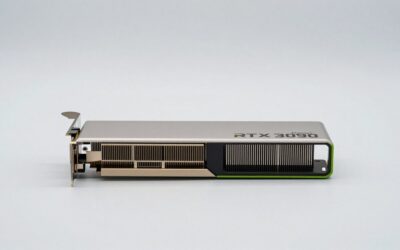
Sapphire 11348-03-20G Pulse AMD Radeon™ RX 9070 XT Gaming Graphics Card with 16GB GDDR6, AMD RDNA 4

amd radeon rx 9070 xt vs 5090 is rarely a real cross-shop. Almost nobody is genuinely undecided between a $650 card and a $2,000 one. What people are actually doing is running a justification check: if I skip the halo card and save roughly $1,200, what percentage of performance am I giving up, and will I feel it? That is a question with a number attached, so this comparison gives you the number — at 1440p, at 4K, and under path tracing, where the answer changes completely.
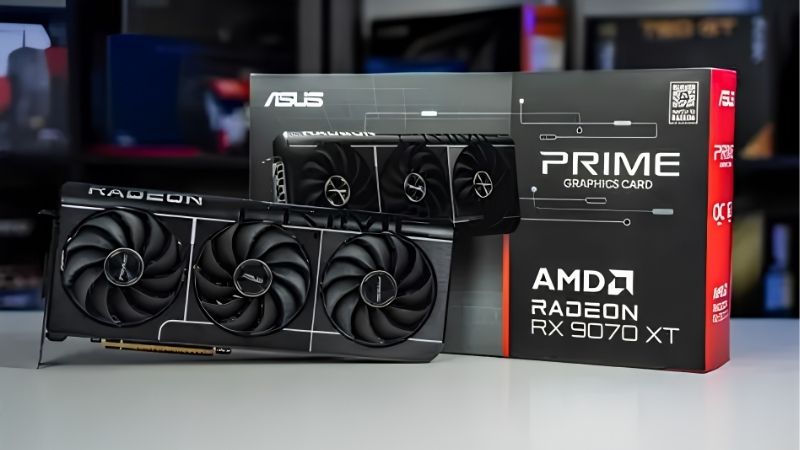
The Quick Verdict on AMD Radeon RX 9070 XT vs 5090
Here is the honest arithmetic up front. The RTX 5090 is roughly 60% to 75% faster at 4K raster and can be more than twice as fast under path tracing. It also costs roughly 200% more. Performance per dollar is not close — the 9070 XT wins that metric by a wide margin, and it is not really contested. The 5090 is not sold on value and never was.
As an Amazon Associate we earn from qualifying purchases at no extra cost to you.



Who Should Buy the RX 9070 XT
Buy the 9070 XT if you game at 1440p, if your total build budget is under roughly $2,000, or if the GPU is for gaming and nothing else. At 1440p the 5090 spends most of its advantage on frames beyond what your monitor refreshes, which means you would be paying $1,200 for headroom you never see.
It is also the correct answer if you are upgrading rather than building fresh. A 9070 XT drops into an existing 750W system with standard 8-pin cables and no further spending. A 5090 does not — more on that below, because the hidden cost is larger than people expect.
Who Should Buy the RTX 5090
The 5090 justifies itself in three scenarios and no others. First: 4K at 120 Hz or above with ray tracing on, where you genuinely need every frame. Second: professional work — Blender, DaVinci Resolve, 3D rendering — where render time is billable and CUDA plus 32 GB of VRAM converts directly into money. Third: local AI workloads, where 32 GB of GDDR7 lets you run models that simply will not fit in 16 GB.
That third case is worth dwelling on, because it is why 5090s keep vanishing from shelves. The card is not competing only against other gaming GPUs. It is competing against demand from people who do not care about frame rates at all.
If you are a gamer at 1440p, none of these three apply to you. That is not a criticism of the card. It is a description of who it is for.
AMD Radeon RX 9070 XT vs 5090 Spec Comparison Table
This is the widest spec gap in any comparison on this site. Read the shader count and the power rows together — they explain both the performance and the problem.
| Specification | Radeon RX 9070 XT | GeForce RTX 5090 |
|---|---|---|
| Architecture | RDNA 4 | Blackwell |
| Shader Units | 4,096 SPs (64 CUs) | 21,760 CUDA cores (170 SMs) |
| RT Hardware | 64 Ray Accelerators | 170 RT Cores (4th gen) |
| AI Cores | 128 AI Accelerators | 680 Tensor Cores (5th gen) |
| VRAM | 16 GB GDDR6 | 32 GB GDDR7 |
| Memory Bus | 256-bit | 512-bit |
| Bandwidth | ~645 GB/s | ~1,792 GB/s |
| Board Power | ~304W | ~575W |
| Power Connector | 2-3x 8-pin | 1x 16-pin (12V-2×6) |
| Recommended PSU | 750W | 1000-1200W |
| Typical Length | 280-330 mm | 320-360 mm, 3-4 slots |
| Upscaling | FSR 4 | DLSS 4 + Multi Frame Gen |
| Launch MSRP | $599 | $1,999 |
The 5090 has 5.3x the shader count and 2.8x the bandwidth, yet delivers roughly 1.7x the frame rate. That is not a defect — it is diminishing returns, and it is the single most important fact in this entire comparison.
Deep Dive Face-Off: Exactly What You Give Up
You asked what percentage you lose. Aggregated across published benchmark suites, here is the answer, broken down by the only three variables that change it: resolution, ray tracing load, and whether the work is a game at all.
The Percentage Gap at 1440p and 4K
At 1440p with ray tracing off, the 5090 leads by roughly 45% to 55%. That sounds enormous until you look at absolute numbers: the 9070 XT is already producing 110 to 160 fps in most modern titles at high settings. The 5090 pushes that to 170 to 240. If you run a 144 Hz or 165 Hz panel, a large share of that lead is discarded frames.
At 4K raster the gap opens to roughly 60% to 75%. Here it is real and visible. The 9070 XT lands at 60 to 90 fps in demanding titles; the 5090 reaches 100 to 150. If you own a 4K 144 Hz display, this is the difference between using it and merely owning it.
So the answer to your justification check depends entirely on your monitor. At 1440p you save $1,200 and lose frames you cannot perceive. At 4K high-refresh you save $1,200 and lose frames you absolutely can. Check what panel is on your desk before you check any more benchmarks.
Path Tracing: Where the Gap Stops Being a Percentage
Under path tracing the comparison breaks down into a category difference. In Cyberpunk 2077 with full path tracing at 4K, the 5090 with DLSS 4 and Multi Frame Generation produces a playable, high-refresh experience. The 9070 XT does not produce a playable experience at those settings at all.
Multi Frame Generation is the multiplier. Blackwell can generate up to three additional frames per rendered frame using a hardware flip metering unit and a transformer-based optical flow model. RDNA 4 has no equivalent. This is not a 70% gap — it is a feature you have or you do not.
The counter-argument is equally honest: a handful of titles support full path tracing, and plenty of people find generated frames add perceptible latency. If path tracing in four games is not your reason for spending $1,200, then this section is a spec sheet curiosity rather than a purchase driver.
Practical Reality: The Hidden Cost of the 5090
The sticker price is not the price. The 5090 draws roughly 575W board power with transient spikes considerably higher. A 1000W PSU is the floor and 1200W is the sensible spec if you pair it with a high-end CPU. If your current unit is 750W or 850W, add $150 to $250 to the 5090 column right now.
Then there is heat. Dumping 575W into your case raises ambient temperature enough to affect CPU and NVMe thermals. Cases with three intake fans and a mesh front are not optional here; a sealed tempered-glass front panel will throttle the whole system. That is another line item.
And clearance. Most 5090 partner cards are 320 to 360 mm and three to four slots, with the 12V-2×6 connector needing 30 to 40 mm of bend radius above it. Measure your case interior, not the marketing spec. The real gap in this comparison is closer to $1,400 than $1,200 once the PSU and airflow are counted.
Pros, Cons and the Card That Beats Both
With the numbers established, here is the plain ledger — and then the option that most people asking this question should actually buy instead.
RX 9070 XT: Pros and Cons
Pros: Roughly one third the price for roughly 60% of the 4K performance — the best value ratio in this pairing by a distance. Standard 8-pin power, works with existing 750W units. 304W board power keeps case temperatures manageable. 16 GB VRAM is sufficient for 1440p and adequate at 4K. FSR 4 is close to DLSS at Quality preset. Actually purchasable at something near retail.
Cons: Path tracing is off the table. No Multi Frame Generation. 16 GB caps local AI work and heavy 3D scenes. No CUDA. Not a 4K 144 Hz card in demanding titles without heavy upscaling.
RTX 5090: Pros and Cons
Pros: Fastest consumer GPU available, decisively. 32 GB of GDDR7 on a 512-bit bus at ~1,792 GB/s — this is the spec that matters for AI and 3D. Full DLSS 4 stack with Multi Frame Generation. CUDA plus 32 GB makes local LLM and Stable Diffusion work practical. Ninth-generation NVENC with dual AV1. Strong resale.
Cons: The price, and it is routinely above MSRP. 575W demands a PSU upgrade for most people. Substantial heat output affects the whole system. 5.3x the shaders for 1.7x the frames is poor scaling. Chronic availability problems driven partly by buyers who are not gamers. Physically enormous.
The Alternative: RTX 5070 Ti or 5080
If this comparison has convinced you that the 9070 XT gives up too much but the 5090 is indefensible, you have identified the actual market. The RTX 5070 Ti carries 16 GB of GDDR7, the complete DLSS 4 stack including Multi Frame Generation, full NVENC, and a 300W board power that a 750W PSU handles — for roughly a third of a 5090.
Step up to the RTX 5080 if you want 4K with RT and can live with 16 GB. It lands roughly 30% behind the 5090 at half the price, needs 850W rather than 1200W, and fits in cases the 5090 will not.
For the large majority of people typing this comparison into a search bar, one of those two is the correct purchase. Worth checking current listings on both before you commit to either extreme.
Why 2026 Supply Should Change Your Decision
The 5090’s price is not set by what it costs to make. It is set by who else wants the silicon. Three developments explain the number on the listing you are looking at.
H200 Sales to China Reopen a Very Large Market
The United States has cleared Nvidia to sell the H200 — among its most capable AI accelerators — into China. Nvidia allocates finite TSMC wafer capacity and finite GDDR7 and HBM supply across its lines, and data centre margins dwarf GeForce margins by a wide multiple.
The 5090 is the consumer card most exposed to this. It uses the largest die, the most memory, and it competes for the same GDDR7 supply as professional parts. Every prior surge in data centre demand has tightened halo-tier consumer supply and pushed street prices above MSRP.
There is a second-order effect worth noting for the amd radeon rx 9070 xt vs 5090 decision. Some buyers were using 5090s for AI precisely because proper accelerators were unavailable to them. Legal H200 access could redirect some of that demand — but it could equally signal Nvidia to weight production further toward accelerators. The direction is genuinely uncertain; the volatility is not.
Component Prices Are Still Trending Up
The broader direction for laptops and PC components remains upward, and memory is the driver. AI infrastructure is absorbing DRAM and GDDR at a scale consumer hardware cannot outbid, and that cost lands in every board partner’s bill of materials.
This hits the 5090 hardest in absolute terms — 32 GB of GDDR7 on a 512-bit bus is the most memory-expensive consumer product Nvidia ships. It also hits the PSU you may need to buy alongside it, since power supplies are not immune to component inflation either.
Practical consequence: if you are leaning 5090 and you see one at or near MSRP, the case for waiting is weaker than it feels. Halo cards do not get cheaper in a tightening supply market.
The Good News Is Real, But Weak and Distant
Prices have at least stopped climbing at the rate they set through late 2025. Framework, which publishes unusually candid supply commentary, has reported a stretch of relative stability while still warning that volatility is not over. The spike flattened. It did not reverse.
A plateau is not a discount. Planning a build around a correction the supply picture does not support means paying roughly the same money later, from thinner stock.
Which sharpens the real question. It is not “will the 5090 get cheaper?” It is “at today’s price, does 60% to 75% more 4K performance justify roughly 200% more money for how I actually use a PC?” For most people the honest answer is no — and the 9070 XT or a 5070 Ti is waiting.
Final Verdict and Recommendation
The amd radeon rx 9070 xt vs 5090 justification check resolves against the 5090 for most people, and the reason is scaling. You are giving up roughly 45% to 55% at 1440p and 60% to 75% at 4K raster, and saving roughly $1,200 — closer to $1,400 once the PSU and case airflow the 5090 demands are counted. If you game at 1440p, that lost performance is largely frames your monitor discards. Buy the 9070 XT and put the difference into a better display, faster RAM, or an NVMe drive, where you will feel it every day.
Buy the 5090 only if one of three things is true: you own a 4K high-refresh panel and want ray tracing on, you bill for render time, or you need 32 GB of VRAM for local AI. In those cases it is not a luxury — it is a tool, and the maths works. Everyone else should look hard at the 5070 Ti or 5080, which deliver the full DLSS 4 stack without the 1200W PSU. With H200 demand pulling on the same supply and component prices flat-but-high rather than falling, waiting buys you nothing. Check current pricing on whichever card fits your monitor, confirm your PSU headroom and case clearance against the table above, and buy while it is in stock.
Frequently Asked Questions
How much faster is the RTX 5090 in real games?
Roughly twice as fast in rasterisation and substantially more in path-traced titles, where the gap can exceed two and a half times. The RTX 5090 also carries 32GB of GDDR7 on a 512-bit bus against 16GB of GDDR6 on 256-bit, which matters at 4K with maximum textures.
Is the price difference justified?
Only for specific users. If you drive a 4K high refresh display, use path tracing, or run large local AI models that need 32GB of VRAM, the RTX 5090 delivers something the Radeon simply cannot. For 1440p gaming the RX 9070 XT provides most of the experience for a fraction of the cost.
What power supply does each need?
The RX 9070 XT is around 304W and runs on a good 750W unit using two or three 8-pin connectors. The RTX 5090 is rated at 575W and needs a 1000 to 1200W ATX 3.1 supply with a native 12V-2×6 cable, seated fully to avoid connector overheating.
Will the RTX 5090 fit my case?
Check carefully. Partner RTX 5090 cards commonly exceed 340mm in length and three slots in thickness, and you need generous side clearance for the power cable bend radius. The RX 9070 XT is large too at roughly 300 to 340mm, but it is far easier to accommodate in a standard mid tower.
Which has better upscaling for 4K?
NVIDIA currently leads. DLSS 4 with the transformer model plus multi frame generation is available in more titles and handles 4K reconstruction extremely well. FSR 4 on RDNA 4 is a large improvement over previous versions and is genuinely competitive, but supported game coverage is still narrower.
Ready to decide? Our #1 pick for 2026 is the Architecture.
Live price & availability on Amazon.

Write Your Review
No reviews yet. Be the first to share your experience!