
- Top Pick: Skytech Gaming Archangel 5 Gaming PC, Intel i5 14400F 2.5GHz, NVIDIA RTX 5060, 1TB NVMe SSD, 16GB DDR5 RAM 6000, 750W Gold PSU, Wi-Fi, Win 11, Desktop
- Best Value: Skytech Gaming O11 Vision Gaming PC, AMD Ryzen 7 9850X3D 4.7GHz, NVIDIA RTX 5070 Ti 16GB VRAM, 2TB Gen4 NVMe SSD, 32GB DDR5 RAM 5600, 850W Gold ATX 3 PSU, 360 ARGB AIO, Wi-Fi 5, Windows 11, Desktop
- Premium Choice: WIWB Gaming PC Desktop Computer – Ryzen 7 4700LE, Radeon RX 6500XT 4GB
Best used GPU for 1080p gaming is the search that saves budget builders the most money, because the second-hand market is packed with cards that still crush 1080p for a fraction of their launch price. The trick is knowing which ones deliver smooth high frame rates and which are past their prime. This ranked guide gives you the quick picks, a clear comparison table, and honest reviews so you can buy the right card with confidence in 2026.
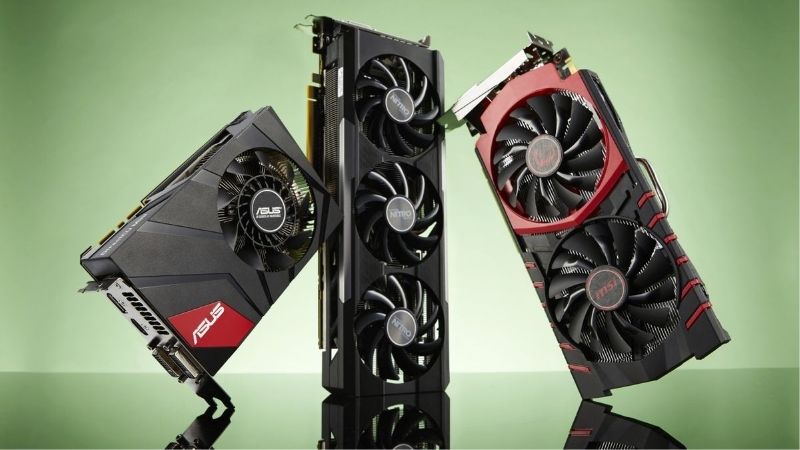
Quick Picks and the Best Value 1080p GPUs
If you are shopping right now and do not want a wall of text, this section front-loads the answers. Below you will find the fast recommendations for different budgets, an at-a-glance comparison, and the exact criteria used to rank every card. Skim the picks, scan the table, then dive deeper only on the card you are leaning toward.
As an Amazon Associate we earn from qualifying purchases at no extra cost to you.


Quick Picks for Busy Buyers
These are the shortcuts for the most common 1080p buyer types, from bargain builds to high-refresh setups.
- Best Overall: Radeon RX 6600 (~$150–$180 used) — the value benchmark for high-refresh 1080p.
- Best for High Refresh and Streaming: GeForce RTX 3060 12GB (~$200 used) — DLSS plus a strong encoder.
- Best Budget: GTX 1660 Super (~$120–$150 used) — smooth 1080p high settings for less.
- Best Rock-Bottom Pick: Radeon RX 580 8GB (~$90–$120 used) — the cheapest way into solid 1080p gaming.
At-a-Glance Comparison Table
Here is how the top contenders compare on the specs that decide your 1080p frame rates and longevity.
| GPU | VRAM | Best For | Approx. Used Price | Value Rating |
|---|---|---|---|---|
| Radeon RX 6600 | 8GB | High-refresh 1080p | ~$150–$180 | 9.5 / 10 |
| RTX 3060 12GB | 12GB | Streaming, DLSS, RT | ~$200 | 9.0 / 10 |
| GTX 1660 Super | 6GB | Budget 1080p high | ~$120–$150 | 8.5 / 10 |
| Radeon RX 580 8GB | 8GB | Bargain 1080p | ~$90–$120 | 8.0 / 10 |
| GTX 1650 | 4GB | Low-power entry | ~$100–$130 | 7.5 / 10 |
The pattern is clear: for comfortable 1080p in 2026, an 8GB card is the sweet spot, which is why the RX 6600 and RTX 3060 top the list while the older 6GB and 4GB cards trail as budget options.
How We Ranked the Best Used 1080p GPUs
These rankings are grounded in measurable factors rather than hype. Each card was scored on average 1080p frame rates in modern titles, VRAM capacity, power efficiency, feature support like DLSS and hardware encoding, and current used-market pricing.
We also weighted the real-world friction that reviews often skip: how easy the card is to source, how power-hungry it is, and how cleanly it drops into a budget system without a supply upgrade or airflow headaches.
Finally, availability and reliability mattered. A card that rarely appears used, or one with a reputation for failing fans, does not earn a spot here—every pick shows up regularly and carries a strong track record of owner satisfaction.
The Best Used GPU for 1080p: Detailed Reviews
Now the deep dive. Each pick below follows the same structure so you can compare like for like: what it excels at, where it falls short, and who it is genuinely for. These are the cards that consistently earn strong owner feedback for smooth 1080p gaming, with the common complaints noted honestly so there are no surprises.
Best Overall: Radeon RX 6600
The RX 6600 is the card most 1080p builders should target first. At around $150–$180 used, it runs the majority of modern games at 1080p high or ultra above 60 fps and pushes well past 100 fps in esports titles, making it ideal for a high-refresh monitor.
Its 132W power draw means it drops into a modest 400W system without a supply upgrade, and owners consistently praise how cool and quiet it runs. The recurring complaint in critical reviews is its 8GB VRAM ceiling in a few texture-heavy titles and weaker ray tracing—both expected trade-offs at this price.
What centres the RX 6600 as the default pick is its balance. It is fast enough to feel genuinely smooth in almost every modern game at 1080p, efficient enough to install in nearly any system, and cheap enough to leave budget for the rest of your build. That combination is why it consistently tops value charts and why most 1080p shoppers should price it out first before considering anything else.
- Pros: Best 1080p raster per dollar, low power, quiet, easy upgrade.
- Cons: 8GB VRAM, weak ray tracing, no DLSS.
Best for High Refresh and Streaming: RTX 3060 12GB
If you can stretch to around $200, the RTX 3060 12GB is the most versatile 1080p pick. Its unusually generous 12GB buffer keeps modern textures loading cleanly, while DLSS and a strong NVENC encoder make it the standout choice for anyone who streams or records gameplay.
Buyers repeatedly highlight the VRAM headroom and clean streaming performance. The honest downsides in critical reviews are its higher 170W power draw and the fact that, in pure 1080p raster, it can trail the cheaper RX 6600 despite costing more.
Where it justifies the extra spend is versatility. If you plan to stream, record, dabble in light ray tracing, or keep the card for several years, the RTX 3060’s 12GB buffer and DLSS support give it a longevity edge the pure-gaming picks cannot match. For a straightforward high-refresh 1080p rig, the RX 6600 is the better value, but for a do-it-all card the RTX 3060 earns its place.
- Pros: 12GB VRAM, DLSS, excellent for streaming, capable of light ray tracing.
- Cons: Higher price and power, slightly behind the RX 6600 in raw raster.
Best Budget Picks: GTX 1660 Super and RX 580
When every dollar counts, these two keep the cost down without giving up smooth 1080p. The GTX 1660 Super (~$120–$150) handles most games at 1080p high settings and runs efficiently, making it the more modern budget choice. The RX 580 8GB (~$90–$120) is the cheapest solid option, with an 8GB buffer that punches above its price.
Both are older cards, so complaints center on the RX 580’s higher heat and power use and the GTX 1660 Super’s 6GB VRAM in the most demanding titles. For a first build or a tight budget, though, both remain excellent value and a clear upgrade path to the RX 6600 later.
Treat these as smart entry points: enough performance for a great 1080p experience today, with room to move up when your budget allows.
Between the two, your choice comes down to priorities. The GTX 1660 Super is the better pick if you want efficiency, a newer media engine, and slightly higher frame rates, and it stays cool and quiet in any build. The RX 580 8GB is the one to grab when price is everything and you value that larger VRAM buffer, provided your case has decent airflow to handle its higher heat. Both punch well above their bargain used prices for straightforward 1080p gaming.
Buying Guide, Market Timing, and FAQs
Buying used is where the real savings live, but it is also where beginners lose money. This final section covers the checklist for a safe purchase, what the current market means for timing, and quick answers to the questions that usually send shoppers back to a search engine.
Buying Guide: What Makes a Great Used 1080p GPU
Focus on a few key factors before you pay. Aim for at least 8GB of VRAM for comfortable modern 1080p, check the card’s power draw against your existing supply, confirm it physically fits your case, and prioritize models with any remaining warranty or a clean, well-documented history.
There are real trade-offs to buying second-hand rather than new, and it helps to weigh them plainly.
- Pros of buying used: Far lower prices, access to cards that outperform new budget options, and quick availability.
- Cons of buying used: Little or no warranty, unknown wear, and the small risk of a heavily-used ex-mining card.
To reduce risk, favor sellers who share photos of the actual card, ask for a quick benchmark or temperature screenshot, and test the card in demanding games within any return window.
Should You Buy Now? The 2026 Used Market
Timing genuinely affects value here. Component prices have been trending upward again across the PC market, and that pressure flows straight into used GPU listings, where these 1080p cards live. Sellers are asking a little more than a year ago, so holding out for a steep discount works against the current market.
The good news is real but modest and distant. Prices have stopped climbing as sharply as they did in late 2025, and the market has settled into a stretch of relative stability, though more volatility remains possible. Fresh memory supply is on the way too, with new fabrication capacity in the pipeline, but those facilities are not expected to run until 2027–2028—so meaningful relief is years out rather than months.
For a 1080p builder, the takeaway is direct: when a card on this list appears at a fair price today, it is usually smarter to buy than to wait for a discount the market is not promising. You can compare current used pricing on every pick through the links here in seconds.
See More:
Frequently Asked Questions
Is 8GB of VRAM enough for 1080p in 2026? Yes—8GB comfortably covers the vast majority of games at 1080p high settings. It is the capacity we recommend targeting for a card you want to keep for a few years.
Which card is best for a 144Hz 1080p monitor? The RX 6600 is the value champion for high-refresh 1080p, easily pushing past 100 fps in lighter and competitive titles while staying affordable.
Are ex-mining cards safe to buy? Often yes, if priced well and tested. Mining mainly stresses fans and thermal pads, so budget for a possible fan replacement and confirm the card runs stable under load before the return window closes.
Should I buy new instead of used for 1080p? New budget cards exist, but a used RX 6600 or RTX 3060 typically delivers more performance per dollar than anything brand-new at the same price. For 1080p specifically, the used market is where the best value lives.
Ultimately, the best used GPU for 1080p comes down to matching one of these proven picks to your budget: the RX 6600 for outstanding high-refresh value, the RTX 3060 12GB for streaming and longevity, and the GTX 1660 Super or RX 580 for the tightest budgets. Buy from a careful seller, test within your return window, and act while pricing is stable rather than waiting on relief that is still years away—that is how you turn a modest budget into a smooth, high-frame-rate 1080p rig today.
Top-Rated Picks


| Product | Brand | Rating | Reviews | Price |
|---|---|---|---|---|
| ARCTIC MX-4 (4 g) – Premium Performance Thermal Paste… | ARCTIC | ★ 4.8 | 104k | $4.99 |
| ARCTIC MX-4 (incl. Spatula, 4 g) – Premium Performanc… | ARCTIC | ★ 4.8 | 71.9k | $5.49 |
| Crucial 8GB DDR4 RAM 3200MHz (PC4-25600), Downclockab… | Crucial | ★ 4.8 | 62.8k | $74.99 |
| AMD Ryzen 5 5600X 6-core, 12-thread unlocked desktop … | — | ★ 4.8 | 30.2k | $177.60 |
| NVIDIA Shield Remote; Voice Search, Motion-Activated,… | — | ★ 4.7 | 10.6k | $25.99 |





Write Your Review
No reviews yet. Be the first to share your experience!