
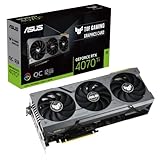
- Top Pick: ASUS TUF Gaming NVIDIA GeForce RTX 4070 Ti OC Edition Gaming Graphics Card (PCIe 4.0, 12GB GDDR6X, HDMI 2.1a, DisplayPort 1.4a), 3 Year Warranty
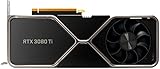
- Best Value: Geforce RTX 3080 Ti 12GB GDDR6X PCI Express 4.0 Graphics Card Titanium and Black (Renewed)
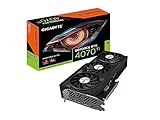
- Premium Choice: Gigabyte GeForce RTX 4070 Ti WINDFORCE OC 12G Graphics Card, 3X WINDFORCE Fans, 12GB 192-bit GDDR6X, GV-N407TWF3OC-12GD Video Card
Top Rtx 4070 3080 Efficiency Raw Picks for 2026
Here are our current top rtx 4070 3080 efficiency raw picks, compared on real Amazon owner reviews, price, and features. Live prices update below.


Dropped $10.00


Rtx 4070 ti vs 3080 ti is a close cross-generation duel between a newer efficient card and last generation’s high-end performer. The two trade blows in native rasterization, but the 4070 Ti adds modern features and far better efficiency, while the 3080 Ti counters with a wider memory bus. This comparison breaks down the data so you can see exactly where each card leads and which one suits your build and budget in 2026.
As an Amazon Associate we earn from qualifying purchases at no extra cost to you. Product prices and availability are accurate as of the date shown and are subject to change.


Quick Verdict and Specifications
This section opens with the bottom line, then grounds it in a specification table and a note on running a fair comparison. Because these cards land so close in raw frames, the deciding factors are features, efficiency, and price rather than headline performance, and the deep dive that follows quantifies each of them in turn.
Setting expectations early helps here: with raw frames so evenly matched, the result you care about will likely be decided by your power budget, the features you want, and the prices available to you, rather than by a few percentage points in any single benchmark.
Quick Verdict – The Efficiency vs Power Trade-Off
For most buyers, the RTX 4070 Ti is the better pick. It matches or beats the 3080 Ti in many titles, draws far less power, and adds DLSS 3 frame generation – a feature the Ampere-based 3080 Ti cannot use.
The 3080 Ti remains compelling where native bandwidth matters, thanks to its wider 384-bit bus, and it can undercut the 4070 Ti on the used market. If you find one cheap and value raw 4K bandwidth, it holds up well – this is the spot to compare current listings for both.
In essence the cards are close enough in raw frames that the decision turns on efficiency, features, and price rather than headline speed. The deep dive below quantifies each of those factors so the right pick becomes clear for your build.
RTX 4070 Ti vs 3080 Ti Specs Table
The specification table frames the matchup, contrasting Ada efficiency and features against Ampere bandwidth. The power and frame-generation rows, more than the core counts, are what separate these two cards in real use.
The 3080 Ti’s larger core count and wider bus look commanding, but Ada’s per-core efficiency lets the 4070 Ti match it with fewer resources and far less power. That is why the spec sheet overstates the older card’s edge.
| Spec | RTX 4070 Ti | RTX 3080 Ti |
|---|---|---|
| Architecture | Ada Lovelace | Ampere |
| CUDA cores | 7680 | 10240 |
| Memory | 12GB GDDR6X | 12GB GDDR6X |
| Memory bus | 192-bit | 384-bit |
| TDP | 285W | 350W |
| Frame generation | Yes (DLSS 3) | No |
Setting Up a Fair Comparison
A credible comparison holds the platform constant and separates native rasterization from upscaled and frame-generated numbers. That separation is essential here because only the 4070 Ti supports frame generation, so blending those results would distort the matchup.
In this article native performance is reported on its own, with DLSS and frame generation flagged explicitly. That is the only honest way to judge the rtx 4070 ti vs 3080 ti question, since the cards sit a full feature generation apart despite their similar raw output.
A balanced CPU keeps the test fair as well, because a weaker processor at 1440p can cap both cards and hide their differences. On equal footing the two genuinely trade the lead rather than one running away with it.
Deep Dive Face-Off
With the verdict and specs set, this section compares the cards criterion by criterion rather than reviewing each alone. Each face-off isolates a single variable – native performance, features, or efficiency – so the trade-offs stay clear and quantified, keeping the focus on what actually decides the purchase.
Read together, the three face-offs form a consistent pattern: the cards tie on native frames, the 4070 Ti wins efficiency and features, and the 3080 Ti answers only on bandwidth and used price, which makes the eventual recommendation straightforward.
Native Rasterization and 4K Frame Rates
In native rasterization the two are very close, frequently within a few percent across many titles. The 3080 Ti’s wider bus can edge ahead at 4K where bandwidth is stressed, while the 4070 Ti’s newer architecture keeps it level or ahead at 1440p.
The practical reading is that there is no decisive native winner; the lead shifts with resolution and engine. For the 1440p and entry-4K gaming this tier targets, the two deliver a very similar raw experience before features and efficiency enter the picture.
It is also worth noting that future drivers and game patches tend to favor the newer architecture, so the small native gaps seen today can drift toward the 4070 Ti over the years a buyer is likely to keep the card.
Both cards share a 12GB buffer, so VRAM is not a differentiator here, which keeps the decision focused on the surrounding factors rather than memory capacity.
That shared 12GB is actually a point in the matchup’s favor, since neither card forces a texture compromise the other avoids. The result is a cleaner comparison where features and efficiency, not memory, decide the outcome.
DLSS 3 Frame Generation vs Ampere
The clearest divide is features. The 4070 Ti supports DLSS 3 frame generation, an Ada-exclusive capability that sharply raises smoothed frame rates in supported titles, while the Ampere-based 3080 Ti cannot use it at all.
As frame generation spreads through new releases, the 4070 Ti’s effective performance ceiling rises over time, giving it a longevity advantage native benchmarks miss. This is the forward-looking factor worth weighing for buyers who value future optimization rather than today’s raw output alone.
Frame generation adds a little latency and only works where supported, so for competitive play it complements native performance rather than replacing it. Even so, it firmly tilts long-term value toward the newer card.
Image quality from newer DLSS revisions has improved as well, narrowing the visible cost of upscaling and making frame generation more usable than early implementations. As that software matures, the 4070 Ti’s edge widens rather than fades.
Power Efficiency, Value and Pros/Cons
Efficiency is a decisive practical win for the 4070 Ti. At 285W versus the 3080 Ti’s 350W, it runs cooler and quieter, needs less power, and costs less to run over years of ownership while delivering similar or better performance.
RTX 4070 Ti – Pros: excellent efficiency, DLSS 3 frame generation, modern features, cooler and quieter. Cons: narrower 192-bit bus and lower native bandwidth than the 3080 Ti.
RTX 3080 Ti – Pros: wider 384-bit bus, more CUDA cores, strong native 4K, often cheap used. Cons: 350W power draw, more heat, and no frame generation. The choice is modern efficiency and features versus older raw bandwidth.
For real builds the efficiency gap matters beyond the spec sheet: the 3080 Ti’s 350W demands stronger cooling, a larger power supply, and a roomier case, adding cost and noise that the cooler 4070 Ti avoids entirely.
Those hidden costs are easy to overlook when comparing sticker prices, yet they meaningfully affect the true cost of ownership, which is another reason the efficiency gap deserves real weight rather than being treated as a footnote.
Taken together with the feature advantage, that efficiency is why the 4070 Ti tends to win recommendations outright unless the 3080 Ti’s used price drops far enough to offset its higher running costs and missing frame generation.
Recommendations and Buying Timing
Benchmarks only matter once matched to budget, resolution, and timing. This final section adds a smarter third option for undecided buyers, factors in current pricing pressure, and closes with a clear recommendation for each buyer so the data becomes an actual decision.
These recommendations need no technical background to follow; they simply convert the efficiency and feature data into a plain choice shaped by your resolution, your case and power supply, and the real prices on offer today.
The Alternative – A Smarter Third Option
If neither card quite fits, a 4070 Ti Super or 5070-class option sits a tier above both, offering more native headroom than the 4070 Ti while keeping its efficiency and modern features – without returning to a power-hungry older design.
For buyers who want clear future-proofing rather than a used-market value play, that middle option is often the most satisfying long-term purchase, particularly for those moving toward 4K gaming where extra headroom pays off.
Bargain hunters might also scan the used market for a discounted higher tier, accepting the usual no-warranty risk in exchange for more performance per dollar than either of the two cards compared here.
Buyers who prefer peace of mind will reasonably skip that route, and for them a new 4070 Ti with a full warranty is the simplest, lowest-stress way to secure modern features without gambling on second-hand hardware.
Pricing Trends That Affect the Decision
Timing matters because laptop and PC component prices have been trending upward on tight memory supply and intense AI demand. That pressure makes deep discounts on the newer 4070 Ti unlikely while keeping used 3080 Ti prices firmer than buyers expect.
Recent clearance for Nvidia to sell H200 AI chips to China adds to it, raising data-center demand for the same memory and fabrication capacity consumer GPUs use. While that does not change gaming results, it reinforces why prices across the stack are unlikely to fall sharply, which argues for buying the right card at a fair price now.
The practical takeaway is to let efficiency and features guide the choice: if a new 4070 Ti and a used 3080 Ti land at similar prices, the newer card’s lower power and frame generation usually make it the better long-term spend.
Display pairing helps with close calls too: a 1440p high-refresh monitor lets both cards excel so efficiency and features break the tie, while a dedicated 4K setup gives the 3080 Ti’s bandwidth a reason to exist if the price is right.
For the many buyers who game at 1440p, though, that nuance points back to the 4070 Ti, whose efficiency and frame generation deliver more usable and future-ready performance for the way most people in this tier actually play their games.
Final Verdict – Who Should Buy Which
Buy the RTX 4070 Ti if you want the more efficient, future-ready card with DLSS 3 frame generation and you plan to keep it for years – it is the better all-round choice for most buyers in 2026.
Buy the RTX 3080 Ti only if you find one notably cheaper used and you prioritize native 4K bandwidth over efficiency and modern features. Compare current listings for both and pick the card that matches your resolution, power setup, and budget.
As with any cross-generation choice, the version that suits your case airflow, power supply, and noise tolerance will shape your everyday experience as much as the benchmark gap, so weigh those practical constraints alongside the frame-rate numbers before deciding.
See More:
- Rtx 4070 ti super vs rtx 4070 super
- 5080 vs 4080 super benchmark
- 4070 ti super vs 4080 super benchmark
- Rtx 4070 ti super vs rtx 4090
- Rtx 4070 ti vs rtx 4070 ti super
Conclusion
The rtx 4070 ti vs 3080 ti decision is a clean efficiency-versus-power trade-off: the 4070 Ti wins efficiency, features, and longevity, while the 3080 Ti wins raw bandwidth and used-market value. With component prices trending up, the smart move is to match the card to your resolution and buy at a fair price rather than wait. Review the current options for both GPUs and choose the one that best fits your build and goals in 2026.
Frequently Asked Questions
What is the best rtx 4070 ti 3080 ti in 2026?
The best rtx 4070 ti 3080 ti depends on your budget and how you plan to use it. The options compared above are our top-rated picks based on real customer ratings, build quality, and overall value — start with the highest-rated model that fits your budget.
How much should I expect to spend on a rtx 4070 ti 3080 ti?
Prices vary by brand and features. Budget options cover the essentials, while mid-range and premium models add durability, performance, and extra features. Compare the prices in the list above to find the best value for your needs.
What should I look for when buying a rtx 4070 ti 3080 ti?
Focus on what matters most for your use case — build quality, compatibility, performance, warranty, and verified customer reviews. Every pick above is selected to balance these factors.
Are budget rtx 4070 ti 3080 ti options worth it?
Yes. For most people a well-reviewed budget or mid-range rtx 4070 ti 3080 ti delivers excellent value. You only need to spend more if you specifically require premium materials or top-tier performance.
How did we choose these rtx 4070 ti 3080 ti picks?
We compare current Amazon ratings, review counts, key features, and price to surface the options with the best real-world value. The list is refreshed as ratings and availability change.










Write Your Review
No reviews yet. Be the first to share your experience!