
- Top Pick: ZER-LON GeForce GTX 1660 Super 6GB Graphics Cards, GDRR6 192Bit PCIE 3.0X16 Computer Gaming Gpu, Dual Freeze Fans Video Card with HDMI/DP/DVI Ports Support 4K and 8K HD
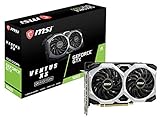
- Best Value: MSI Gaming GeForce GTX 1660 Super 192-bit HDMI/DP 6GB GDRR6 HDCP Support DirectX 12 Dual Fan VR Ready OC Graphics Card (GTX 1660 Super VENTUS XS OC) (Renewed)
- Premium Choice: MSI Gaming GeForce GTX 1660 Super 192-bit HDMI/DP 6GB GDRR6 HDCP Support DirectX 12 Dual Fan VR Ready OC Graphics Card (GTX 1660 Super Gaming X) (Renewed)
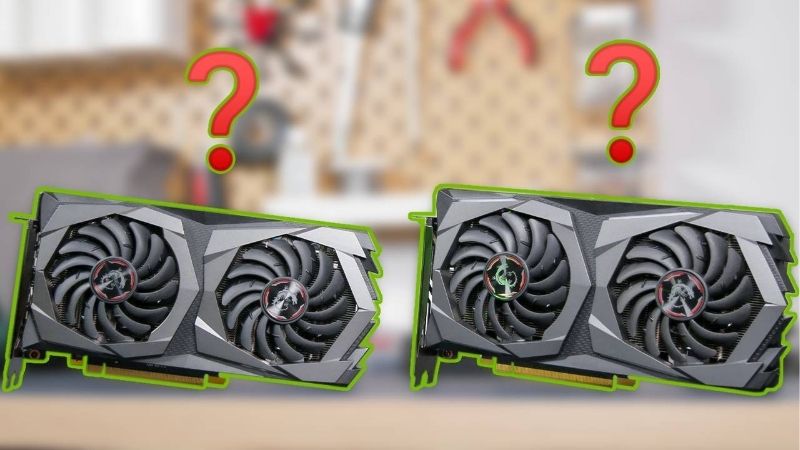
GTX 1660 Super vs 1650 is the upgrade question every budget 1080p gamer eventually faces: pay a little more for real gaming muscle, or save cash with the leaner, lower-power option? These two Turing cards sit close on the shelf but far apart in performance. This side-by-side lays out the specs, the actual frame rates, and a clear verdict on which one earns your money for smooth 1080p gaming in 2026.
The Quick Verdict and Full Spec Comparison
Here is the short answer before the deep dive. One of these cards is a genuine 1080p gaming GPU and the other is an entry-level card that trades performance for tiny size and low power. Knowing which camp you fall into makes this an easy decision, and the table below shows exactly why the gap is so wide.
As an Amazon Associate we earn from qualifying purchases at no extra cost to you.





Quick Verdict: Who Wins at a Glance
For real 1080p gaming, the GTX 1660 Super is the clear winner. It delivers roughly 50–60% more performance than the GTX 1650, turning many titles from barely-playable into genuinely smooth at high settings.
The GTX 1650 wins only on constraints. If your build has no spare power connector, a weak power supply, or a tiny case, its 75W design and connector-free models make it the safer physical fit.
Short version: buy the GTX 1660 Super if your system can power it, and choose the GTX 1650 only when power and size limits force your hand.
Full Spec Comparison Table
Numbers first. These specs drive every difference you will notice in games.
| Spec | GTX 1650 | GTX 1660 Super |
|---|---|---|
| Architecture | Turing | Turing |
| VRAM | 4GB GDDR5 / GDDR6 | 6GB GDDR6 |
| Memory bus | 128-bit | 192-bit |
| CUDA cores | 896 | 1,408 |
| Board power | ~75W | ~125W |
| Power connector | None on most models | 1x 8-pin required |
| Recommended PSU | 350W | 450W |
| Typical used price | ~$100–$130 | ~$120–$150 |
The GTX 1660 Super’s extra cores, wider 192-bit bus, and faster 6GB GDDR6 memory are the real reasons it pulls so far ahead. That performance costs more power, which is why it needs an 8-pin connector the 1650 usually does without.
What the Raw Numbers Actually Mean
The memory setup is the headline difference. The GTX 1660 Super’s 6GB of fast GDDR6 on a 192-bit bus moves far more data than the 1650’s narrower 128-bit design, and that bandwidth is exactly what modern games hunger for at 1080p.
The VRAM jump from 4GB to 6GB also matters. It lets the 1660 Super hold higher texture settings without the stutter and pop-in that the 4GB GTX 1650 runs into sooner in newer titles.
The trade-off is power. The 1660 Super’s 125W draw is still modest, but it crosses the line from connector-free to requiring a proper power supply, which is the one practical hurdle to check before buying.
There is also a longevity angle in the memory difference. As games continue to raise their minimum texture and asset requirements, the 1650’s 4GB buffer will hit walls sooner, forcing texture drops that the 1660 Super’s 6GB can often avoid. Buying the larger buffer today is a small hedge against how quickly entry-level cards fall behind modern requirements.
Deep Dive Face-Off: Performance, Features, and Real-World Fit
Spec sheets set expectations; real use confirms them. To pick correctly you need to see how these cards behave in actual frame rates, what features they share, and how each fits a real budget build. This is where the GTX 1660 Super vs 1650 matchup gets decided by how and where you play.
Rasterization Performance at 1080p
In demanding AAA titles at 1080p high settings, the GTX 1660 Super frequently holds 60 fps and above, while the GTX 1650 often lands in the 35–50 fps range in the same games, forcing you down to medium or low settings to stay smooth.
In esports titles, both cards perform well, but the 1660 Super pushes much higher frame rates, easily feeding a 144Hz monitor in lighter games where the 1650 targets a steadier 60–100 fps experience.
That difference reshapes what each card is for. The 1660 Super is a true high-settings 1080p card, while the 1650 is an entry ticket best paired with modest expectations.
Concrete examples make the gap obvious. In demanding titles such as Cyberpunk 2077, Hogwarts Legacy, or a modern Call of Duty at 1080p, the GTX 1660 Super stays playable at high settings while the GTX 1650 usually needs medium or low presets and lowered resolution scaling to hold a steady 60 fps. In lighter esports games both cards feel great, but only the 1660 Super has the raw output to consistently saturate a high-refresh panel across a broad library.
Shared Features and the DLSS Question
Both cards are built on Turing, so they share the same modern video engine with solid encoding for lightweight streaming and recording—an edge over older Pascal cards.
Neither, however, includes ray tracing hardware or DLSS, since both sit in the GTX line rather than the RTX family. If AI upscaling is a priority, you would need to look at Nvidia’s RTX cards, whose ongoing feature development keeps pulling ahead of these GTX models.
For pure rasterized gaming without RT effects, that shared limitation is not a dealbreaker—it just means you judge these two on raw performance, where the 1660 Super wins decisively.
It is worth remembering what that shared Turing base gives you beyond gaming, too. Both cards handle modern video playback smoothly and include reliable hardware encoding, so either one works well for a PC that doubles as a media or light-creative machine. On this everyday front the two are evenly matched, which keeps the real decision squarely about the gaming performance and power differences that separate them. In other words, choosing the cheaper 1650 costs you frame-rate headroom, not general usability.
Power, Size, and System Compatibility
This is the GTX 1650’s home turf. Its roughly 75W draw means many models run with no power connector at all, slotting cleanly into locked-down office prebuilts and tiny cases that cannot handle a bigger card.
The GTX 1660 Super needs a single 8-pin connector and a 450W supply. That is easy for most builds, but owners of bare-bones prebuilts should confirm their power supply has the right cable before buying.
So the compatibility verdict splits cleanly: the 1650 for the most constrained systems, the 1660 Super for any build with a proper power supply and a spare connector.
Before buying the 1660 Super, take two minutes to verify your system. Check that your power supply is at least 450W and actually has a spare 8-pin PCIe connector, and confirm your case has room for a standard dual-slot card. These are easy checks, but skipping them is the most common reason a budget upgrade stalls on arrival. The 1650, by contrast, rarely raises any of these questions.
Value, Alternatives, and Final Verdict
Performance clearly favors the 1660 Super, but the right buy still depends on your system and budget. Here are the honest trade-offs, a strong alternative if neither quite fits, and a final recommendation tailored to how you play.
Pros and Cons of Each Budget GPU
Every budget card is a set of compromises. Here is the direct breakdown.
GTX 1650
- Pros: Very low power, no connector on most models, compact and low-profile options, cheap and easy drop-in.
- Cons: Much slower, only 4GB VRAM, struggles at high settings in modern games.
GTX 1660 Super
- Pros: Strong 1080p high-settings performance, 6GB fast GDDR6, great value used, capable of 144Hz in lighter titles.
- Cons: Needs an 8-pin connector and a decent PSU, higher power and heat, still no ray tracing or DLSS.
The Alternative Pick
If both cards feel like a stretch in different directions, there are strong alternatives. A used RX 6600 offers a big leap over the 1660 Super for a little more money and remains efficient. On the other end, if the 1650 is too slow but your power supply is weak, an RX 6400 is another low-power option to weigh.
For most gamers, though, the RX 6600 is the natural next step up and worth pricing out before you commit to the 1660 Super, since the two often sit close on the used market.
The right alternative depends entirely on which constraint is driving your choice—raw performance or power and size.
See More:
Final Verdict: Who Should Buy Which
Choose the GTX 1660 Super if your build has a spare 8-pin connector and you want a genuine high-settings 1080p card that will feel smooth in modern games. It is the better GPU by a wide margin and the one most buyers should target.
Choose the GTX 1650 only when constraints demand it: no power connector, a weak supply, or a case too small for anything larger. In those cases it is a sensible, low-fuss pick.
It is worth being honest about the value math, too. Because the two cards often sit only a little apart on the used market, the 1660 Super’s roughly 50–60% performance jump usually represents far better value per dollar than the small price gap suggests. Unless your system genuinely cannot power it, paying slightly more for the bigger card is the smarter long-term spend.
Whichever you choose, used prices move constantly, so compare live listings first. You can check current deals on both cards through the links on this page and grab the one that fits your build.
Ultimately, the GTX 1660 Super vs 1650 choice comes down to a single question: can your system power the bigger card? If yes, the GTX 1660 Super is the obvious winner, delivering far smoother 1080p gaming for only a little more money. If your build is locked to low power and no connectors, the GTX 1650 remains a capable, hassle-free entry card. Match the GPU to your system’s limits, and you will get the best performance your budget and build can support.
Top-Rated Picks


Save $89.37


Best Seller
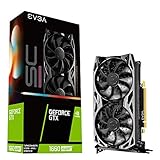
EVGA 06G-P4-1068-KR GeForce GTX 1660 Super Sc Ultra Gaming, 6GB GDDR6, Dual Fan, Metal Backplate (Renewed)
Save $85.02

| Product | Brand | Rating | Reviews | Price |
|---|---|---|---|---|
| ARCTIC MX-4 (4 g) – Premium Performance Thermal Paste… | ARCTIC | ★ 4.8 | 104k | $4.99 |
| ARCTIC MX-4 (incl. Spatula, 4 g) – Premium Performanc… | ARCTIC | ★ 4.8 | 71.9k | $5.49 |
| Crucial 8GB DDR4 RAM 3200MHz (PC4-25600), Downclockab… | Crucial | ★ 4.8 | 62.8k | $74.99 |
| AMD Ryzen 5 5600X 6-core, 12-thread unlocked desktop … | — | ★ 4.8 | 30.2k | $177.60 |
| NVIDIA Shield Remote; Voice Search, Motion-Activated,… | — | ★ 4.7 | 10.6k | $25.99 |
Frequently Asked Questions
How large is the performance gap between them?
The GTX 1660 Super is roughly 45 to 60 percent faster than the GTX 1650 at 1080p. It has substantially more CUDA cores, 6GB of GDDR6 on a 192-bit bus delivering about 336GB/s, versus 4GB on a 128-bit bus. That is a full tier of performance, not a small step.
Do they have the same power requirements?
No. The GTX 1650 runs at 75W and many models need no PCIe power connector at all, while the GTX 1660 Super draws about 125W and always requires a single 8-pin. If your prebuilt lacks a spare PCIe cable, the GTX 1650 may be the only option without a PSU upgrade.
Which card handles modern AAA games better?
The GTX 1660 Super, comfortably. It can hold 1080p high settings around 60fps in many recent titles, while the GTX 1650 usually needs medium or low settings and sometimes resolution scaling. The 6GB VRAM buffer also prevents the texture-related stutter that plagues 4GB cards.
Is either card better for streaming?
The GTX 1660 Super has the full Turing NVENC encoder with better quality per bitrate, while the original GTX 1650 shipped with the older Volta-era encoder, though later TU116-based 1650 revisions include the newer one. For consistent streaming quality the GTX 1660 Super is the safer pick.
Which offers better value on the used market?
The GTX 1660 Super is normally worth the premium because the performance gain far outweighs the typical price difference. Only choose the GTX 1650 when power delivery, physical size, or a low-profile bracket requirement makes the larger card physically impossible to install.





Write Your Review
No reviews yet. Be the first to share your experience!