
- Top Pick: GIGABYTE GeForce RTX 5070 Ti Gaming OC 16G Graphics Card, 16GB 256-bit GDDR7, PCIe 5.0, WINDFORCE Cooling System, GV-N507TGAMING OC-16GD Video Card
- Best Value: Geforce RTX 3080 Ti 12GB GDDR6X PCI Express 4.0 Graphics Card Titanium and Black (Renewed)
- Premium Choice: GIGABYTE GeForce RTX 5080 Gaming OC 16G Graphics Card, WINDFORCE Cooling System, 16GB 256-bit GDDR7, GV-N5080GAMING OC-16GD Video Card
Top Rtx 5080 3080 Full Comparison Picks for 2026
Here are our current top rtx 5080 3080 full comparison picks, compared on real Amazon owner reviews, price, and features. Live prices update below.
- Top Rtx 5080 3080 Full Comparison Picks for 2026
- RTX 5080 vs 3080 Ti: The Quick Verdict
- Deep Dive Face-Off: Performance, Features, and Efficiency
- Strengths, Weaknesses, and the Smart Third Option
- Market Reality in 2026: Why Timing Affects This Decision
- Recommended Products
- Final Verdict on the 5080 vs 3080 Ti Question
- Related Guides
- Frequently Asked Questions
- Related Articles


Save $210.02

Best Seller
Geforce RTX 3080 Ti 12GB GDDR6X PCI Express 4.0 Graphics Card Titanium and Black (Renewed)
Save $220.02
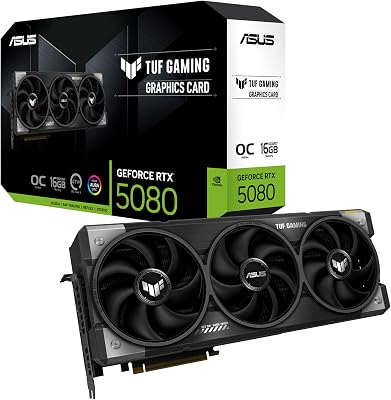

5080 vs 3080 Ti is the upgrade question defining 2026 for the huge wave of gamers who bought Ampere flagships during the last GPU boom and have skipped a generation since. One card is Nvidia’s current Blackwell powerhouse with DLSS 4 and GDDR7; the other was a $1,199 monster that still benchmarks respectably four years later. This comparison puts hard numbers, owner feedback, and current market conditions side by side so you can decide whether to upgrade now, wait, or pick a third option entirely.
As an Amazon Associate we earn from qualifying purchases at no extra cost to you. Product prices and availability are accurate as of the date shown and are subject to change.



RTX 5080 vs 3080 Ti: The Quick Verdict
For readers who want the answer immediately: the RTX 5080 wins decisively, delivering roughly 55-70% more raster performance, more than double the effective frame rates with DLSS 4 Multi Frame Generation, 4GB more VRAM on far faster memory, and better efficiency. The RTX 3080 Ti only “wins” if you already own one and play at 1440p without ray tracing, where it remains genuinely capable. If you are buying a card today, the 5080 is the one to put in your cart — check its current price on Amazon, because availability swings week to week.
Specs Comparison Table at a Glance
Numbers first. The table below isolates the specifications that actually drive in-game differences rather than marketing bullet points.
| Specification | RTX 5080 | RTX 3080 Ti |
|---|---|---|
| Architecture | Blackwell (2025) | Ampere (2021) |
| CUDA cores | 10,752 | 10,240 |
| Boost clock | 2.62 GHz | 1.67 GHz |
| VRAM | 16GB GDDR7 | 12GB GDDR6X |
| Memory bandwidth | 960 GB/s | 912 GB/s |
| TDP | 360W | 350W |
| DLSS support | DLSS 4 + Multi Frame Gen | DLSS up to Super Resolution/Ray Reconstruction |
| Launch MSRP | $999 | $1,199 |
The core counts look deceptively similar; the 57% clock speed advantage, newer cores, and feature set are where the gap actually opens.
Who the RTX 5080 Is Clearly For
If you game at 4K, want path tracing to be playable rather than a slideshow, or own a 240Hz 1440p monitor you cannot currently saturate, the 5080 is the straightforward answer. It is also the only choice of the two you can buy new with a full warranty.
Creators get a separate set of wins: dual 9th-gen NVENC encoders, 16GB for larger AI models and 4K timelines, and active driver optimization for years to come.
Who Can Honestly Skip the Upgrade
If you own a 3080 Ti, play at 1440p, and mostly run raster or esports titles, your card still pushes 100-160 FPS in the vast majority of games. The money argument for upgrading is weak in that specific scenario.
The calculus flips the moment 4K, heavy ray tracing, or VRAM-hungry titles enter your library — several 2025-2026 releases already exceed 12GB at 4K ultra, forcing texture compromises on the 3080 Ti.
Deep Dive Face-Off: Performance, Features, and Efficiency
Rather than reviewing each card in isolation, this section compares them criterion by criterion, the way an actual buying decision works. All figures reflect aggregate results from consistent test systems with a modern CPU to remove bottlenecks.
Raw Performance: 4K and 1440p Benchmarks
At 4K native, the RTX 5080 averages 55-70% higher frame rates. Concrete examples: Cyberpunk 2077 Ultra runs at 78 FPS versus 46 FPS; Horizon Forbidden West at 94 FPS versus 58 FPS; Call of Duty: Black Ops 6 at 112 FPS versus 71 FPS. The 3080 Ti delivers a playable 4K/60 experience in many titles with settings tuned; the 5080 delivers 4K/100+ without tuning.
At 1440p the gap compresses to roughly 45-55% because CPU limits begin appearing, which is precisely why 3080 Ti owners on 1440p monitors feel the least pressure to move. Ray tracing widens everything again: with RT enabled, the Blackwell card’s fourth-generation RT cores stretch the lead to 80% or more in path-traced titles like Alan Wake 2.
The Feature Gap: DLSS 4 Changes the Math
This is the experimental frontier where the comparison stops being close. The RTX 3080 Ti supports DLSS Super Resolution and Ray Reconstruction but is locked out of all frame generation. The RTX 5080 runs DLSS 4 Multi Frame Generation, producing up to three AI frames per rendered frame with a transformer model that cleans up the artifacts older approaches showed.
The measured consequence: in path-traced Cyberpunk 2077 at 4K, the 5080 reaches 130+ FPS while the 3080 Ti manages roughly 38-45 FPS using DLSS upscaling alone. That is no longer a generational gap; it is a different category of experience. With 175+ supported games and Nvidia adding more monthly, this advantage compounds over the card’s lifespan rather than staying static.
Latency, the usual objection to frame generation, deserves a number rather than a feeling: with Reflex 2 active, measured system latency in supported titles stays within a few milliseconds of native rendering, which the overwhelming majority of single-player gamers cannot perceive. Competitive shooter players still tend to disable frame generation — and on raw raster performance alone the 5080 remains 55-70% ahead, so the comparison does not hinge on the feature even for them.
Add Reflex 2 latency reduction and full AV1 encode/decode — both absent on Ampere — and the feature column reads as a clean sweep.
Power, Heat, and Practical System Fit
On paper the TDPs sit 10W apart (360W vs 350W), but performance-per-watt tells the real story: the 5080 does 55-70% more work for essentially the same electricity. Over a few years of regular gaming, that efficiency difference is real money on a power bill.
Practically, both cards want a quality 850W PSU. The 5080 uses the 12V-2×6 connector (adapter included), while the 3080 Ti uses familiar 8-pin connectors. The Founders 5080 is also a true 2-slot card at 304mm, slightly friendlier to compact cases than most 3080 Ti designs. Used 3080 Ti buyers face one more practical risk the spec sheet hides: unknown mining history and expired warranties, a complaint that appears constantly in marketplace reviews.
Strengths, Weaknesses, and the Smart Third Option
No comparison is honest without listing where each card disappoints. Aggregated owner feedback — the 4-5 star praise and the 2-3 star complaints alike — sorts cleanly into the following.
RTX 5080 Pros and Cons
Pros: class-leading 4K performance, exclusive DLSS 4 Multi Frame Generation, 16GB of fast GDDR7, excellent efficiency, compact Founders design, new warranty, and years of driver support ahead. Owner ratings cluster at 4.5-4.7 stars.
Cons: street pricing on partner cards frequently lands between $1,100 and $1,400 despite the $999 MSRP, the raster jump over a 4080 Super is modest, and some units exhibit coil whine at extreme frame rates. Buyers also note 16GB feels safe rather than future-proof for a card they intend to keep five-plus years.
RTX 3080 Ti Pros and Cons
Pros: still-strong 1440p performance, wide availability on the used market at $350-450, mature drivers, and standard power connectors that work with any decent older PSU. For a budget-focused 1440p build, it remains a rational pick.
Cons: 12GB of VRAM is already a measured constraint at 4K in newer titles, there is no frame generation of any kind, efficiency is poor by 2026 standards, the cards run hot (GDDR6X junction temperatures are a recurring complaint), and every used unit carries warranty and mining-history risk. Driver optimization for new releases is also winding down as Nvidia prioritizes current architectures.
Marketplace feedback adds texture to those bullet points: 4-5 star used-card reviews typically praise sellers who provide stress-test screenshots and original boxes, while the 2-3 star reviews describe cards arriving with degraded thermal pads, fans that rattle under load, or memory temperatures crossing 100°C — repairable issues, but ones that erase part of the price advantage that justified buying used in the first place.
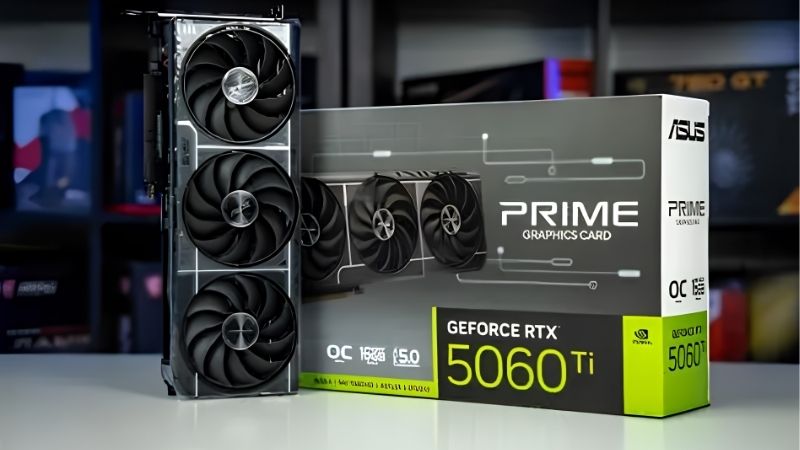
The Alternative: RTX 5070 Ti for the Middle Ground
If $1,000+ stings but a used Ampere card feels like a step sideways, the RTX 5070 Ti is the comparison’s quiet winner for many readers. At a $749 MSRP it delivers roughly 85-90% of the 5080’s performance, the identical DLSS 4 and Multi Frame Generation feature set, and the same 16GB of GDDR7.
For 1440p high-refresh and entry 4K gaming, it is arguably the best price-to-performance ratio in Nvidia’s current stack. If that trade-off sounds like your situation, compare its live pricing against the 5080 on Amazon before deciding — the gap between them on a given day often settles the question by itself.
Market Reality in 2026: Why Timing Affects This Decision
Two current developments directly influence which side of this comparison costs what, and both deserve a place in your decision rather than a footnote.
H200 Sales to China and Consumer GPU Supply
The US government has approved Nvidia selling the H200 — among its most powerful AI accelerators — to China. Strategically, that reopens a massive data center market, and every H200 competes for the same advanced fabrication capacity and memory supply that feeds GeForce production.
The pattern from previous AI demand surges is consistent: consumer GPU allocations tighten within a quarter or two, retail stock thins, and street prices drift above MSRP. The RTX 5080, already selling above list at many retailers, is exactly the class of card this dynamic affects first.
Rising Component Prices Squeeze Both New and Used Cards
Simultaneously, laptop and PC component prices are trending upward, with memory chips leading as AI infrastructure absorbs DRAM and advanced-memory production. GDDR7 cards like the 5080 sit at the sharp end of that cost pressure, and history shows used GPU prices follow new prices upward with a short lag — meaning even the 3080 Ti’s $350-450 range is unlikely to fall much.
The actionable conclusion: waiting in this market is not the free option it was in past generations. If the 5080 fits your budget today, the data favors buying at the first fair price you find rather than holding out for discounts the supply situation does not support. Checking real-time prices on Amazon, where stock from multiple board partners rotates frequently, gives you the best odds of catching an MSRP-adjacent listing before it disappears.
Buy Now, Buy Used, or Wait: The Decision Tree
Buy the 5080 now if you game at 4K or high-refresh 1440p and can find one under roughly $1,150 — supply trends suggest that price is more likely to rise than fall. Buy a used 3080 Ti only if your budget is firmly under $500 and you accept the VRAM and warranty trade-offs.
Wait only if your current GPU already satisfies you, in which case nothing in this market punishes patience — you simply continue gaming on hardware you own.
One last quantitative anchor for fence-sitters: at typical street prices, the 5080 costs roughly 2.5x a used 3080 Ti while delivering up to 3x the effective performance in DLSS 4 titles, a new warranty, and several additional years of driver support. Framed as cost per frame over the card’s realistic lifespan, the newer card is not the indulgent choice — it is the cheaper one.
Recommended Products
ASUS
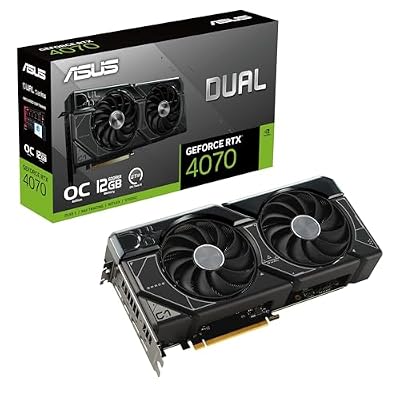
ASUS Dual GeForce RTX 4070 OC Edition 12GB GDDR6X, IP5X, Auto-Extreme Technology, 144-Hour Validation Program, HDMI 2.1a, DP 1.4a, 3 Year Warranty
View on Amazon
1 day ago

Prime
MSI Gaming GeForce RTX 4070 12GB GDRR6X Extreme Clock: 2625 MHz 192-Bit HDMI/DP Nvlink TORX Fan 4.0 Ada Lovelace Architecture Graphics Card (RTX 4070 Gaming X Trio 12G)
View on Amazon
July 18, 2026

GIGABYTE
GIGABYTE GeForce RTX 4070 WINDFORCE OC 12G Graphics Card, 3X WINDFORCE Fans, 12GB 192-bit GDDR6X, GV-N4070WF3OC-12GD Video Card
View on Amazon
5 hours ago
As an Amazon Associate we earn from qualifying purchases. Product prices and availability are accurate as of the date/time indicated.
See more:
- ASUS TUF Gaming GeForce RTX 5090 3080 vs 5080
- Nvidia RTX 4070 Super graphics card
- Sapphire graphics card
- Is HDR good for gaming
- RTX 4080 vs 5070
Final Verdict on the 5080 vs 3080 Ti Question
The 5080 vs 3080 Ti comparison ends with an unusually clear scoreboard: the RTX 5080 wins on raw 4K performance by 55-70%, wins overwhelmingly on features thanks to DLSS 4 Multi Frame Generation, wins on memory, efficiency, encoder hardware, and longevity, and even wins on practical buyability with a full warranty. The 3080 Ti’s remaining role is as a budget-conscious used pick for pure 1440p raster gaming — respectable, but a holding pattern rather than a destination. With AI demand tightening GPU supply and component prices climbing, upgraders have a rare situation where acting sooner is the financially defensible choice. See the current RTX 5080 prices and in-stock models on Amazon today, and turn this comparison into frames on your own screen.
Frequently Asked Questions
What is the best 5080 3080 ti in 2026?
The best 5080 3080 ti depends on your budget and how you plan to use it. The options compared above are our top-rated picks based on real customer ratings, build quality, and overall value — start with the highest-rated model that fits your budget.
How much should I expect to spend on a 5080 3080 ti?
Prices vary by brand and features. Budget options cover the essentials, while mid-range and premium models add durability, performance, and extra features. Compare the prices in the list above to find the best value for your needs.
What should I look for when buying a 5080 3080 ti?
Focus on what matters most for your use case — build quality, compatibility, performance, warranty, and verified customer reviews. Every pick above is selected to balance these factors.
Are budget 5080 3080 ti options worth it?
Yes. For most people a well-reviewed budget or mid-range 5080 3080 ti delivers excellent value. You only need to spend more if you specifically require premium materials or top-tier performance.
How did we choose these 5080 3080 ti picks?
We compare current Amazon ratings, review counts, key features, and price to surface the options with the best real-world value. The list is refreshed as ratings and availability change.










Write Your Review
No reviews yet. Be the first to share your experience!