
The Radeon RX 9070 XT suits most builds aiming for high frame rates at 1440p on a moderate budget, while the GeForce RTX 4080 suits buyers who want stronger ray tracing, Nvidia software features, or CUDA-based creative work and can accept a higher power and case-space requirement. The choice comes down to whether value per frame or Nvidia-specific strengths matter more to you.
This guide compares the two cards from a buyer’s point of view: which versions fit, what the makers and reviewers report, how the trade-offs change by budget, and what to check before ordering.
At a Glance
| Item | Radeon RX 9070 XT | GeForce RTX 4080 |
|---|---|---|
| Maker and architecture | AMD, RDNA 4 | Nvidia, Ada Lovelace |
| Generation | Current | Previous generation |
| Memory | 16 GB GDDR6, 256-bit | 16 GB GDDR6X, 256-bit |
| Stated power | 304 W typical board power | 320 W reference graphics power |
| PSU guidance | 750 W minimum listed by AMD | 750 W recommended in the Founders Edition listing and several partner pages |
| Best for | 1440p frame rates per spend | Ray tracing, Nvidia features, CUDA workloads |
Key Specs as Stated by the Makers
AMD lists the RX 9070 XT with 64 compute units, 4,096 stream processors, a 2,400 MHz game clock, and a boost clock of up to 2,970 MHz. Memory bandwidth is listed at up to 640 GB/s, and the card carries 64 MB of Infinity Cache. Third-party spec databases report slightly different ROP and bandwidth figures, so the maker’s own page should be treated as the reference.
The RTX 4080 uses 9,728 CUDA cores with 16 GB of GDDR6X on a 256-bit interface, which gives about 716.8 GB/s of bandwidth. Nvidia describes its 320 W figure as total graphics power rather than a fixed draw, and actual consumption varies by workload and by board partner model. Note that the RTX 4080 SUPER is a separate card with 10,240 cores, so product pages for that model should not be used for the base 4080.
Performance: What Reviewers Report
Tom’s Hardware’s launch review of the RX 9070 XT, titled “Excellent value, if supply is good,” treats 1440p Ultra as the most important test setting. In that review, the RX 9070 XT beats the RTX 5070 by about 21 percent at 1440p in rasterization, although the RTX 5070 sits in a lower price tier, while the RTX 5070 Ti holds a lead of roughly 9 percent in ray tracing at the same resolution. Those figures come from a launch-era review and will shift as drivers and game patches change.
The RTX 4080 generally fares better in heavy ray tracing and in productivity workloads. One benchmark aggregator reports the 4080 ahead by roughly 19 percent at 1440p and about 21 percent in productivity scores. Other aggregators disagree: one shows the two cards nearly level at 1440p on average, and another puts the 4080 ahead by a larger margin. Because the test suites differ, the spread is best read as a range rather than a single verdict.
Features also separate the cards. The RX 9070 XT supports AMD’s FSR 4 upscaling and an updated AV1 encoder. The RTX 4080 supports DLSS 3 frame generation, which is widely adopted in current games, and it lacks DisplayPort 2.1 connectivity according to one comparison. Buyers who depend on a specific upscaler should confirm that their target games support it.
Compatibility Notes
- Power supply: Both cards are listed with a 750 W PSU recommendation. A quality unit from a known brand with the correct PCIe power connectors is the safer starting point. Check the manufacturer’s manual and the PSU’s own compatibility list before buying.
- Power connectors: Partner cards differ. Some RTX 4080 models use a single 12VHPWR-style connector, while the Founders Edition uses three 8-pin connectors. Confirm the connector type on the exact card and use the adapter or cable the maker supplies.
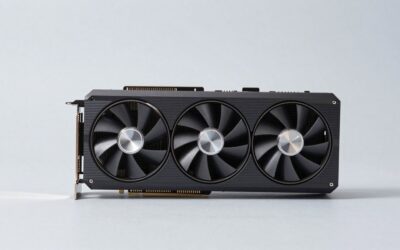
- Case clearance: Partner cards vary in length and thickness. Compare the listed card length and slot width with your case’s GPU clearance before ordering, and remember that large triple-fan coolers may block a motherboard slot.
- Airflow: Both cards are rated for high sustained power. A case with at least two front intake fans and a clear exhaust path reduces the chance of thermal throttling.
- Driver stack: AMD cards use the Adrenalin driver suite, while Nvidia cards use the GeForce driver and app. Both are routine on current Windows builds.
Trade-offs by Budget
Budget tier: Neither card is a natural budget choice. If the budget is tight, a card in the same family but lower in the stack, or a current-generation card with 16 GB of memory, will usually leave more room for a stronger CPU and faster storage.
Mid-range tier: The RX 9070 XT is the more common match for high-refresh 1440p gaming, because reviewers consistently describe it as strong value at its launch tier. Buyers who will also run ray-traced titles at high settings should compare the RTX 5070 Ti as an alternative.
Premium tier: The RTX 4080 remains a high-end option even as a previous-generation card. It makes the most sense for buyers who already use Nvidia tools, want the strongest ray-tracing results in this pair, or run CUDA-accelerated rendering and AI software.
Pick the Right Card If
| Your situation | Pick |
|---|---|
| Main goal is high frame rates at 1440p | RX 9070 XT |
| Ray tracing at high settings is a priority | RTX 4080 |
| You rely on CUDA software or Nvidia creative tools | RTX 4080 |
| Your PSU is a 750 W-class unit with no spare headroom | RX 9070 XT, after confirming the PSU’s connectors |
| You want the upscaler and frame generation used by most current titles | Compare game lists for FSR 4 and DLSS 3 support first |
| Your case is short or has limited clearance | Choose the shortest partner model that fits your case |
Reading Performance Claims Carefully
Most published comparisons of these two cards use different games, settings, drivers, and test passes, so a single percentage rarely settles the question. A difference of a few percent is within the normal spread between outlets, while a gap of 20 percent or more usually holds up across several sources. When a comparison lists only average frame rates, look for the 1 percent lows and the exact resolution and preset used, since those details often matter more for smoothness than the average.
Price is the other moving part. The RX 9070 XT’s value case rests on its launch-tier pricing, and the RTX 4080 is a previous-generation card whose street price depends on stock and region. Compare the live price of each exact partner model against the performance gap described in the reviews, rather than relying on the launch price of either card.
Alternatives Worth Comparing
The RTX 5070 Ti is a current-generation Nvidia option that reviewers describe as stronger than the RTX 5070 in heavier games. It is a practical comparison for buyers who want Nvidia features at a lower tier than the 4080.
The RX 9070 is the non-XT model in the same AMD family. Reviewers position it below the XT in performance, so it suits buyers who want to spend less while staying with the same platform.
The RTX 4080 SUPER is a higher-tier previous-generation card with more cores than the base 4080. It is the step-up choice for buyers who want the 4080 experience with more headroom.
Frequently Asked Questions
Is the RX 9070 XT faster than the RTX 4080?
It depends on the workload and the test suite. Launch-era reviews from Tom’s Hardware place the RX 9070 XT ahead of the RTX 5070 at 1440p, but other aggregators show the RTX 4080 ahead in ray tracing and productivity. For most gaming at 1440p the two cards are close, so the decision should rest on price, features, and workload rather than a single chart.
Does the RTX 4080 need more power than the RX 9070 XT?
Both are listed with a 750 W PSU recommendation, and the stated reference power figures are close, at 320 W for the 4080 and 304 W for the 9070 XT. Real draw depends on the game, the card’s factory overclock, and the rest of the system. Check the card maker’s manual and use a quality PSU with the correct connectors.
Will either card fit a small case?
Not every model will. Partner designs differ widely in length and thickness, so compare the listed dimensions with your case’s GPU clearance. Choose a shorter partner model or a case with better clearance if space is limited.
Which card has better ray tracing?
The RTX 4080 generally leads in ray-traced workloads according to the aggregators reviewed here, and the RX 9070 XT’s ray-tracing lead over the RTX 5070 is smaller than its raster lead. Results vary by game and by test suite. Look at ray-tracing results for the specific games you plan to play.
Is the RTX 4080 a good buy in 2026?
It is a previous-generation card, so its value depends on whether you can find it at a price that fits your budget. Its strengths are ray tracing, Nvidia software, and CUDA workloads. If those strengths do not matter to your use, the RX 9070 XT or a current-generation Nvidia card is usually the simpler choice.
Which card should I buy for 1440p at high settings?
For most buyers at 1440p with high settings, the RX 9070 XT is the more direct match, because reviewers describe it as strong 1440p value. Buyers who also want ray tracing or Nvidia-specific tools should weigh the RTX 4080 or the RTX 5070 Ti. Confirm the maker’s current model listing before purchase.




Write Your Review
No reviews yet. Be the first to share your experience!