
- Top Pick: ASUS Prime GeForce RTX 5060 Ti 16GB GDDR7 Gaming Graphics Card
- Best Value: ASUS Dual GeForce RTX 5060 Ti 16GB GDDR7 OC Edition Gaming Graphics Card
- Premium Choice: GIGABYTE GeForce RTX 5060 Ti WINDFORCE OC 8G Graphics Card, 8GB 128-bit GDDR7, PCIe 5.0, WINDFORCE Cooling System, GV-N506TWF2OC-8GD Video Card


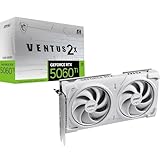
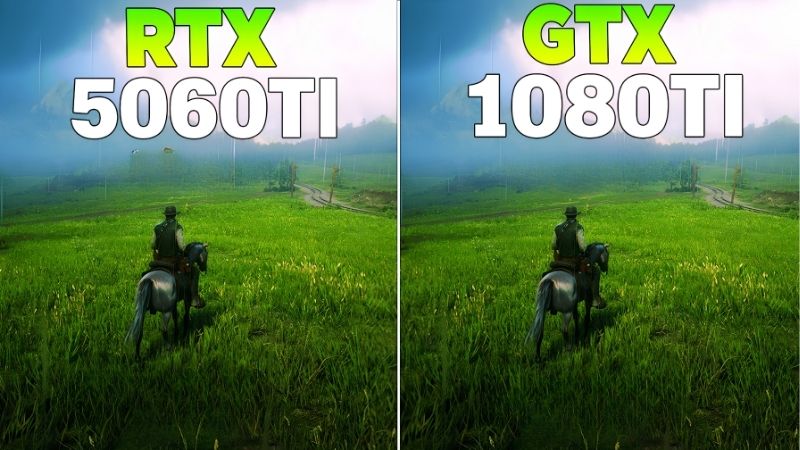
The rtx 5060 vs 1080 ti question is one that thousands of loyal 1080 Ti owners are finally asking, because a legendary card from 2017 is now up against a modern budget GPU from 2025. On raw performance the two are startlingly close, but the RTX 5060 answers with modern efficiency, ray tracing, and DLSS 4, while the GTX 1080 Ti hits back with more memory and a wider bus. This face-off gives you the quick verdict, a full spec table, real performance expectations, and a clear recommendation on whether it is time to upgrade.
As an Amazon Associate we earn from qualifying purchases at no extra cost to you.




Quick Verdict and Full Spec Comparison
Short on time? Start here for the blunt answer, the core specs side by side, and a plain explanation of what really separates these two cards. The generational gap makes this a fascinating contest, and knowing your priorities settles most of the debate before you even reach the benchmarks.
The 30-Second Answer
If you own a GTX 1080 Ti and are happy with your current games, a plain RTX 5060 is not a dramatic raw-performance upgrade, so switch mainly for ray tracing, DLSS 4, and far lower power draw rather than raw speed. If you are buying fresh, the RTX 5060 is the obvious modern choice, since the 1080 Ti is only available used.
The GTX 1080 Ti still impresses with its 11GB of memory and wide bus, which age it well in memory-heavy scenarios, while the RTX 5060 wins on efficiency, features, and current support. Neither is a clean sweep, which is exactly why your reason for buying matters.
Put simply, current 1080 Ti owners should upgrade for features and efficiency, not for a big frame-rate jump, while new buyers get modern capabilities and support from the 5060. That distinction resolves this comparison for most people.
RTX 5060 vs 1080 Ti Spec Table
Here are the essentials side by side. Clock speeds, power, and prices are launch or reported figures, so verify current listings before buying, particularly for the 1080 Ti on the used market.
| Spec | GTX 1080 Ti | RTX 5060 |
|---|---|---|
| Architecture | Pascal (GP102) | Blackwell (GB206) |
| Memory | 11GB GDDR5X | 8GB GDDR7 |
| Memory Bus | 352-bit | 128-bit |
| Boost Clock (approx.) | ~1.58 GHz | ~2.5 GHz |
| Typical Board Power | ~250W | ~145W |
| Recommended PSU | 600W | 550W |
| Ray Tracing / DLSS | None | RT + DLSS 4 |
| Interface | PCIe 3.0 | PCIe 5.0 |
| Launch MSRP | $699 (2017) | ~$299 (2025) |
What the Numbers Actually Mean
The headline is that raw rasterized performance between these two is remarkably close, often trading places depending on the game. That a 2025 budget card matches a 2017 flagship shows how strong the 1080 Ti was, and it explains why a straight upgrade can feel underwhelming in pure frame rates.
It is a genuine testament to the 1080 Ti’s engineering that the comparison is even this close nearly a decade later. Few cards age so gracefully, which is exactly why so many owners have held onto theirs for years.
The differences live in the details. The 1080 Ti’s 11GB of memory and 352-bit bus give it an edge in memory-hungry scenarios, while the RTX 5060’s newer GDDR7, dramatically lower power draw, ray tracing, and DLSS 4 point to a far more efficient, modern design.
That memory contrast is the twist of this matchup. The older card actually carries more VRAM, which matters in a few demanding titles, while the newer card counters with features and efficiency the 1080 Ti can never gain.
Deep Dive Face-Off: Performance, Features, and Value
Spec sheets do not capture how a card feels day to day. What matters is frame rates in real games, how each handles modern features, and how the total value compares once power and support are considered. This is where the rtx 5060 vs 1080 ti decision becomes practical.
Gaming Performance and VRAM
At 1080p and 1440p, both cards deliver a similar core experience in traditional rasterized games, often within a modest margin of each other. In many titles you would struggle to tell them apart on raw output, which underlines how close the contest really is.
Memory is where they diverge. The 1080 Ti’s 11GB can hold up better in a handful of texture-heavy games at higher settings, whereas the RTX 5060’s 8GB, though faster, is the tighter buffer. For the newest, most demanding titles, this is a genuine point in the older card’s favor.
The practical takeaway is that neither card transforms your raster experience over the other. If you already own a 1080 Ti and play mostly traditional games, you will not feel a dramatic speed increase from a 5060; the reasons to switch lie in features and efficiency.
Frame-rate feel deserves emphasis because expectations shape satisfaction. A 1080 Ti owner swapping to a 5060 would mostly notice a cooler, quieter system and new features rather than a smoother game in older titles. That is a very different kind of upgrade from the generational leap the newer model number might suggest to a casual shopper.
Ray Tracing, DLSS 4, and Efficiency
This is where the RTX 5060 pulls decisively ahead. It supports ray tracing and DLSS 4 with multi-frame generation, which can substantially lift frame rates and add modern visual effects the 1080 Ti simply cannot produce, since Pascal predates both technologies entirely.
Efficiency is the other major gap. The RTX 5060 draws around 145W versus roughly 250W for the 1080 Ti, meaning lower power bills, less heat, and quieter operation. For anyone running a small case or a modest power supply, that difference is a real, everyday benefit.
These forward-looking strengths are the strongest argument for upgrading, and they grow as more games adopt DLSS 4. If modern features and a cooler, quieter system appeal to you, the 5060 offers something the classic card never can.
There is a longevity angle too. As more games build around ray tracing and AI upscaling, a card that supports the latest DLSS should stay comfortable for longer, while the 1080 Ti increasingly relies on brute force it no longer has to spare. For a buyer planning several more years of gaming, that future-facing support is a meaningful, if hard-to-benchmark, advantage.
Pros and Cons of Each Card
The RTX 5060’s pros are clear: excellent efficiency, ray tracing, DLSS 4, GDDR7 memory, PCIe 5.0, and ongoing driver support at a low price for new buyers. Its cons are the narrower 128-bit bus and the 8GB buffer, which is actually less capacity than the older card.
The GTX 1080 Ti’s pros are its generous 11GB of memory, wide bus, strong rasterized performance, and legendary durability, often at attractive used prices. Its cons are high power draw, no ray tracing or DLSS, aging driver support, and PCIe 3.0.
Weighed together, the 5060 wins on efficiency and modern features while the 1080 Ti holds an edge in memory capacity and remains a capable used-market value. The right choice depends on whether you prize features or raw VRAM.
Support life is the quiet tiebreaker. The RTX 5060 will receive fresh, optimized drivers for years, while the Pascal-based 1080 Ti sits near the tail of its support cycle. For long-term reliability in the newest games, that ongoing software attention is worth factoring into the decision alongside the raw specs.
Buying in a Rising-Price Market
Your decision also depends on the wider market, which shapes both new-card prices and used 1080 Ti values. Component costs in 2026 have climbed rather than eased, and that changes the math on upgrading versus holding a proven card. A quick look helps you time the move wisely.
How 2026 Prices Affect the Upgrade Math
Across the PC market, laptops and components have trended upward in price this year rather than down, and graphics cards have felt the pressure. Memory cost is a major driver, since pricier modules feed into final sticker prices, affecting both new cards and the resale value of classics like the 1080 Ti.
There is some good news, but it is modest and mostly in the future. The steep increases of late 2025 have cooled, and hardware maker Framework has noted a stretch of relative price stability while cautioning that conditions can still swing. Prices have leveled off rather than begun falling.
More supply is on the way but not soon. Manufacturers can now source DDR5 memory from Chinese suppliers such as CXMT, and Micron is building two plants in Idaho, yet those sites are not expected to run until 2027 or 2028. For upgraders, the message is practical: if your 1080 Ti still serves you, there is no need to rush, but do not wait for a near-term crash that the supply picture does not support.
This backdrop matters most for anyone whose 1080 Ti is genuinely struggling. Waiting for a dramatic price drop that the supply outlook does not support usually just means more months of poor performance. If a well-priced modern card meets your needs and your old card is holding you back, upgrading now is a defensible, well-timed decision rather than a rushed one.
The Alternative: When Neither Fits
If the RTX 5060’s raw performance feels too similar to your 1080 Ti to justify the switch, look one tier up. A card like the RTX 5060 Ti or an RX 9060 XT 16GB offers a more meaningful jump along with more memory, addressing the one area where the old card still competes.
For new buyers who mainly want efficiency and modern features on a budget, the RTX 5060 remains the sensible pick. Comparing these options through the links on this page is the fastest way to find the best current price for the performance and features you need.
The used market is a factor in both directions here. The 1080 Ti itself is now a secondhand purchase, where condition and remaining lifespan vary, while stepping up a tier new gives you a warranty and current support. Weigh the appeal of a cheap used classic against the peace of mind of a new card before you decide.
Final Verdict: Who Should Buy Which
Upgrade to the RTX 5060 if you want ray tracing, DLSS 4, and a cooler, quieter, more efficient system, or if you are buying fresh and the 1080 Ti is only an option secondhand. It is the modern, forward-looking choice.
Hold onto your GTX 1080 Ti if you are happy with its raster performance and value its 11GB of memory, since a plain 5060 is not a big enough raw leap to justify the change for everyone. If you want a real upgrade, save for a higher tier. Check live pricing on both through the links here before deciding.
For most readers, the decision comes down to two questions. First, do you value ray tracing, DLSS 4, and a cooler, quieter build enough to switch, even without a big raster jump? Second, does your 1080 Ti’s 11GB still cover your games comfortably? Answer those honestly and the right path becomes clear.
See More:
- nvidia meaning
- rx 9070 vs rx 9070 xt
- 9060 xt 16gb vs 5070 ti
- radeon rx 9070 xt vs 5080
- windows graphics driver update
Conclusion
The rtx 5060 vs 1080 ti comparison is less about a clear winner and more about what you value. The two are close in raw performance, so current 1080 Ti owners upgrade mainly for ray tracing, DLSS 4, and efficiency rather than a big speed jump, while new buyers benefit from the 5060’s modern features and support. Notably, the older card still holds more VRAM. With component prices firm rather than falling, buying the card that fits your needs today is the smart move. Compare the latest prices on both through the links on this page and choose the one that matches your goals and budget.
Frequently Asked Questions
Is the RTX 5060 actually faster than a GTX 1080 Ti?
In raw rasterized performance the two are surprisingly close, since the 1080 Ti was a flagship with 3584 cores and a wide 352-bit bus. The RTX 5060 pulls decisively ahead once DLSS, ray tracing and modern shader features enter the picture, and it does so at half the power.
The 1080 Ti has 11GB versus 8GB. Does that matter?
It does in texture-heavy games at high settings, where the older card can hold assets the RTX 5060 cannot. However the 1080 Ti lacks the upscaling and frame generation that reduce the effective rendering load, so the capacity advantage rarely translates into better real-world playability.
What do I gain by upgrading beyond frame rate?
Power draw drops from 250W to about 145W, reducing heat and noise. You gain DLSS 4 with multi-frame generation, hardware ray tracing, AV1 encode and decode for streaming and video work, PCIe 5.0 support, driver support going forward, and modern display outputs with higher refresh capability.
Is my old system a bottleneck for the new card?
Possibly. Machines built around a 1080 Ti often pair it with processors several generations old, which will cap frame rates at 1080p. The RTX 5060 also uses a PCIe x8 interface, so on PCIe 3.0 boards you lose a small amount of performance, most noticeably when VRAM is tight.
Is the upgrade worth the money?
If your 1080 Ti still runs your games acceptably and you do not care about ray tracing or streaming encode quality, the raw performance gain alone is modest. The upgrade makes most sense for the feature set, efficiency and reliability of aging hardware rather than for frames per second.
Ready to decide? Our #1 pick for 2026 is the Architecture.
Live price & availability on Amazon.


Write Your Review
No reviews yet. Be the first to share your experience!